Neanderkirche: An Early Baroque Protestant Church in Düsseldorf
Site at a Glance
- Rating
- 4.5
- Popularity
- Low
- Country
- Germany
- Primary era
- Early Modern
- Eras represented
- Early Modern, Modern
- Civilizations
- Duchy of Berg, German, Holy Roman Empire
- Site type
- Religious
- Remains
- Church
On this page8 sections
History
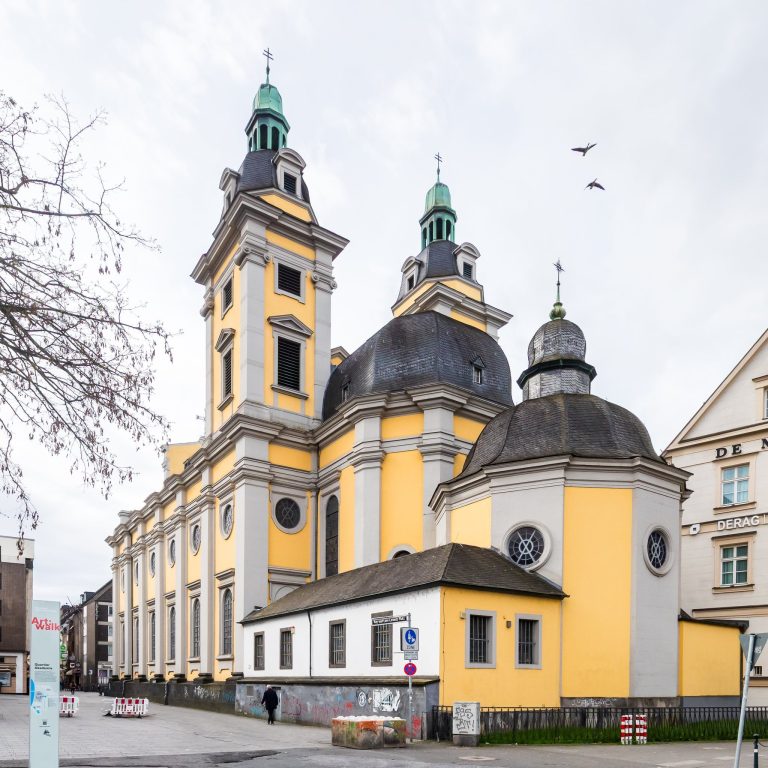
The Neanderkirche is an early Baroque Protestant church on Bolkerstraße in Düsseldorf’s Altstadt, Germany. Its foundation stone was laid in 1683, it was consecrated in 1684, and construction was completed in 1687.
Early Protestant worship
Reformed Christians, part of a Protestant tradition shaped by John Calvin, and Evangelical congregations in Düsseldorf received temporary permission to worship from 1609 to 1614. This brief opening came after the Counter-Reformation, the Catholic Church’s response to the spread of Protestantism, had begun. A preaching house was built on the Neanderkirche site in 1610, but it closed when the period of tolerance ended in 1614. Protestant Christians regained permission to build churches in the Altstadt during the second half of the seventeenth century.
Catholicism predominated in the Duchy of Berg, and its ruling Palatinate-Neuburg house was Catholic. Amid reservations about Protestant worship, Protestant churches could not present themselves openly as church buildings. The Neanderkirche was therefore established out of public view in an inner courtyard. A struggle to obtain permission to build is recorded in 1678.
Construction and later history
The church was designed and supervised by Michael Cagnon and was built at almost the same time as the Lutheran Berger Church. In 1916 it was named after Joachim Neander, a seventeenth-century Reformed minister and hymn writer. The Neanderkirche belongs to the Evangelical Church in the Rhineland and serves as a parish church for the Düsseldorf-Mitte Evangelical congregation.
During the Second World War, the houses in front of the church on Bolkerstraße were destroyed and not rebuilt. The open ground created by their loss became the churchyard.
Oskar Gottlieb Blarr served as cantor, the church musician responsible for worship music, and as organist from 1961 to 1999; he also founded and conducted the church choir. Martin Schmeding succeeded him, and Sebastian Klein has held the post since 2003. The church’s summer organ-concert series has a tradition of more than fifty years.
Remains
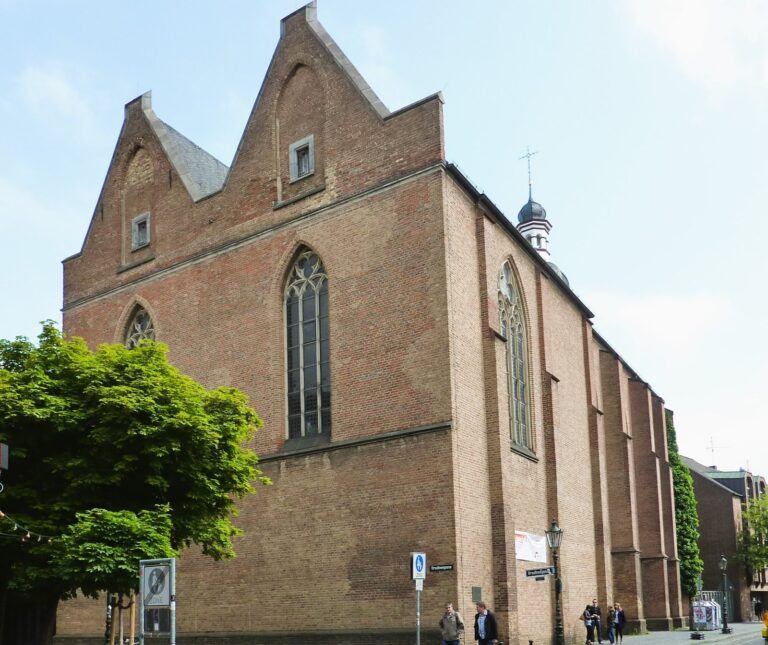
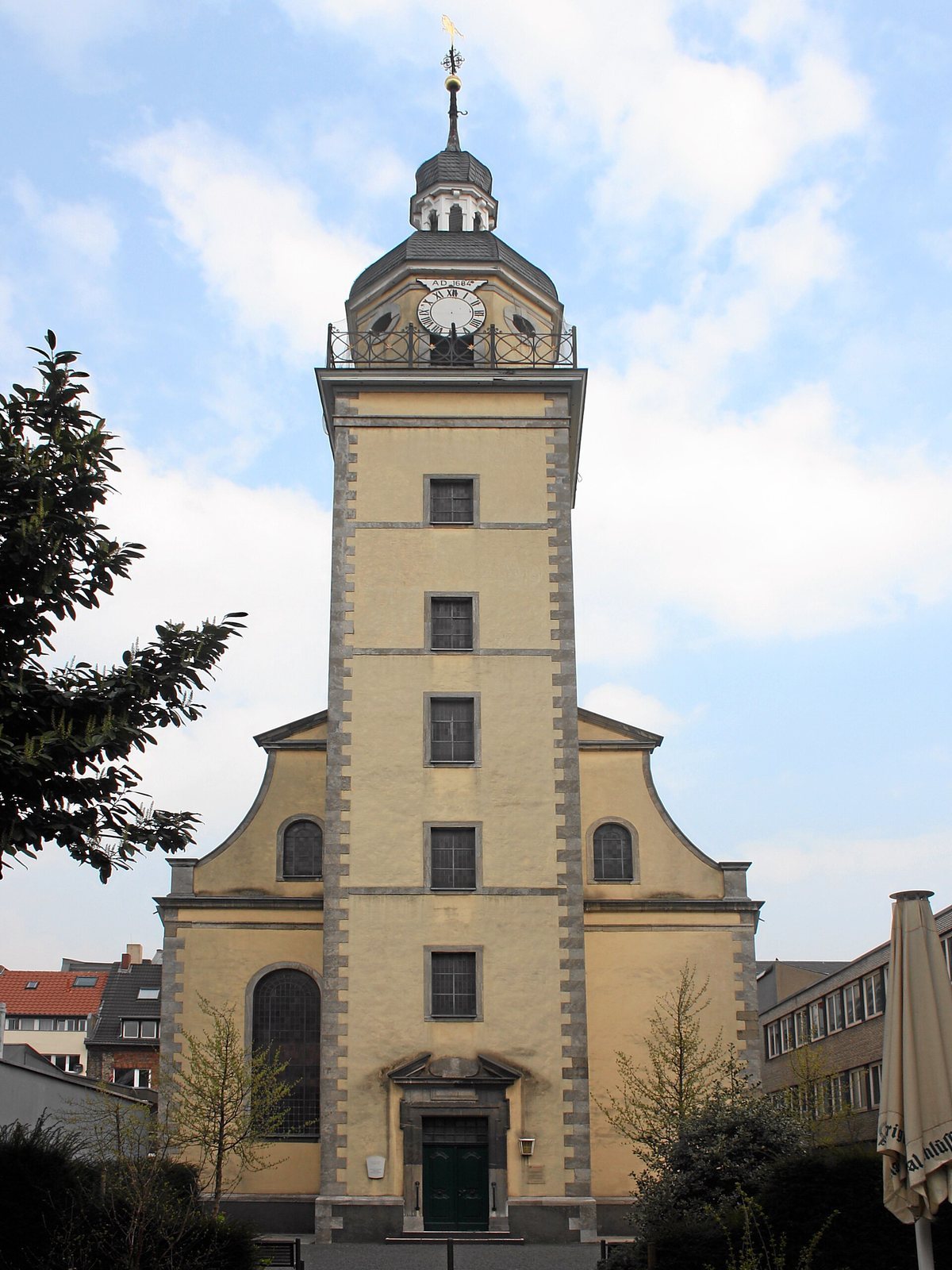
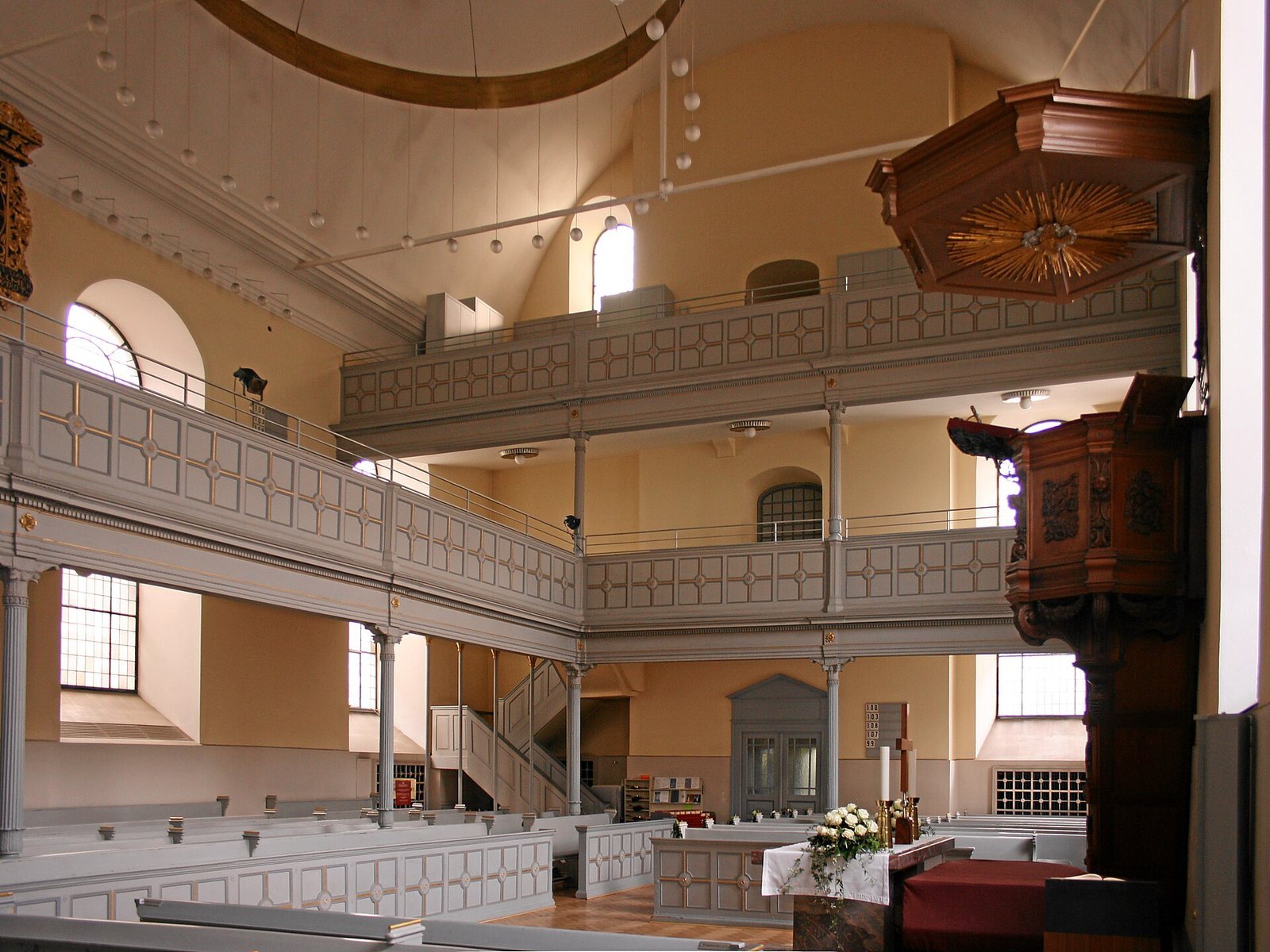
The Neanderkirche is an early Baroque hall church, with a nave and side aisles of roughly equal height that form a unified interior space. Its design is more restrained than is usual for Baroque churches, reflecting Calvinist restraint. The building stands within an inner courtyard enclosed by a continuous row of surrounding buildings, and a passage connects the church precinct with Andreasstraße. The church can now be seen from Bolkerstraße.
Fittings and musical features
Interior fittings and weather vane
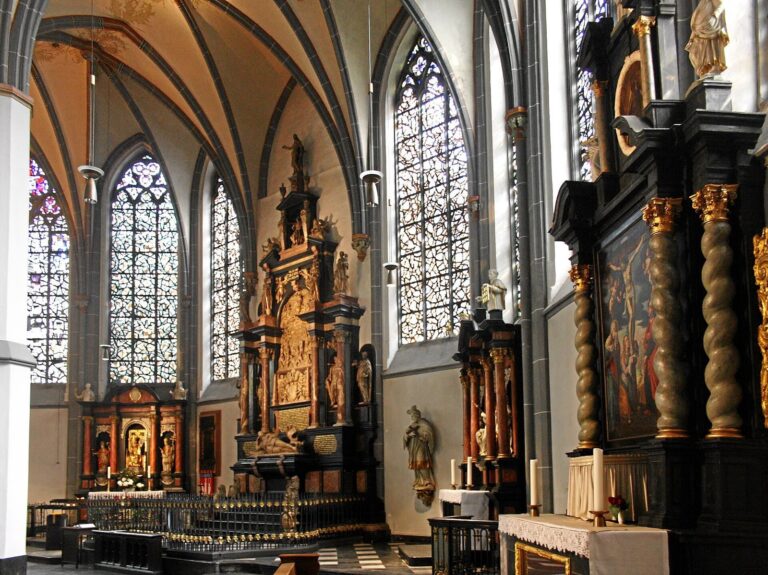
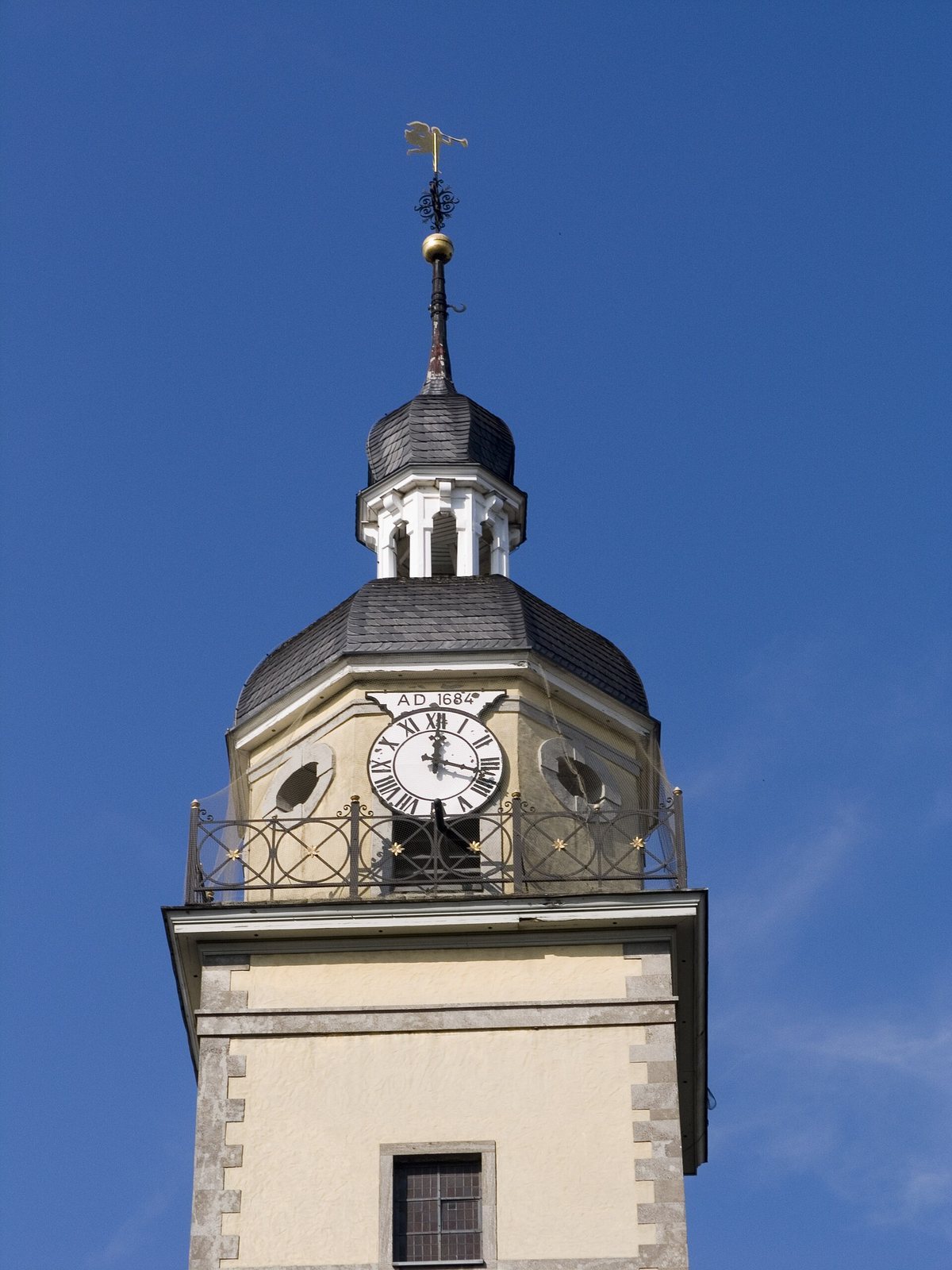
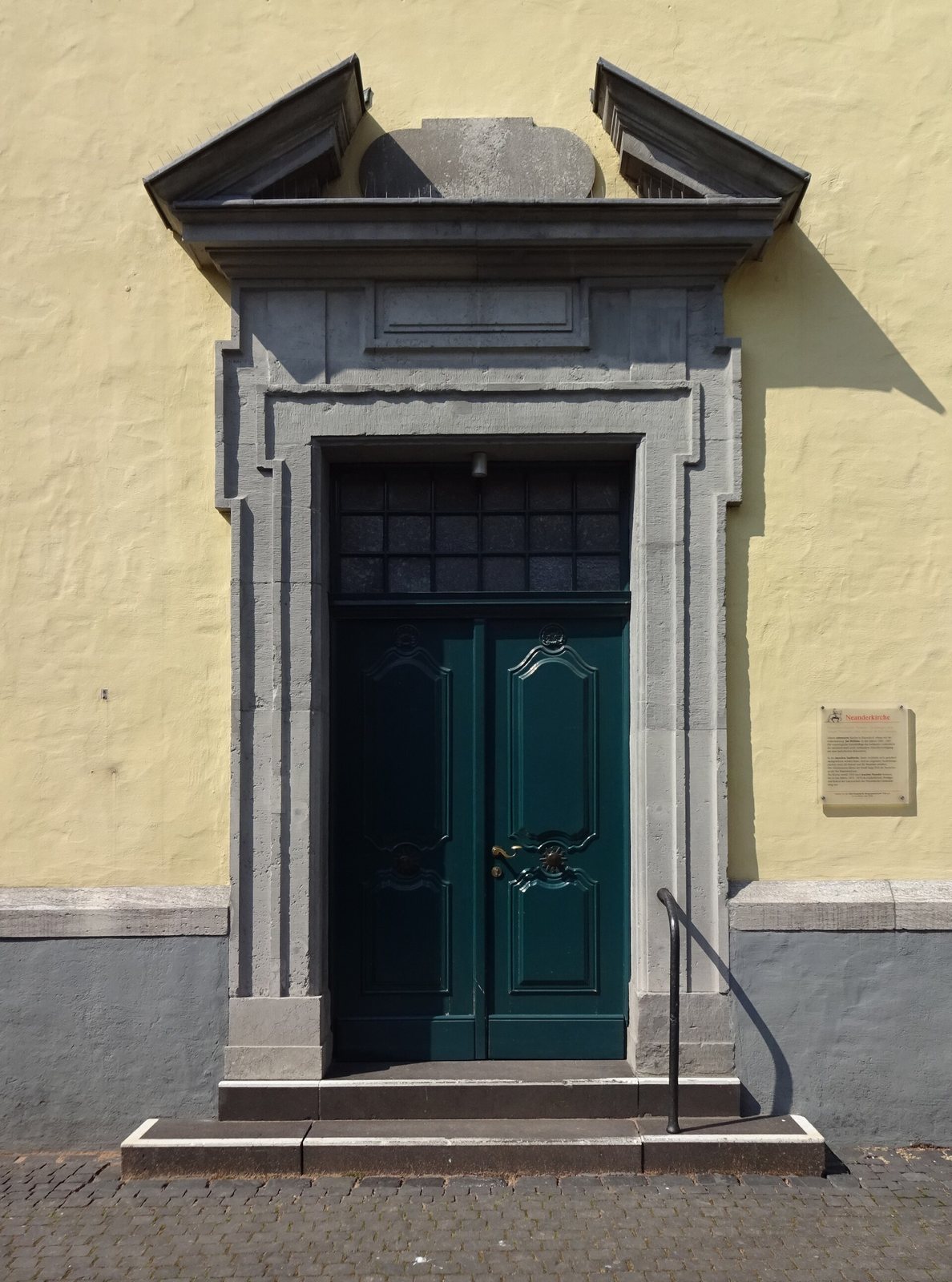
Court painter Johannes Spilberg designed the interior fittings and the large church door. He also designed the tower’s weather vane, which takes the form of an angel playing a trombone.
Organ
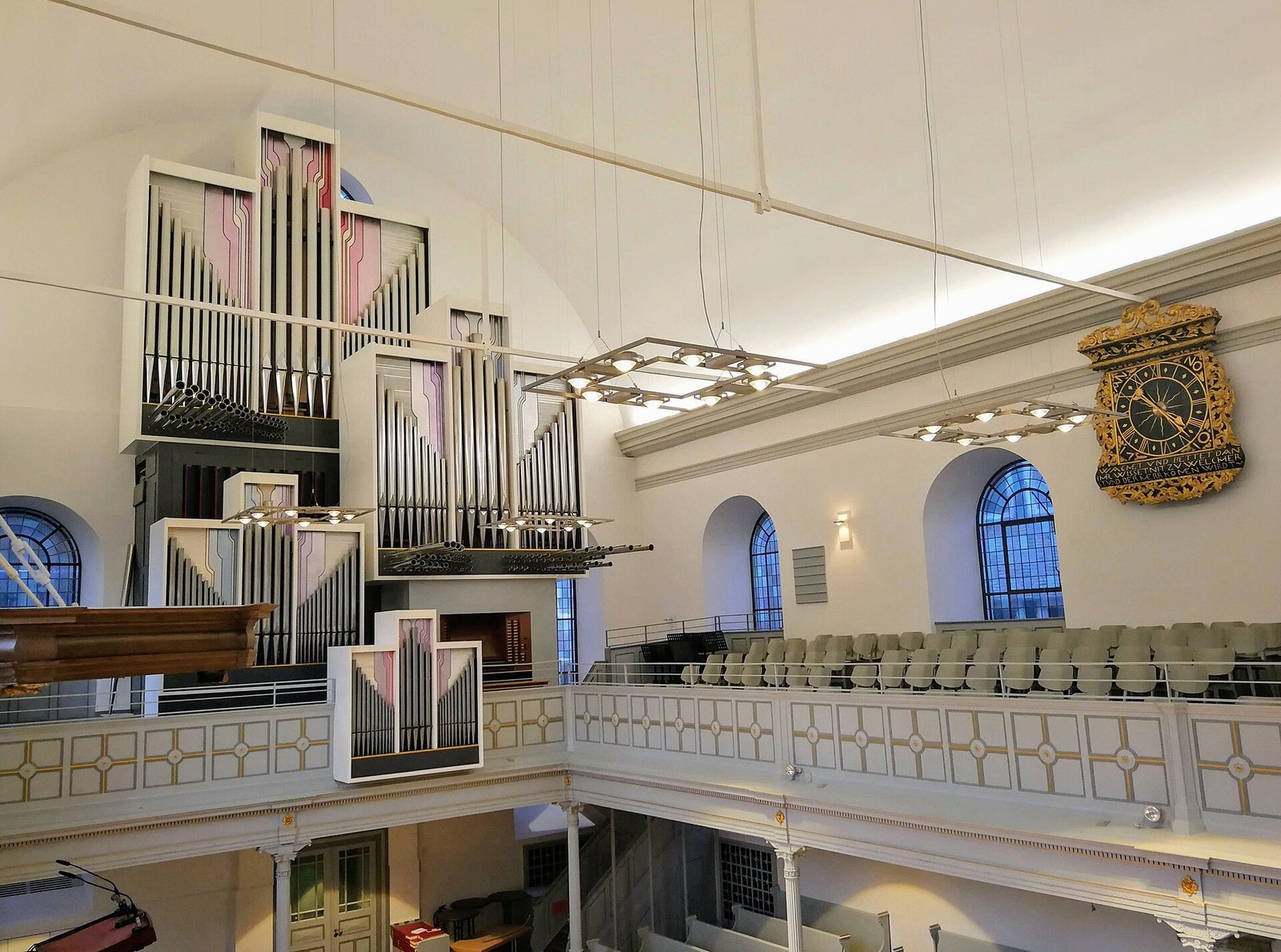
Peter Weidtmann built an organ for the church in 1694. The present organ, installed in 1965, was made by the Rieger firm of Schwarzach, Austria, under Josef von Glatter-Götz, following a design for its stops by Gerhard Schwarz, Hubert Meyers, and Oskar Gottlieb Blarr. Its keys and stops, which select the instrument’s sounds, operate mechanically. Couplers link its three keyboards with one another and with the pedals, while additional connections provide sub-octave effects. The instrument also has a nightingale stop that imitates birdsong and a combination system that stores 4,000 settings. It is used especially for concerts. Seifert overhauled it in 2016, adding extensions and making other changes, including a new unequal temperament, a tuning system in which intervals are not all the same size.
Bells
Two bronze bells hang in the tower. The larger was cast in 1962 by the Rincker bell foundry in Sinn, Hesse. It weighs 720 kg and measures 1,070 mm in diameter. Its inscription reads, “Remember what the Almighty can do, who meets you with love. Donated by the City of Düsseldorf for the Protestant Neanderkirche.” The smaller bell weighs 500 kg and measures 940 mm in diameter. It is on loan from a bell storage depot in Hamburg for bells removed from their original locations.