Vanevan Monastery: A Medieval Armenian Apostolic Monastery
Site at a Glance
- Rating
- 4.8
- Popularity
- Medium
- Country
- Armenia
- Primary era
- Medieval
- Eras represented
- Medieval
- Civilizations
- Armenian
- Site type
- Religious
- Remains
- Monastery
On this page12 sections
History
Foundation and royal burial
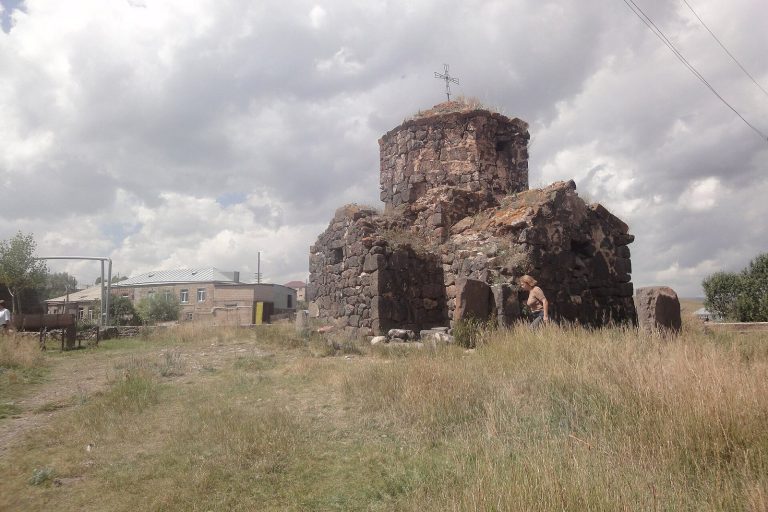
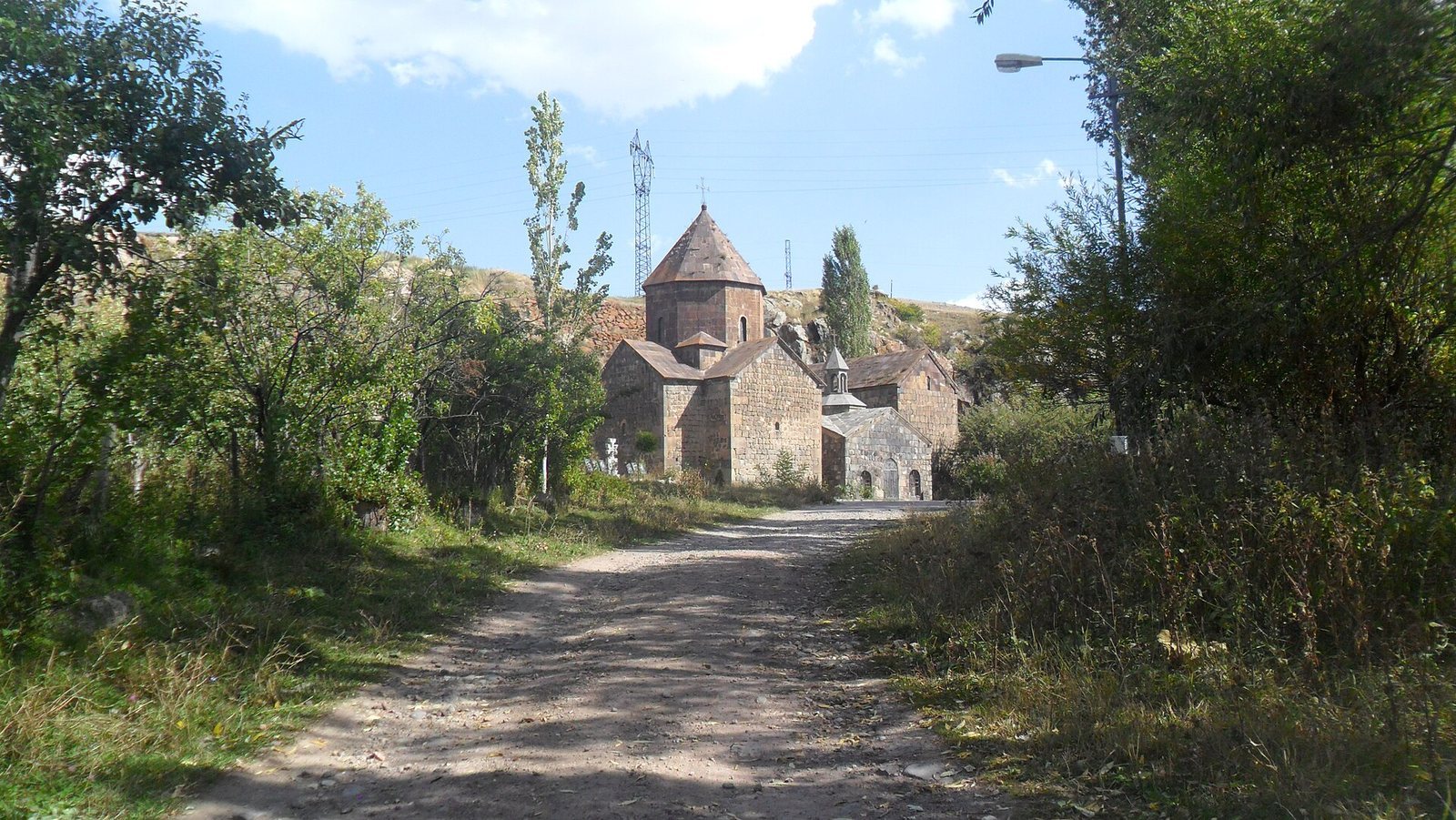
Vanevan Monastery is an Armenian Apostolic monastery at the southern edge of Artsvanist, southeast of Lake Sevan in Armenia. Prince Shapuh Bagratuni founded it in 903 with his sister Mariam, during the rule of the Bagratid dynasty, Armenia’s medieval ruling family. Shapuh was a son of King Ashot I and an Armenian sparapet, a high military commander. Mariam was Ashot’s daughter and a princess of Syunik, a historic Armenian region. The monastery belongs to the Armenian Apostolic Church, an ancient Christian church with a distinct Armenian tradition.
The foundation inscription of Sourp Grigor, or Saint Gregory, credits Shapuh and Mariam with building the church in 903. Local nobles endowed the monastery with four surrounding villages and a water mill. In 914, King Smbat I, Shapuh’s brother, was buried there after dying in battle against Arab invaders.
Royal restoration
In the late 10th or early 11th century, King Gagik I restored the monastery, which appears to have fallen into disrepair, and enclosed it with a wall. The medieval Armenian historian Stepanos Orbelian recorded this work.
Abandonment and revival
Campaigns by the Ottoman Empire, a state centered in Anatolia, left the surrounding area largely depopulated during the 16th century. The monks left, and the monastery was abandoned. It was occupied again in the second half of the 19th century and restored between 1871 and 1880. Further restoration followed, and the monastery remains active.
Remains
Layout and setting
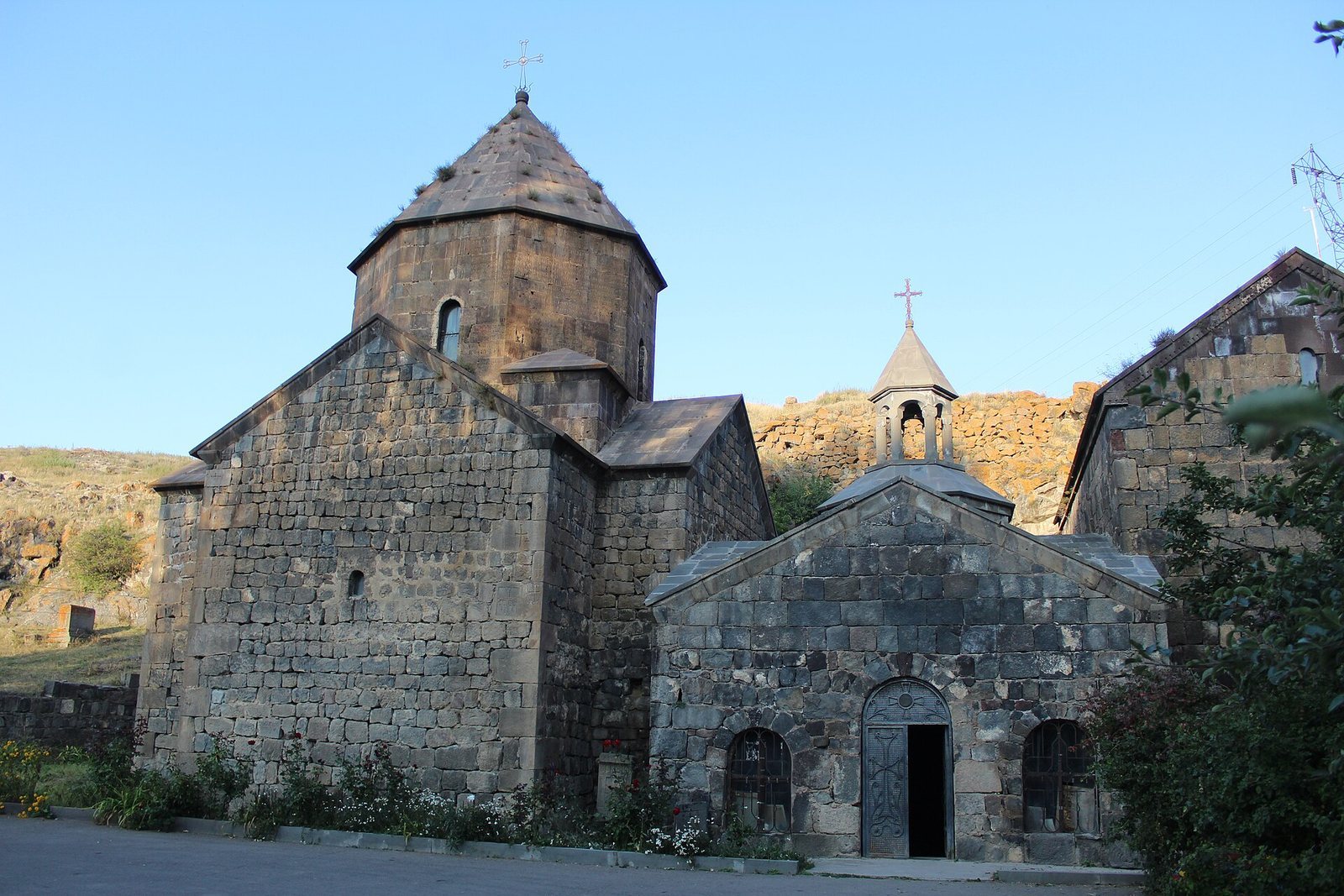
The monastery occupies a level terrace beside a stream that flows into Lake Sevan. Its principal buildings are two churches and a later hall between them, arranged on a north-south line and facing east. Auxiliary buildings lie to the south. A spring and a small cave are situated behind the complex, in the direction of the mountain summit.
Churches
Sourp Grigor
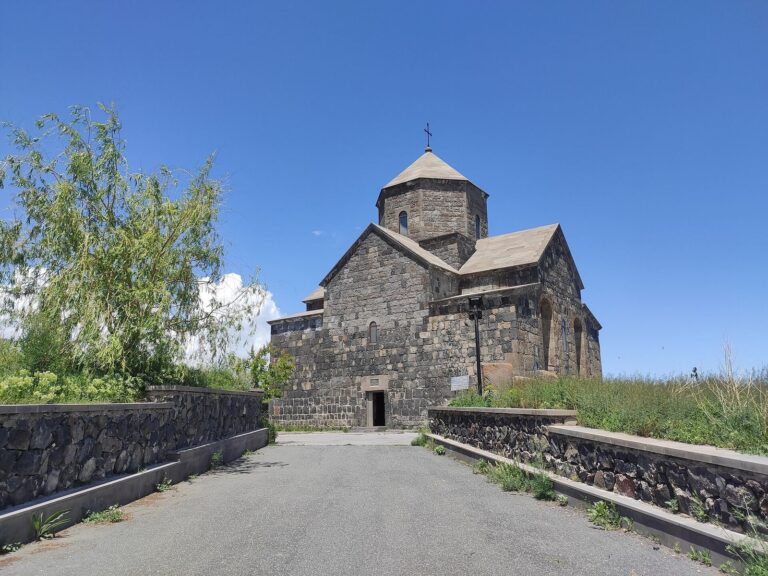
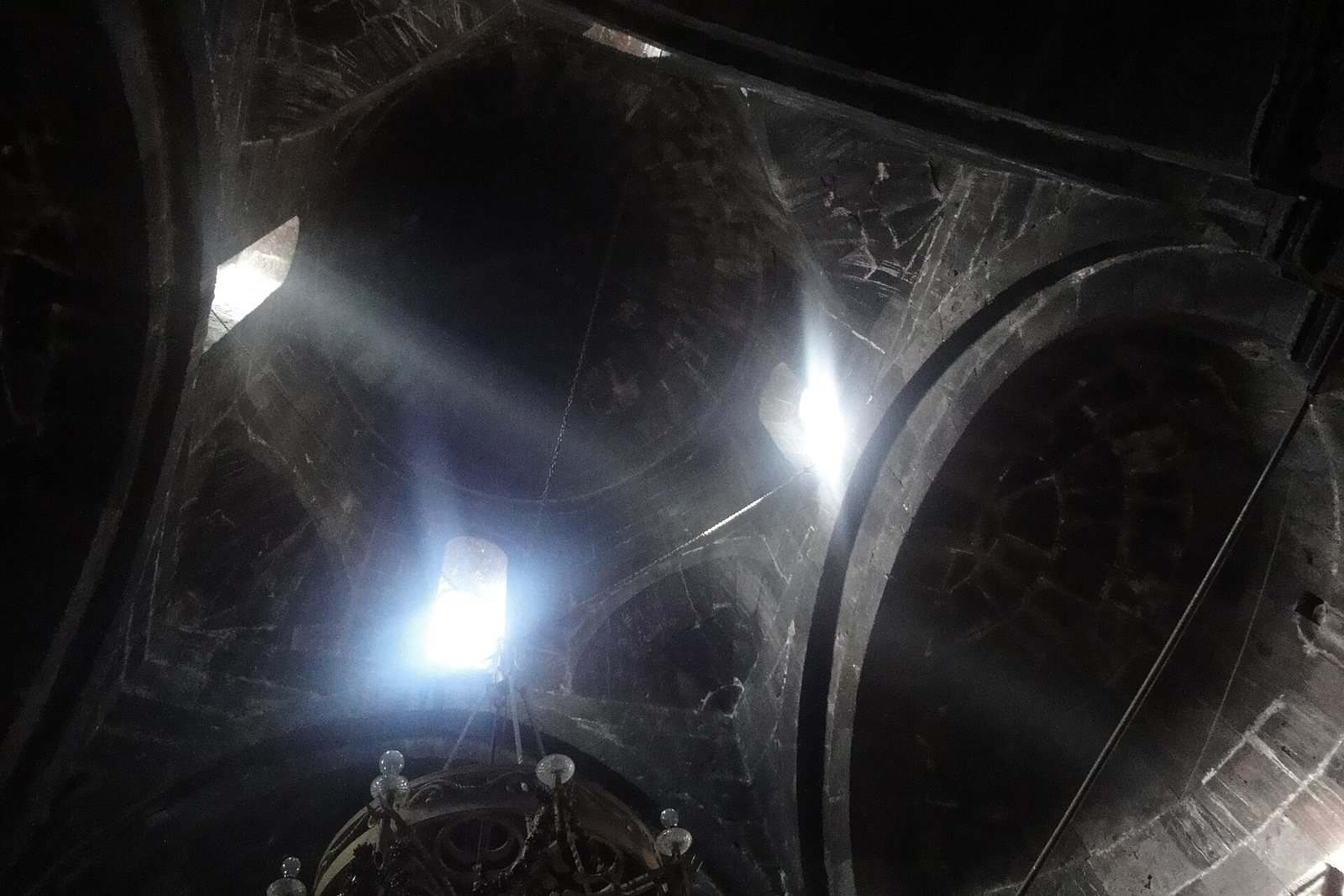
The principal church, Sourp Grigor, has a domed, cross-shaped plan with four semicircular-ended sections and two rooms on its eastern side. Its semi-free layout represents a transition between a cross-shaped form with projecting arms and one contained within the building’s outline. Four central arches widen as they rise; squinches, supports that carry a dome over a differently shaped base, help them support the eight-sided structure beneath the dome.
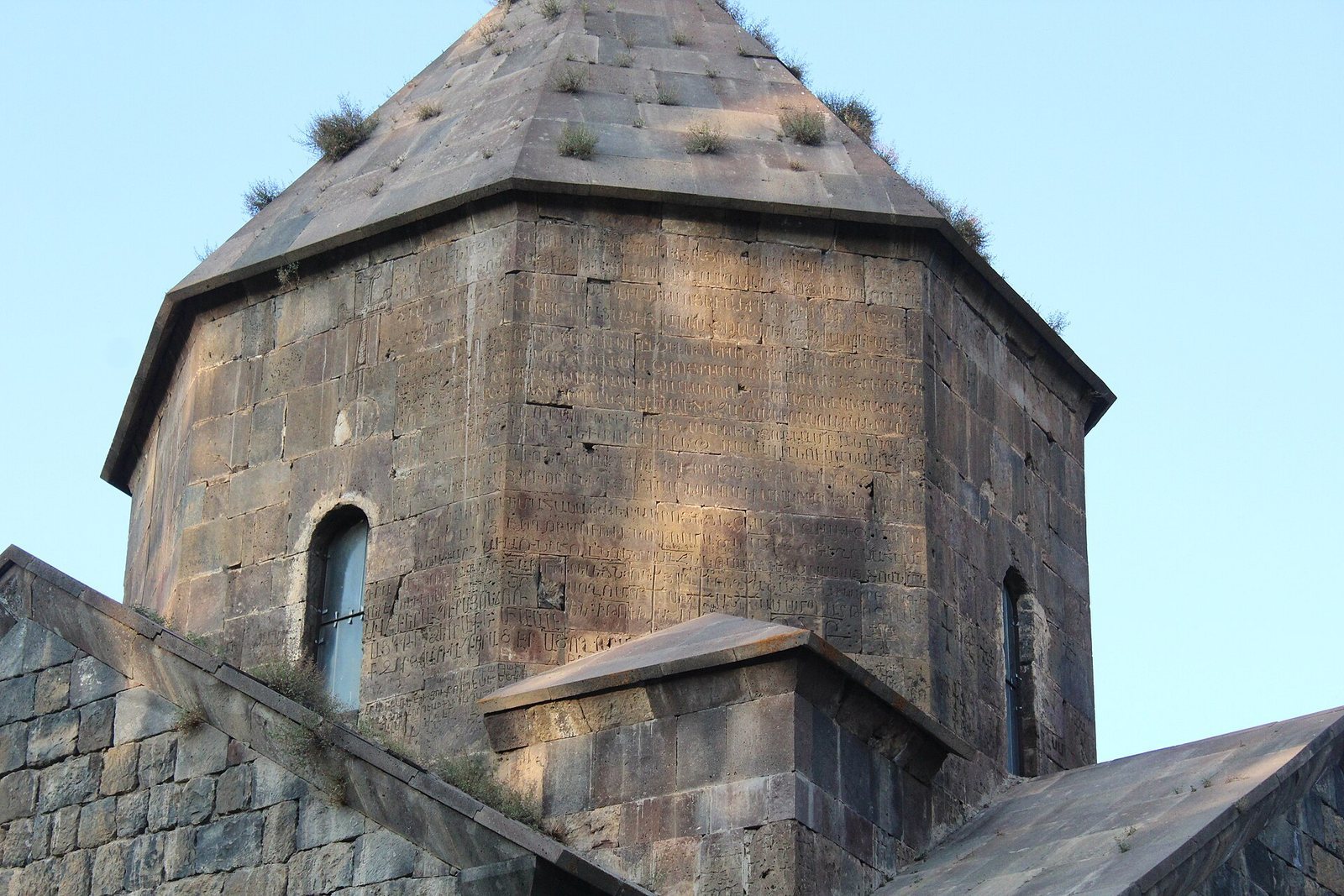
The church’s plain walls are built of basalt. The interior of the eight-sided upper structure is faced with carefully dressed tuff, rock formed from volcanic ash. A paired window opens on the east side. A continuous molded band provides the church’s decoration. The upper structure and pyramidal roof are damaged, while the main dome survives.
Second church
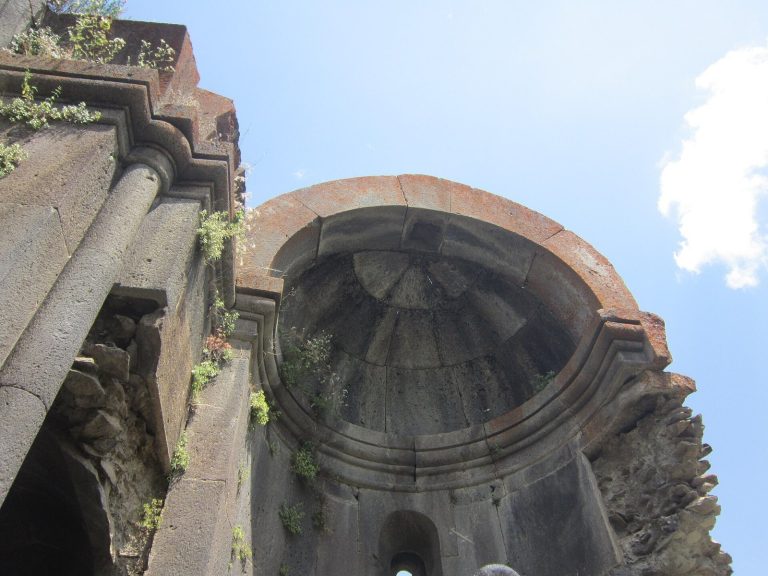
The other church is tall and elongated, with a single interior space. Arches support its barrel vault, a continuous curved ceiling, and two vaulted niches are set into its side walls. Part of the ceiling has collapsed. Its masonry and molded band resemble those of Sourp Grigor, suggesting that the churches may date from the same period. A layer of paint covers its walls, but its date is unknown.
Hall and surrounding remains
Gavit and chambers
A rectangular gavit, an Armenian church hall commonly used for gathering, was added between the churches. Its roof is a corbelled vault, formed by masonry courses that project inward, with a central erdik, a type of skylight. The hall is partly destroyed. Rectangular chambers to its east may have served as monks’ cells or for funerary purposes.
Spring, cave, and carved stones
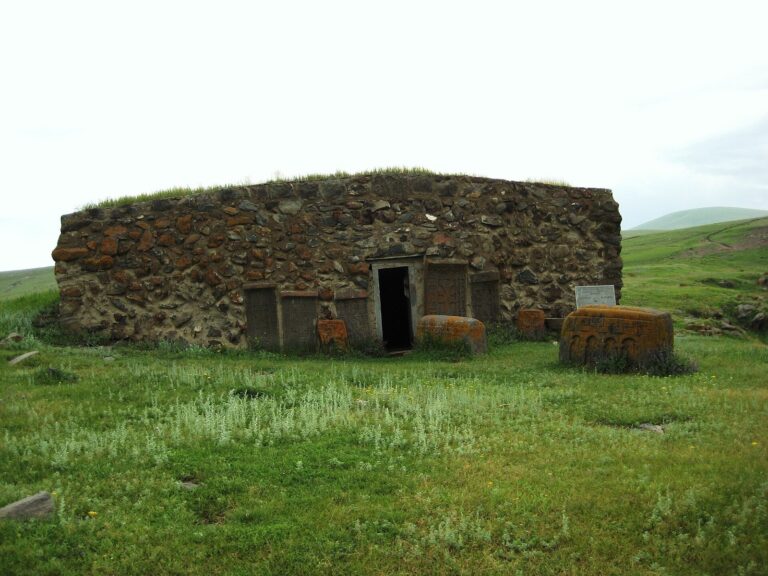
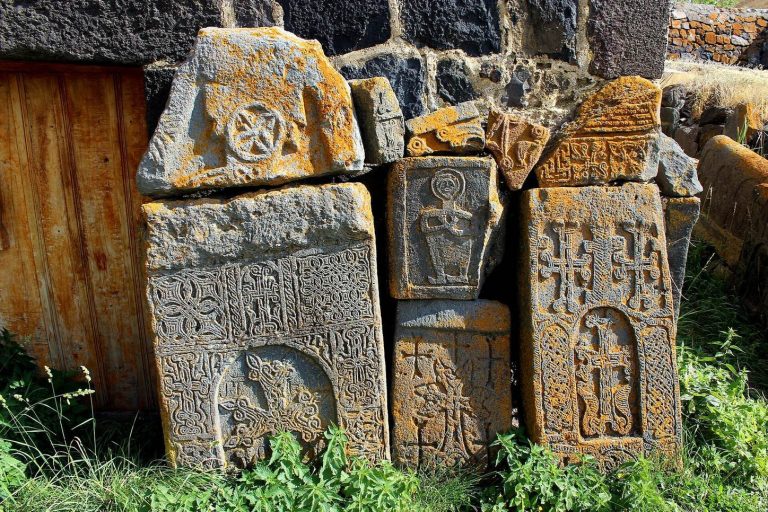
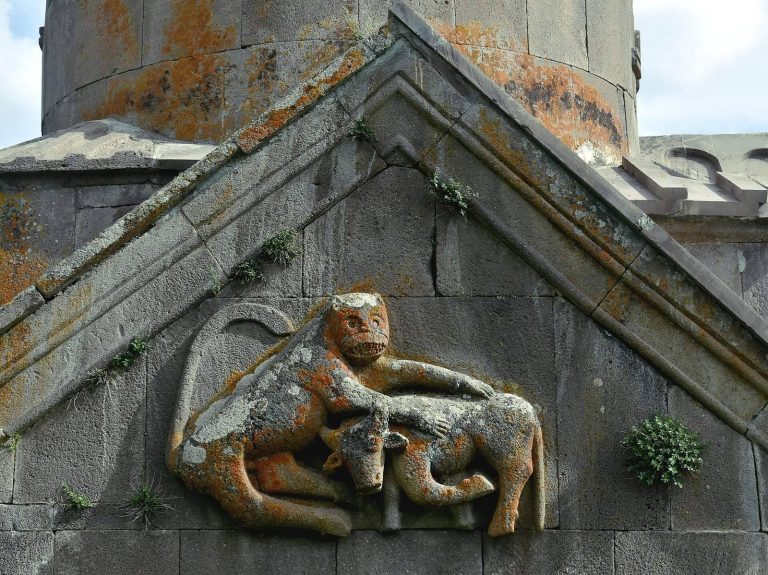
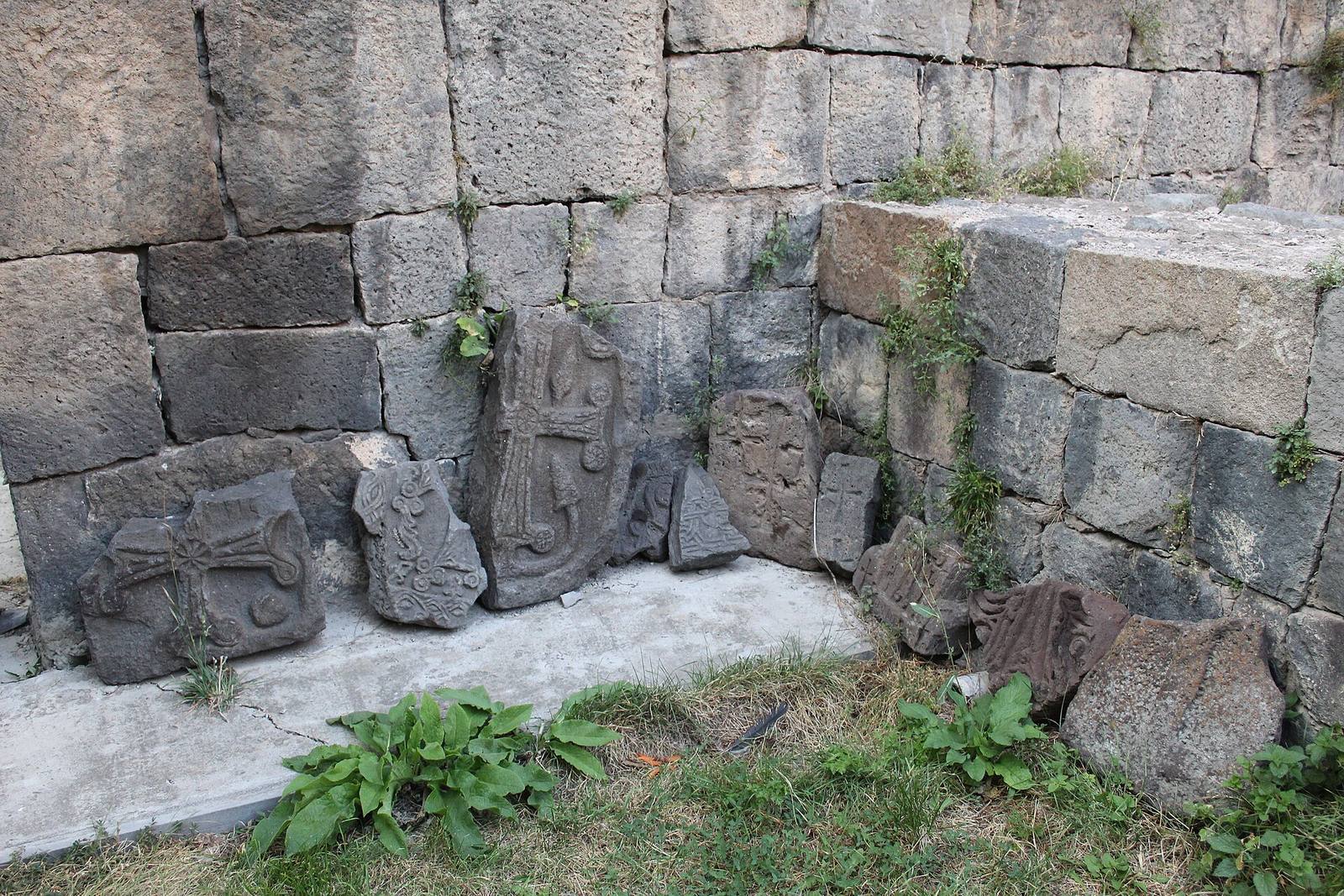
The small cave behind the monastery leads toward the mountain summit and may have served the monks as an escape route. Several khachkars, carved stone cross monuments, stand within and around the complex.
Nearby sites
An abandoned cemetery and the ruins of another church lie nearby. About three kilometres south are Kolataki Surb Astvatsatsin, or Holy Mother of God, a church dating to the late ninth or early tenth century, and Hnevank Monastery, built in the 10th century. Bruti Berd fortress is also nearby; its construction uses very large stones.