Church of St Mary, Addington: An Anglican Parish Church
Site at a Glance
- Rating
- 4.7
- Popularity
- Medium
- Country
- United Kingdom
- Primary era
- Medieval
- Eras represented
- Medieval, Early Modern, Modern
- Civilizations
- British, English
- Site type
- Religious
- Remains
- Church
On this page9 sections
History
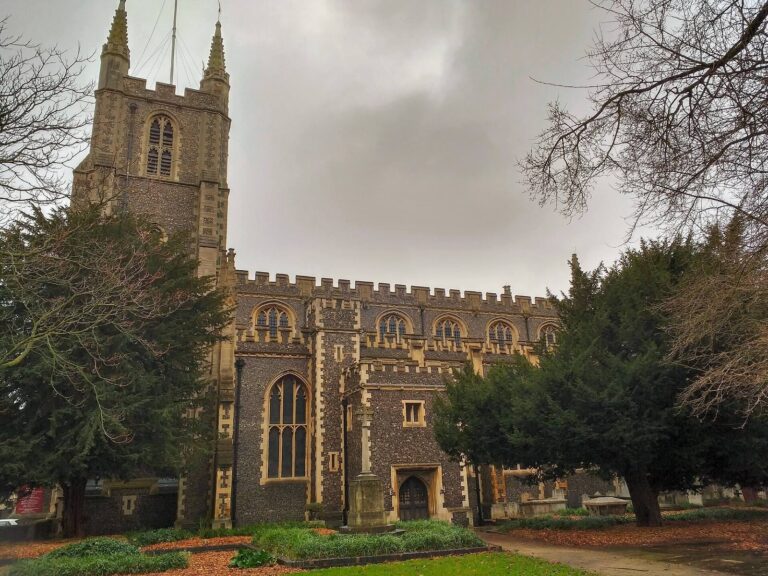
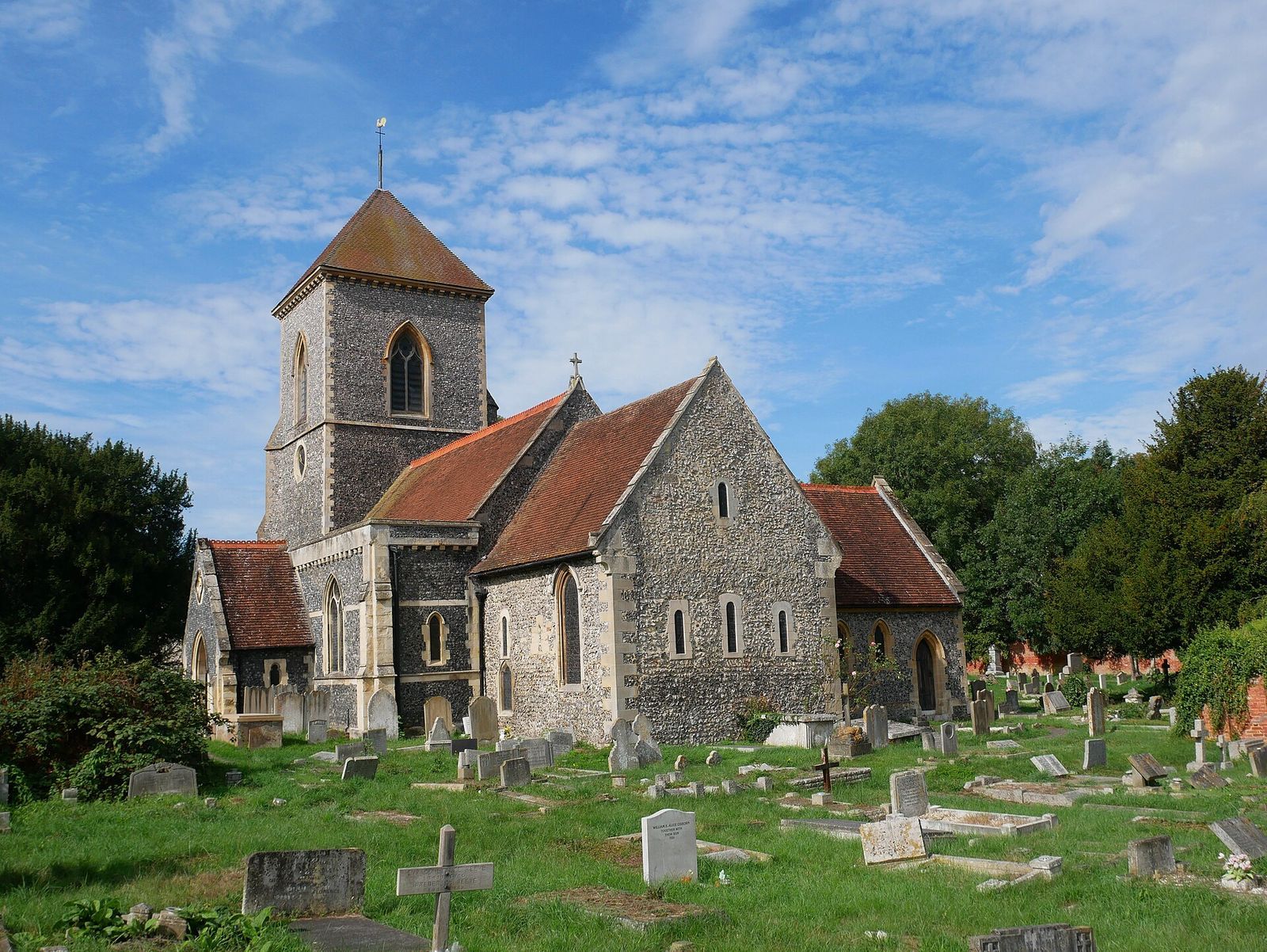
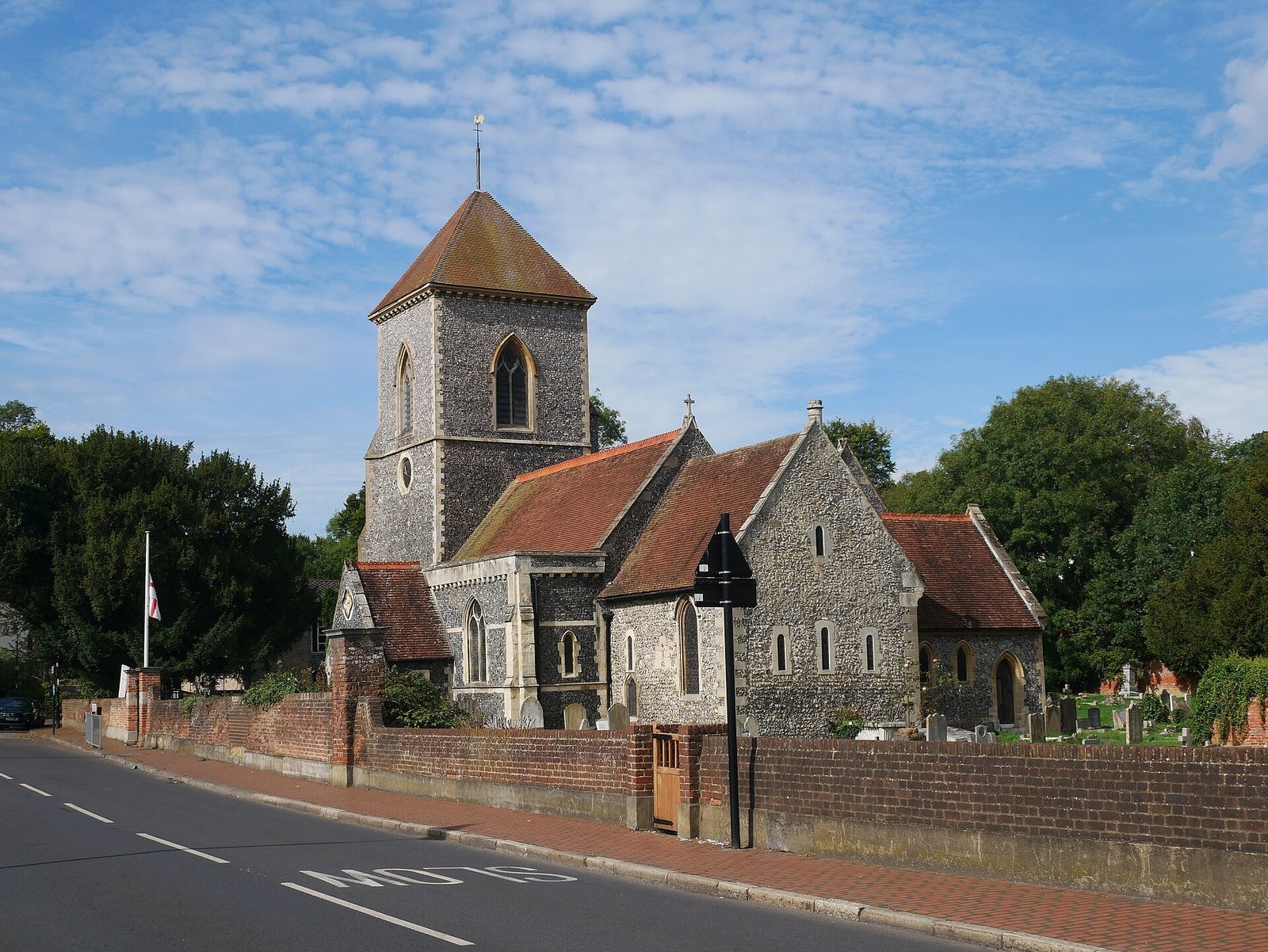
The Church of St Mary, Addington, is an Anglican church in Addington, United Kingdom, on a site where a church has stood since at least 1080. It was once the village’s only church and served a wider parish that included Shirley.
The parish belonged to the Diocese of Canterbury until 1984, when it became part of the Diocese of Southwark. The church follows the Modern Catholic tradition within the Church of England, an Anglican approach that incorporates forms of worship associated with historic Catholic practice.
The church has close associations with nineteenth-century Archbishops of Canterbury, the Church of England’s senior episcopal office, who lived at nearby Addington Palace. Five of the six who spent time there are buried at St Mary’s. Charles Manners-Sutton, who died in 1828, lies in a vault beneath the vestry; William Howley, who died in 1848, is buried in the chancel. John Bird Sumner, who died in 1862, Charles Longley, who died in 1868, and Archibald Campbell Tait, who died in 1882, were buried in the churchyard.
Other people buried at the church include a Lord Mayor of the City of London, a civic head of the City of London Corporation, and members of the Leigh family, which held the manor’s customary rights and was entitled to bear arms. Henry Selfe (1810–1870), a member of the Canterbury Association, an organization that promoted English settlement in Canterbury, New Zealand, is also buried there. The churchyard contains Commonwealth war graves for thirteen service personnel: four who died in the First World War and nine in the Second World War. The Commonwealth War Graves Commission has fourteen entries because J. Collier is identified as another name for J. Rostron.
St Mary’s became a Grade I listed building on 29 January 1951. Grade I is England’s highest category of listed-building protection, reserved for buildings of exceptional interest.
Remains
Church fabric
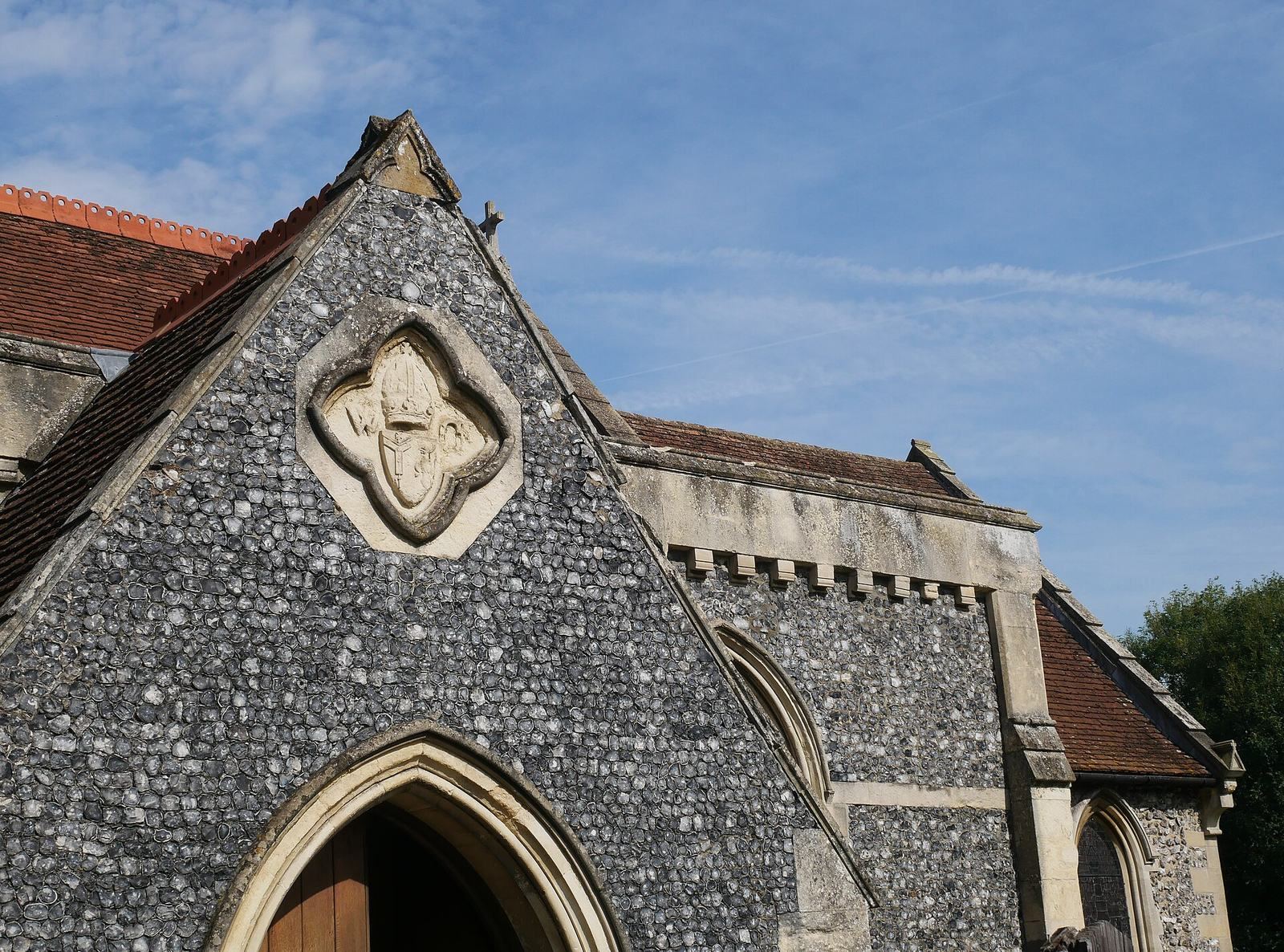
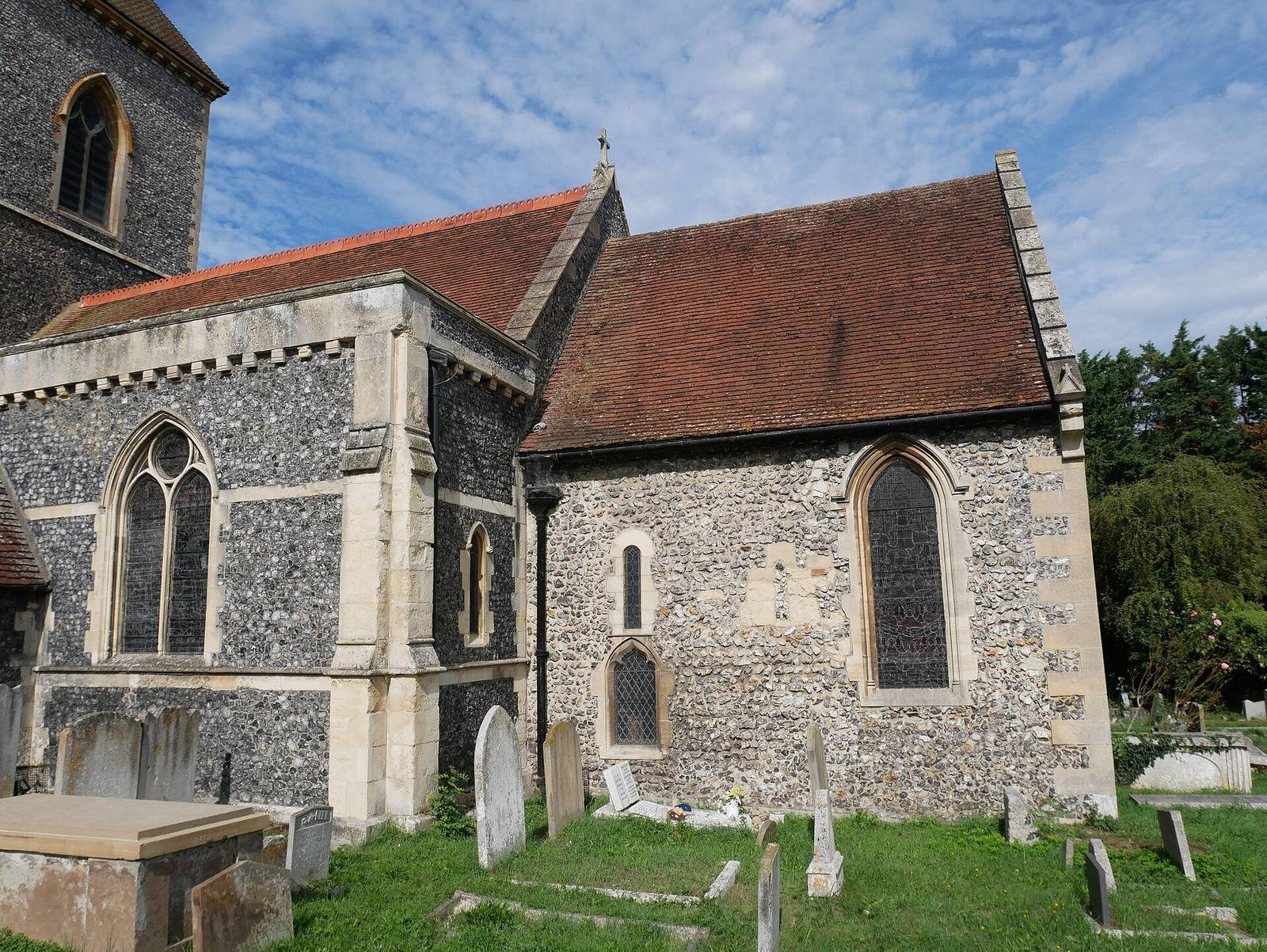
The surviving church fabric includes an early chancel and windows, a narrow south aisle, and a bell tower. Memorial features are found within the church and in its churchyard.
Chancel and windows
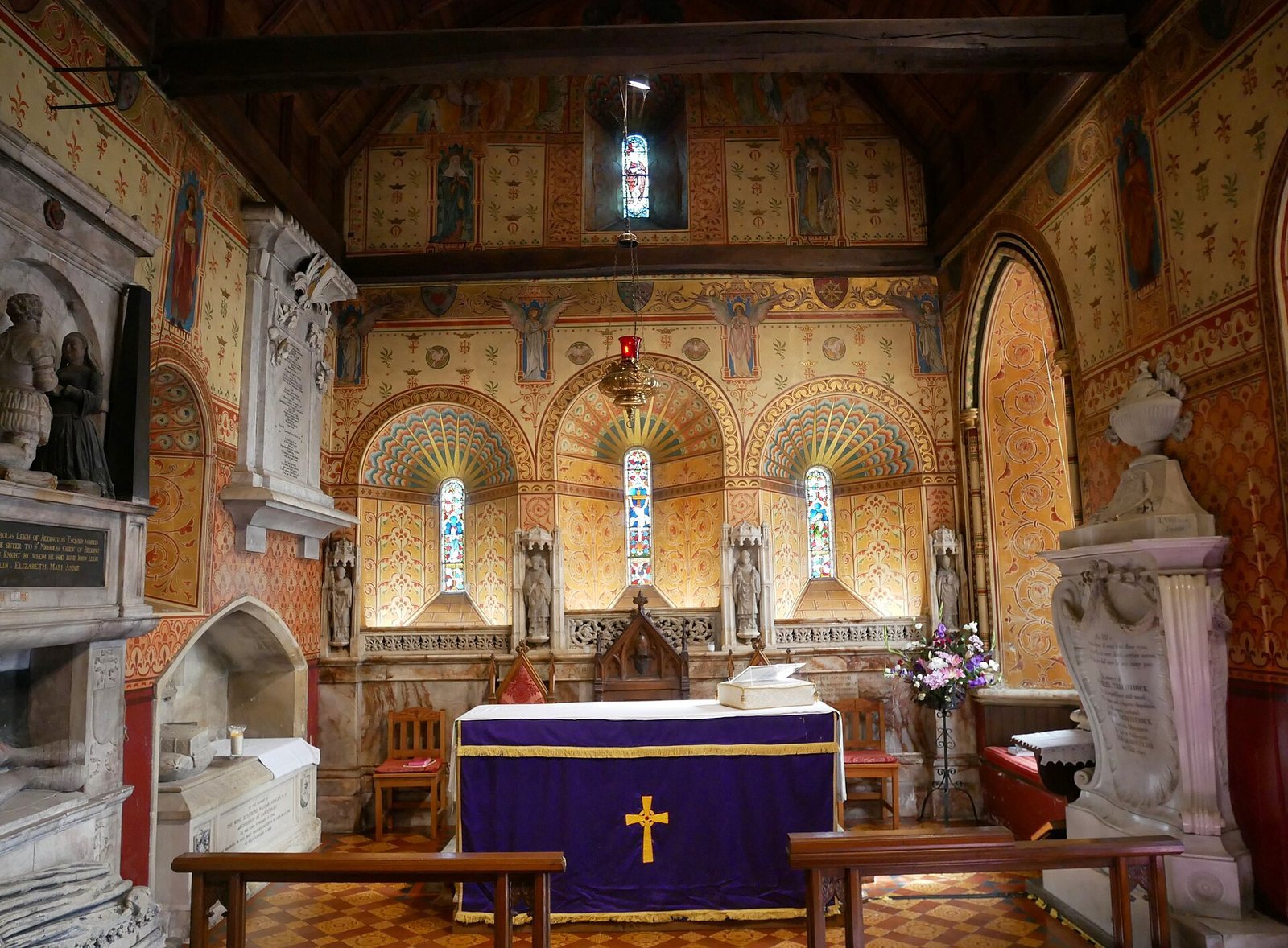
The chancel, the area around the altar, and the windows date from the eleventh century. In 1898 the chancel received rich decoration in memory of Archbishop Edward White Benson.
South aisle
The narrow south aisle was added in the early thirteenth century. It once had a thatched roof, which accounts for its lower roofline.
Bell tower
The tower took its present form in 1876. Its belfry, the part of a tower that houses bells, contains six bells. The oldest probably dates to about 1380, while two others are from the seventeenth century. The bells were restored in 1957.
Memorials
Archbishops’ memorial
A memorial to the Archbishops of Canterbury stands in the churchyard.
Home Guard window
A stained-glass double window, with a small circular window above it, commemorates the wartime service of the 59th (Addington) Battalion of the Home Guard, a British civilian defence force during the Second World War. The circular window bears the Paschal Lamb, a Christian symbol of Christ as the sacrificial lamb, alongside the Queen’s Royal Regiment (West Surrey) emblem and its motto, Pristinae Virtutis Memor. An inscription at the top of the double window refers to Nehemiah 4:18, describing builders working with their swords at hand. The dedication identifies the window as a memorial to the battalion’s service to King and Country and gives 1952 as its date of erection.