Buridava: A Geto-Dacian Capital and Roman Settlement in Romania
Site at a Glance
- Rating
- 3
- Popularity
- Very Low
- Country
- Romania
- Primary era
- Classical
- Eras represented
- Classical
- Civilizations
- Roman
- Site type
- Settlement
- Remains
- Town
On this page8 sections
History
Buridava was a Geto-Dacian settlement and later a Roman civilian and military center in present-day Romania, with its Dacian settlement at Cosota near Ocnele Mari and the later Roman settlement at Stolniceni. The Dacian site was the capital and principal economic center of the Buri, a Geto-Dacian people.
Dacian center
The name Buridava is interpreted as meaning “fortress” or “city of the Buri.” The ancient Greek geographer Ptolemy described it as the home of the Buridavensioi. Along with the fortresses at Grădiștea and Tetoiu, it formed part of a defensive system on the southeastern approaches to Sarmizegetusa, the Dacian royal capital. Buridava may also have helped protect valuable salt deposits nearby.
Roman settlement and military role
After Rome conquered Dacia, the Dacians were displaced from their original settlement and a later Roman settlement and fort developed at Stolniceni, about five kilometres away. Buridava lay first in Dacia and later in Dacia Apulensis, an administrative subdivision of the Roman province. The Roman center stood roughly halfway along a road between Pons Aluti, at present-day Ioneștii Govorii, and Castra Traiana, at Sîmbotin.
During the Dacian Wars, the campaigns through which Emperor Trajan conquered Dacia, a detachment of Cohors I Hispanorum veterana, a smaller auxiliary military unit, was stationed at Buridava. The settlement also served as a base for preparations for Trajan’s second campaign in 105. A substantial stone fort was probably built during the reign of Hadrian. Units associated with the site included Cohors I milliaria Brittonum, Cohors II Flavia Bessorum, and Cohors IX Batavorum. Stamps on bricks and tiles also identify the legions I Italica, V Macedonica, and XI Claudia. A legion was a major formation in the Roman army.
After Roman rule and rediscovery
Settlement continued after Rome withdrew from Dacia in 271 and lasted until the arrival of the Slavs and Avars. Around 1960, local teacher Gheorghe Moșteanu found pottery fragments while digging in his garden at Cosota. Professor Dumitru Berciu identified them as Dacian and began excavations, which uncovered a cemetery.
Remains
Layout and Roman structures
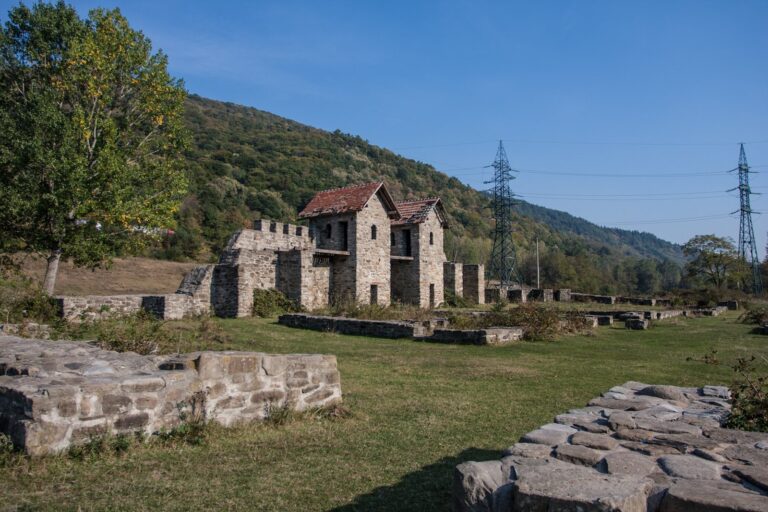
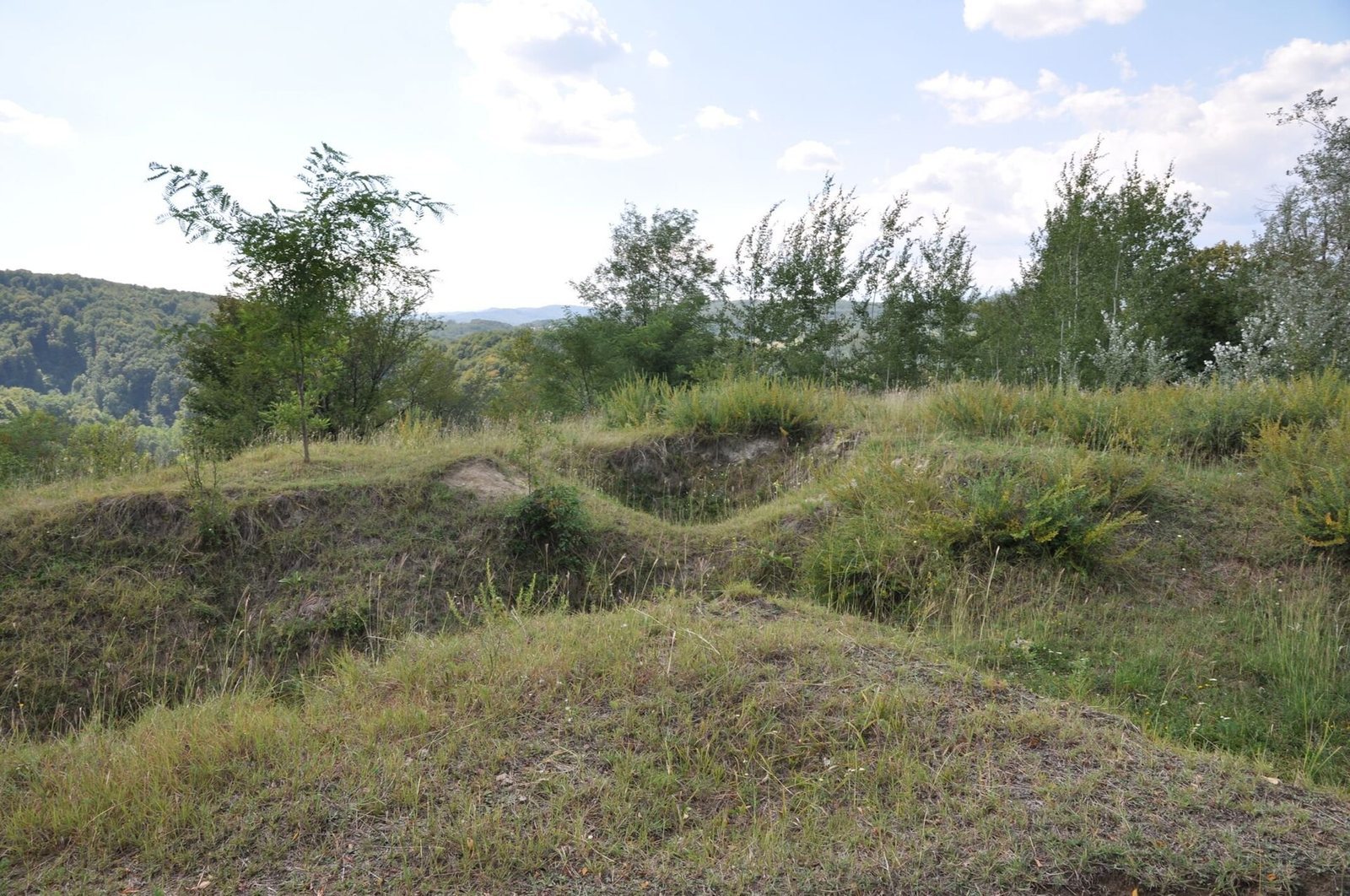
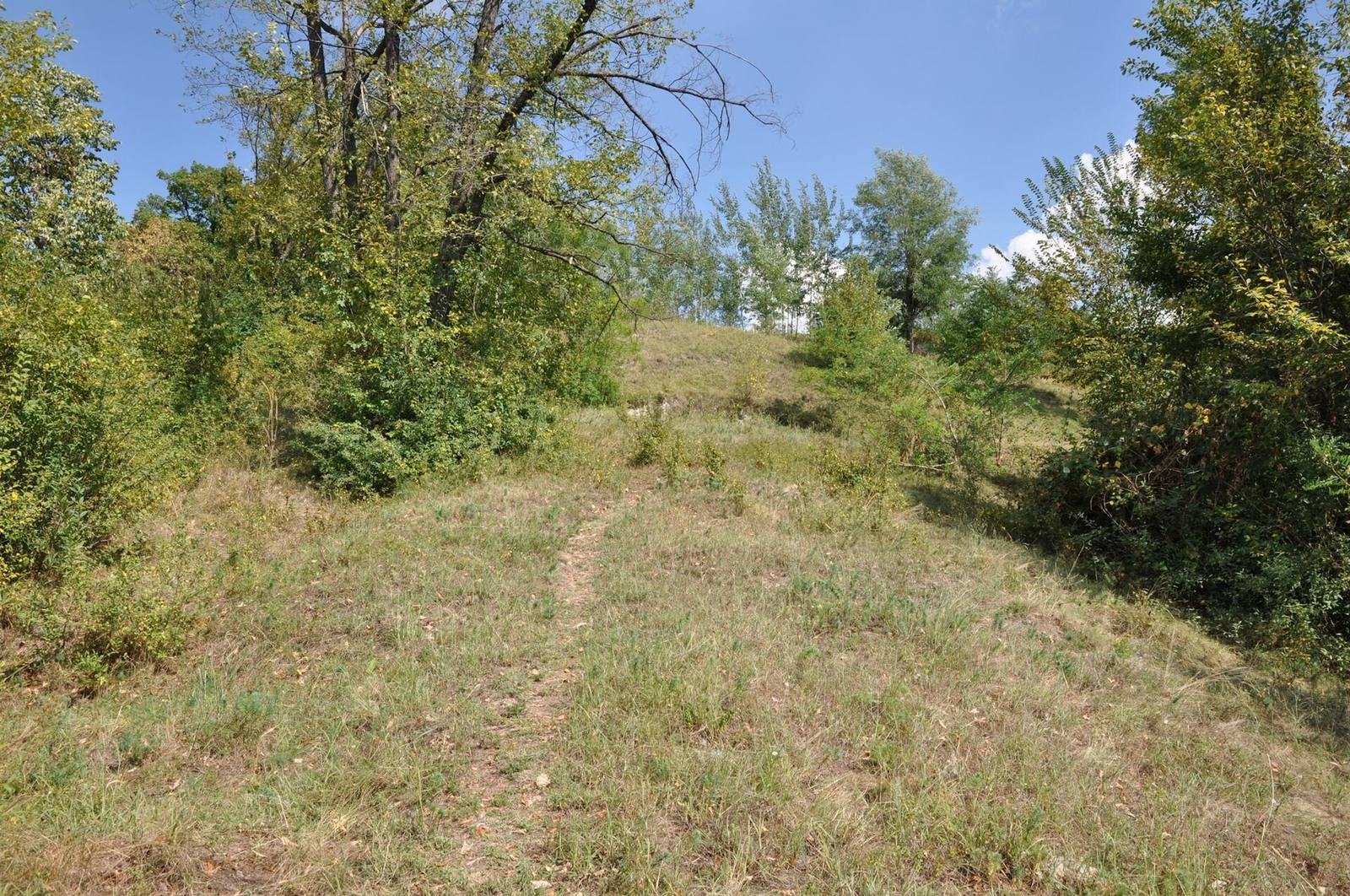
The archaeological complex lies in the area of the Olt River, known in antiquity as the Aluta, at an elevation of about 350 metres; its remains are in ruins. The Roman town extended for roughly one kilometre, with a width of about 300 metres. Its stone fort, approximately 50 by 60 metres, stood south of the civilian settlement. Roman buildings used stone from the Govora-Buleta quarries, and their floors were paved with fired clay. A large bath complex has also been identified, although it has not been fully excavated.
Dacian cemetery and inscriptions
Finds from the Dacian cemetery include cups, plates, and other pottery vessels, as well as iron bands recovered from a grave that may have been barrel hoops. Pottery fragments from the Dacian settlement bear the inscriptions “REB,” “MARK,” and “BUR.” The last has been interpreted as a reference to the settlement’s inhabitants, the Buridavenses. A clay vessel carries the inscription “BASILEO THIAMARCOS EPOIEI,” which identifies the local king Thiamarcos and has been associated with the period of Augustus.
Other archaeological finds
Dacian and Roman pottery from the first through fourth centuries reflects occupation under Roman rule. Coins found at the site range in date from the reign of Caligula to that of Justinian I. Fragments of a bronze statue of an emperor have also been identified in an area that remains only partly excavated.