University Church of the Blessed Name of Jesus in Wrocław: A Baroque Jesuit Church
Site at a Glance
- Rating
- 4.8
- Popularity
- High
- Country
- Poland
- Primary era
- Early Modern
- Eras represented
- Early Modern, Modern
- Civilizations
- German, Habsburg, Habsburg Austria, Holy Roman Empire, Kingdom of Bohemia
- Site type
- Religious
- Remains
- Church
On this page10 sections
History
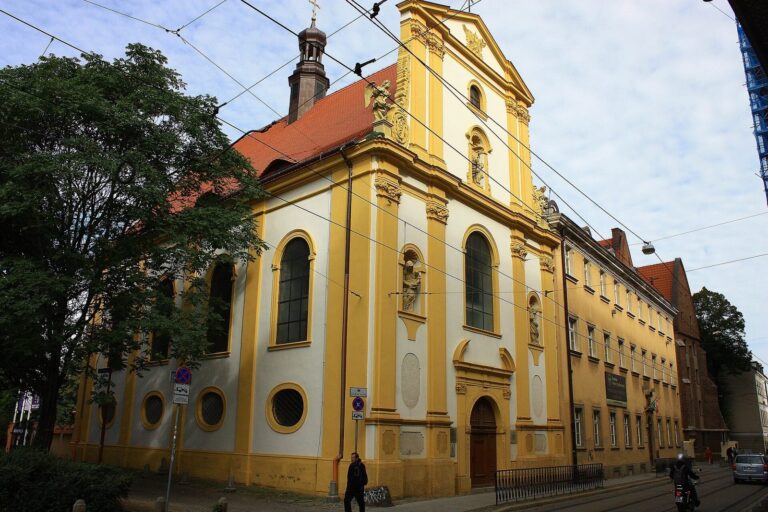
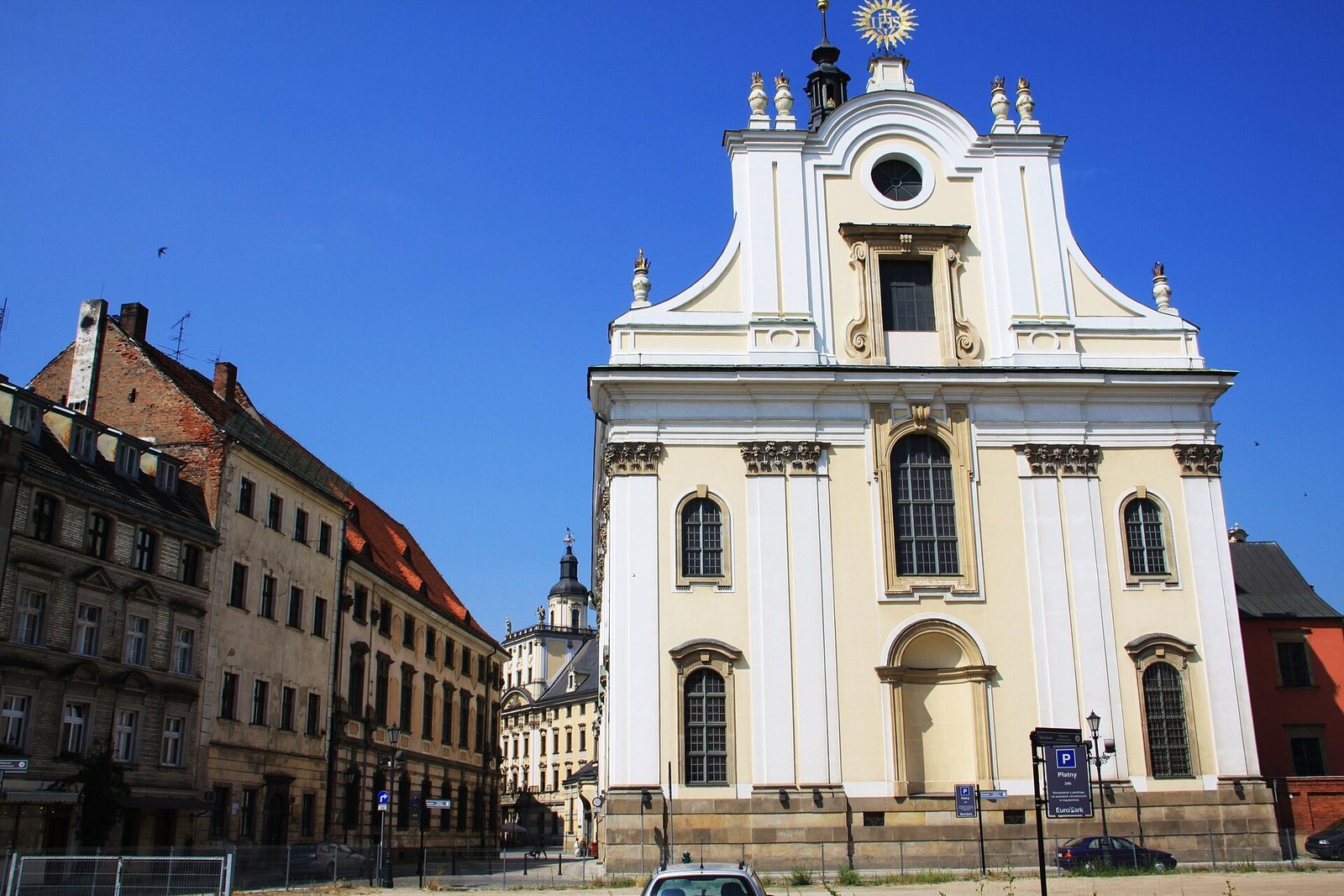
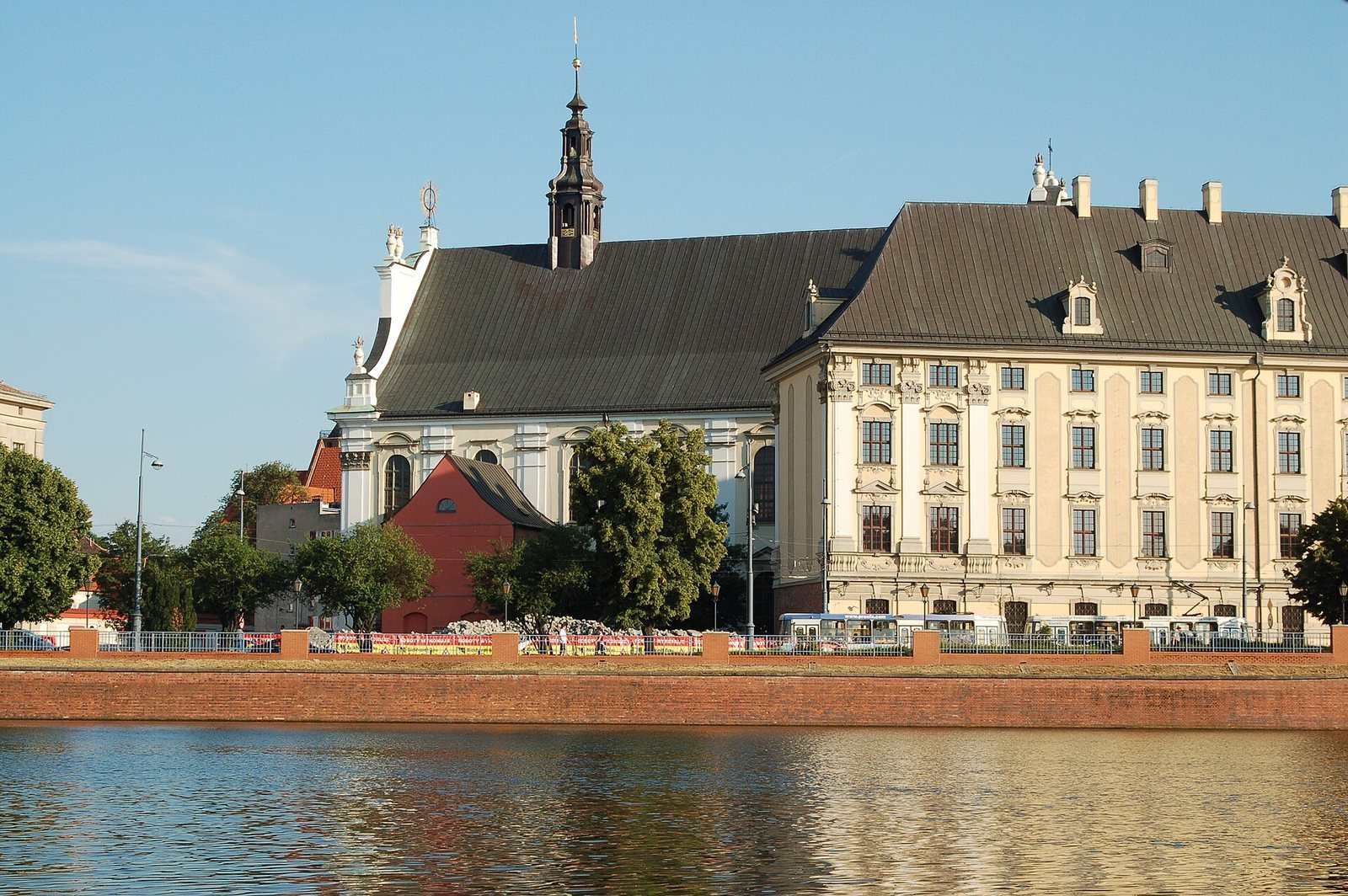
The University Church of the Blessed Name of Jesus in Wrocław is a Roman Catholic Baroque church in Poland, built by the Jesuits, a Catholic religious order, from 1689. It is dedicated to the Most Holy Name of Jesus, whose Catholic liturgical feast falls on 3 January.
Jesuit foundation and decoration
In 1659, Leopold I, a Habsburg ruler and Holy Roman Emperor, summoned the Jesuits to Breslau, now Wrocław, and granted them the site of the former imperial castle for a college and church. Teodor Moretti designed the church, and Matthäus Biener and Johann Georg Knoll directed its construction. After Biener died in 1692, Knoll continued alone. The church was consecrated and opened for worship on 30 July 1698, while work on its west façade carried on until 1700.
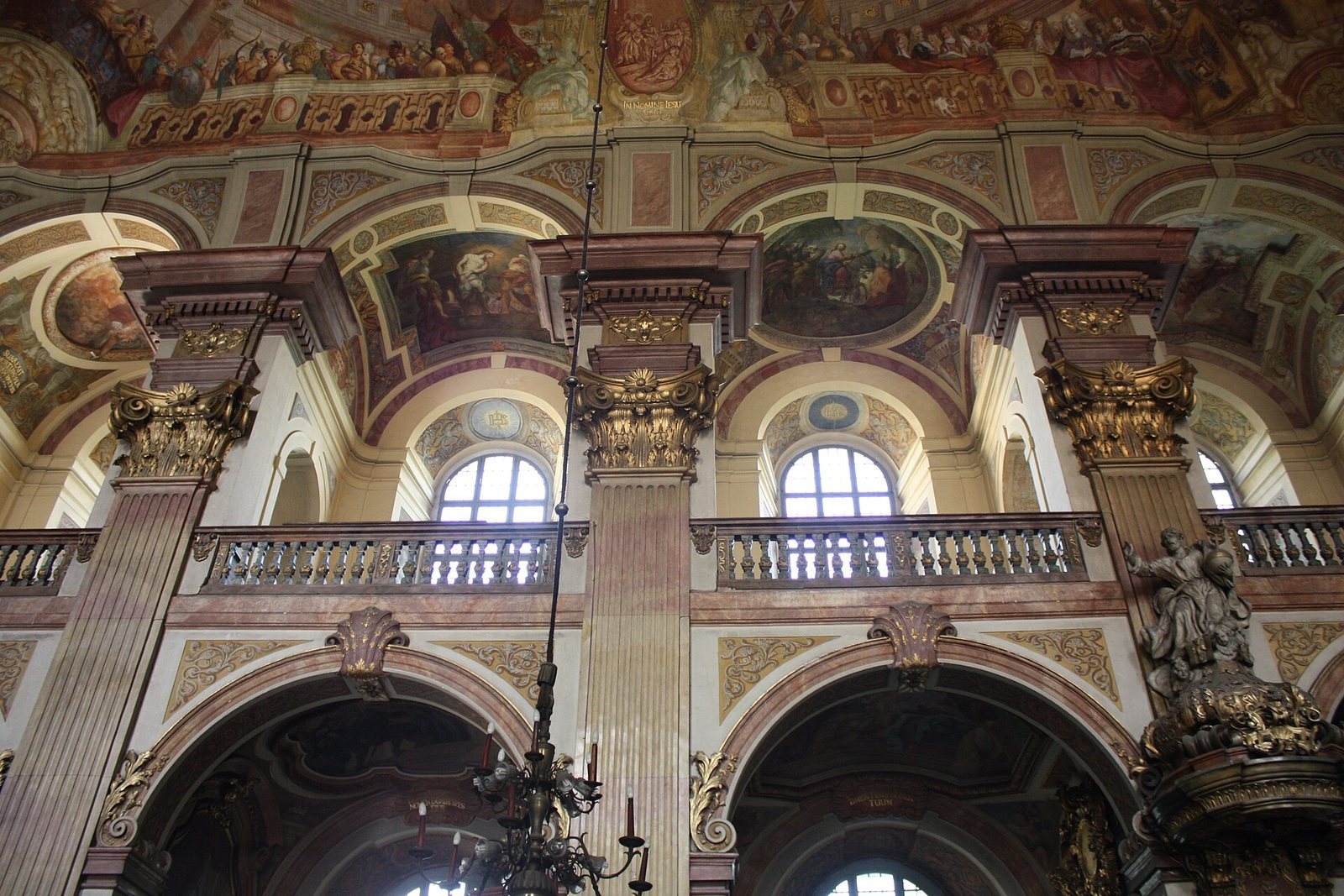
Johann Michael Rottmayr painted a cycle of illusionistic frescoes between 1703 and 1706. From 1722 to 1734, Christoph Tausch directed work on the sculptural interior. The Jesuit college was built nearby between 1728 and 1741; since 1811, its main building has served as the main building of the University of Wrocław.
Later use and change
The church was abandoned several times and suffered relatively limited damage. An explosion at the nearby Powder Tower damaged it in 1748. During the Seven Years’ War, a major mid-eighteenth-century conflict involving European powers and their empires, the building was used to store grain.
In the nineteenth century, particularly from 1879 to 1893, most Baroque altars in the side chapels were remodeled. Some original elements were retained, and new altarpieces were added. A new organ was installed in 1926 within the church’s eighteenth-century organ case.
War damage and university use
In April 1945, the church received some of Wrocław’s most valuable religious artworks from other churches. During the 1945 siege of Breslau, it sustained damage estimated at about 10 percent. After initial work to secure the building following the Second World War, it was assigned to university chaplaincy in September 1946 and became the University Church.
Remains
Plan and retained castle fabric
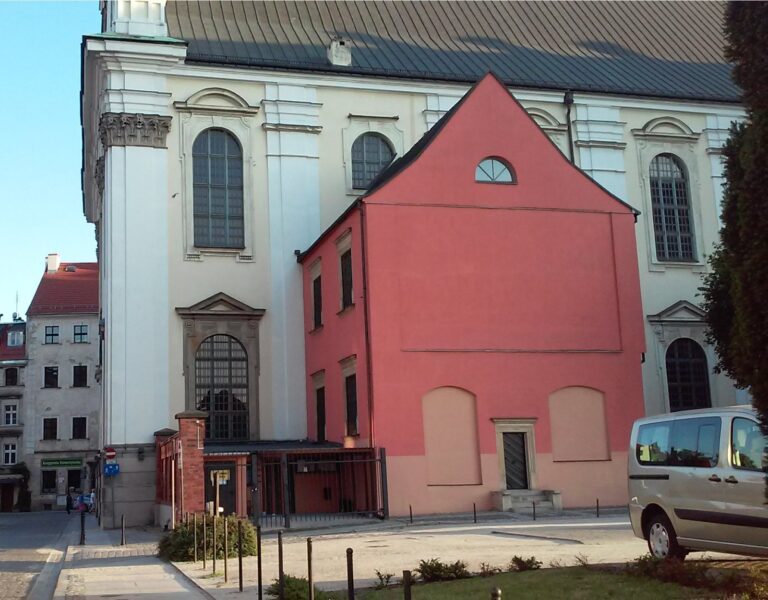
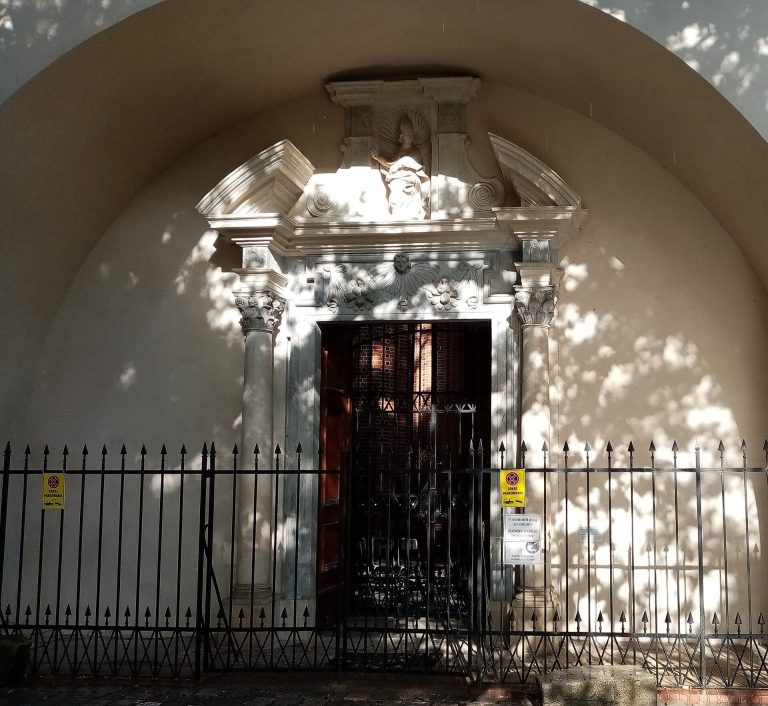
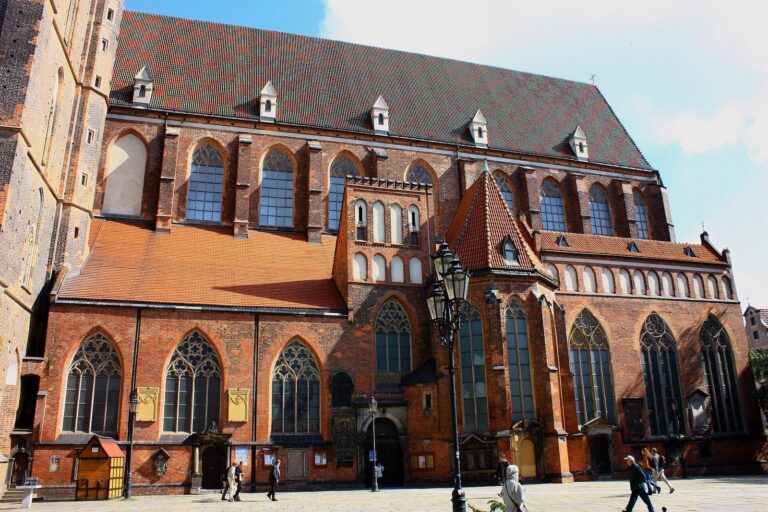
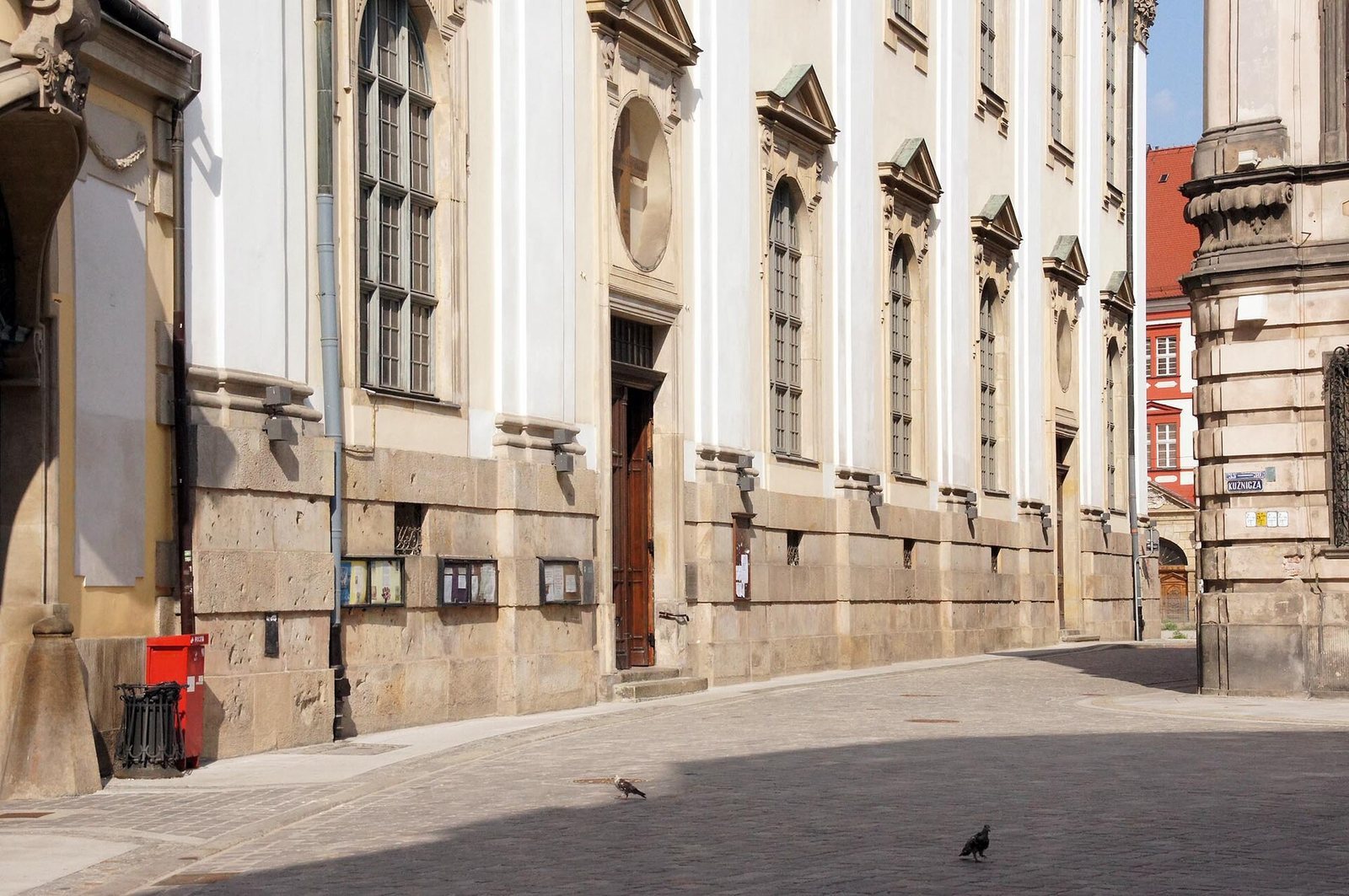
The brick church measures 53.2 metres long, 26.2 metres wide and 23.6 metres high. Its single nave is bordered by two rows of six side chapels, with galleries opening onto the nave above them. The building stands on the former castle’s southern wing. A one-storey Renaissance building from the demolished castle survives as the sacristy, a room where clergy prepare for services and keep liturgical objects; Renaissance window and door portals were also retained. Two bell turrets rise above the church: the smaller, dating to 1700, sits on the eastern gable, while the larger dates to 1727.
Painted decoration
Rottmayr’s illusionistic frescoes, wall paintings that use painted effects to suggest depth, cover the walls and vaulted ceilings, including those of the main nave. Their subjects include saints, contemporary Austrian emperors and the Jesuit order. A self-portrait of Rottmayr appears among the paintings in the nave.
Altars and chapels
Tausch’s monumental high altar was completed in 1726, and its altarpiece, painted by him in 1725, depicts the Circumcision of Jesus. He also made an altar for the Virgin Mary and designed a Passion altar in the Chapel of Our Lady of Sorrows in 1725. The Chapel of Saint Francis Xavier contains a plaster altar made to imitate marble and two alabaster reliefs showing episodes from the saint’s life. Only a few side-chapel altars retain paintings from the seventeenth or eighteenth century. A plaster copy of Michelangelo’s Pietà, depicting Mary holding the dead Jesus, was also made for the church.
Sculpture and furnishings
The interior’s decoration includes molded plasterwork, flat wall supports and projecting cornices, as well as sculptures, benches, confessionals, candelabra and candlesticks. Some benches and other furnishings survive only in part. The pulpit combines marble and wood, and its sculptures date to 1727 and 1728. Sculptures on the pulpit and some saints’ figures at the entrance to the presbytery, the area around the altar used by clergy, are attributed to Franz Joseph Mangoldt. Other sculptures are attributed to Johann Albrecht Siegwitz, who also made two richly decorated confessionals and statues of Saint Ignatius of Loyola and Saint Francis Xavier. The church interior also includes a figure of a Moorish porter.
Organ
The organ installed in 1926 was made by the workshop of Wilhelm Sauer in Frankfurt an der Oder and fitted within the original eighteenth-century case. It is used for both liturgy and concerts.