Church of Saints Cosmas and Damian, Stade: A Lutheran Church in Brick Gothic Style
Site at a Glance
- Rating
- 4.5
- Popularity
- Medium
- Country
- Germany
- Primary era
- Medieval
- Eras represented
- Medieval, Early Modern, Modern
- Civilizations
- German, Holy Roman Empire, Swedish
- Site type
- Religious
- Remains
- Church
On this page13 sections
History
Medieval origins and construction
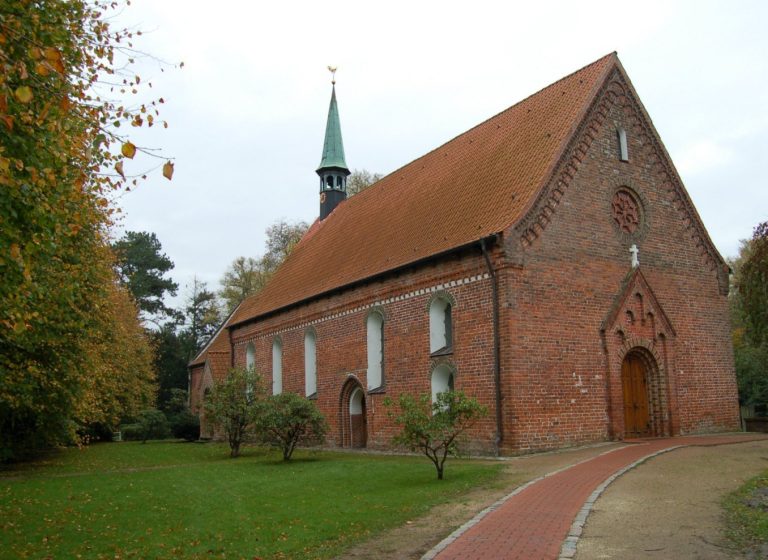
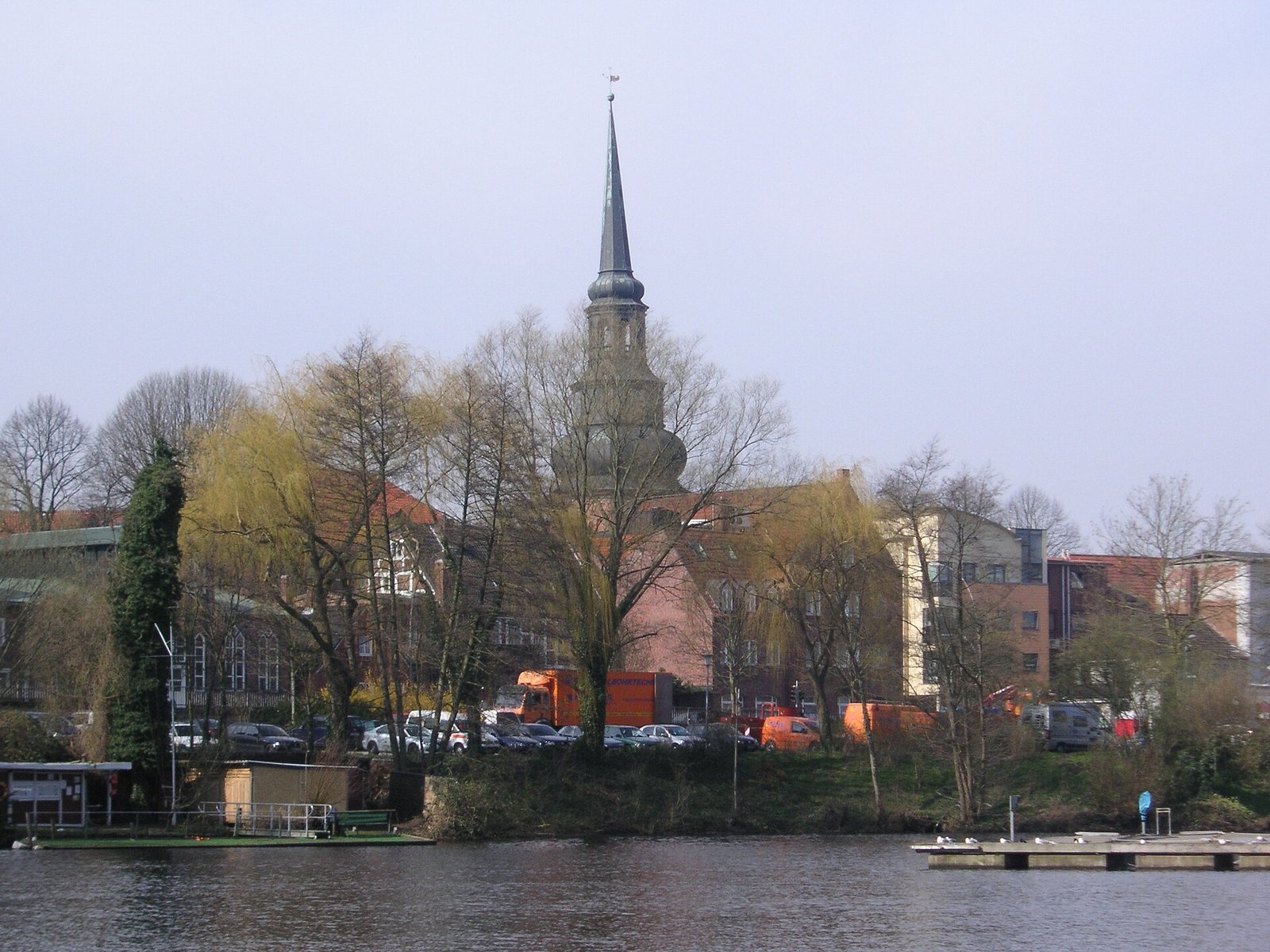
The Church of Saints Cosmas and Damian is a brick church in Stade, Germany, whose present form developed through construction and rebuilding from the 13th to the 17th century in Brick Gothic, a northern European Gothic style characterized by extensive use of brick.
A chapel belonging to the counts of Stade was in existence in the 1130s under the authority of the archbishop of Bremen. The church’s dedication to Cosmas and Damian, early Christian saints traditionally associated with medicine, probably dates to this period. Bremen Cathedral held important relics of the saints and could distribute portions of them.
The church took shape through successive building and rebuilding phases. In the 15th century, a three-aisled choir replaced the original eastern parts.
Reformation and later history
The church remained Catholic until 1529 and is now Lutheran, part of the Protestant tradition that developed during the Reformation. It is one of two Lutheran churches in central Stade. Together with St. Wilhadi and St. Nicolai in Stade-Bützfleth, it belongs to the Evangelical Lutheran City Parish of Stade. It also serves as the principal church of the Stade church district, within the Stade regional church district of the Evangelical Lutheran Church of Hanover.
A city fire in 1659 destroyed the tower’s spire, the roof structures, and nearly all the interior furnishings; a chandelier survived. Rebuilding continued until 1684, when a new eight-sided tower cap in the Baroque style, an elaborate European style of the 17th and early 18th centuries, had been installed. Andreas Henne is associated with the work after the fire.
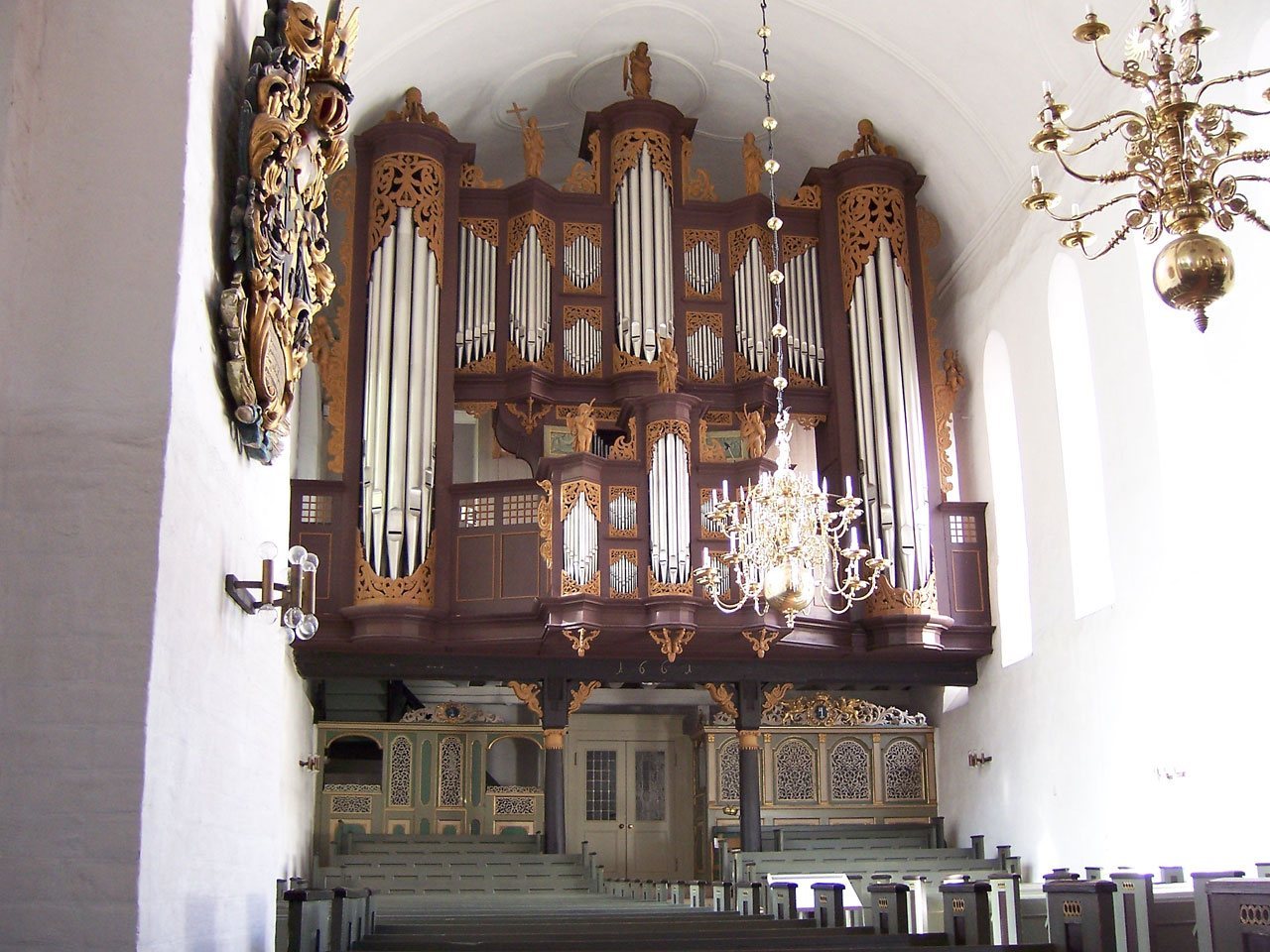
North German organ builders Berendt Hus and his nephew Arp Schnitger built the organ between 1668 and 1675. Schnitger replaced four of Hus’s stops in 1688; each stop controls a set of pipes and helps shape the instrument’s tone. Otto Diedrich Richborn altered the organ in 1727 and 1728, and rebuilding from 1781 affected its original fabric. The organ was reconstructed between 1972 and 1975 with the participation of the Hanoverian regional church’s expert committee. Vincent Lübeck served as organist from 1675 to 1702.
Hermann Benningk of Hamburg made the main bell peal in 1663 to replace bells lost in the fire. The bells remained intact during the First World War. During the Second World War, the second-largest bell was surrendered for melting down for military use. A replacement cast by the Rincker Bell and Art Foundry in Sinn, Hesse, was installed in 1959. Hamburg shipowner and merchant Ernst Jung and his wife, Claere, funded the new bell and a chime cast at the same time.
Remains
Church plan and tower
The surviving brick church has a cross-shaped plan. Its oldest fabric remains in the nave, the main body, and the transepts, the crosswise arms of the building, as well as in the vaulted crossing, the area where the nave and transepts meet. The choir at the eastern end has three aisles. A depiction from around 1550 shows a tower over the crossing with an openwork, onion-shaped cap. The present tower rises 62.45 metres, excluding its weather vane, and ends in an eight-sided Baroque cap.
Interior and furnishings
High altar
Hamburg sculptor and woodcarver Christian Precht made the richly figured Baroque high altar between 1674 and 1677. Its lower section contains a relief of the Last Supper. A crowded Crucifixion scene fills the centre, accompanied by the four Evangelists, the Gospel writers Matthew, Mark, Luke, and John. Above it is a relief of the Entombment, and a figure of the risen Christ crowns the work. The wooden carvings have a white finish that imitates marble or alabaster.
Gertrude altarpiece
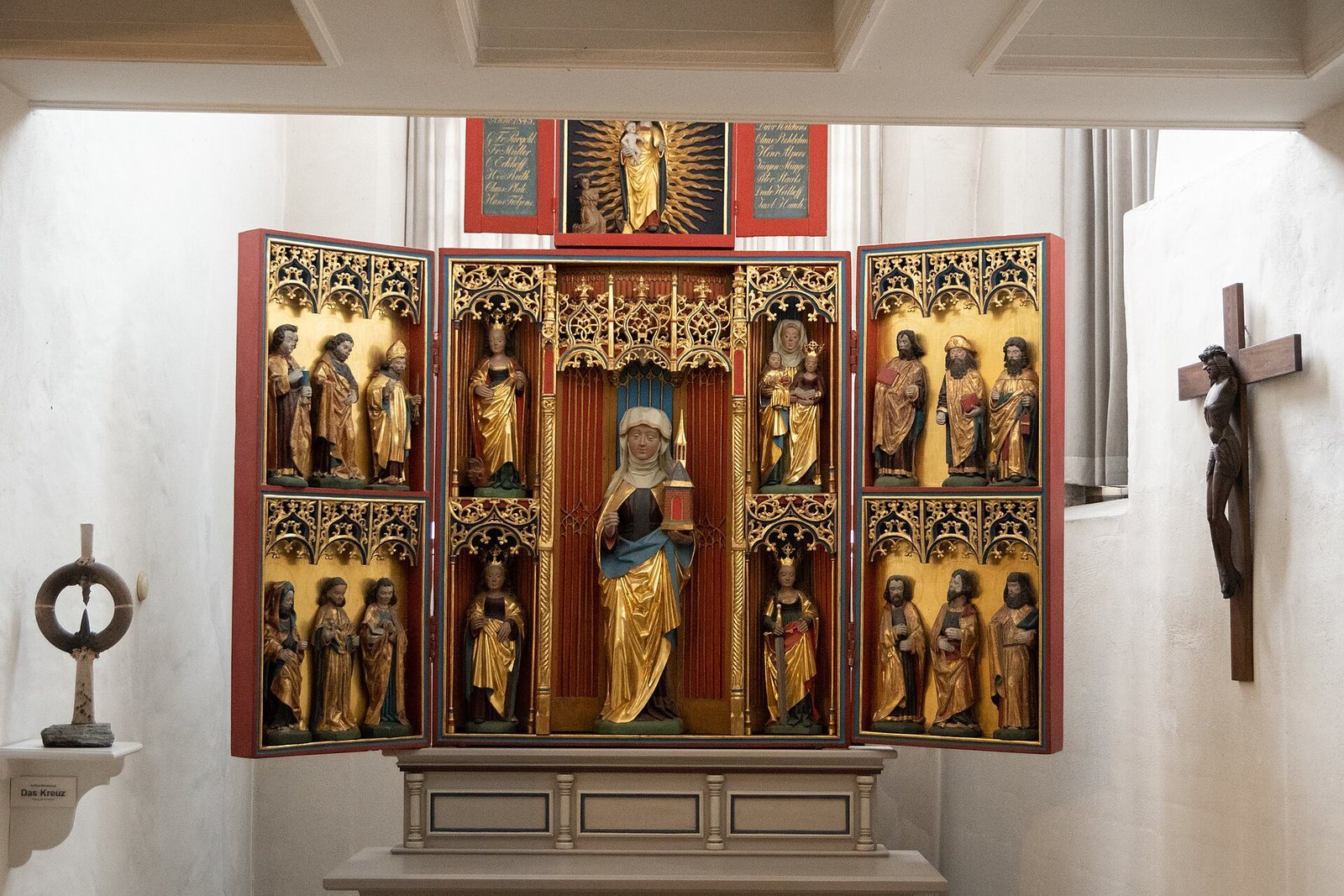
This winged altarpiece, a work with hinged side panels, dates to around 1500. It originally stood in the Gertrude Chapel outside the Ship Gate, a chapel that has since been demolished. In the centre, Saint Gertrude, an abbess, holds a model of the chapel and is surrounded by smaller figures of saints. The badly damaged painted outer panels show episodes from her legend, including a cog.
Baptismal font and other furnishings
The marble baptismal font dates to 1665 and rests on alabaster figures of the Evangelists. Its wrought-iron enclosure was made around the same time and has since been moved to a new position. Seating in the north transept, dating to about 1730, was reserved for the magistrate, the city’s governing authority. The pulpit, made in 1663, carries figures and elaborate curling, irregular forms known as cartilage-style ornament.
Stained-glass windows
Coloured stained-glass windows behind the high altar date to 1910.
Organ and bells
Organ
The large Baroque organ has been reconstructed, and its historic tonal character restored.
Bell ensemble
The church has ten bronze bells. The main bells sound in B major, a musical key. A high-pitched chime of five bells bears names drawn from musical instruments and uses the Resurrexi motif, the Easter introit, a piece of liturgical music associated with the beginning of a service. Two more bells hang in the tower lantern, an upper chamber of the tower: the smaller quarter-hour bell was cast by Hermann Benningk in 1669, and the larger hour bell by Otto Struve in 1683.