Saint Stephen’s Church, Strasbourg: Abbey Church and College Chapel
Site at a Glance
- Rating
- 4.5
- Popularity
- Very Low
- Country
- France
- Primary era
- Medieval
- Eras represented
- Classical, Medieval, Modern
- Civilizations
- French, Holy Roman Empire, Merovingian, Roman
- Site type
- Religious
- Remains
- Cathedral
On this page9 sections
History
Roman and early Christian site
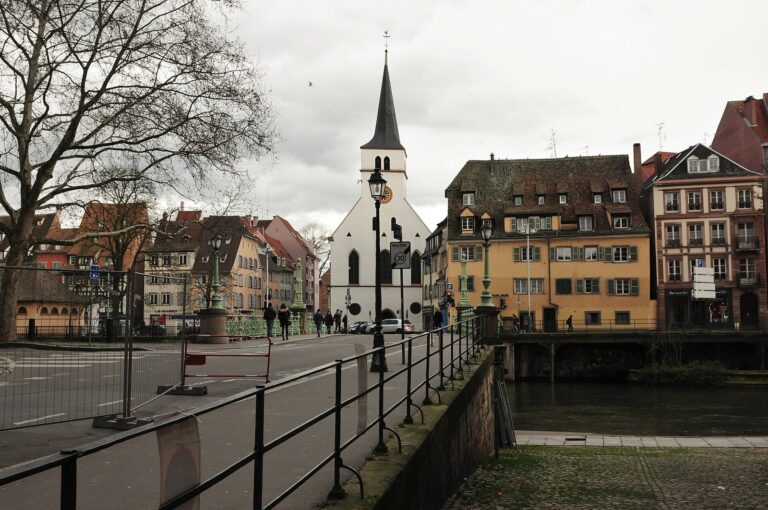
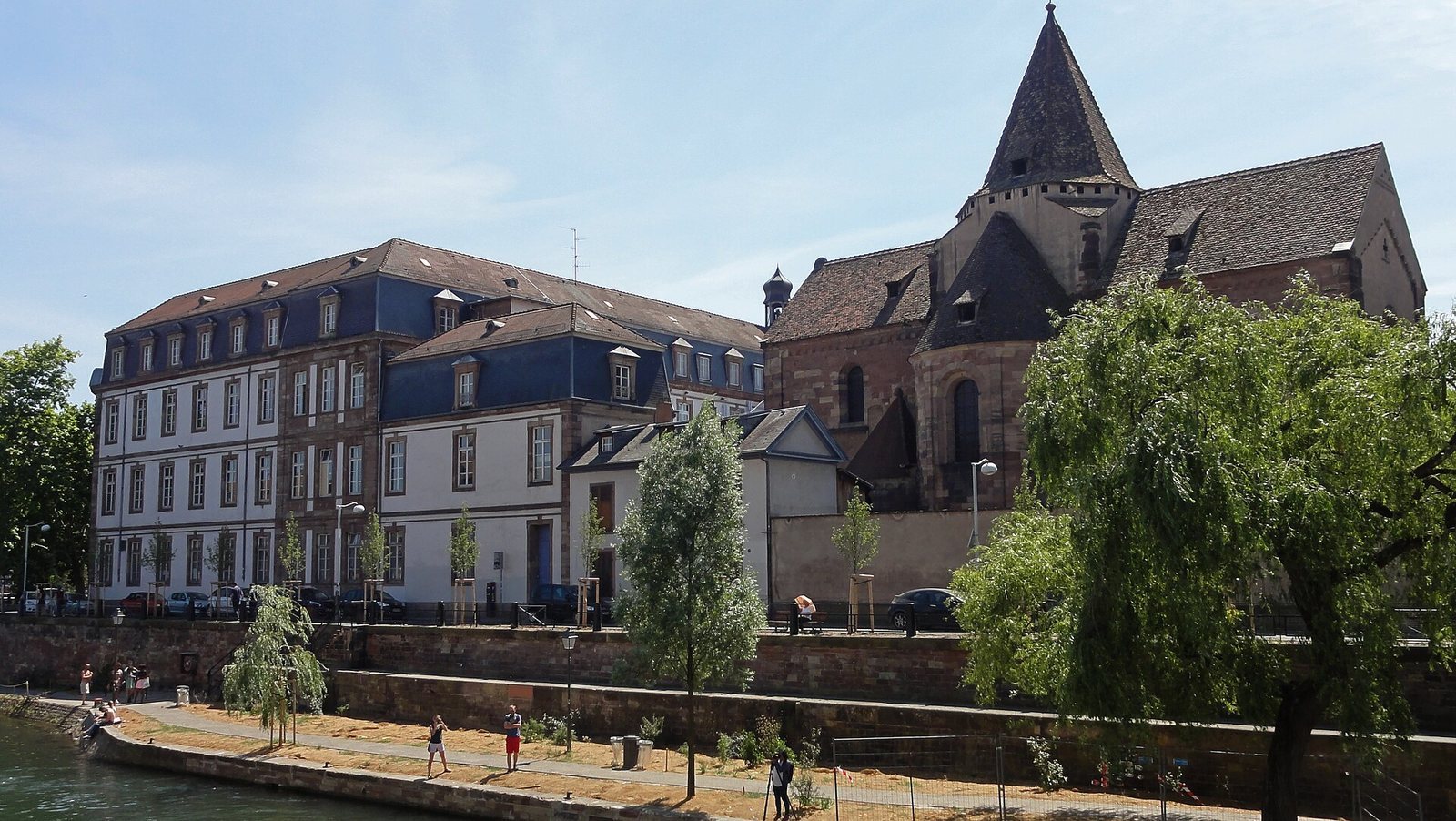
Saint Stephen’s Church, Strasbourg, stands within the grounds of Saint-Étienne College in France. The site was first occupied by a Roman fort and a sanctuary dedicated to Mercury, the Roman deity associated particularly with commerce and travel. Christians used it from the fourth century, and a large basilica was built here in the fifth. Its rebuilding in 1220 gave it a Romanesque-Gothic design, combining Romanesque and Gothic forms, with a Rhenish Romanesque character, a regional style associated with the Rhine. In the seventh century, Bishop Arbogast built what is described as Strasbourg’s first cathedral on the site. The church also served for many years as a center of episcopal authority in northern Alsace.
Abbey and community of canonesses
Duke Adalbert of Alsace established a church and convent here in 717. The foundation of the Benedictine abbey, a monastery in the Benedictine tradition, is dated to 718. A charter from 845 gives 722 as the foundation date, but the Alsatian archaeologist and historian Jean-Jacques Hatt identified the charter as a forgery because it locates the construction near a branch of the Bruche. A tradition in the Strassburgische Cronica says Adalbert built the church over the ruins of a fortified palace belonging to a Roman count. Adalbert’s daughter Attala became the first abbess.
In the eleventh century, the monastery became a chapter of secular canonesses, women in a religious community who were not bound by monastic vows. The church served as a parish church in the early sixteenth century. In 1534, its parish was transferred to St William’s because the canonesses opposed Protestant reform. In 1541, the canonesses rebelled against the bishop’s authority and converted to Protestantism.
Return to Catholic worship and changing uses
After forces of Louis XIV, king of France, besieged Strasbourg, the city capitulated on 30 September 1681. The abbey returned to Catholic worship in 1687, initially under the Antonines, members of a Catholic religious order, and from 1702 under the Visitandines, members of the Order of the Visitation of Holy Mary. The Visitandines opened a boarding school for girls of the nobility in 1718. The religious community was expelled in 1792.
The church lost its tower in 1802 and became a municipal theatre in 1805. The building also housed a small seminary, or school for clergy, from 1821 to 1874. In 1823, the church became a Protestant chapel associated with the Petit Séminaire, or minor seminary. It was classified as a French historic monument in 1862.
Wartime damage and reconstruction
In 1940, Adolf Hitler, dictator of Nazi Germany, ordered worship to cease in Strasbourg Cathedral and expressed a desire to turn it into a national monument glorifying the Germanic people. Cathedral parishioners consequently used the chapel at Saint-Étienne College. Senior Catholic priest Eugène Fischer was installed there as archpriest, a priest with supervisory or pastoral responsibilities, in 1942.
Allied bombing on 25 September 1944 severely damaged the church. The roof collapsed, destroying the pulpit, altar, organ, paintings, statues, and benches. The church was rebuilt after the war, with work on the nave carried out from 1959 to 1965. It now serves as a chapel within the Catholic Saint-Étienne College.
Remains
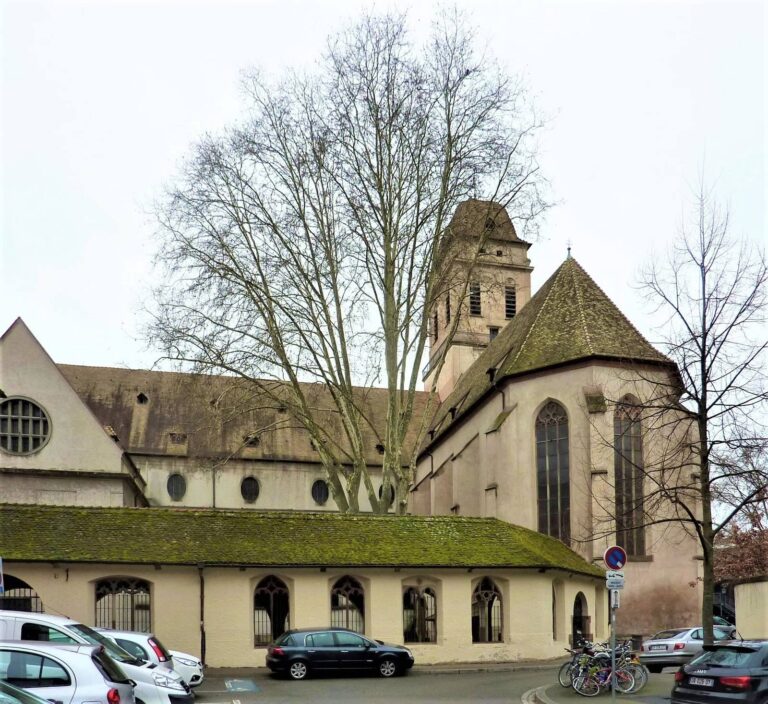
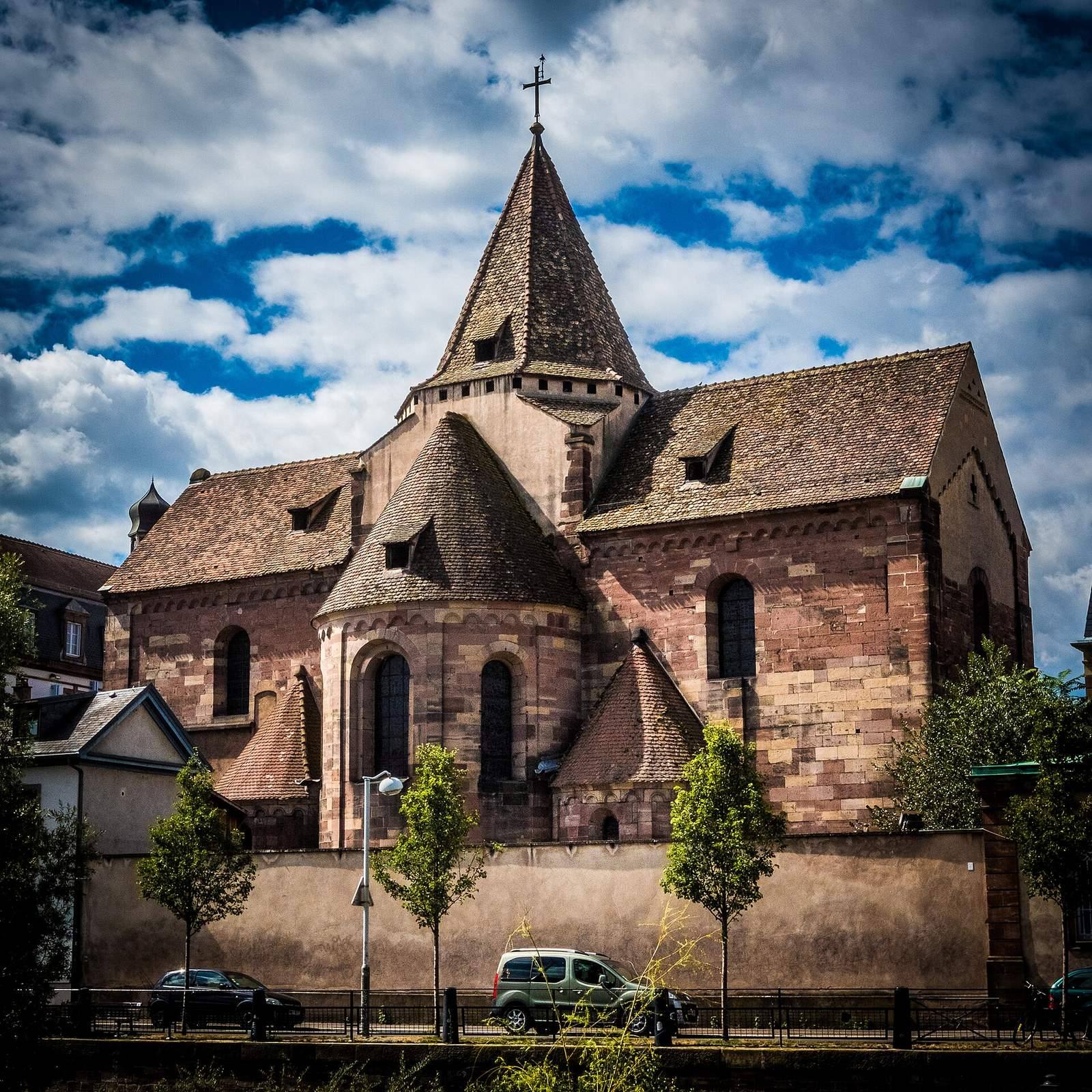
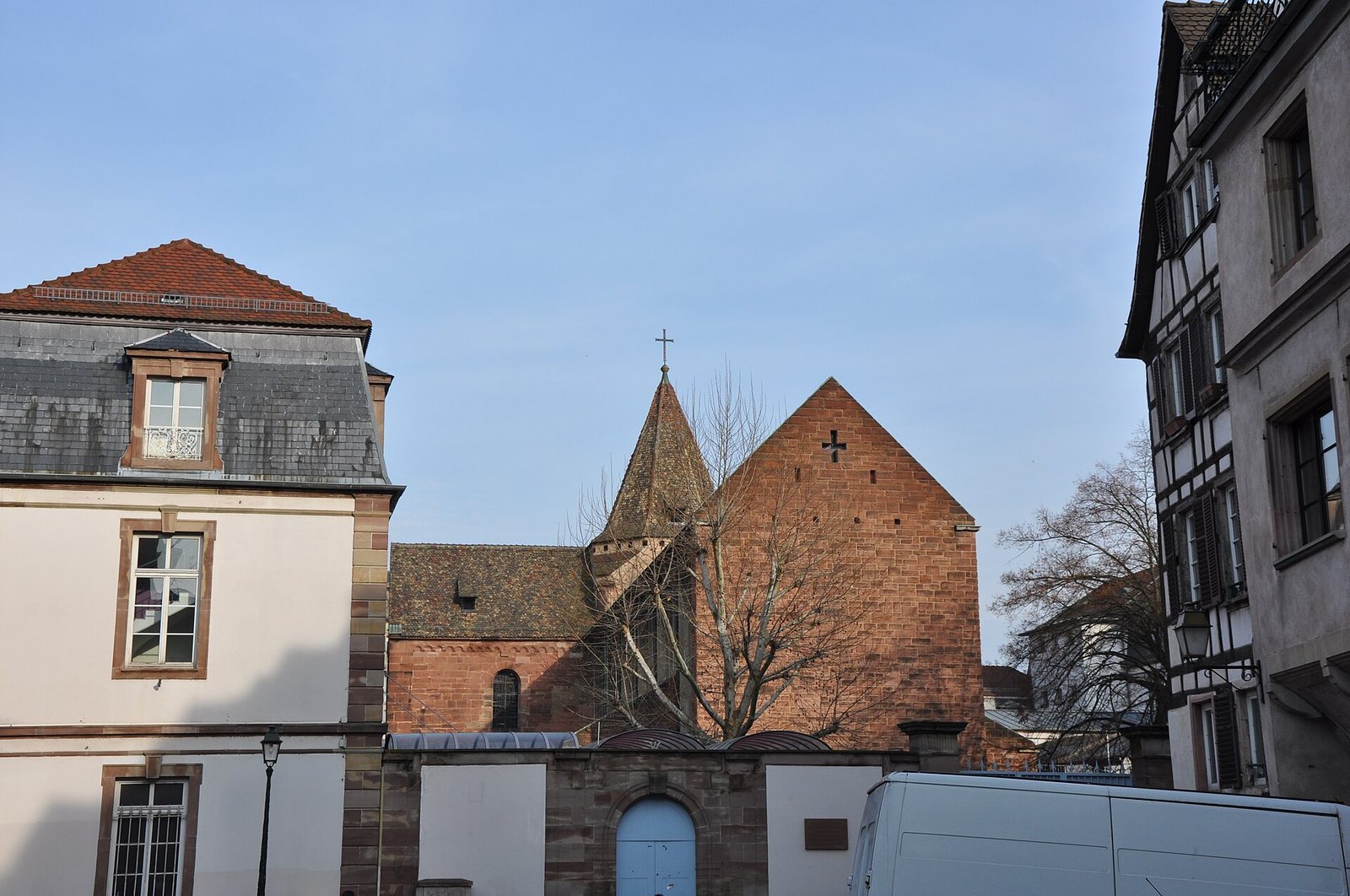
The church combines a broad, vaulted transept and triple apse with a nave reconstructed after the 1944 bombing. The transept and apses preserve original medieval fabric, while the later nave has a simpler design. Archaeological remains beneath the church and evidence recovered in nearby excavations relate the site to Roman and early medieval Strasbourg.
Roman and early medieval archaeology
The crypt, a chamber beneath a church, contains remains of a fifth-century Roman basilica. Excavations after the Second World War, including work in 1948 and especially in 1956, uncovered remains of the Roman camp Argentoratum, the Roman settlement that preceded Strasbourg. They also revealed foundations for an apse, the rounded or polygonal end of a church, belonging to a building dated to the late fourth or early fifth century. If that building was a Christian church, it would be the oldest discovered in Alsace. In 1956, excavators also found a Merovingian, or early Frankish-period, apse beneath the foundations of the former tower.
Medieval fabric and rebuilt nave
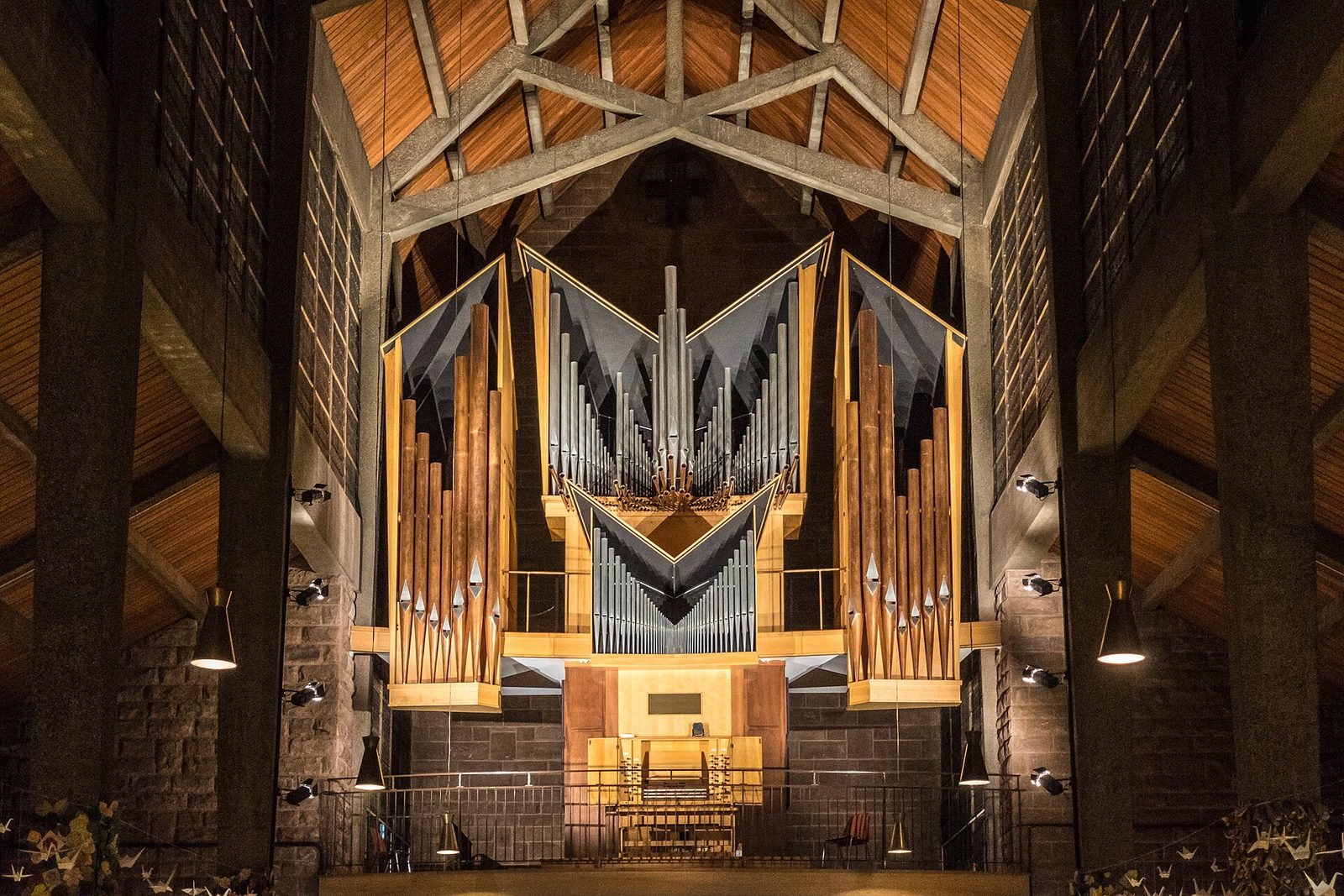
The broad vaulted transept, the crosswise part of the church, and the triple apse are the surviving original medieval fabric. The reconstructed nave has slender pillars and an exposed timber roof structure, with a design inspired by the church’s former Gothic vaults. A wall of rusticated masonry, whose blocks have deliberately rough faces, forms the facade.
Relics, tapestries, and organs
A reliquary, a container for relics, preserved at the church holds the hand of Saint Attala, who died in 741. Tapestries that belonged to the church’s original furnishings are now held at the Notre-Dame Museum and at the college. An organ made by Andreas Silbermann was installed in 1714 and is now in Bischheim. Another organ was installed in 1826 and replaced in 1974. The present nave organ was made by Curt Schwenkedel in 1963 and formerly belonged to the Strasbourg Conservatory. It had been unused since 1995 before being moved to the church in 2016 and restored by organ builder Quentin Blumenroeder.