Sainte-Madeleine Church: A Catholic Church in Strasbourg
Site at a Glance
- Rating
- 4.6
- Popularity
- Medium
- Country
- France
- Primary era
- Modern
- Eras represented
- Medieval, Modern
- Civilizations
- German, Holy Roman Empire
- Site type
- Religious
- Remains
- Church
On this page16 sections
History
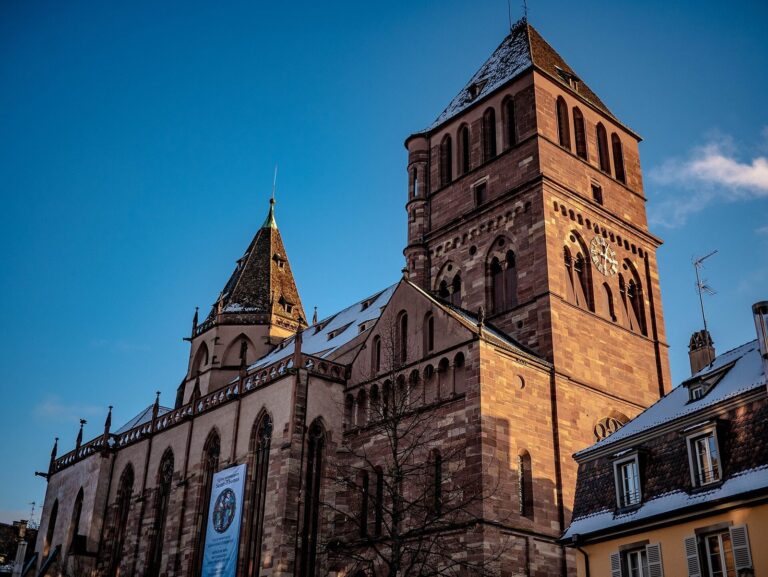
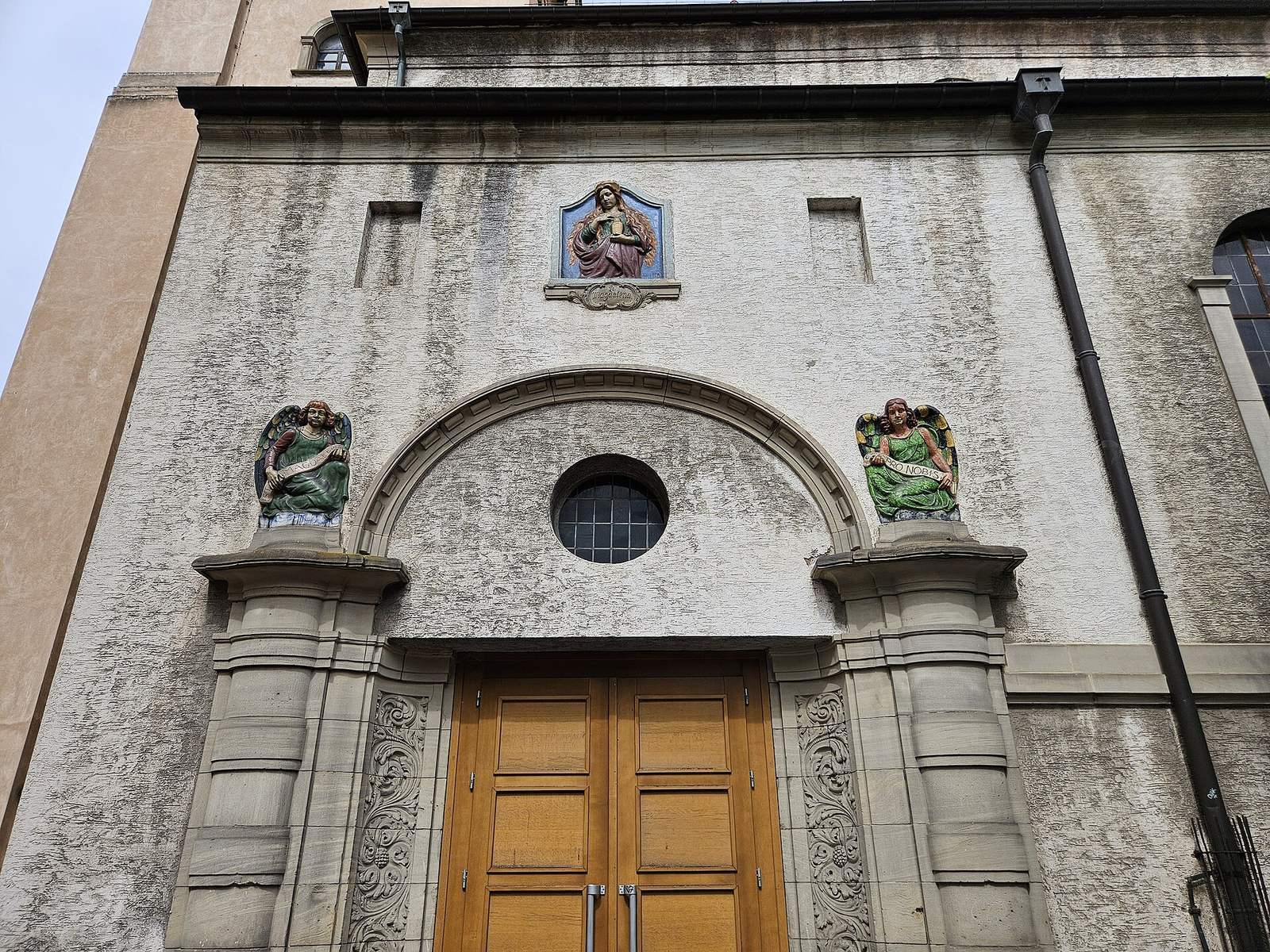
Sainte-Madeleine Church is a Catholic church in Strasbourg, France, and the fourth building in the city dedicated to Mary Magdalene, a New Testament figure and Christian saint, since the thirteenth century. The present church was built in 1907, combining Gothic features with simplified Jugendstil, the German-speaking form of Art Nouveau.
The convents and Gothic church
The first convent dedicated to Mary Magdalene was established in 1225 at what is now Place de la République. It housed former prostitutes who had turned to a life of penitence. Around 1470, Strasbourg evacuated and destroyed the convent because the city feared an imminent attack by the Duke of Burgundy’s forces.
A new convent was built in the Krutenau district, where its church was completed in 1478. The sisters belonged to the Order of Saint Mary Magdalene of Penance, a Catholic women’s religious order. Their church was the last Gothic sacred building constructed in Strasbourg. John Calvin, a French-born theologian and Protestant Reformation leader, preached and held services there.
Parish growth and rebuilding
By the late eighteenth century, the parish served people in southern Strasbourg beyond the city walls. On 6 December 1898, the church was classified as a historic monument, with the Gothic choir and fragments of its wall paintings specifically protected.
A fire destroyed the Gothic church in 1904, but its choir survived. The present church was built in 1907 to plans by the German architect Fritz Beblo.
War damage and reconstruction
Anglo-American bombing severely damaged the church on 11 August 1944. It was rebuilt in 1958 to match Beblo’s design.
The Silbermann organ now in the former choir was classified as a historic monument in 1976. The painting Adoration of the Shepherds received the same status in 1980.
Remains
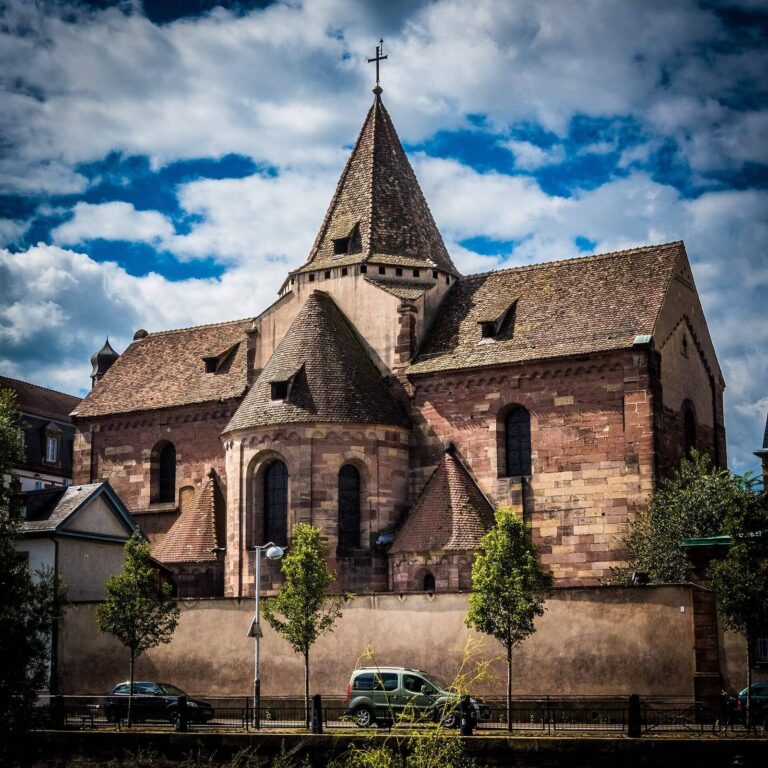
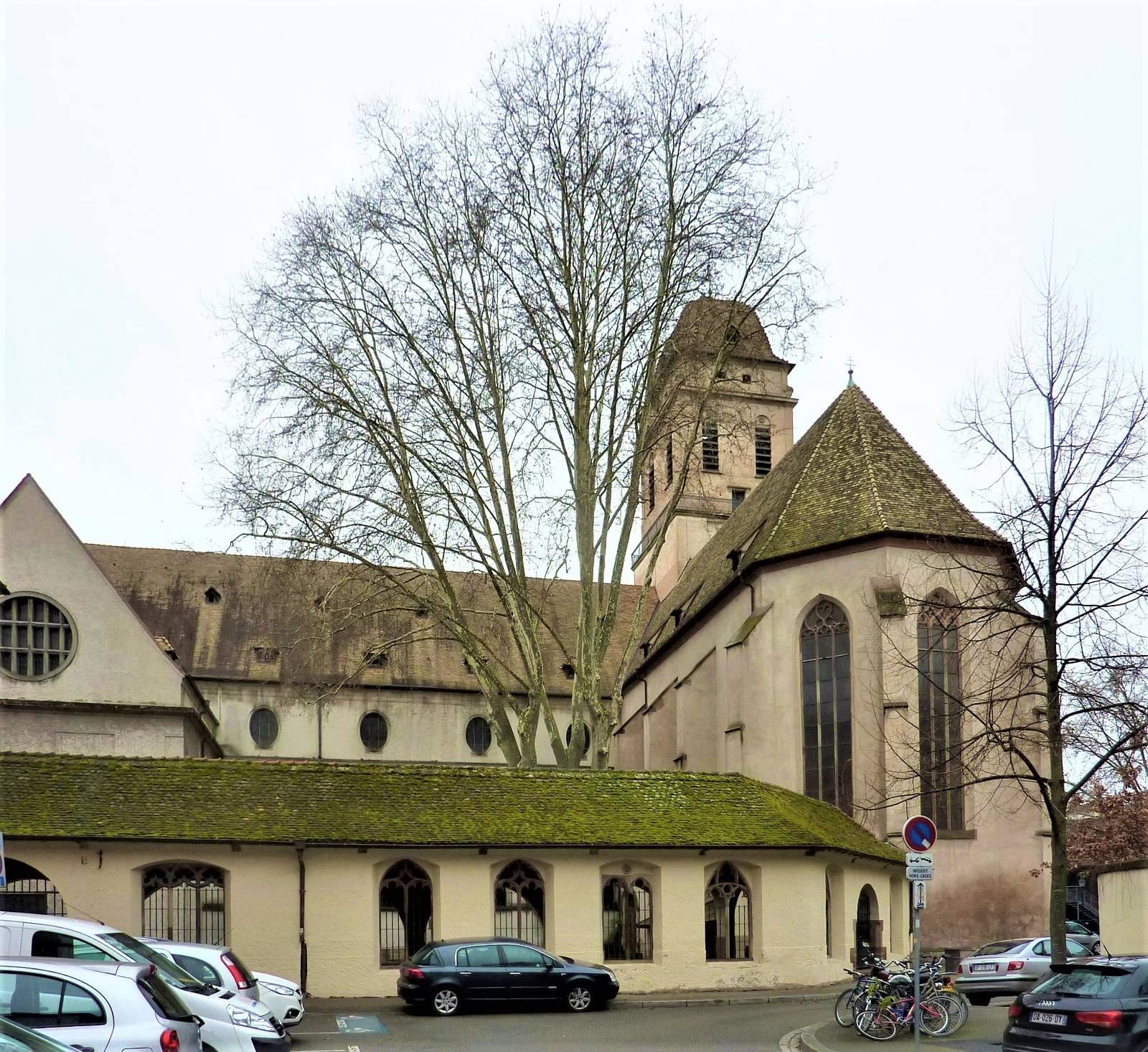
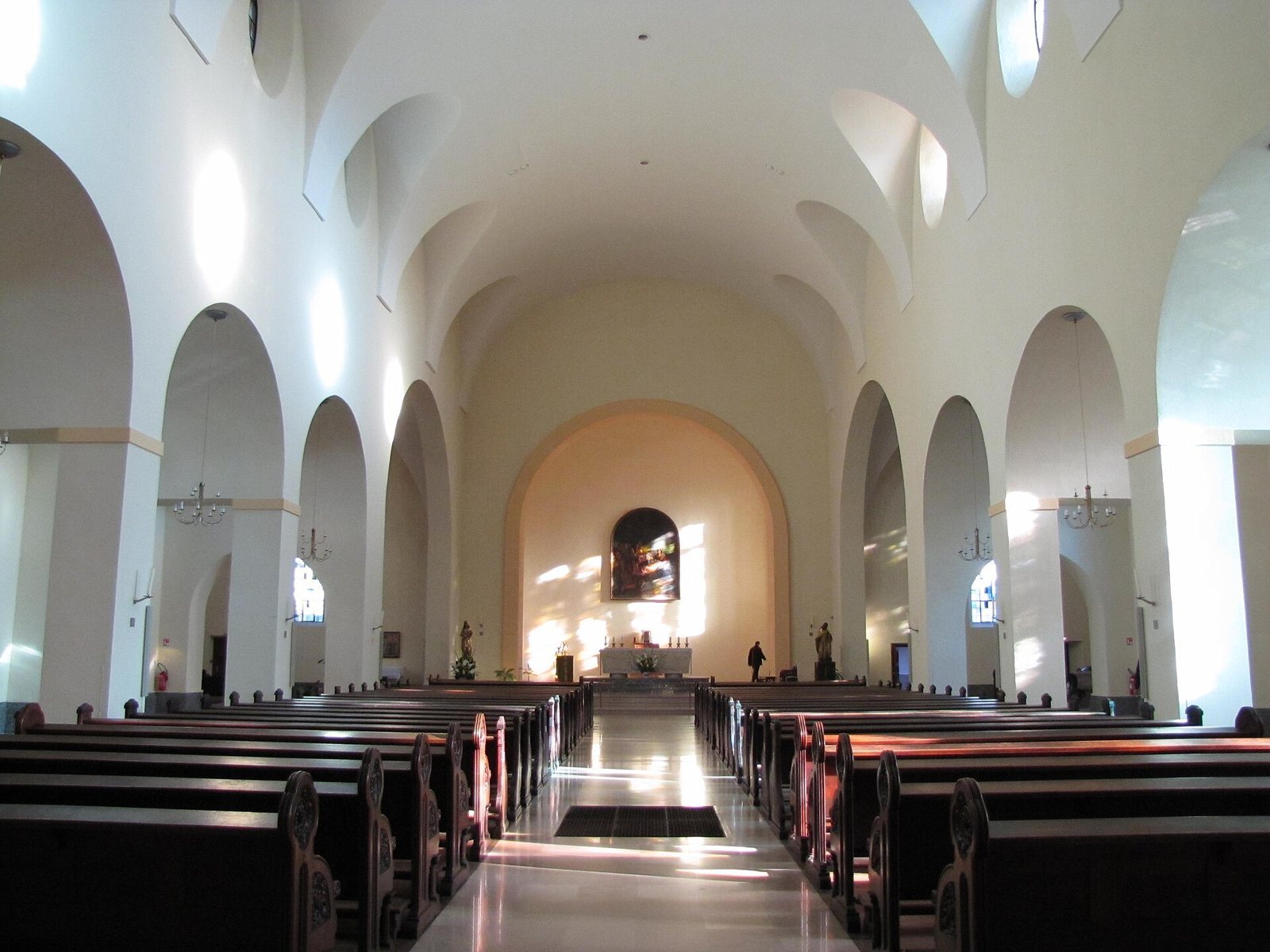
The site brings together the present church, set at right angles to its predecessor, and the surviving choir of the former convent church. The present building combines Gothic features with simplified Jugendstil; it has a barrel-vaulted interior and a prominent bell tower.
Church and convent remains
Present church
The church is larger and more spacious than its predecessor. Its barrel vault was modeled on the vault of St Michael’s Church, a Jesuit church in Munich.
Former choir
The late-Gothic choir contains fragments of its original wall paintings and now serves as a side chapel dedicated to the Blessed Sacrament, the consecrated Eucharist in Catholic worship.
Former cloister
Part of the former cloister, a covered passage in a religious complex, remains visible around the adjacent school building.
Organs
Silbermann organ
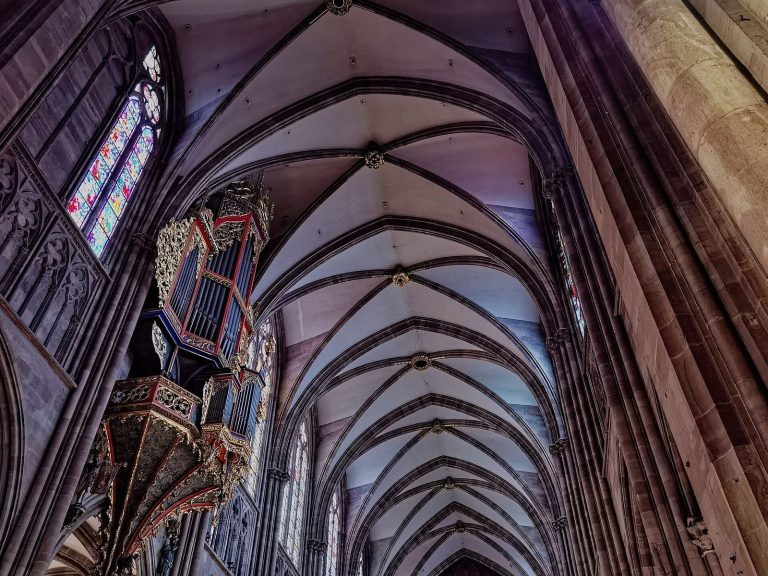
The small pipe organ in the former choir was originally made for Marmoutier Abbey by Andreas Silbermann, an Alsatian Baroque organ builder. The abbot commissioned it on 17 February 1716, and it was completed in 1718. A dispute prevented its delivery to the abbey. The instrument was sold to the Grey Sisters, a Catholic religious community in Haguenau, in 1730, and to the town of Sessenheim in 1799.
Xavier Stiehr partly modified the organ in 1826. It was sold to Strasbourg’s regional museum authority in 1942 and became part of the Museum of Decorative Arts collection. The museum deposited it at the church in 2011. After Quentin Blumenroeder restored it to its 1826 condition, it was installed in the former choir in 2012. The organ has one hand-played keyboard, a separate keyboard for its echo division, a secondary group of pipes, and a foot-operated pedal.
Roethinger organs
An earlier organ made by the Roethinger firm was destroyed in the 1944 bombing. A replacement was inaugurated on 28 November 1965 by organists Michel Chapuis and Robert Pfrimmer. It has 48 stops, which control ranks of pipes, four hand-played keyboards, and a foot-operated pedal.
Michel Wolf carried out a major overhaul in 1997–1998 without changing the instrument’s tonal character. The Kern firm restored it in 2004 and replaced its keyboards.
Paintings and stained glass
Adoration of the Shepherds
An anonymous eighteenth-century oil painting on canvas hangs on the rear wall of the choir. It measures 3.82 metres high by 2.82 metres wide. Formerly kept in the sacristy of Strasbourg Cathedral, it was transferred to Sainte-Madeleine Church at an undetermined date.
Stained-glass fragments
Fragments from the church’s once-numerous stained-glass windows, made by the workshop of late-medieval artist Peter Hemmel von Andlau, are held at the Musée de l’Œuvre Notre-Dame.
Stations of the Cross
The church’s Stations of the Cross, devotional images recalling episodes of Jesus’s Passion, comprised fifteen individual oil paintings on canvas by Joseph Melling. Five are known to have survived the 1904 fire. One of these was rediscovered in 2017, after four had long been believed to have survived; it was then in very poor condition and needed restoration.