Santa Croce e San Camillo de Lellis: A Camillian Church in Italy
Site at a Glance
- Rating
- 4.8
- Popularity
- Low
- Country
- Italy
- Primary era
- Early Modern
- Eras represented
- Early Modern, Modern
- Civilizations
- Genoese, Italian
- Site type
- Religious
- Remains
- Church
On this page11 sections
History
Construction and religious role
Santa Croce e San Camillo de Lellis is a Baroque Roman Catholic church in Italy, begun in 1667 as the seat of the Camillian Fathers, members of an order founded by the priest Camillo de Lellis and devoted to caring for the sick. The church served the nearby Pammatone Hospital and formed part of a larger convent complex. Dedicated to the Holy Cross and Camillo de Lellis, it was inaugurated in 1671 before construction was finished. Its façade was completed in 1682, and the building’s stated completion date is 1695.
The church is generally attributed to the Lombard architect Carlo Mutone, though he may have provided the design rather than overseen the building work. The attribution remains uncertain in part because work on the church began nearly five decades after the start of the seventeenth-century renovation of the Church of San Luca. The painters Agostino Ratti and Gregorio De Ferrari were buried at Santa Croce.
Ownership, damage, and restoration
Since 1866, the church has been owned by the municipality, but it continues to serve as a seat of the Camillian Fathers. It belongs to the Archdiocese of Genoa, a large Catholic jurisdiction led by an archbishop, and has been under heritage protection since 1934.
Allied bombing during the Second World War damaged the church, the nearby hospital, and much of Genoa’s historic centre. Restoration followed in the 1950s. Further work in the early twenty-first century, associated with Genoa’s 2004 European Capital of Culture year, aimed to recover the frescoes’ earlier appearance where possible. In some places, nineteenth- and twentieth-century decoration had replaced paintings that were already too deteriorated to restore.
Remains
Plan and exterior
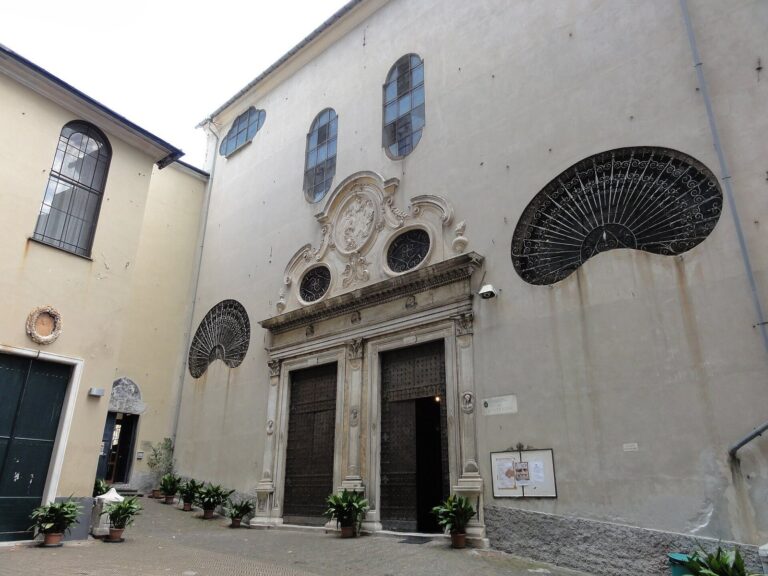
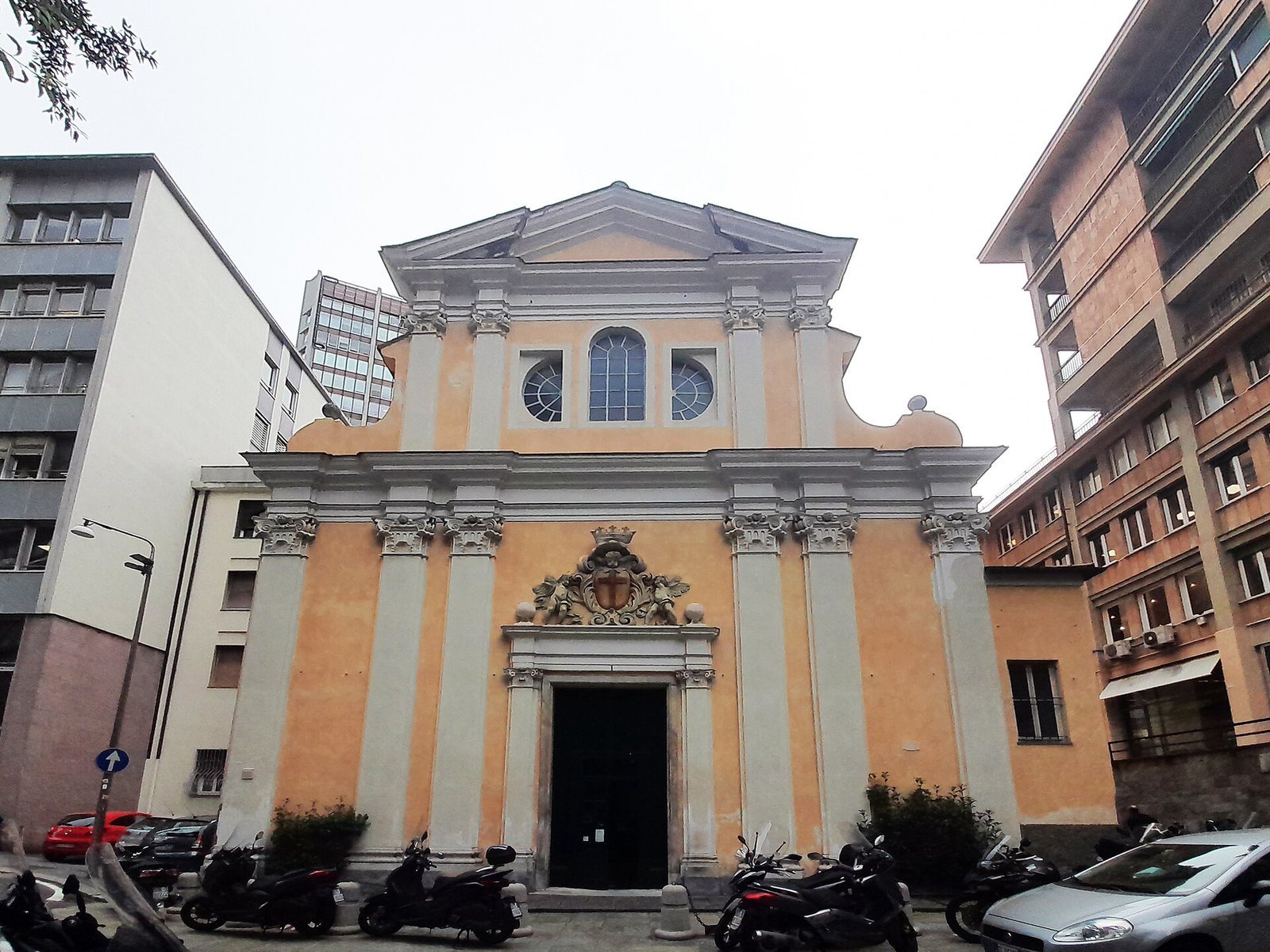
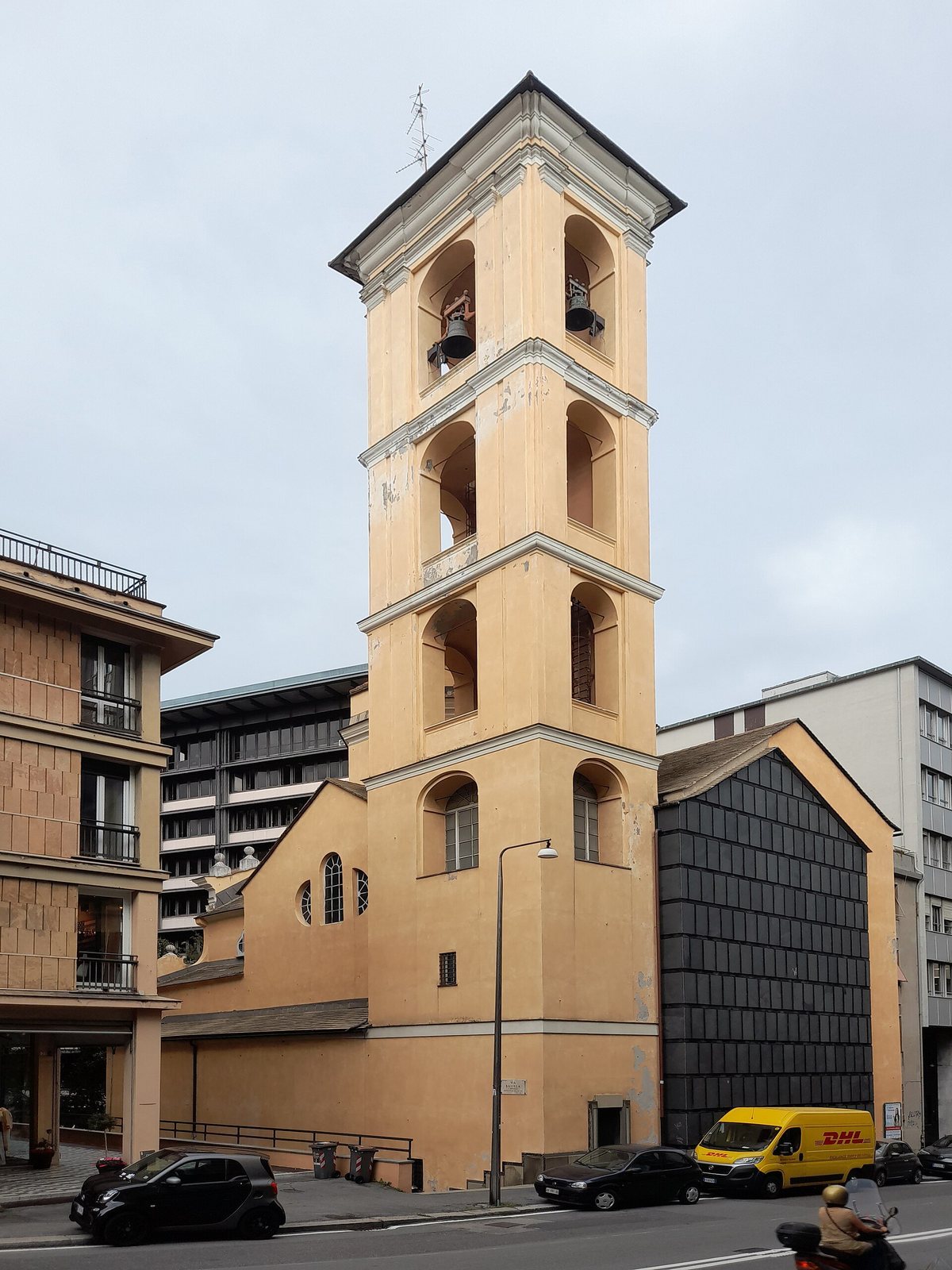
The church has a Greek-cross plan, with four arms around a central space and a slight extension along the line from the nave to the apse, the rounded end of the church. Its dome is octagonal, and a separate bell tower has a rectangular base. The tower’s three levels use the Doric style, a classical column style, with single and paired pilasters, shallow pillar-like forms attached to a wall. Some of this decoration was lost during repairs after the wartime bombing. Work was also carried out on the façade in 1885.
Frescoes
The De Ferrari fresco cycle
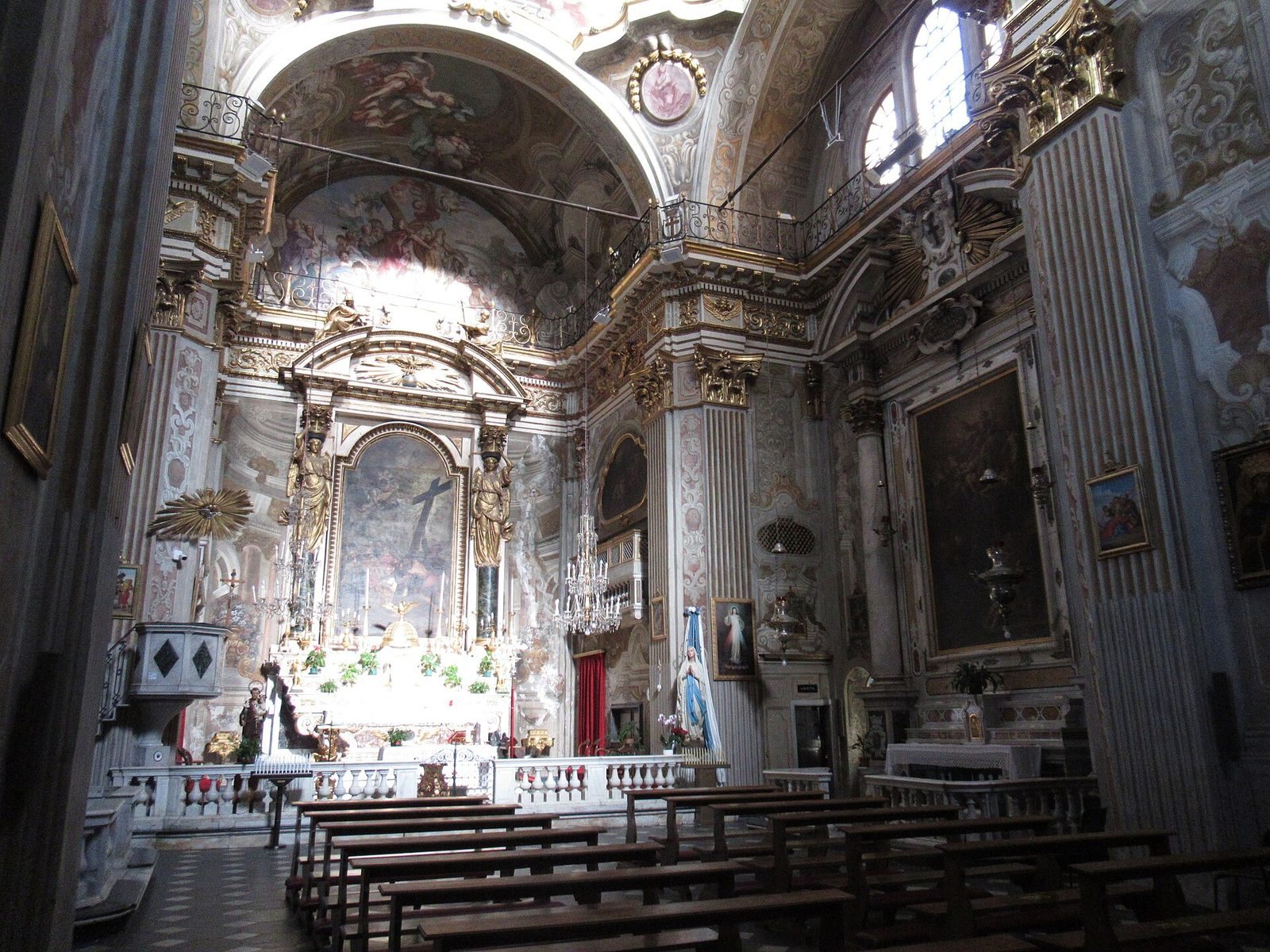
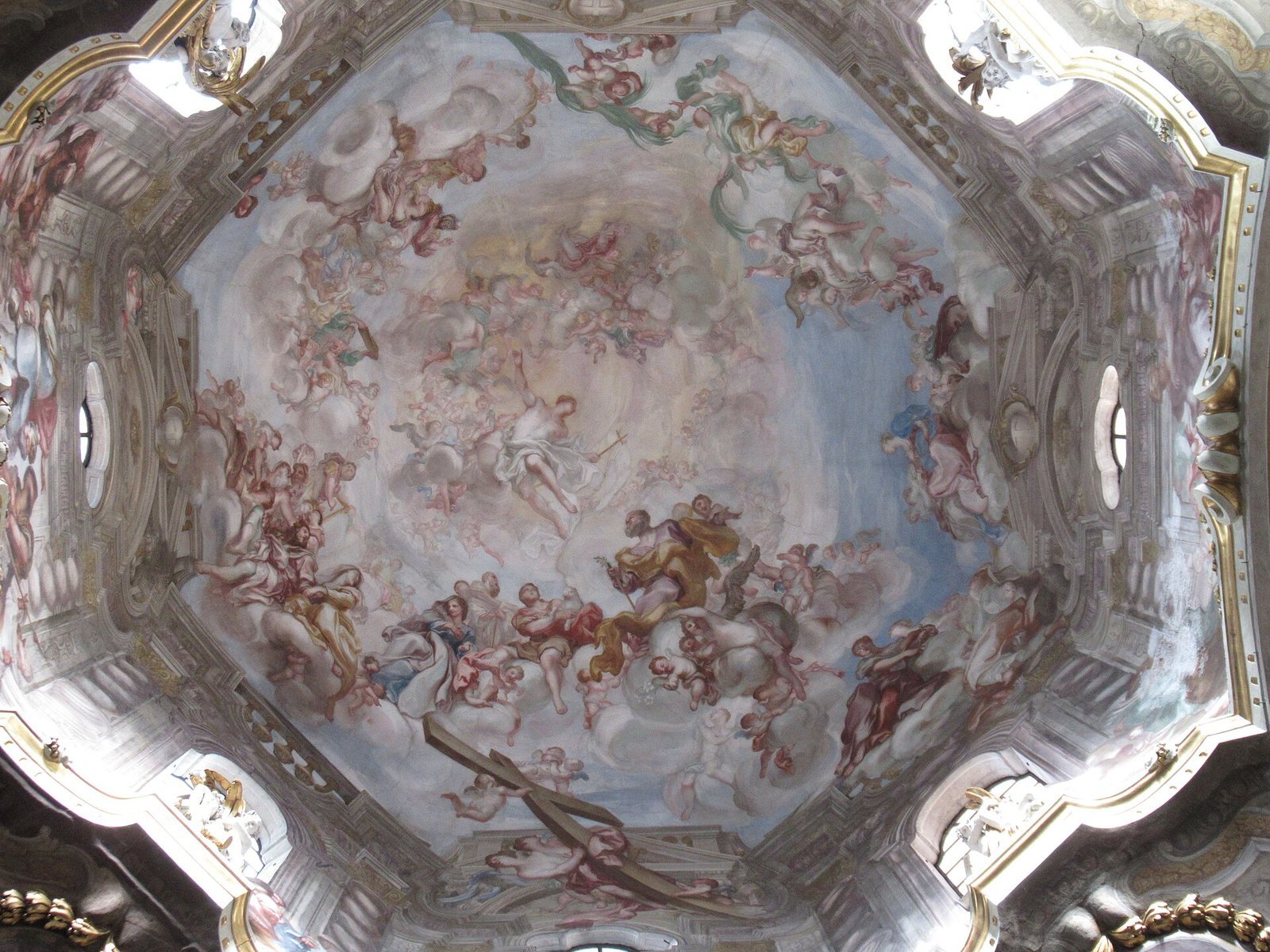
Gregorio De Ferrari and his son Lorenzo painted a cycle on the Triumph of the Cross in the first decades of the eighteenth century. It includes The Invention of the Cross in the apse, The Cross Carried by Angels in the dome’s drum, the supporting structure beneath a dome, and two scenes in the dome: Patriarchs, Prophets, and Biblical Heroines and The Virgin, Saint Joseph, and the Baptist. The Risen Christ appears at the top of the church. The cycle survived the wartime bombing.
Francesco Costa’s frescoes
The church also contains frescoes by the Genoese painter Francesco Costa. Some use quadratura, an illusionistic technique that makes painted surfaces seem to open into architectural space.
Paintings and altar
Paintings
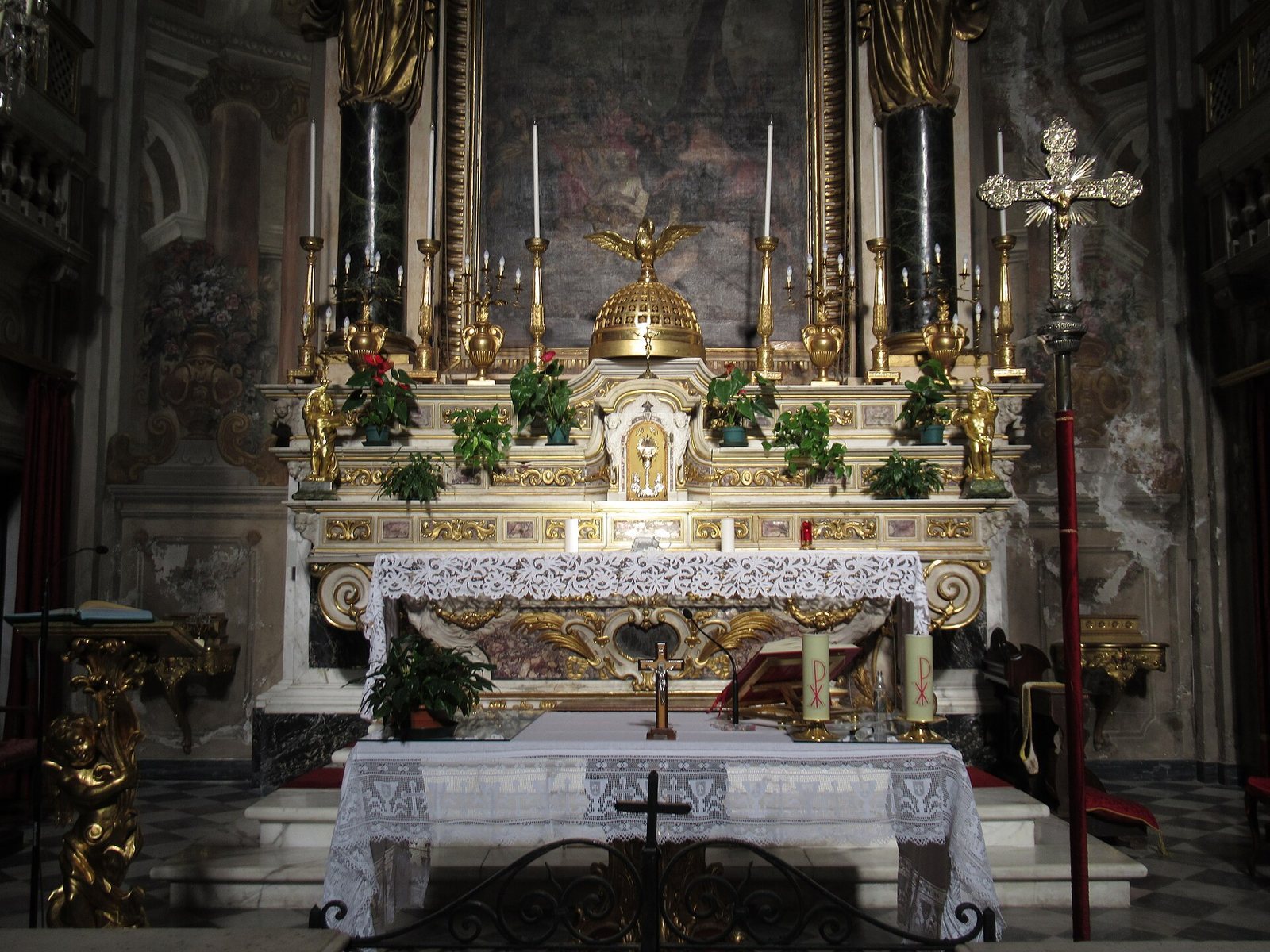
Paintings preserved in the church include Lorenzo De Ferrari’s Saints Nicholas of Tolentino, Lucy, and Mark, Giovanni Battista Baiardo’s Saint Helena Adoring the Cross, and Valerio Castello’s The Centurion. Baiardo’s painting is placed on the main altar. Both it and Castello’s work predate the construction of the church.
Main altar
Two gilded angels were added to the decoration of the main altar in 1816.