Mehmed Pasha Kukavica Mosque: An Ottoman-Era Mosque in Foča
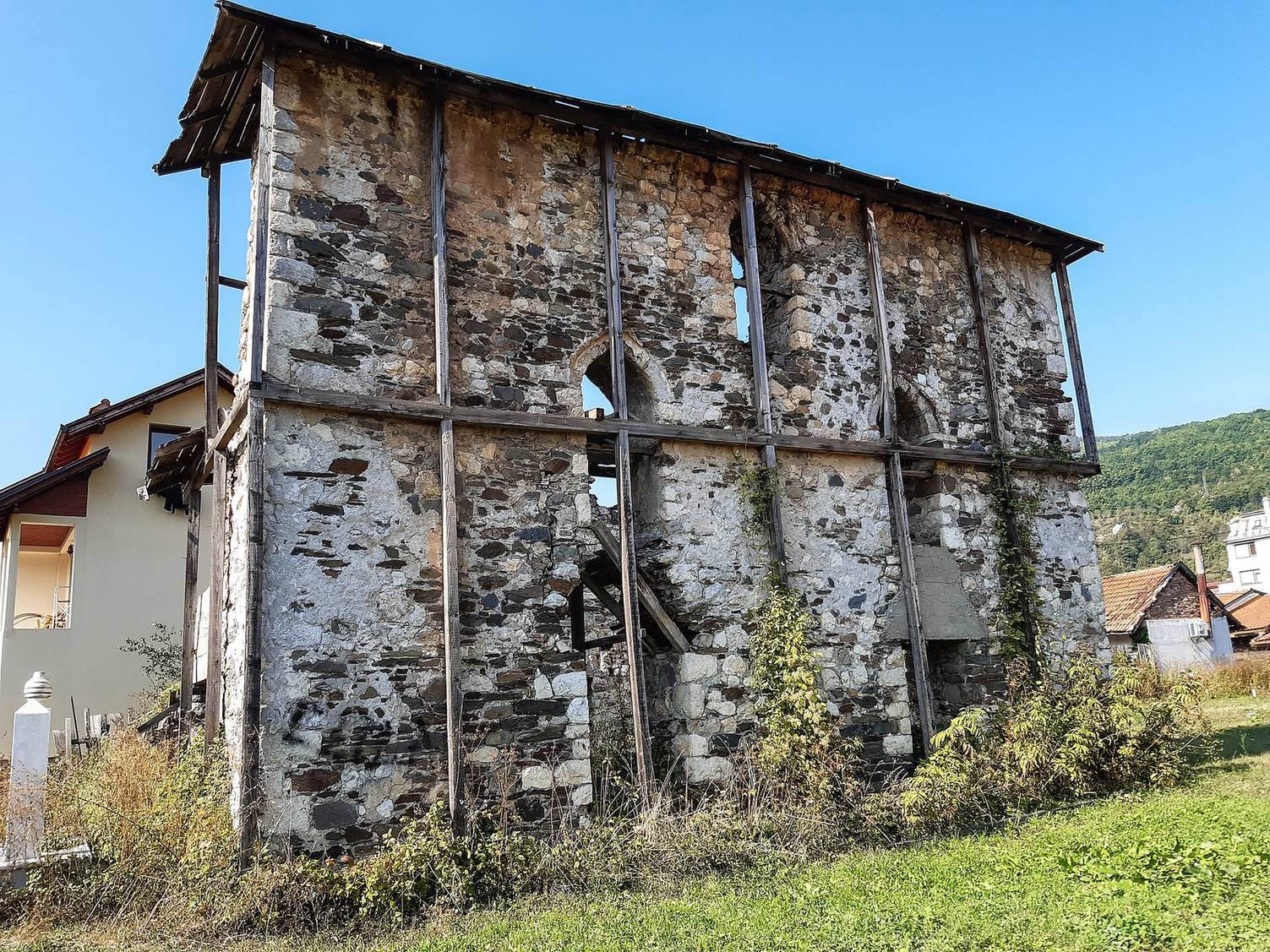
Site at a Glance
- Popularity
- Medium
- Country
- Bosnia and Herzegovina
- Primary era
- Early Modern
- Eras represented
- Early Modern
- Civilizations
- Ottoman
- Site type
- Religious
- Remains
- Mosque
On this page8 sections
History
Ottoman foundations
The Mehmed Pasha Kukavica Mosque is an Ottoman-period mosque in Foča, Bosnia and Herzegovina, built in 1751 and completed in 1752. It was endowed by Mehmed Pasha Kukavica and was the last mosque constructed in Foča. At the time, the Ottoman Empire was a state ruled by the Ottoman dynasty.
Kukavica, a senior Ottoman official born in Foča, served as governor of Bosnia from 1752 to 1756 and again from 1757 to 1760. His mosque belonged to a wider group of religious and civic foundations. In the eighteenth century, when Foča was no longer expanding, these projects were built within the existing town. Kukavica’s other endowments included a fountain, caravanserai, Sufi lodge, and shops.
A madrasa, an Islamic educational institution, formed part of the wider complex and was completed in 1758. It was the last madrasa built in Foča.
Destruction and recognition
The mosque was blown up with explosives on 28 May 1992, during the destruction ordered by Republika Srpska authorities after an attack and the ethnic cleansing of Foča’s Muslim inhabitants. Other parts of Kukavica’s complex and most of the old town were also demolished that year. The mosque, madrasa, clock tower, and bathhouse are designated together as a National Monument of Bosnia and Herzegovina and classified as a Category I cultural monument.
Remains
The Mosque
Plan, portico, and minaret
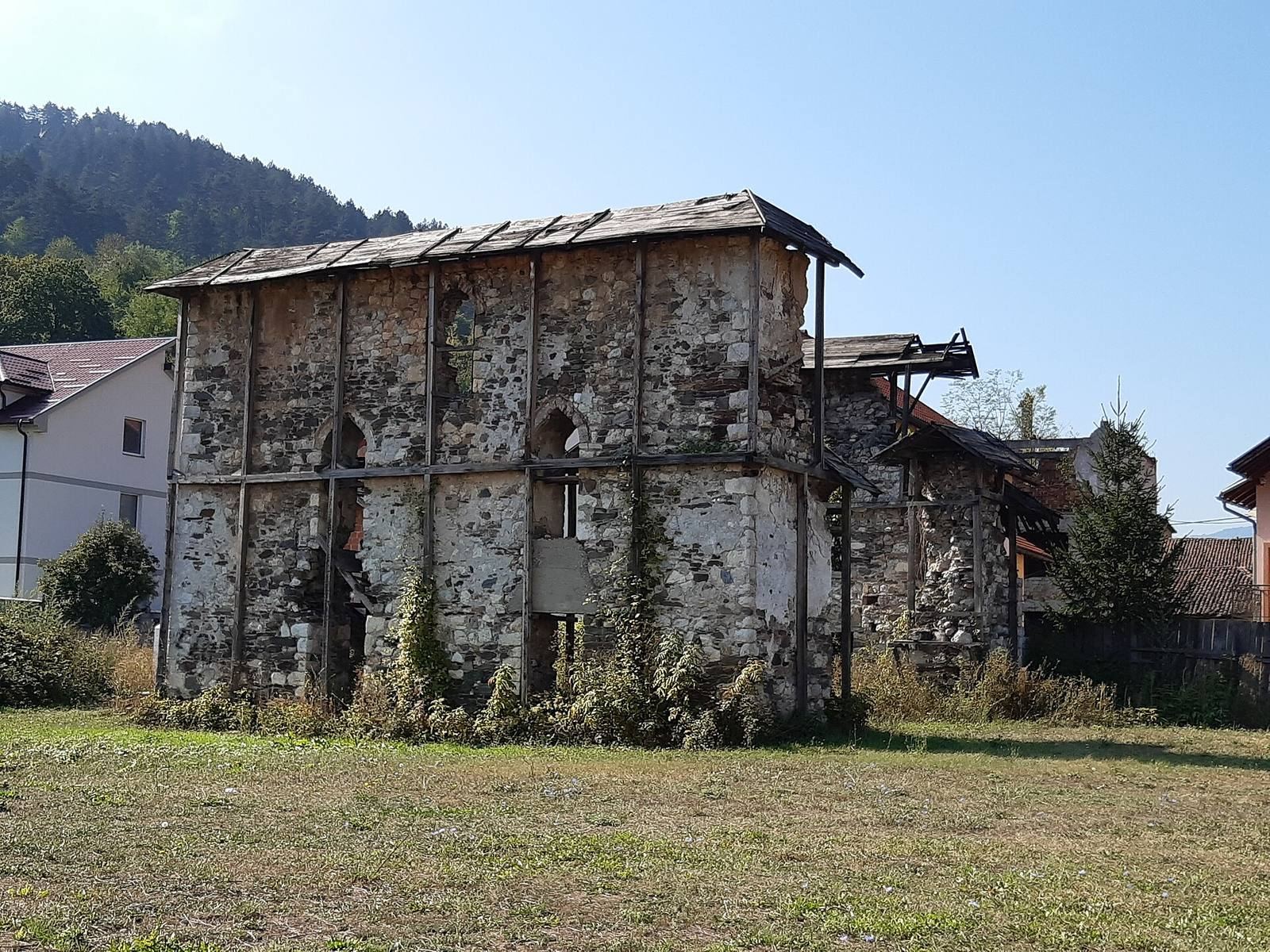
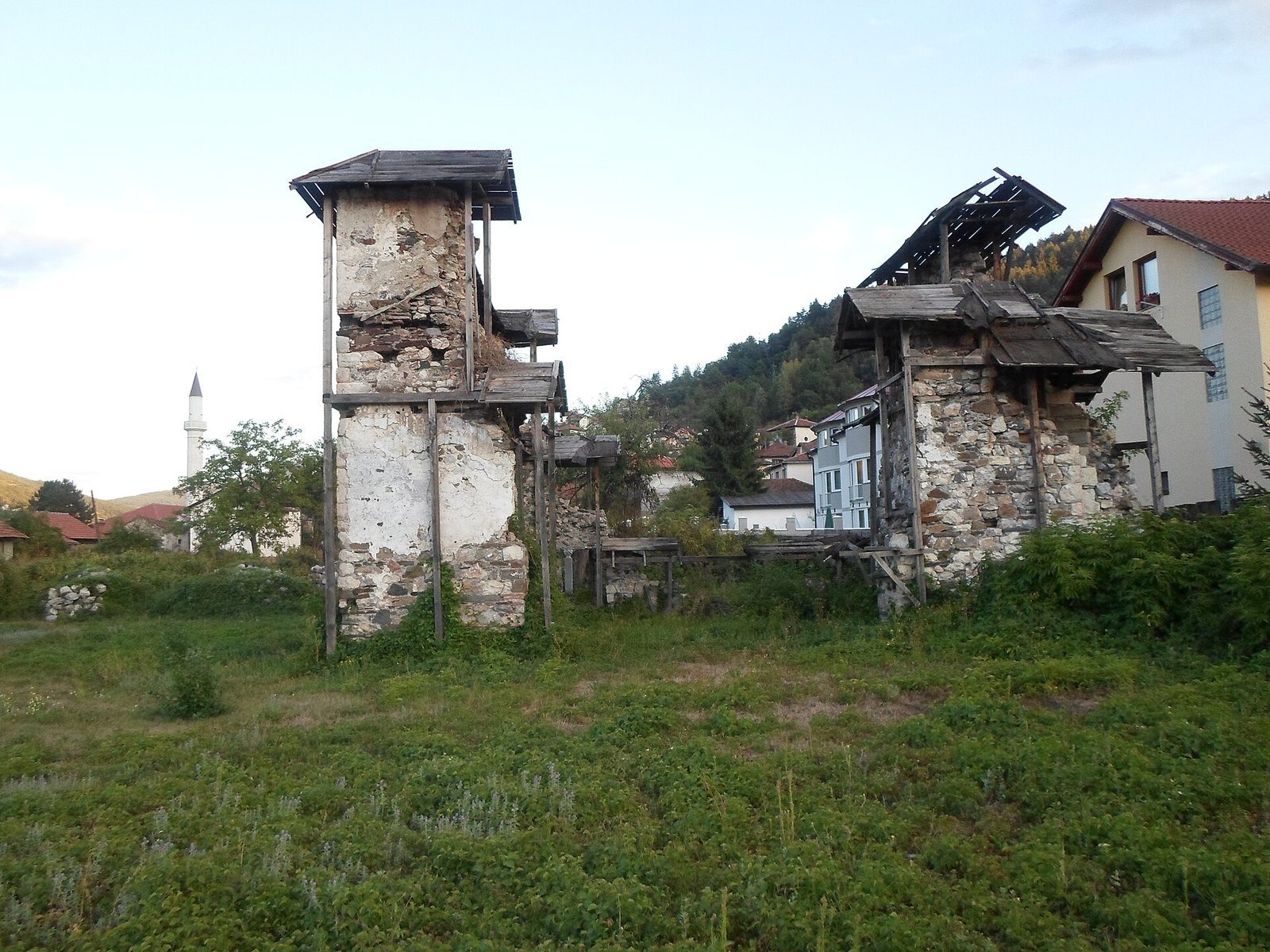
The mosque belonged to a single-space domed type, with one main prayer room beneath a dome and an open portico, or covered entrance porch. It stood in Foča’s Upper Bazaar, also called Prijeka Bazaar, in the old town. Its stated dimensions were 11.10 metres long, 11.26 metres wide, and up to 7.70 metres high. The minaret had an octagonal cross-section, was built of dressed stone, and rose from a square base. The mosque survives in partial ruins, and its dome collapsed in autumn 2002.
Entrance inscription
A carved stone inscription measuring 50 by 50 centimetres was placed above the entrance. Its Turkish text comprised four couplets. It names Hajji Mehmed as a state official and chief of Sultan Mahmud I’s officials, who served in administrative, court, or military roles. The inscription praises the mosque, asks divine reward and long life for its benefactor, and says that he had built several mosques of similar height. Its date-encoding phrase describes the mosque as beautiful and attractive and gives the year 1165, equivalent to 1751/52. Mahmud I ruled as Ottoman sultan from 1730 to 1754.
Associated buildings
The mosque and madrasa stood near Kukavica’s caravanserai and the clock tower. The madrasa, clock tower, and Ottoman bathhouse were also part of the ensemble. An ablution facility and a residence for the madrasa teacher were among its associated buildings; both were burned in 1992.