Clattern Bridge: A Medieval River Crossing in Kingston upon Thames
Site at a Glance
- Rating
- 4.7
- Popularity
- Medium
- Country
- United Kingdom
- Primary era
- Medieval
- Eras represented
- Medieval, Early Modern, Modern
- Civilizations
- British, English
- Site type
- Infrastructure
- Remains
- Bridge
On this page7 sections
History
Clattern Bridge is a medieval bridge over the Hogsmill River in Kingston upon Thames, United Kingdom. Built around 1175 during England’s Norman era, it replaced an earlier Saxon bridge called Clatrung Bridge. Regarded as one of England’s oldest intact bridges, it served as a principal route between Kingston’s market and the grounds of the royal palace, then an important royal residence. The crossing remains in use for traffic. Later forms of its name, including Clateryngbrugge, are thought to echo the clatter of horses’ hooves on the bridge.
Customs and Shrove Tuesday football
Into the eighteenth century, people accused of being scolds could be punished at the bridge with a cucking stool, a seat used to dunk someone in water. The practice continued in Kingston until at least 1745, when the landlady of the Queen’s Head public house was ducked before a large crowd.
For centuries, Clattern Bridge was one of the goals in Kingston’s annual Shrove Tuesday football game. Shrove Tuesday is the day before Ash Wednesday, which begins Lent. Players gathered at the Druid’s Head public house before the Townsend and Thames-Street teams competed to carry the ball to either Clattern Bridge or Kingston Bridge. A local tradition traced the game’s origins to an eighth-century dispute between Kenulf and Kynard. Authorities tried to stop the event in the late eighteenth century because it caused violence and disrupted trade. In 1798, officials read the Riot Act, a law that allowed authorities to disperse a gathering considered riotous after a formal reading. Cavalry summoned from Hampton Court did not respond because the soldiers were also playing football. In 1867, the game was moved from the public highway to a local playing field.
Protection
The bridge was scheduled as an ancient monument on 16 February 1938 and is also a Grade I listed building, England’s highest listed-building category.
Remains
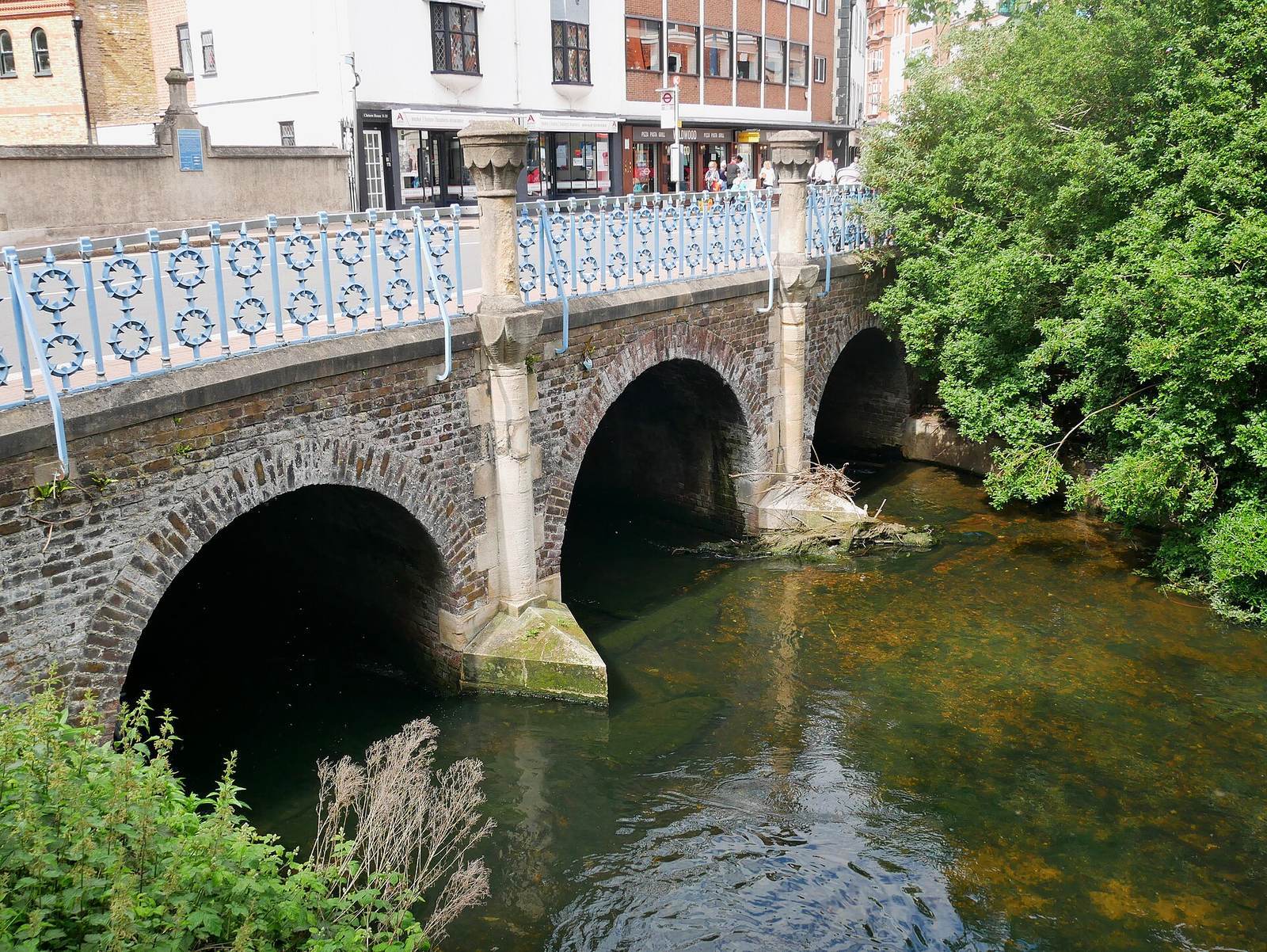
Clattern Bridge carries the High Street over the Hogsmill River. Its three-arched medieval stone core, later brick additions and riverbed modifications form the surviving structure.
Medieval stone arches
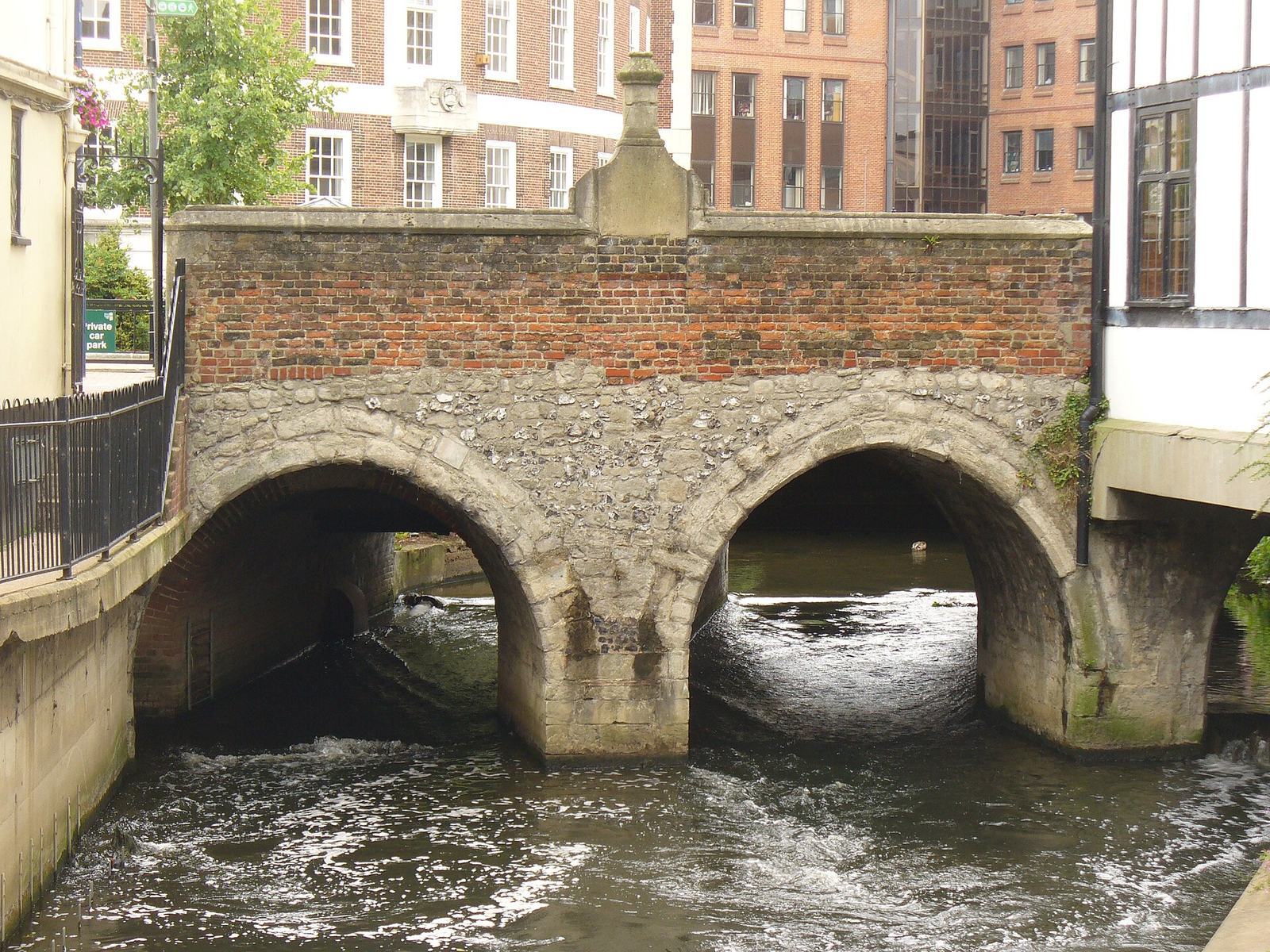
The lower portion of the bridge has three arches built from dressed ashlar, stone shaped into regular blocks, with flint-rubble infill. Two piers stand in the river. These medieval arches remain visible within the later construction.
Later widening
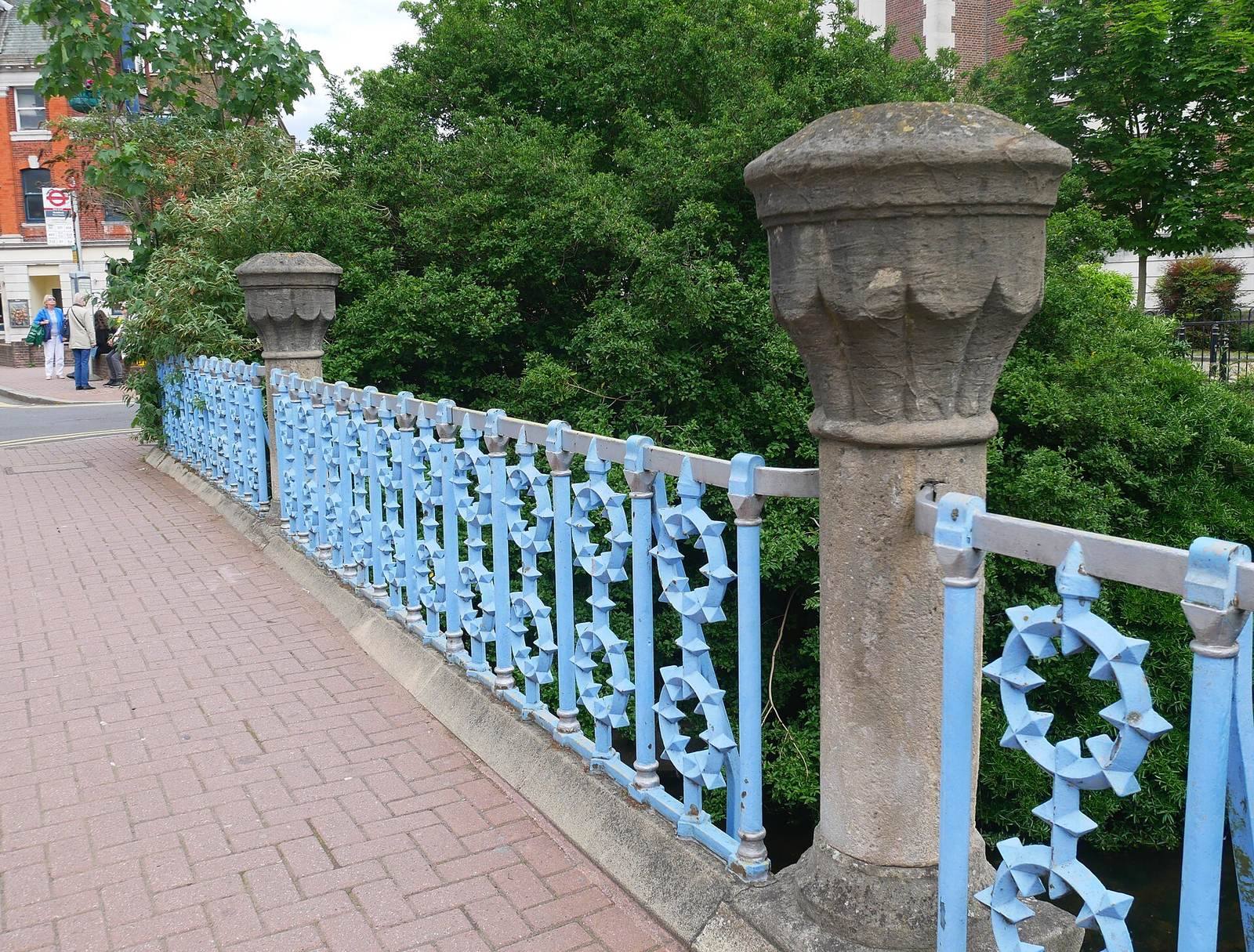
Widening in 1758 added red brick bonded into the existing stone arches, along with brick parapets capped in stone. A further brick-built structure and an ornamental railing were added in 1852. The medieval stonework remains visible as part of the expanded bridge.
Riverbed modifications
A 2012 zoological survey found that fast-flowing water over the smooth riverbed beneath the bridge hindered eels migrating upstream. Protruding tiles were fixed to the riverbed to help the eels wriggle through the current; eels were subsequently found upstream on the Hogsmill.