St Mary le Port Church in Bristol: A Ruined Parish Church
Site at a Glance
- Rating
- 4.2
- Popularity
- Low
- Country
- United Kingdom
- Primary era
- Medieval
- Eras represented
- Medieval
- Civilizations
- Anglo-Saxon, English
- Site type
- Religious
- Remains
- Church
On this page7 sections
History
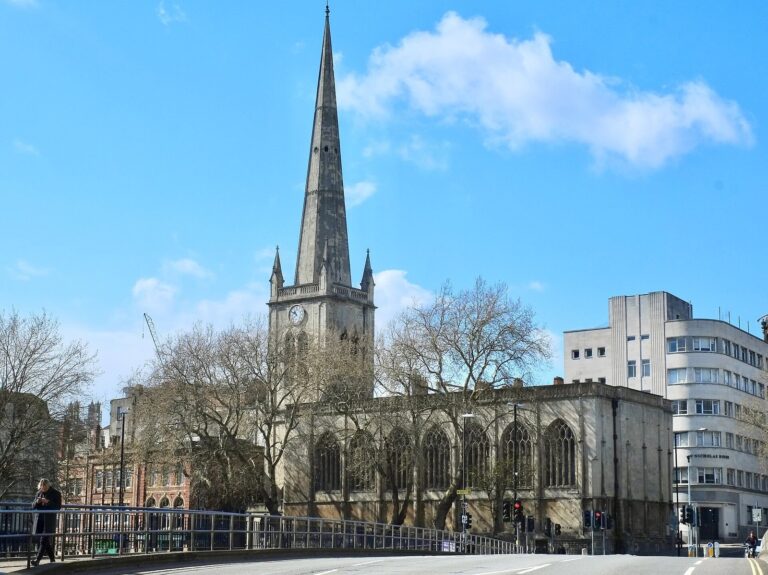
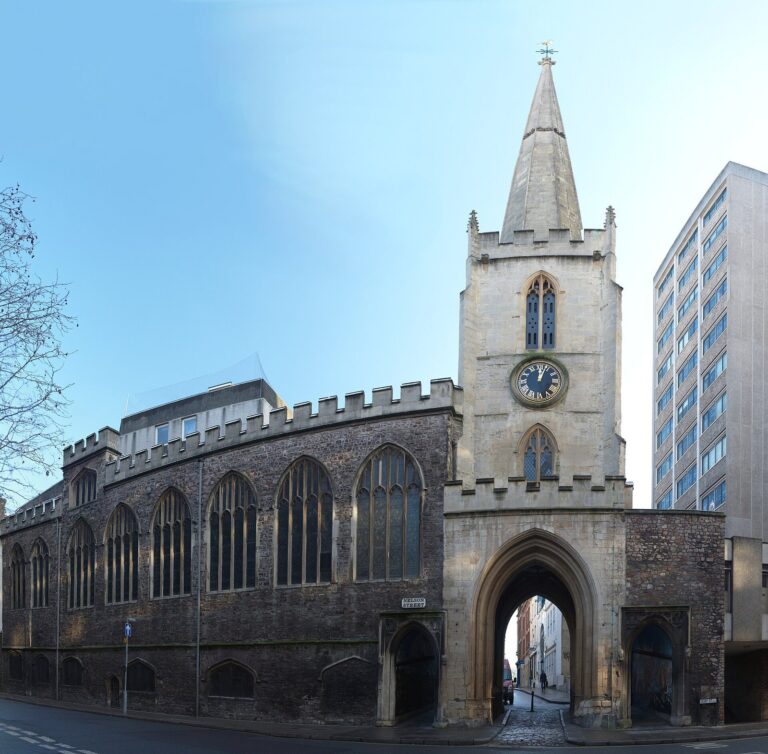
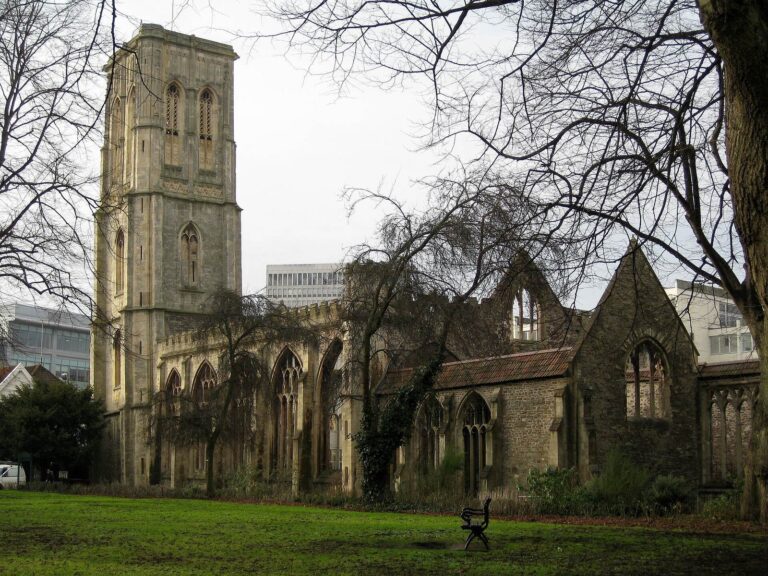
St Mary le Port Church is a ruined parish church in Bristol, United Kingdom, traditionally founded in the Saxon period. It was rebuilt and enlarged between the 11th and 16th centuries.
Saxon foundation and medieval rebuilding
The church’s origins are traditionally placed in Saxon times. Rebuilding and enlargement continued over several centuries, from the 11th through the 16th century.
Evangelical teaching
During the 19th century and into the early 20th, St Mary le Port became a popular centre for evangelical Protestant and Calvinist teaching within Anglicanism. Anglicanism is the Christian tradition of the Church of England and related churches, while Calvinism is a Reformed Protestant tradition.
War damage and the later congregation
On 24 November 1940, German air raids on Bristol during the Second World War, known as the Bristol Blitz, destroyed most of the church. Rector William Dodgson-Sykes and the congregation then moved to St John on the Wall. Many parish records were also lost in the bombing.
The congregation remained at St John on the Wall until the Church Commissioners closed it for worship in 1984, after a prolonged struggle involving its congregation. The remaining worshippers moved to the chapel at Foster’s Almshouses, charitable residences traditionally provided for people in need. In 1995, they joined the Church of England (Continuing), a continuing Anglican body. It no longer lists a Bristol congregation, and some former members joined a Free Presbyterian Church (Ulster) congregation in Horfield.
Copies of baptism, marriage, and burial registers survive at Bristol Archives, alongside records concerning the church’s incumbent, churchwardens, parochial council, charities, schools, and deeds. The surviving tower is both a Grade II listed building, a status recognizing special architectural or historic interest, and a scheduled monument, a nationally important site with legal protection. In 1968, a painting of the bomb-damaged church by John Piper appeared on a British commemorative stamp valued at 1 shilling and 6 pence, in a set featuring paintings by four British artists.
Remains
The tower and its setting
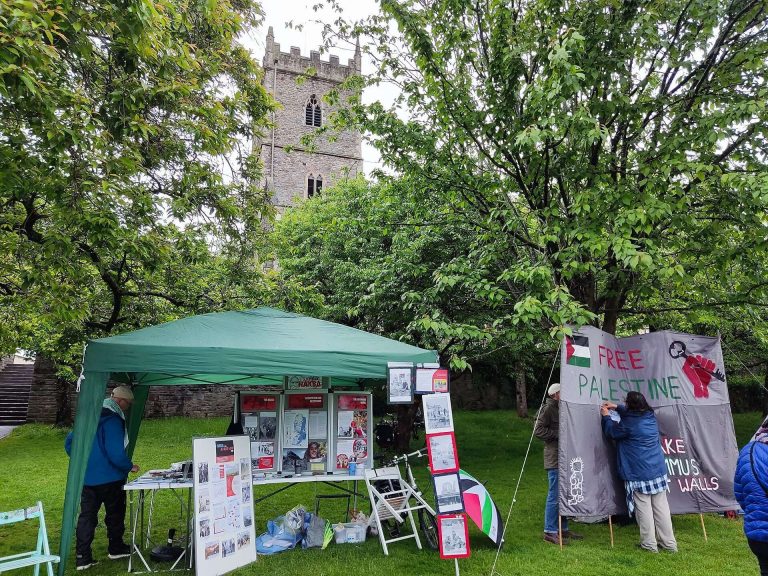
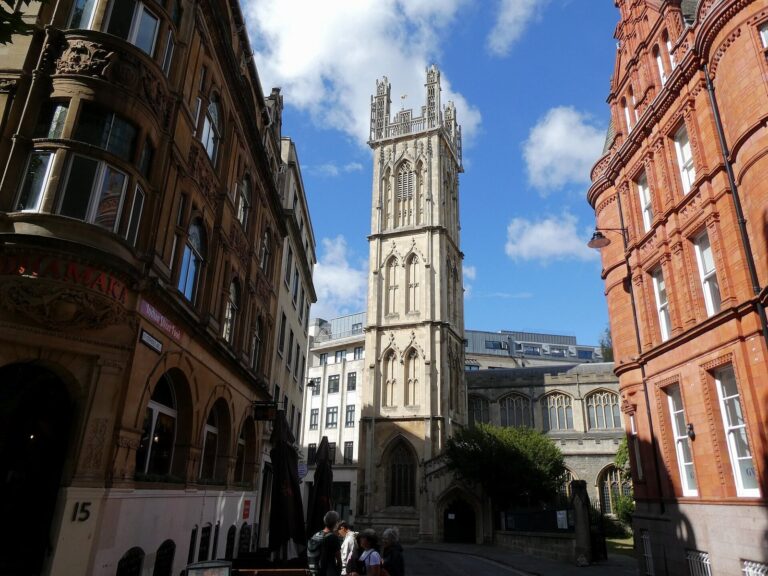
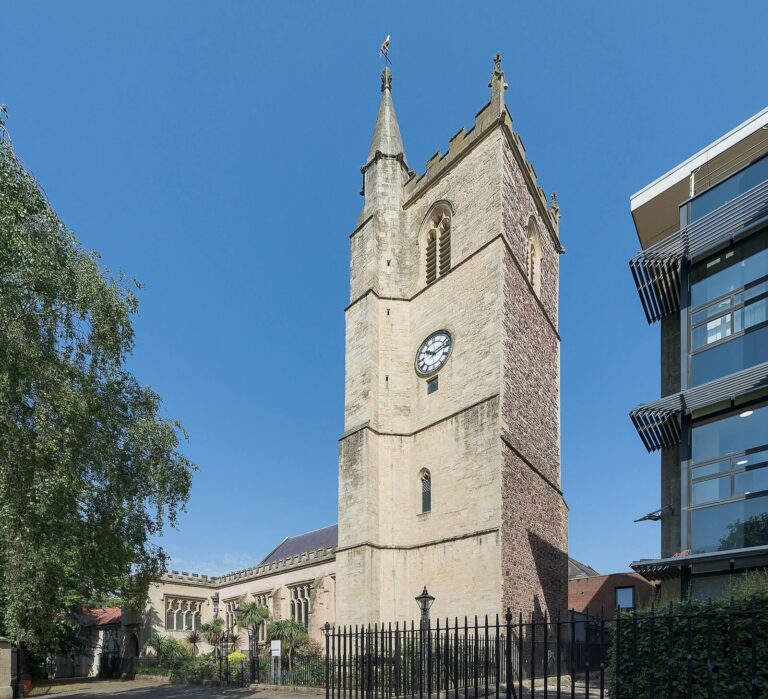
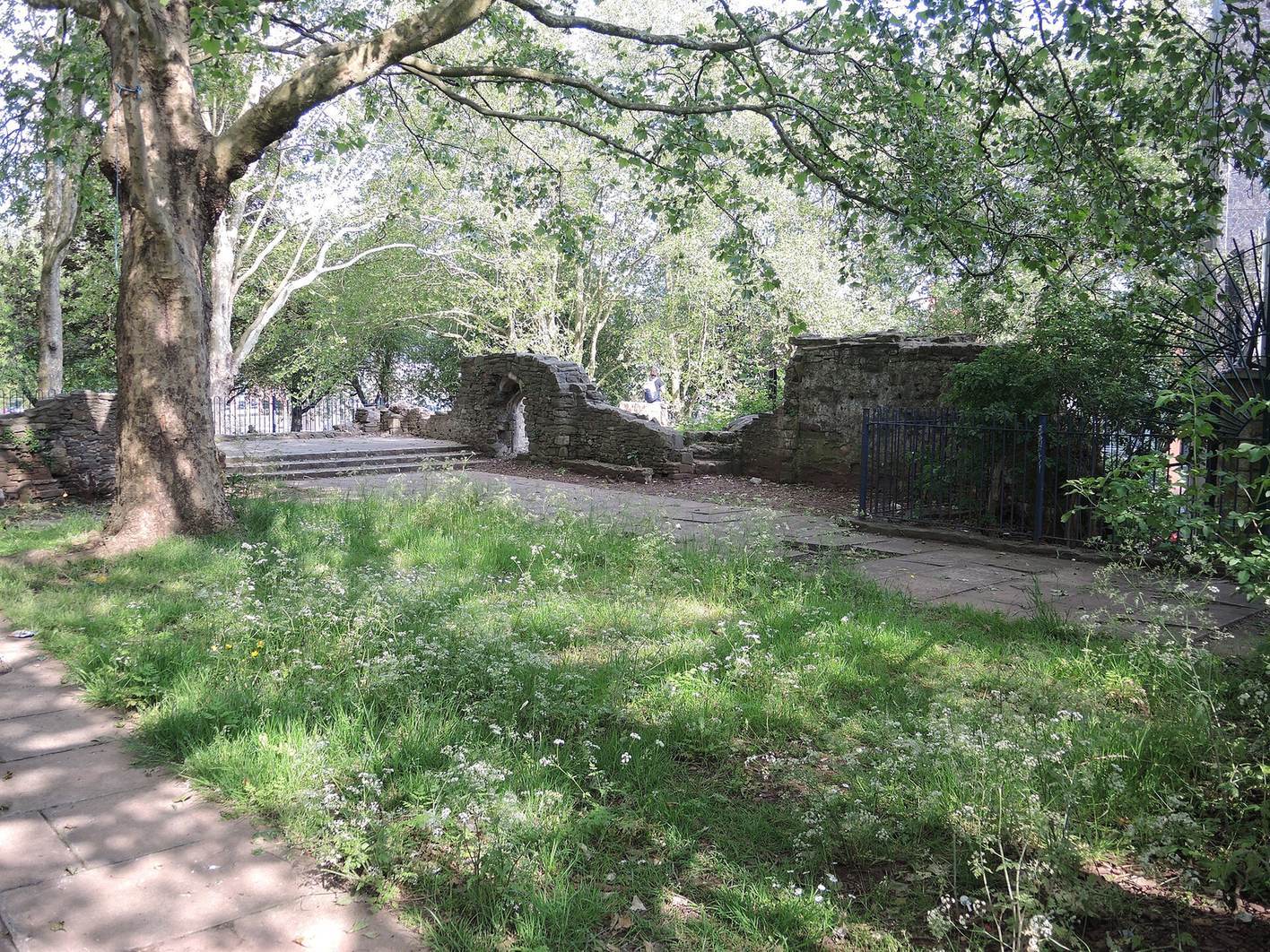
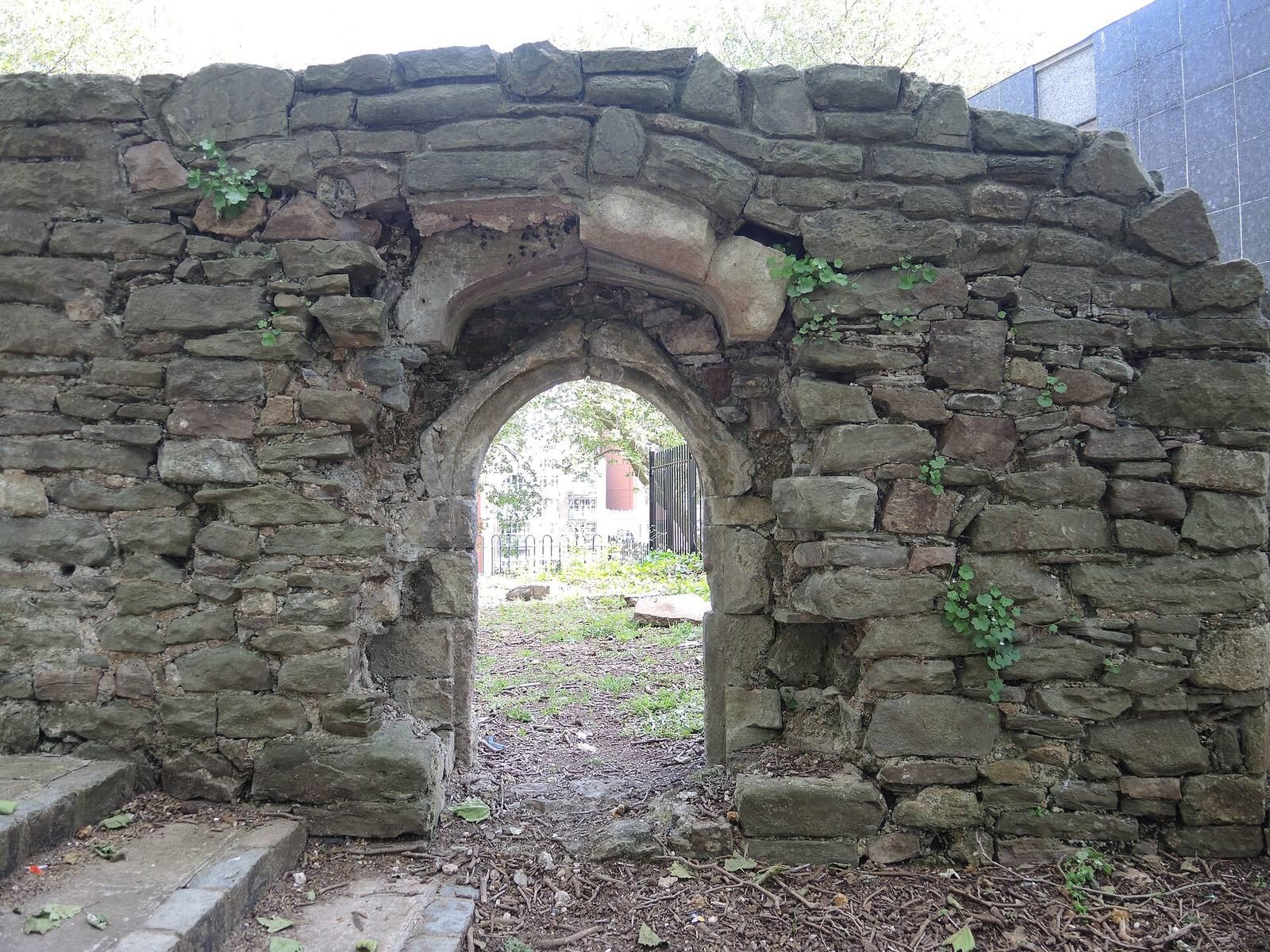
The church ruins are in Castle Park, beside the remaining line of Mary le Port Street. The 15th-century tower is the only surviving part of the church. During the latter part of the 20th century, modernist buildings associated with Norwich Union and the Bank of England stood around it. By the 2020s, both buildings were empty and semi-derelict.
Archaeological evidence
Excavations found foundations from an Anglo-Saxon phase of the church, and Saxon pottery was found nearby.