Hohmichele: A Princely Burial Mound in Germany
Site at a Glance
- Rating
- 4.6
- Popularity
- Medium
- Country
- Germany
- Primary era
- Iron Age
- Eras represented
- Iron Age, Modern
- Civilizations
- Hallstatt culture
- Site type
- Burial
- Remains
- Burial Mound
On this page11 sections
History
Hohmichele is a princely burial mound near Altheim in Germany, built in the seventh century BC by people of the late Hallstatt culture. The Hallstatt culture was part of the early Iron Age in Central Europe. Burials at the mound date from the late seventh century to the second half of the sixth century BC. About 3.5 km west of Hohmichele, the Heuneburg was a major fortified settlement of the period, and the mound is closely connected with its settlement history.
In 1936, Gustav Riek, head of the University of Tübingen’s Institute of Prehistory, began excavations for the Ahnenerbe, an SS-affiliated Nazi organization devoted to research into ancestral heritage. Work continued until October 1938, when the worsening political situation brought it to a halt; there were no further investigations during the war. The excavation moved about 15,000 cubic metres of earth, roughly a third of the mound, and exposed the central grave. It also lowered the summit to about half its former height.
Siegwalt Schiek led further investigations from 1954 to 1956. Thirteen burials were identified, and the central grave had been almost completely looted soon after the burial. In 1960, the mound was restored to its former height of 13.5 m.
Remains
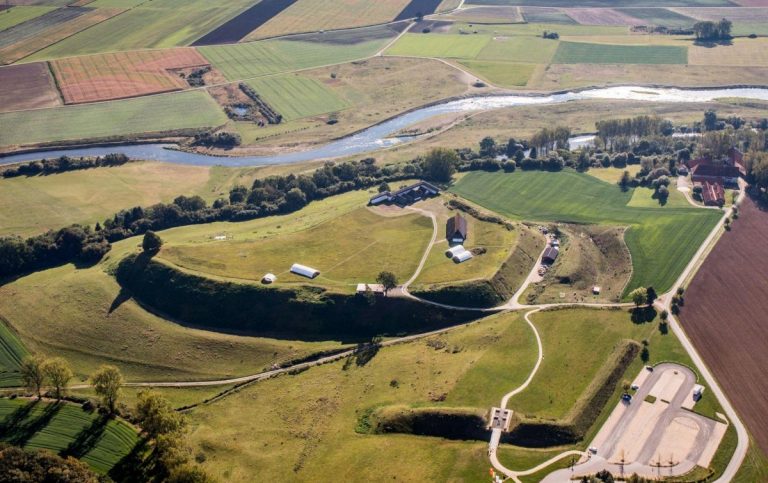
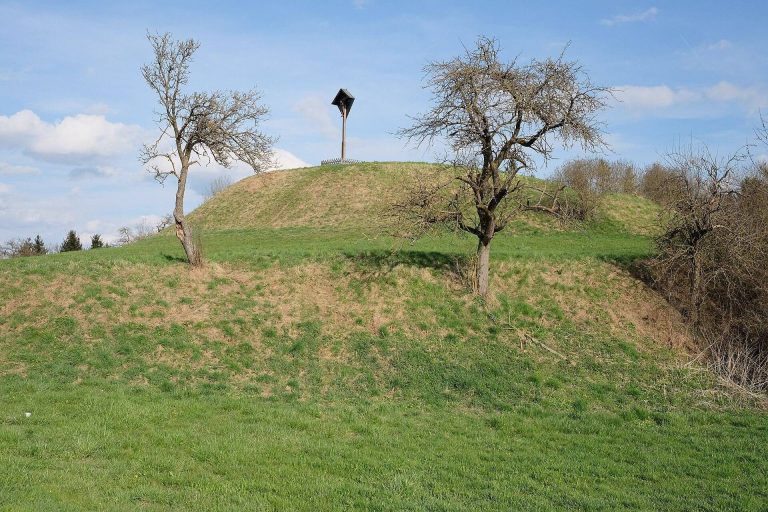
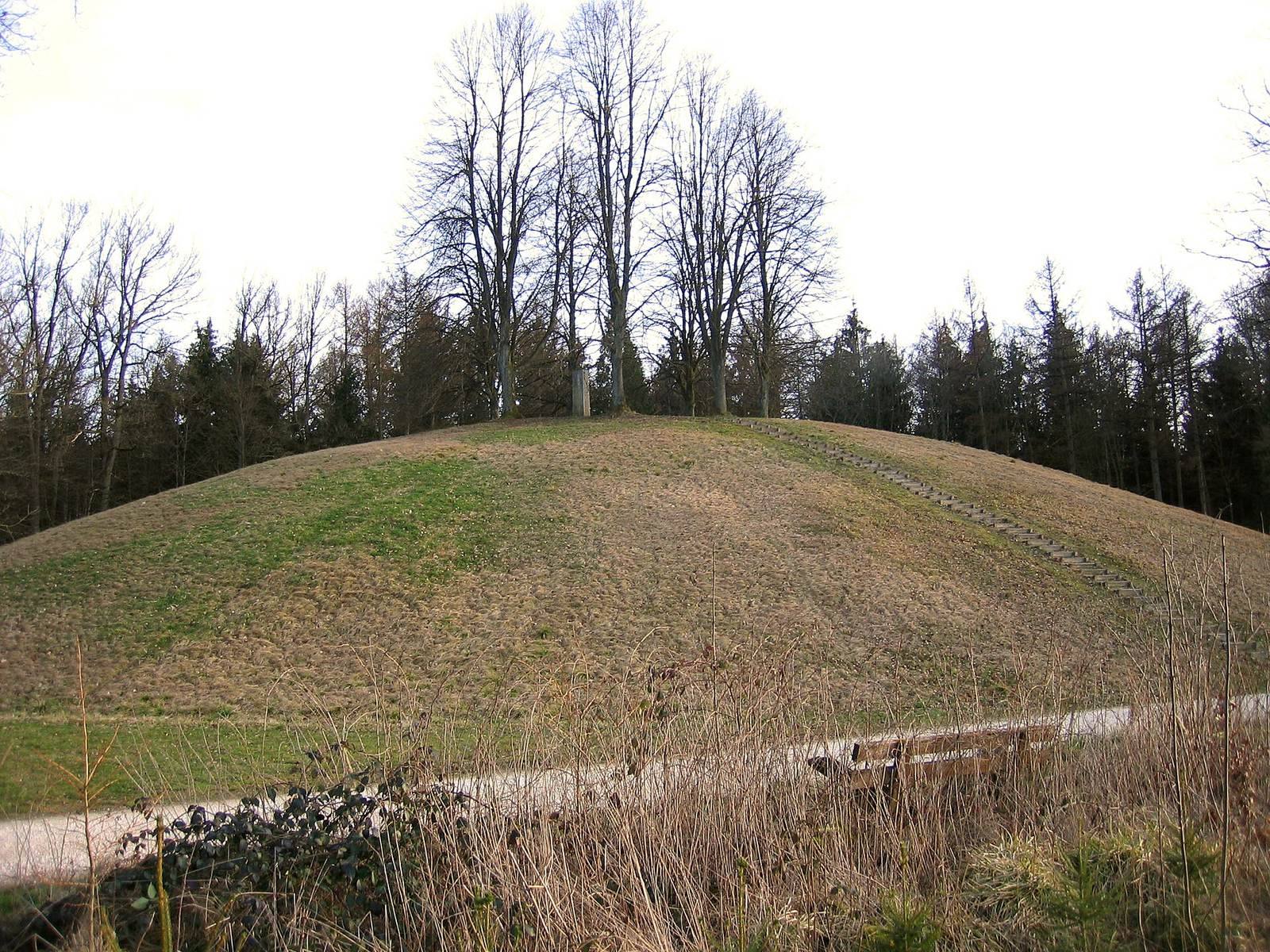
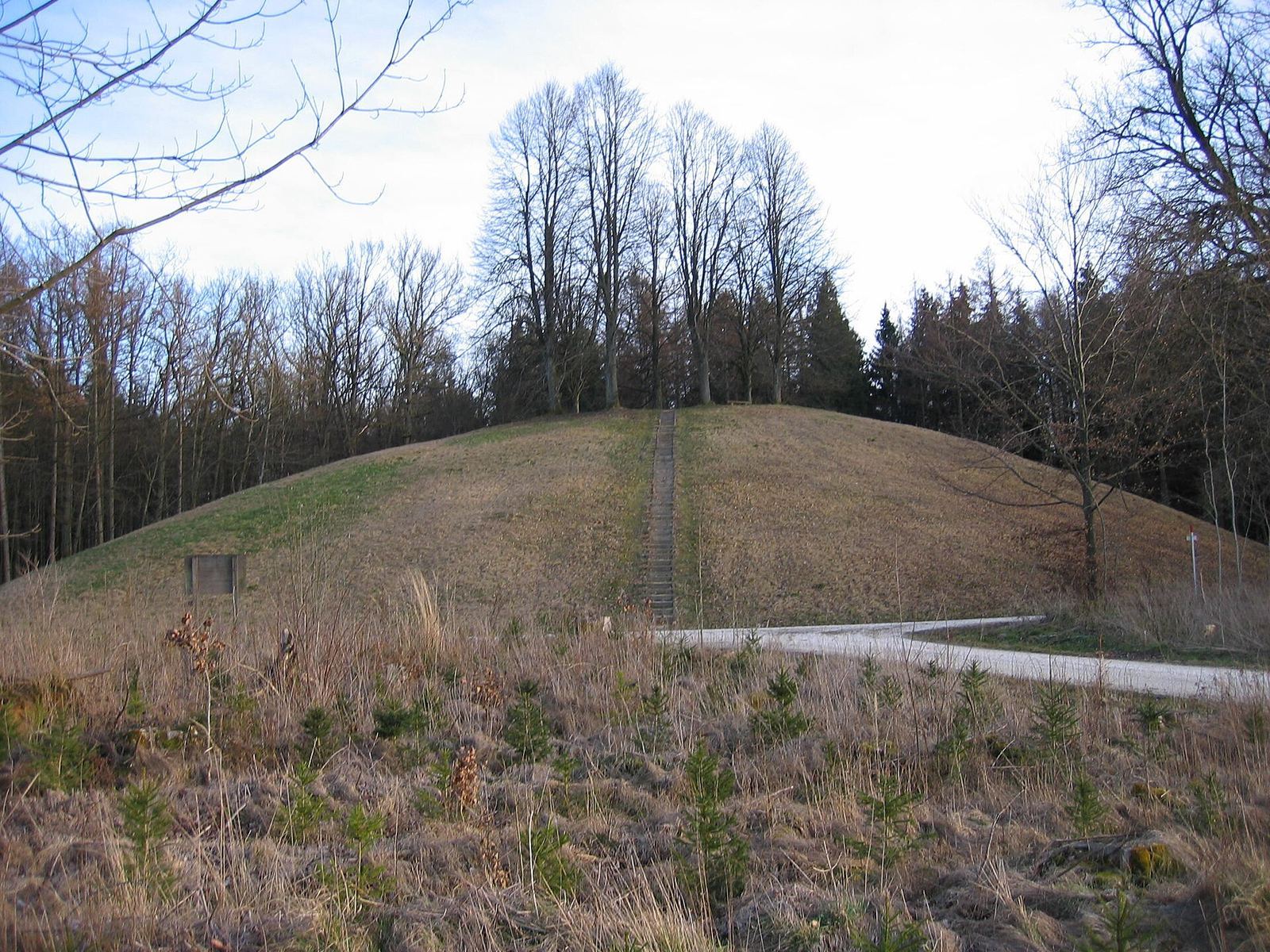
Hohmichele is an overgrown earthen mound in a small woodland clearing. It measures about 85 m across and 13.5 m high, placing it among the largest burial mounds in Central Europe. A raised central mound, about 40 m across and 5 m high, had been heaped over the principal grave. The burials include chambers lined or built with timber, set within the mound at different levels.
Burial chambers and funerary evidence
The central grave
Known as Grave I, the central grave was a chamber at ground level, lined with oak planks and measuring 5.7 m long, 3.5 m wide, and 1 m high. A man and a woman were buried there, and cattle hide covered the floor. Finds included horse-harness remains, nearly 600 glass beads from a costly necklace, and fine gold threads from brocade, a richly patterned fabric. The chamber had been almost entirely looted soon after the burial.
Grave VI
Grave VI lay 12 m southeast of the central grave and about 2.20 m above the mound’s original surface. Its intact timber chamber measured 3 m by 2.40 m by 1 m and held a man and a woman. The woman was buried in a four-wheeled wagon fitted with harness for two horses; the man lay on wooden planks. Bronze food and drinking vessels were arranged nearby, including a kettle and ladle at their feet and a bowl beside the head. Other grave goods included a quiver with 51 iron arrowheads, an iron chopping knife, and rich jewellery of glass and amber. One necklace contained about 2,300 sea-green glass beads. Wool embroidery survives among the textiles, providing some of Europe’s earliest evidence of embroidery.
Grave IX and other burials
About 1 m above Grave VI was Grave IX, a burial associated with a funeral pyre. It held a woman who died between the ages of 18 and 30, with two bronze arm rings and more than 20 pottery vessels decorated with red paint and incised, stamped, and scratched patterns. Six further graves, numbered II to V, VII, and VIII, were inhumations. In total, 22 hearths were made on successive surfaces during the mound’s construction, probably in connection with funerary rites.
Other finds
Additional finds include ornamental chains, arrowheads, a cauldron, wheel hubs, and bronze plates associated with a funerary meal. The wheel hubs provide evidence for the Celtic practice of burying complete wagons with their horse harness. A piece of silk identified as Chinese was also recovered. Most of the finds are held by the Landesmuseum Württemberg and the Heuneburg Museum in Hundersingen.
The surrounding burial landscape
The Hohmichele group
About 50 burial mounds form a group in the area around the Heuneburg. Fourteen other mounds remain recognizable in a nearby small wood, and none reaches Hohmichele’s height. Several ring ramparts also lie in the surrounding area.
Rectangular enclosure
A small rectangular earthwork enclosure lies just east of Hohmichele’s foot and has been investigated archaeologically.
Summit memorial
A stone-cast stele, an upright commemorative stone, stands on the summit within a circle of eight trees, with benches between them and a staircase leading to the monument. The Tübingen Forest Directorate and State Forest Administration erected it in memory of their members killed in the First and Second World Wars. Its east face describes Hohmichele as a Celtic funerary monument of the sixth century BC and refers to partial excavation in 1936 and 1937. The west face commemorates those killed in the wars of 1914–1918 and 1939–1945.