Provan Hall: A Historic House in Glasgow
Site at a Glance
- Rating
- 4.6
- Popularity
- Medium
- Country
- United Kingdom
- Primary era
- Medieval
- Eras represented
- Medieval, Early Modern
- Civilizations
- Kingdom of Scotland
- Site type
- Domestic
- Remains
- Manor House
On this page9 sections
History
Provan Hall is a historic house in Easterhouse, Glasgow, Scotland, in the United Kingdom, comprising buildings dating from the late 15th or early 16th century. Early records called it the Hall of Provan; the name Provan Hall now refers to the buildings collectively. The house was once used by the prebendary of Balernock, a clergyman whose office provided income from church property.
The Baillie household
After the Scottish Reformation, the 16th-century religious transformation that made Scotland predominantly Protestant, Provan Hall became the residence of lawyer and judge William Baillie and his wife, Elizabeth Durham. Baillie, also known as Lord Provand, collected teinds, or tithes, in 1566. These revenues, called the Thirds of Benefices, came from church benefices and were collected for Glasgow’s parsonage. In November 1592, James VI of Scotland, who later ruled England as James I, confirmed Baillie’s ownership of Provan’s mill and meadow.
Durham died at Provan Hall on 11 December 1585. Her will recorded livestock and textile work on the estate, as well as debts for linen and harding, a coarser linen cloth, bought from William Watson and John MacNair. Known as the Officers of Provan, the two men worked on and administered the estate. The linen was probably made from locally grown flax, spun by women on the estate and woven by professional weavers in Glasgow. In a 1578 letter about a cloak for her daughter, Margaret Kennedy, Countess of Cassilis, referred to black cloth of this kind as one of Lady Provan’s skirts.
Hamilton ownership and the Glasgow estate
Elizabeth Baillie, heiress of Provan, married Robert Hamilton, and the Hamilton family acquired the lands in 1593. On 31 October 1599, Elizabeth and Robert gave the house and lands to their eldest son, Francis Hamilton of Silvertonhill. James VI confirmed the gift on 15 November 1600. Francis later sold the property to his brother Edward, and it remained with the Hamilton family of Silvertonhill.
In 1667 Robert Hamilton sold the property to Glasgow. The city council created the office of Bailie of Provan to manage the estate and renovated the house the next year. In 1729 the council sold the house and remaining lands to Robert Lang. After the estate was divided, John Buchanan bought Provan Hall in 1767; his descendants retained it until it passed to the National Trust for Scotland in 1938. The council continued appointing a Bailie of Provan after the land had been sold.
Modern care
In the 1950s, Harold Bride, the junior wireless operator on the Titanic’s maiden voyage, lived at the hall as caretaker for the National Trust for Scotland and maintained the building. Restoration work followed in 1980 and 2005. Provan Hall received category A listed status in 1970, Scotland’s highest listed-building category. The National Trust for Scotland owns the property, which is leased by Glasgow City Council and managed by Provan Hall Community Management Trust as a small museum and community hub.
Remains
The courtyard complex
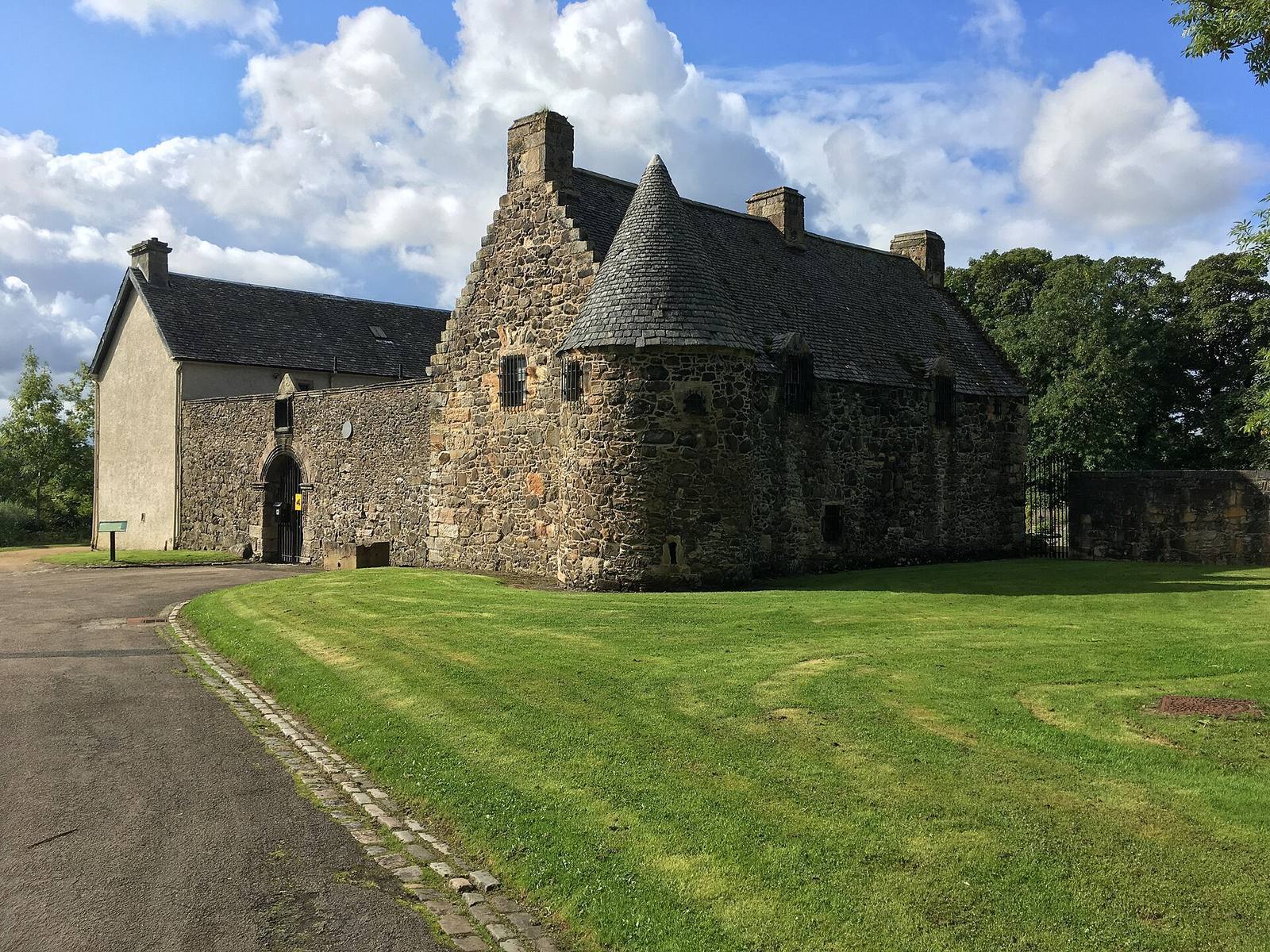
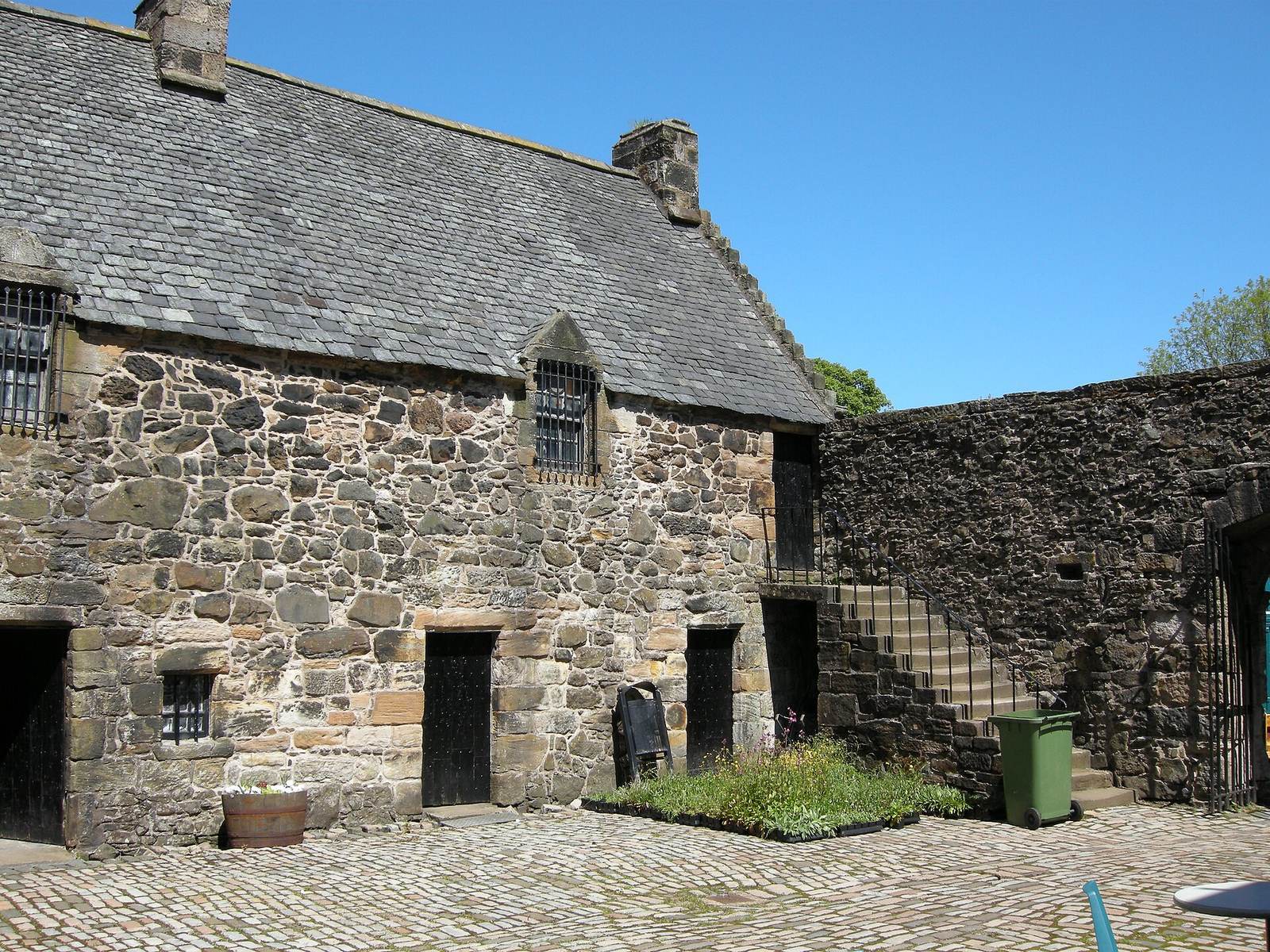
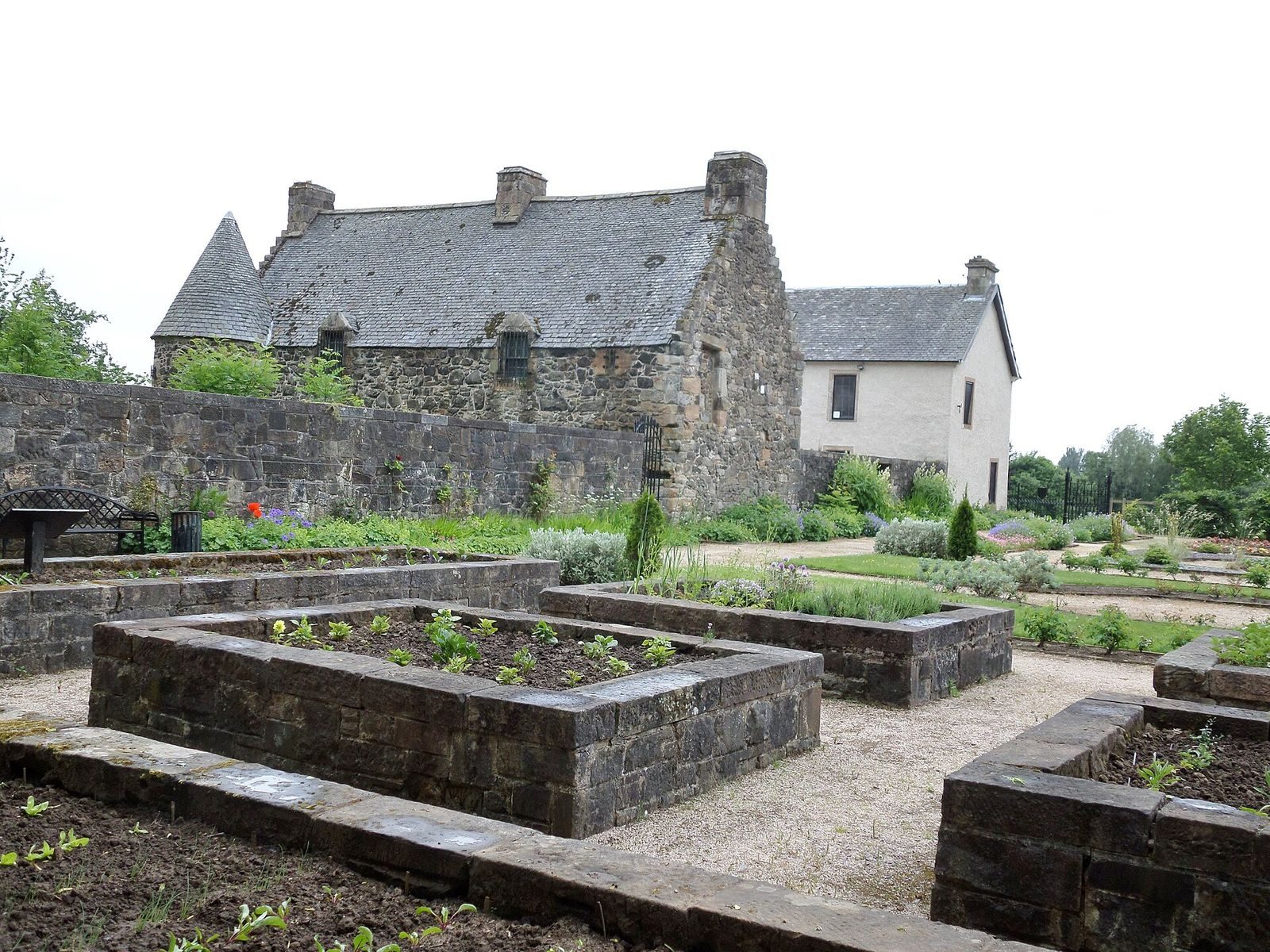
Provan Hall stands in Auchinlea Park, a 20-acre park in Easterhouse. Two parallel buildings define a courtyard and are joined by a screen wall, a dividing wall that separates space without enclosing a complete building. The relatively plain complex has Renaissance architectural details.
Northern building
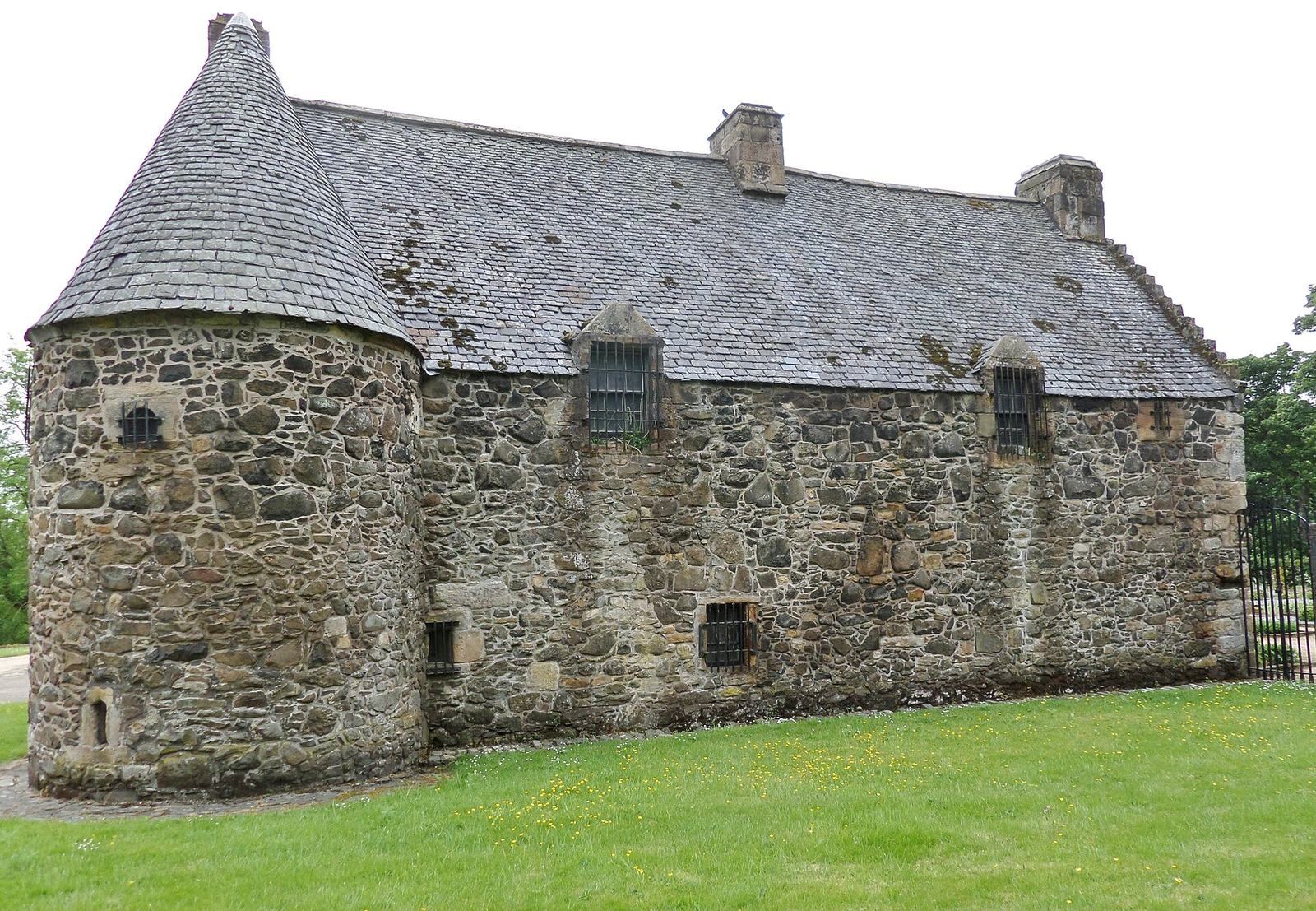
The northern building has dormers, windowed structures projecting from a sloping roof. A round tower rises from its northeast corner and is capped by a conical roof.
Southern building
The southern building is two storeys high, with a harled, or roughcast-plastered, exterior. It is three bays, or vertical sections of a facade, wide. It appears considerably younger than the northern building, although its plaster finish may contribute to that impression.
Screen wall and entrance
A round-arched Renaissance portal, or formal entrance, passes through the screen wall. Above the courtyard entrance, a carved stone bears the initials R.H., identified as Robert Hamilton, the Hamilton arms, and the date 1647. That date is given as the wall’s building date, though the wall may have been rebuilt.