Theater of Herod: A Roman Performance Venue at Caesarea
Site at a Glance
- Rating
- 4.6
- Popularity
- Very High
- Country
- Israel
- Primary era
- Classical
- Eras represented
- Classical
- Civilizations
- Roman
- Site type
- Entertainment
- Remains
- Theatre
On this page8 sections
History
Foundation and Roman use
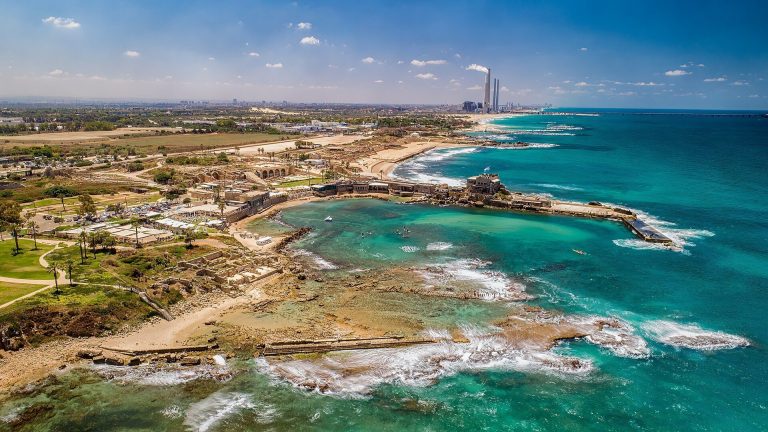
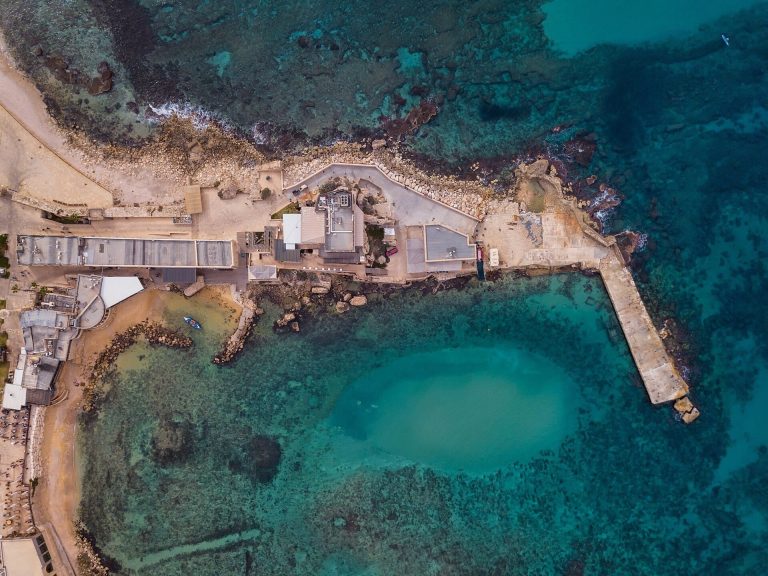
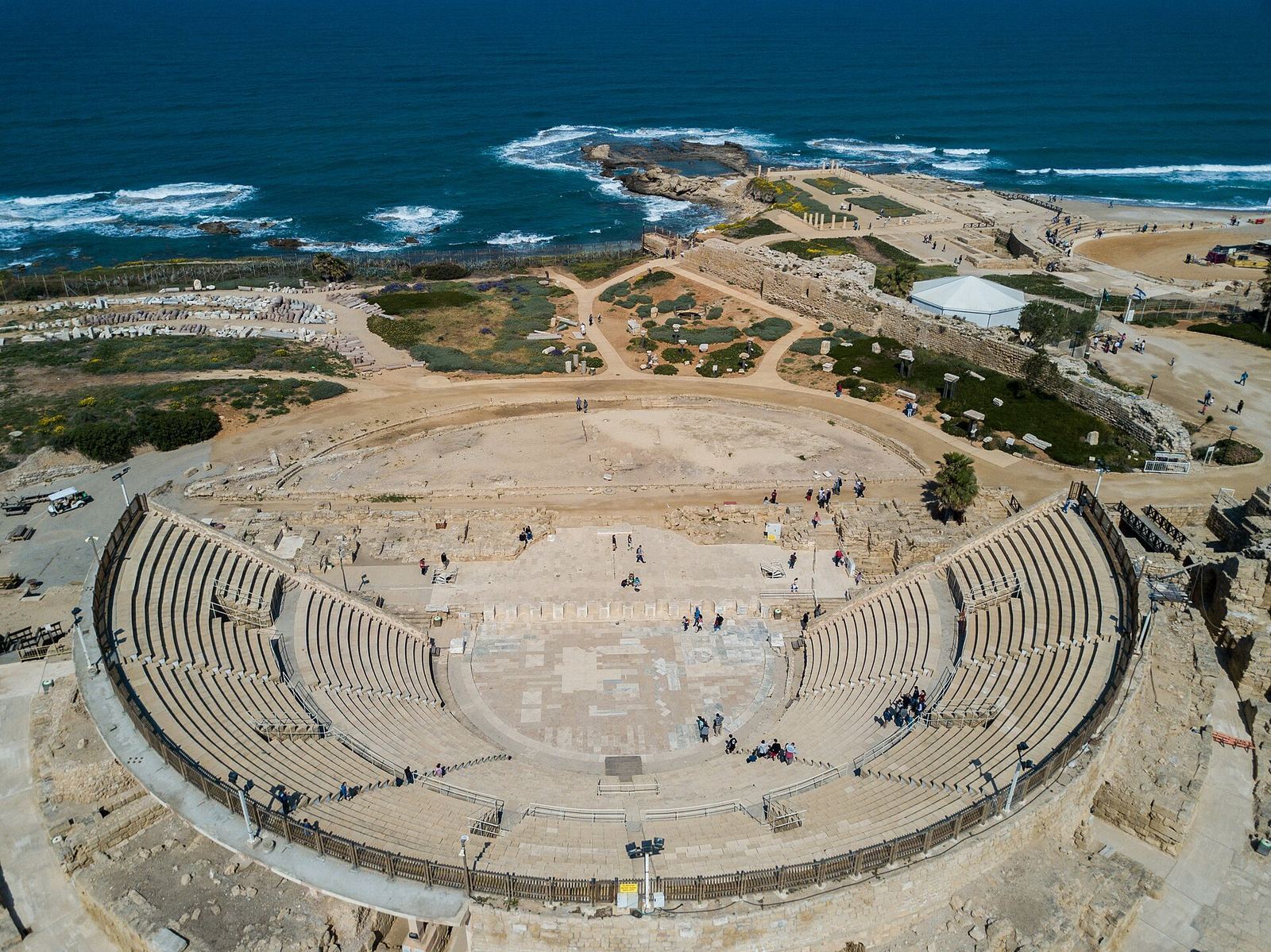
The Theater of Herod is a Roman performance venue at Caesarea in Israel, built by Herod the Great between 22 and 10 BCE as part of the city’s development. Herod was king of Judea under Roman rule, and Caesarea was named in honor of Augustus, Rome’s first emperor. The theater is the oldest surviving Roman theater in the eastern Mediterranean and one of the largest and most important theaters discovered in Israel.
It hosted Greek and Roman plays, sporting events, and gladiatorial contests, and remained in use into the sixth century. The building was enlarged in the third century. In the fourth, its orchestra, the central performance area, could be flooded from a reservoir for water spectacles, including staged naval battles.
Late Roman and Byzantine transformation
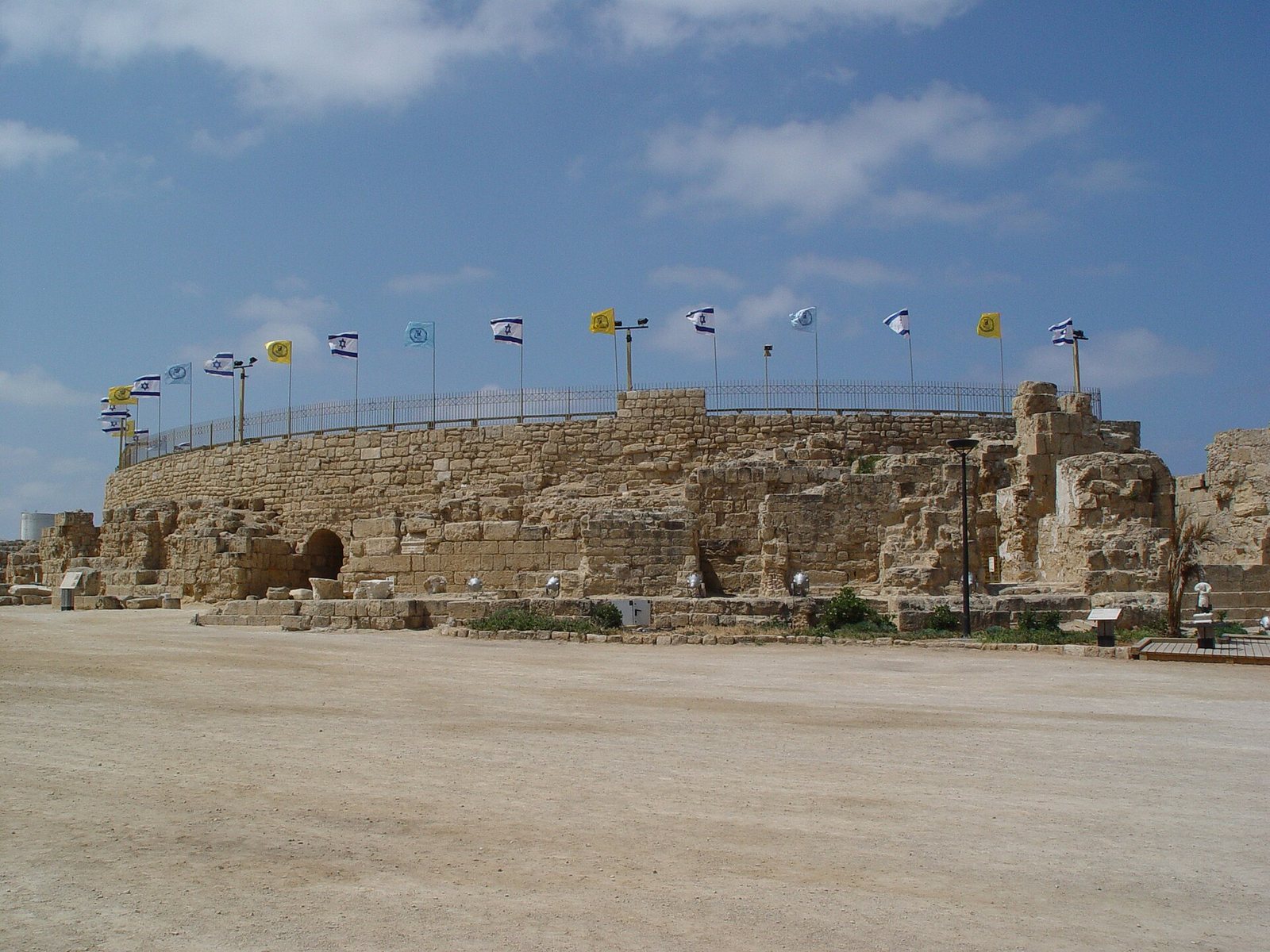
In a late phase of the Roman Empire, workers removed the stage building and altered the orchestra, turning the theater into an amphitheater, an oval or circular arena surrounded by seating. Under Justinian, emperor of the Byzantine Empire, the eastern continuation of Roman imperial rule, it ceased to function as a theater in the sixth century and was partly adapted as a fortress.
During the Byzantine period, an uprising in 555 destroyed Caesarea’s governor’s palace, and the fortress temporarily became the governor’s residence. After the Byzantine era, the theater fell out of use, became a ruin, and was gradually buried by sand.
Excavation and renewed use
Excavations in the 1950s and 1960s uncovered the theater, which was extensively restored. Performances began there in September 1961 with the Catalan cellist Pablo Casals. The restored venue reopened in 1964 with Beethoven’s Ninth Symphony, conducted by Austrian-born conductor Josef Krips. It continues to host concerts and performances.
Remains
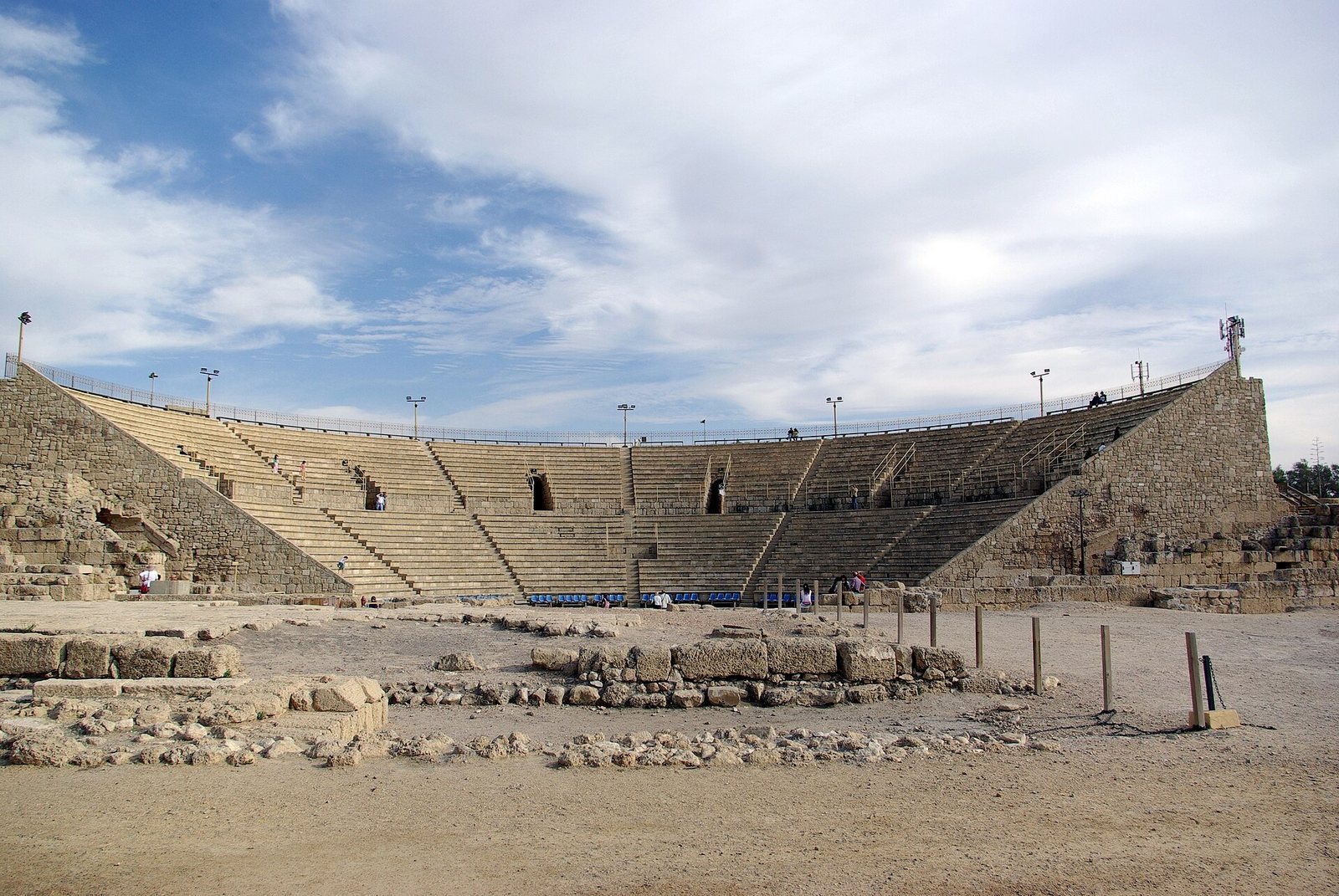
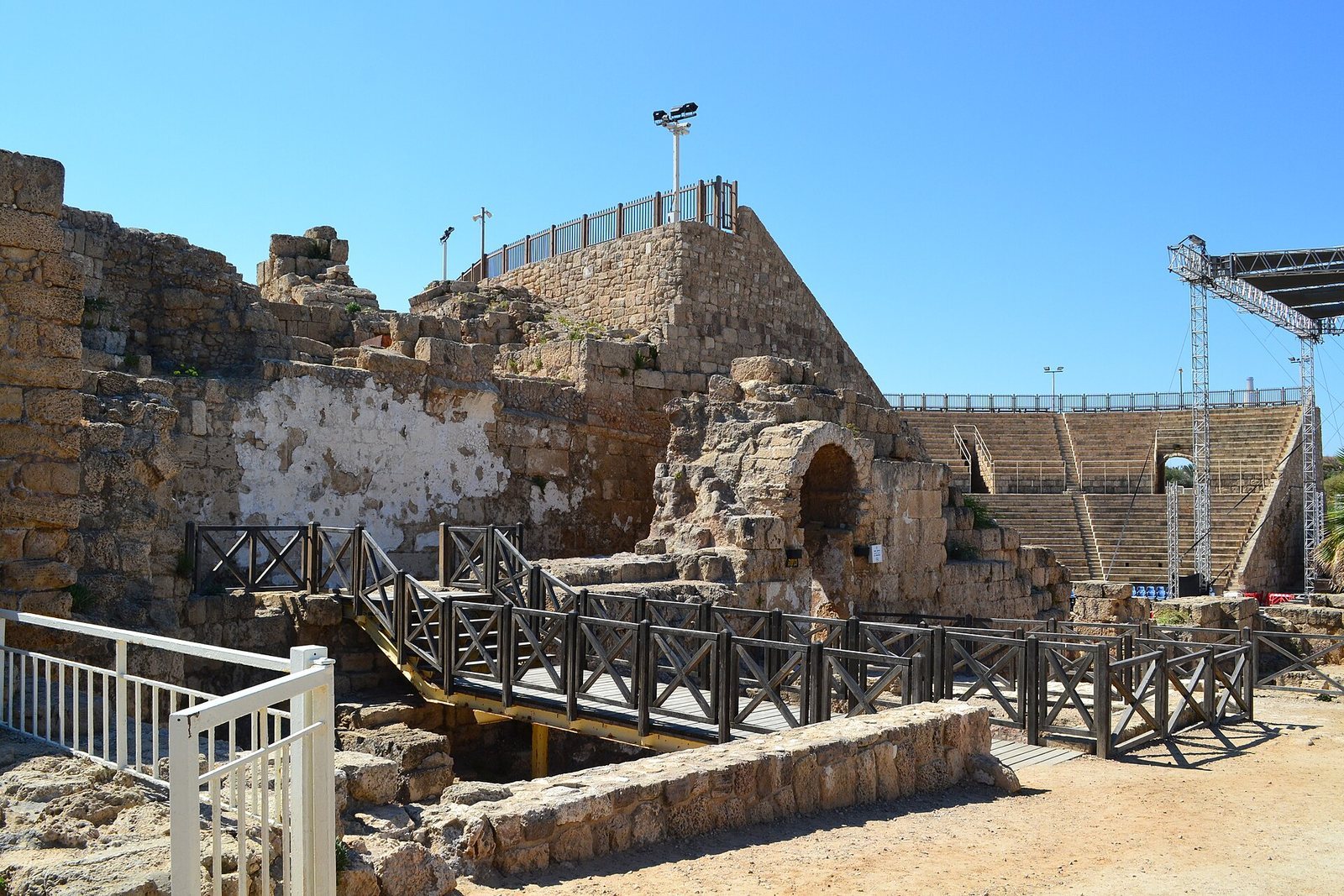
Built of local limestone, the theater has a semicircular plan, with seating blocks divided by circulation passages and arched entrances. It measures about 90 metres across and held approximately 4,000 spectators. A broad space at the foot of the seats could also serve as a performance area. Its capacity was modest beside many classical theaters; the theater at Beit She’an, for example, held 5,000 spectators.
Orchestra and performance area
The orchestra measured about 30 metres across. Its latest floor was paved in white marble, while excavators found earlier Herodian floors beneath it, made of colored plaster and decorated with geometric designs renewed in successive layers. The decoration followed a Roman approach associated with Pompeii and favored by Herod. In the theater’s later Roman form, the orchestra was reshaped as a complete circle.
Stage building and audience facilities
The stage building once rose several stories, with its upper section reaching close to the highest seats. It screened spectators from the landscape beyond, unlike Greek and Hellenistic theaters that allowed views past the stage. Underground rooms served as actors’ dressing rooms. A semicircular portico, a roofed walkway supported by columns, was added to the stage building in the third century. Granite columns from Aswan decorated the stage, and a large awning could be raised over the seating to shade the audience. The stage building was not included in the modern restoration.
Inscribed stone block
A stone block found in 1961 had been reused in one of the theater stairs. It originally came from a temple in Caesarea dedicated to Emperor Tiberius and was incorporated into the theater after the temple’s demolition. The inscription names Pontius Pilate, the Roman provincial governor of Judea under Tiberius, and says that he built and dedicated a Tiberieum, a shrine or other structure honoring a Roman emperor, to the deified Tiberius. The original inscription is held at the Israel Museum, and a replica is installed in the theater.