Tsukinowa Kofun: A Fifth-Century Burial Mound in Okayama, Japan
Site at a Glance
- Rating
- 3.9
- Popularity
- Low
- Country
- Japan
- Primary era
- Classical
- Eras represented
- Classical
- Civilizations
- Unclassified
- Site type
- Burial
- Remains
- Burial Mound
On this page8 sections
History
Tsukinowa Kofun is a Japanese burial mound in the Tsukinowa region of east-central Okayama, Japan, built in the first half of the fifth century. Its date and grave contents suggest that it was the tomb of a regional chief, although the identities of the people buried there are unknown.
Settlement and chiefly tombs
The Tsukinowa region lies near the meeting of the Yoshii and Yoshino rivers. From the later part of the Middle Yayoi period onward, cultivation and settlement spread through the area. Around fifty or more sites with Yayoi-period finds are located on alluvial fans and in places such as the Kibi Plateau, a highland about 300 metres above sea level. In the later Yayoi period, rice cultivation is thought to have begun in some wetlands on the alluvial plain. The Yayoi period preceded the Kofun period, named for its Japanese burial mounds.
Settlements of the Kofun period are identified in part by layers containing Haji earthenware and Sue kiln-fired stoneware. During the later Kofun period, settlements spread over the river-basin plains and nearby foothills, reflecting expanded cultivation of low-lying land. Land reclamation was thought to have helped bind communities together, alongside the rise of chiefly tombs such as Tsukinowa Kofun.
Twenty-two kofun are known in the surrounding area. Fifteen are thought to be small mounds from the later Kofun period, while two undated small mounds have box-shaped stone coffins. Five larger mounds occupy hilltops or ridges; four are considered early kofun, and the fifth has no established date. Tsukinowa is among the largest. Another especially large mound in the group is circular and 55 metres across, with haniwa and a stone revetment; it probably held a wooden coffin in a clay burial chamber.
Excavation and local remembrance
From August to December 1953, a team led by Yoshio Kondo, then an assistant at Okayama University, excavated Tsukinowa Kofun and related sites in the area. Local residents, teachers, and students took part. The work helped establish an approach combining theoretical study and field research to investigate changes in productive capacity since the Yayoi period and the historical character of early kofun. Known as the Tsukinowa method, the project drew attention as an academic, educational, and community effort. Slides and a documentary film made in 1954, as well as the collection Tsukinowa Classroom, preserved accounts of the work.
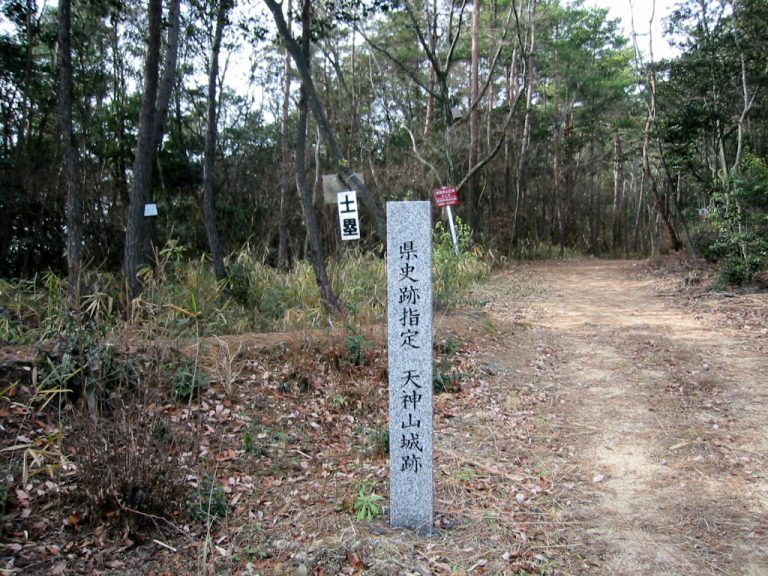
Okayama Prefecture designated Tsukinowa Kofun a prefectural historic site on September 15, 1959. The excavated objects received the prefecture’s Important Cultural Property designation on April 10, 1984. In the Yūka district, an annual Bon gathering, a Japanese Buddhist observance honoring ancestral spirits, includes an evening of Tsukinowa dance commemorating the excavation.
Remains
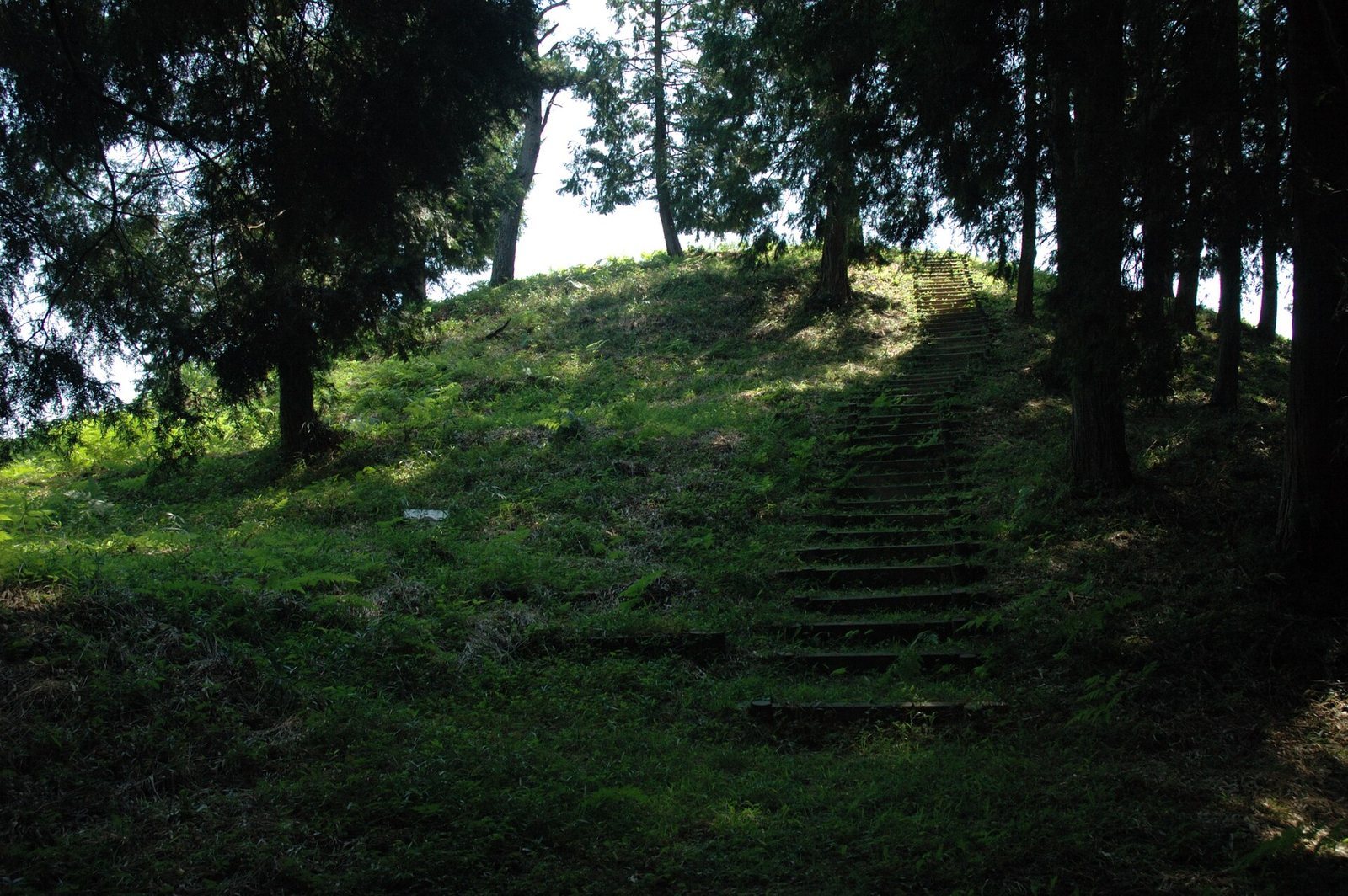
The remains form a circular earthwork on a mountain summit, with a projecting platform at its northern foot and burials in clay chambers. Angular stones and clay haniwa, objects placed on or around burial mounds, were arranged across the mound.
Mound and burials
Mound and platform
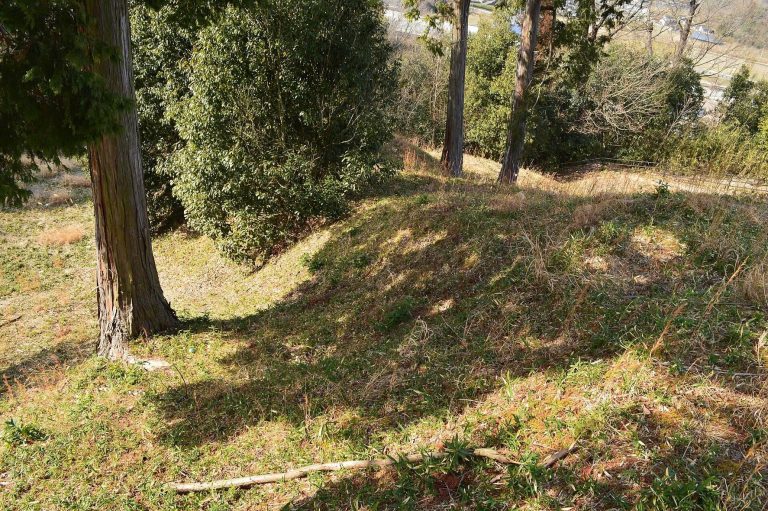
The mound stands on a summit 320 metres above sea level. It measures 60 metres across and 10 metres high, with a one-metre step partway down its slope. Its flat summit is 17 metres in diameter. A platform projects from the mound’s northern foot.
Burial chambers and grave goods
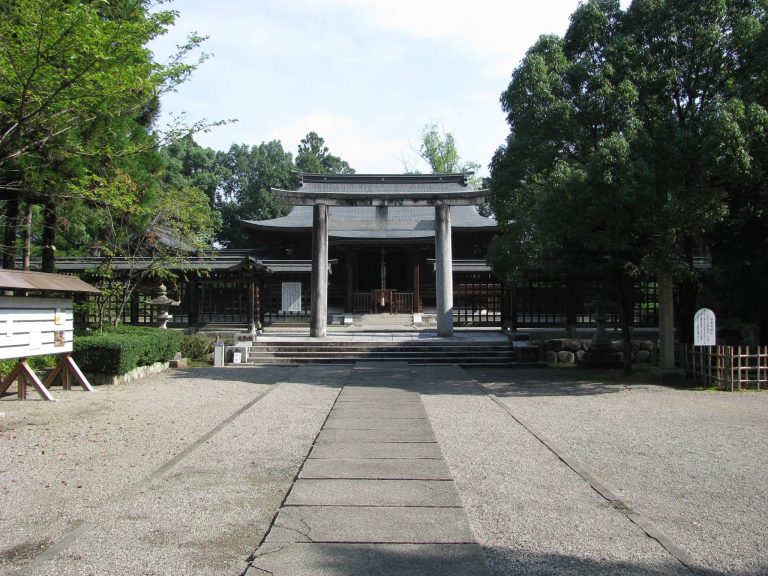
Two wooden coffins in clay burial chambers were found on the summit, and a third wooden-coffin burial was discovered in a clay chamber within the northern platform. The platform burial contained no objects. The central coffin measured 565 centimetres long and held remains thought to be male, along with a necklace, mirror, iron cuirass, leather skirt armour, single- and double-edged swords, and iron and copper arrowheads. The southern coffin measured 310 centimetres long and contained remains thought to be female, a necklace, mirror, lacquered bamboo comb, single- and double-edged swords, iron needles, and a stone armlet. The excavated objects are held at the Tsukinowa Local History Museum, a cultural-property storage facility built in 1974 in the Yūka district at the foot of the mountain.
Stone covering and haniwa
Angular stones covered the mound’s slopes. Cylindrical and morning-glory-shaped haniwa were set around the summit, along the step, and at the foot of the mound.