Grotta del Ninfeo: A Fountain Grotto at the Greek Theatre of Syracuse
Site at a Glance
- Popularity
- Medium
- Country
- Italy
- Primary era
- Classical
- Eras represented
- Classical, Early Modern
- Civilizations
- Ancient Greek, Roman, Spanish
- Site type
- Religious
- Remains
- Sanctuary
On this page11 sections
History
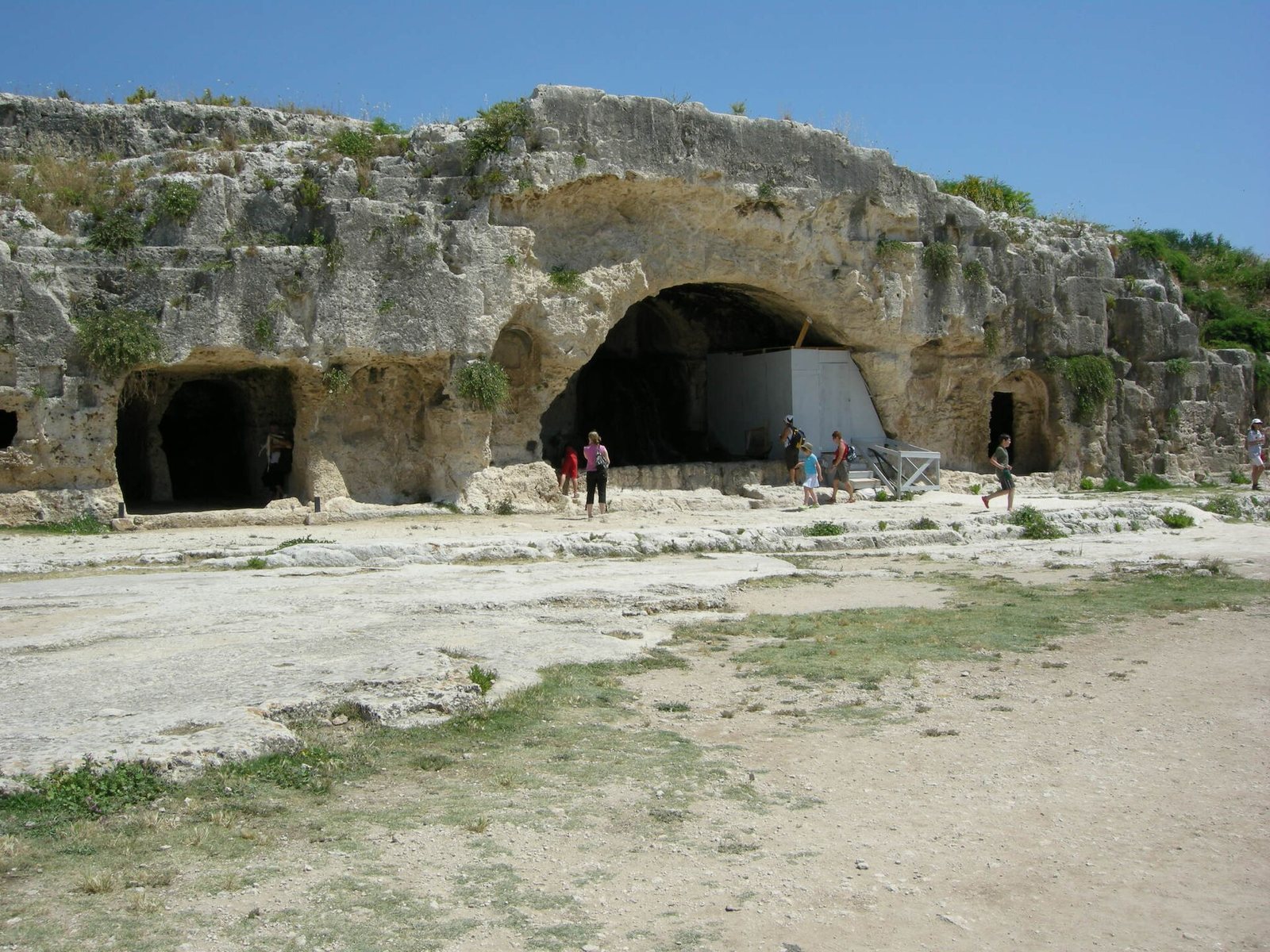
The Grotta del Ninfeo is an artificial fountain grotto within Syracuse’s Greek Theatre, in Italy. It is associated with ancient Greek Sicilian culture and the Hellenistic period, which followed Alexander the Great’s conquests, as well as the period of Roman rule and influence. Its fountain reflects Greek worship of nymphs, nature divinities, and the grotto is thought to have been the Syracusan Mouseion (a sanctuary to the Muses, deities of the arts and learning) and a seat of an artists’ guild.
Greek and Roman associations
Actors were said to gather at the grotto before descending to the theatre to perform comedies and tragedies in the time of Epicharmus, a Greek comic playwright, and Aeschylus, a tragedian.
Reuse and later interpretations
During the period of Spanish rule in Sicily, a watermill used water from the grotto to grind grain before releasing it toward the theatre.
In 1835, Syracusan writer Giuseppe Politi proposed other possible uses. He suggested that victorious ephebes, young men undergoing civic training, might have used it at an Academy of Music, in a practice he associated with the ancient Greek writer Pausanias’s description of the Theatre of Athens. Politi considered a nymphaeum, a monumental fountain associated with nymphs, decorated with statues and water displays, the more likely explanation.
Remains
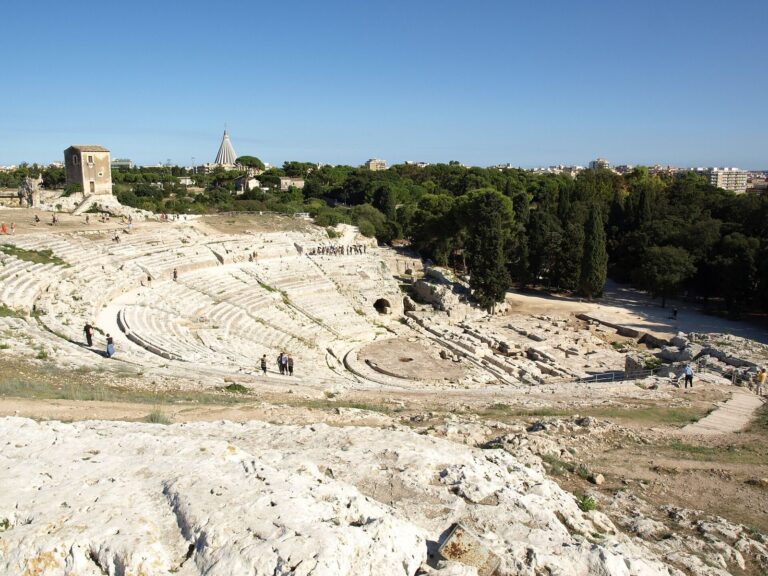
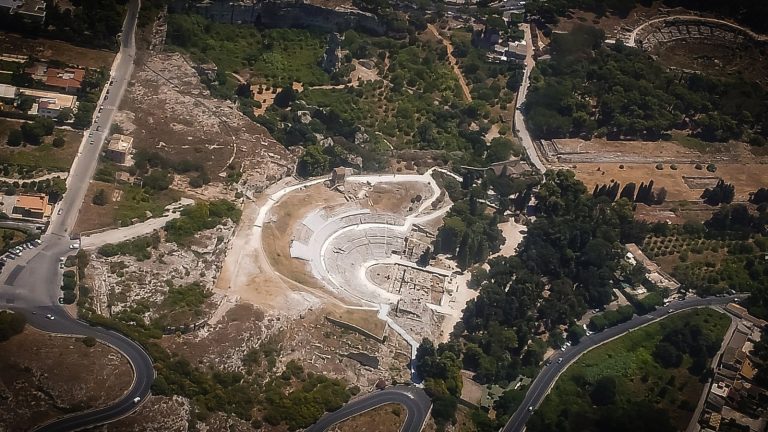
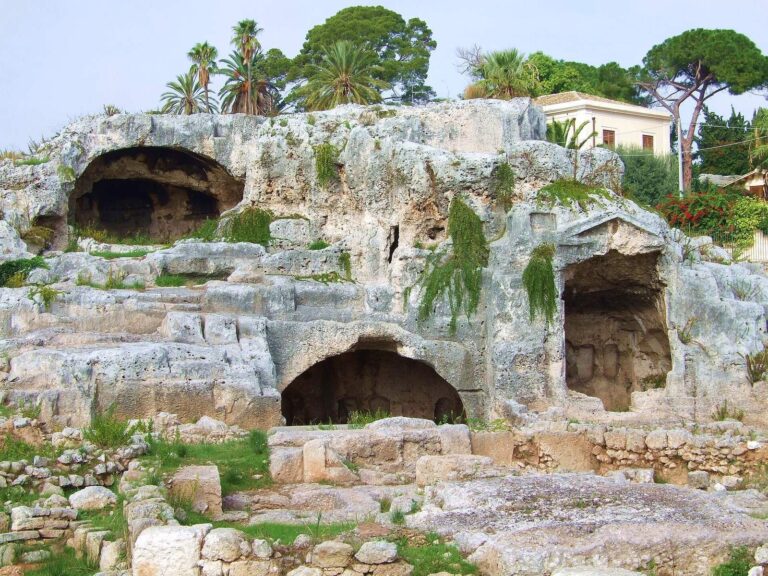
The grotto is cut into the rock of Temenite Hill, near its summit, on a rectangular terrace bordering the Greek theatre. The terrace meets the middle of a rock face, where an enclosed, L-shaped portico once stood. A small pond on the hill has nymphaea plants.
Grotto and water supply
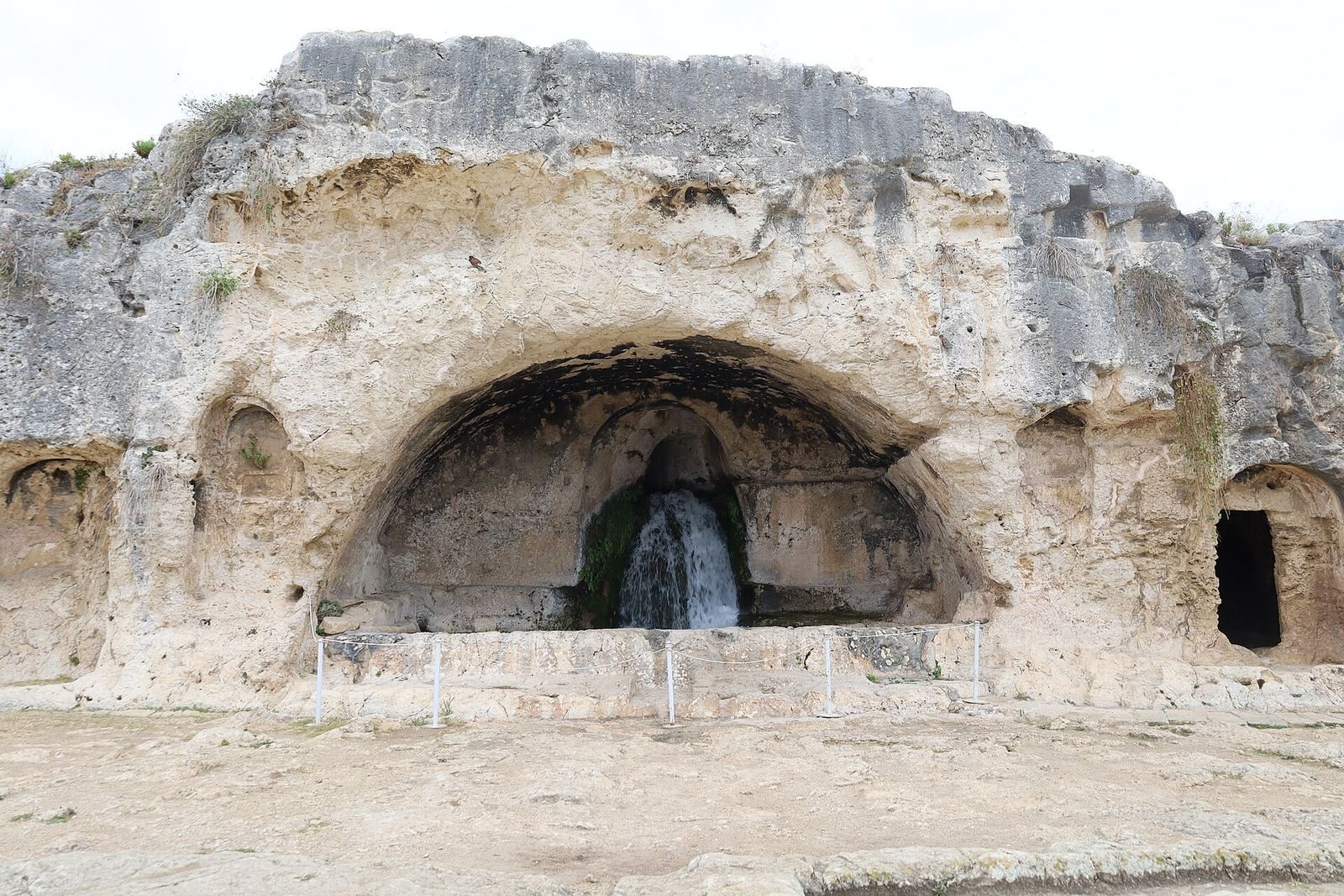
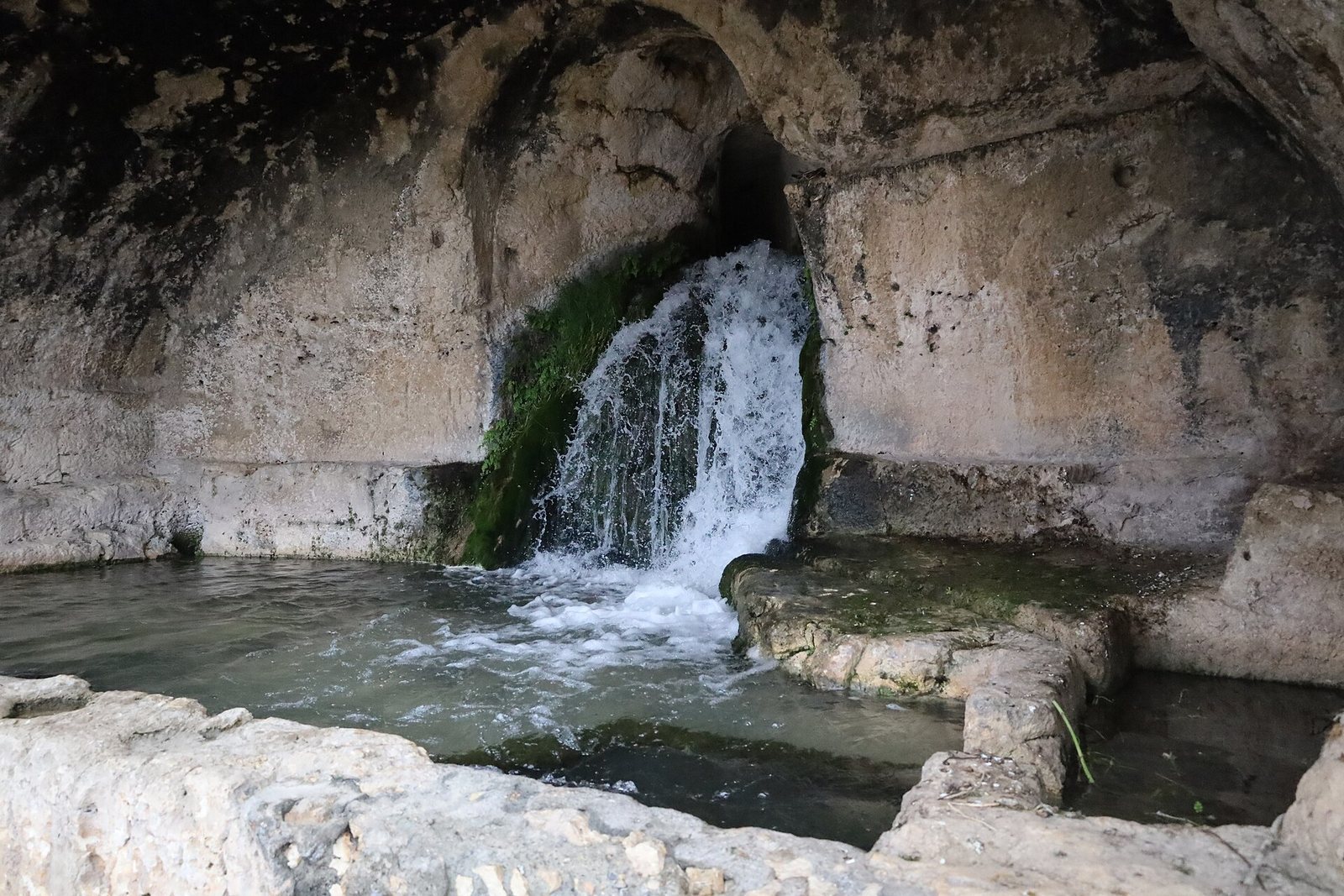
The artificial cavity has a vaulted ceiling and a rectangular basin. Water cascades into the basin from a hollow at the back of the rock face. Two separate aqueducts from the Greek period brought water to the grotto: the Nymphaeum Aqueduct, named after it, and the Galermi Aqueduct.
Rock-cut shrines and Sepulchral Street
Shrine niches and statues
Small shrine niches cut into the rock beside the entrance served the worship of heroes and were associated with pinakes, painted or inscribed votive tablets. Three statues dedicated to the Muses, dated to the second century BC, are displayed at the Paolo Orsi Regional Archaeological Museum.
Sepulchral Street
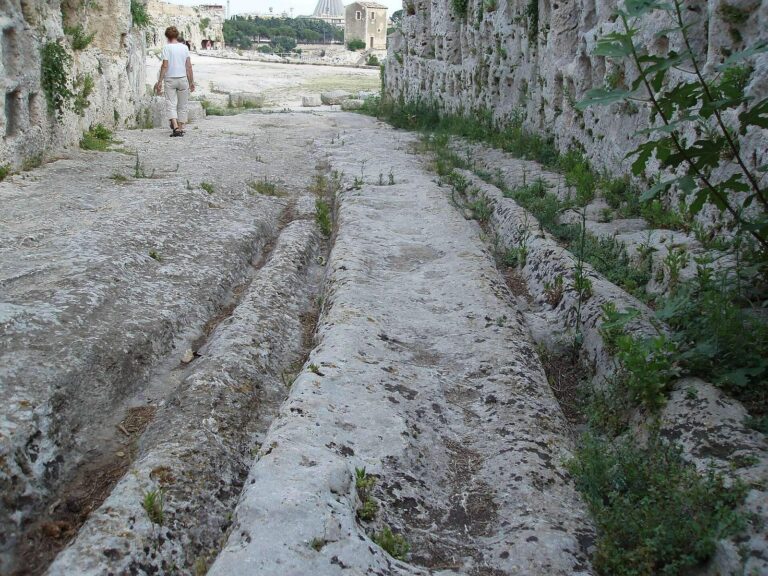
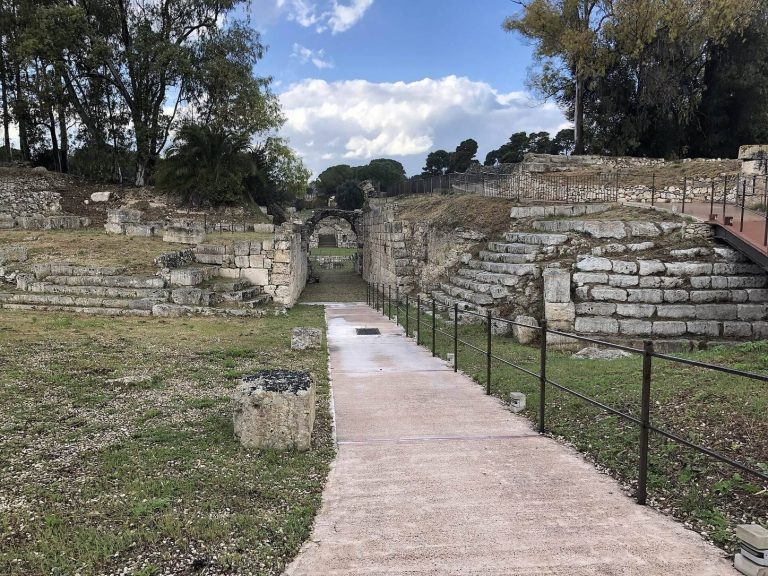
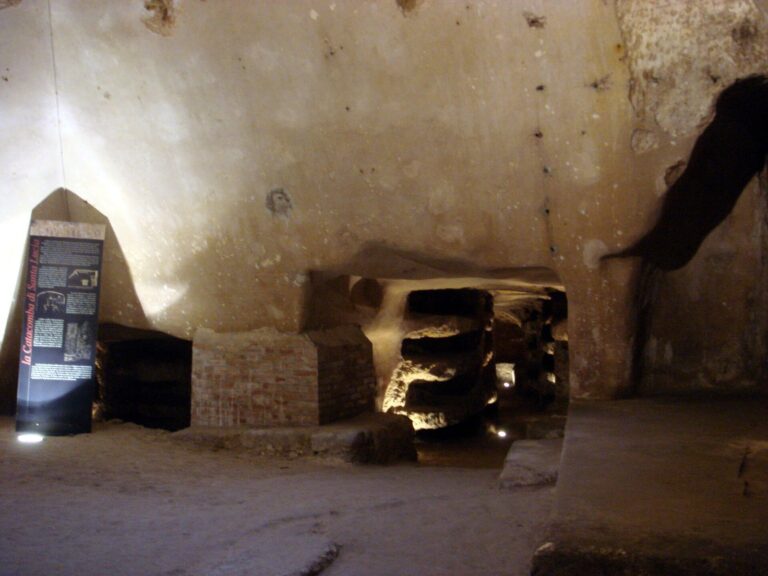
A route from the grotto reaches Sepulchral Street and continues toward the hilltop, where other Greco-Roman monuments stand. Politi described the street as a passage cut through solid rock, with square niches of different sizes for offering tables and epitaphs, along with further chambers for catacombs. He also described a large grotto opening onto the passage, with traces of triglyphs, carved blocks marked by vertical grooves, outside it. At its base, he noted two aqueducts meeting an artificial fissure in the rock at right angles, one supplying the grotto continuously.
Watermill and historical depiction
Watermill and Millers’ Cottage
East of the grotto, the last surviving watermill from the Spanish period remains visible. The Millers’ Cottage is identified near the Greek theatre’s uppermost seating tiers, with the grotto visible in the distance.
Houël’s gouache
During a visit to Syracuse in the second half of the eighteenth century, painter Jean-Pierre Houël made a gouache depicting the grotto. It shows the cavity as deeper than it is today, with water descending toward and through the theatre, where mills were installed. The image also portrays women washing clothes inside the grotto.