St Margaret Lothbury: A Baroque Parish Church in the City of London
Site at a Glance
- Rating
- 4.7
- Popularity
- Medium
- Country
- United Kingdom
- Primary era
- Early Modern
- Eras represented
- Medieval, Early Modern, Modern
- Civilizations
- British, English
- Site type
- Religious
- Remains
- Church
On this page9 sections
History
St Margaret Lothbury is a church on Lothbury in the City of London, United Kingdom. Established by the 12th century, it was rebuilt to Christopher Wren’s design between 1686 and 1690 in the English Baroque style. Dedicated to Margaret of Antioch, a saint associated with early Christian tradition, the church has served its parish through centuries of rebuilding and change.
Medieval foundations and patronage
The church’s earliest surviving written mention dates to 1185. Until 1538, it was Roman Catholic and associated with the Benedictines, a monastic order whose communities followed the Rule of Saint Benedict. The abbess and convent of Barking Abbey, a Benedictine religious house for women in Essex, held its patronage until the Crown’s suppression of England’s monasteries, after which patronage passed to the Crown.
A rebuilding in 1440 was paid for largely by London merchant Robert Large, who was Lord Mayor that year. Large is also remembered as the master under whom William Caxton, an early English printer, served his apprenticeship.
Fire, rebuilding and parish unions
The Great Fire of London, which devastated much of the City in 1666, destroyed the church. It was rebuilt to Wren’s design from 1686 to 1690. In 1781, St Christopher le Stocks’ parish was joined to St Margaret’s after its church was demolished to make way for an extension to the Bank of England. St Olave Old Jewry’s parish was united with St Margaret’s in 1887.
St Margaret Lothbury remains a parish church, administered as St Margaret Lothbury & St Mary Woolnoth. It was designated a Grade I listed building on 4 January 1950, the highest category of listed-building protection in England. The church is also the official church of five Livery Companies, historic London trade and craft associations, two Ward Clubs and two professional institutes. Local finance houses hold special services there each year.
Remains
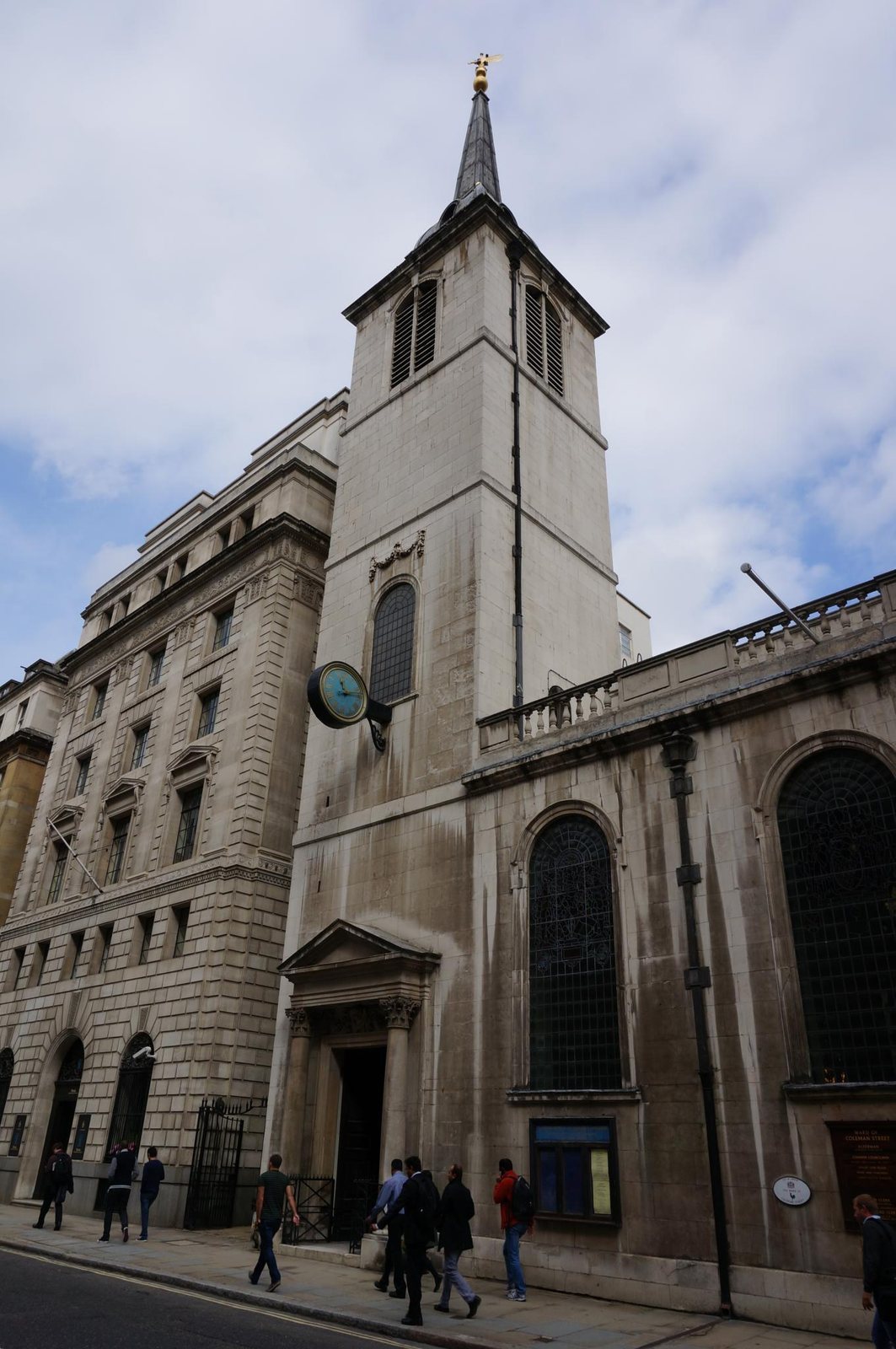
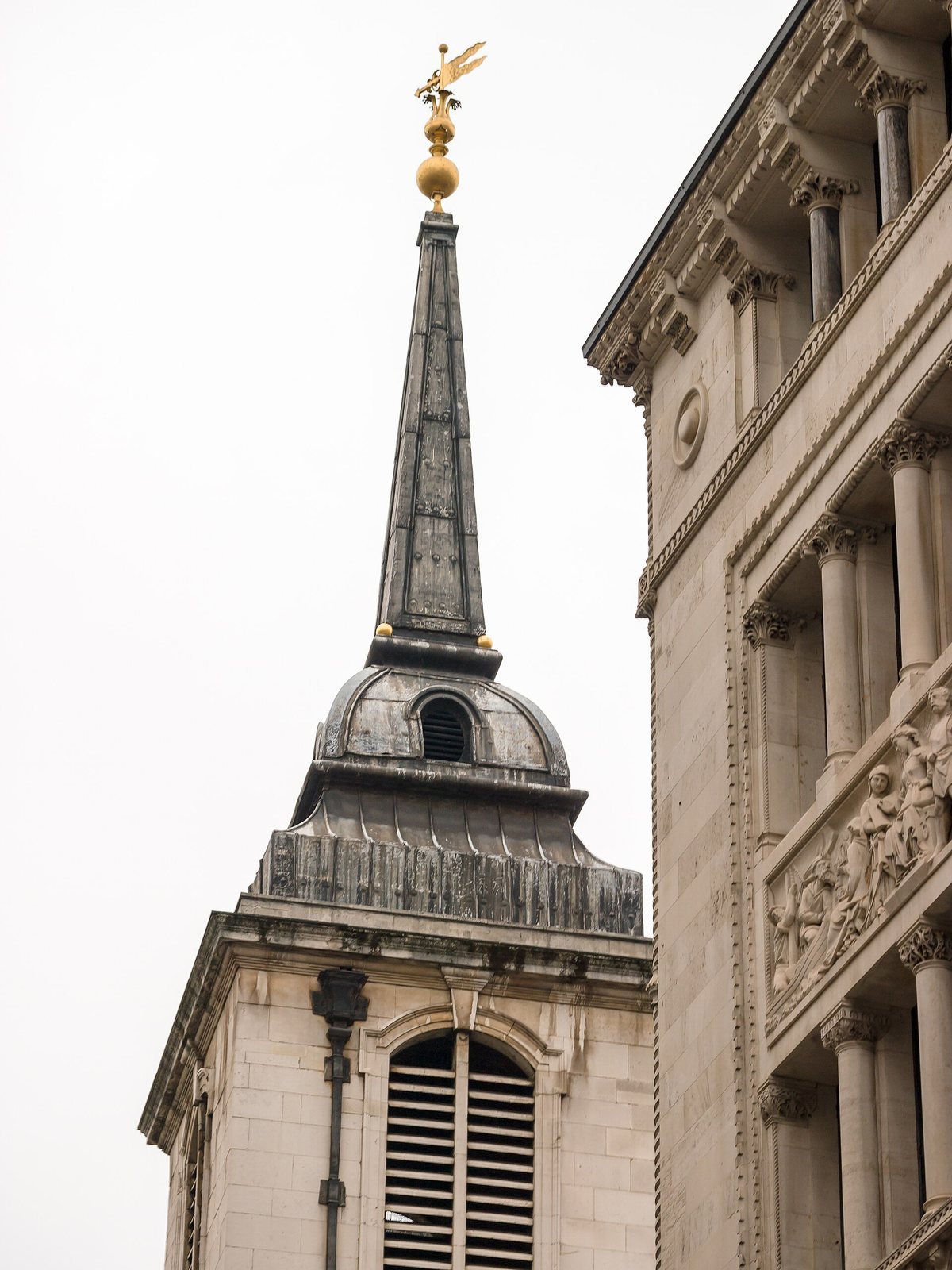
The church has a hall-church plan, with a main interior space and an aisle of similar height. Its side façade and adjoining tower form part of the Victorian streetscape along Lothbury, and the tower’s obelisk-shaped spire rises above nearby buildings.
Exterior
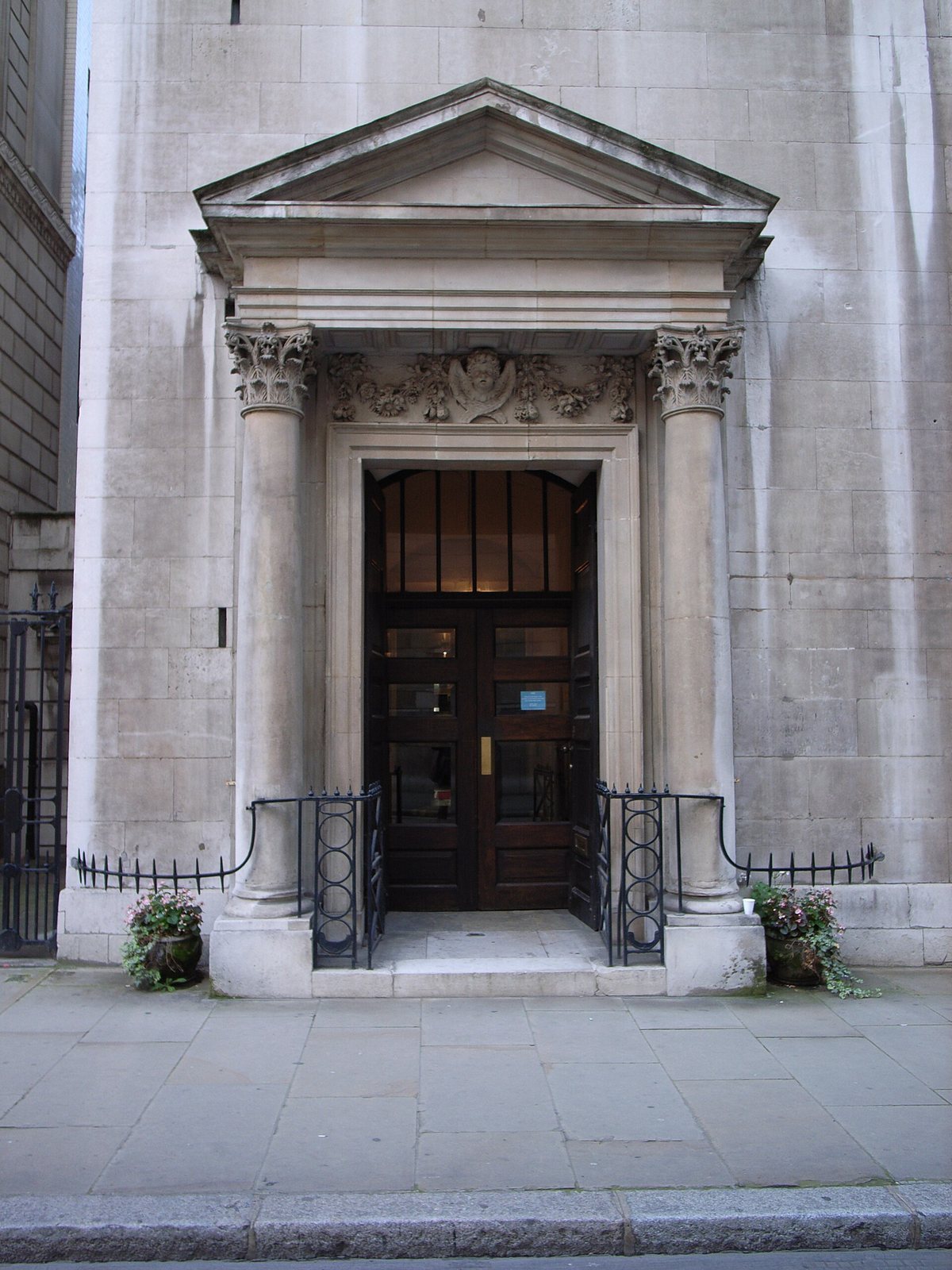
The side façade faces Lothbury, with the tower joined to it as part of the street frontage. The spire’s tapering, obelisk-like form extends above the surrounding buildings. The church spans the boundary between Coleman Street Ward and Broad Street Ward.
Interior and furnishings
Main church space
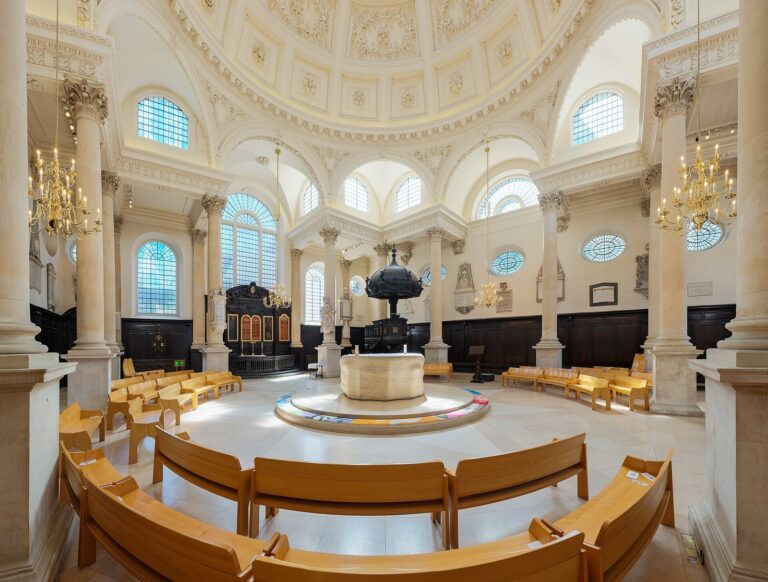
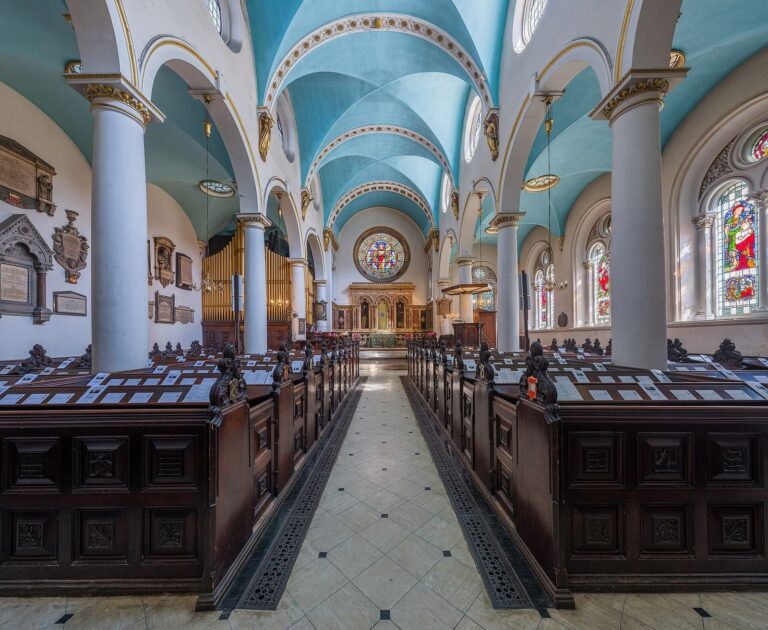
Corinthian columns separate the street-side aisle from the main church space. Above it, a windowed ceiling curves where the ceiling meets the walls.
Transferred furnishings and paintings
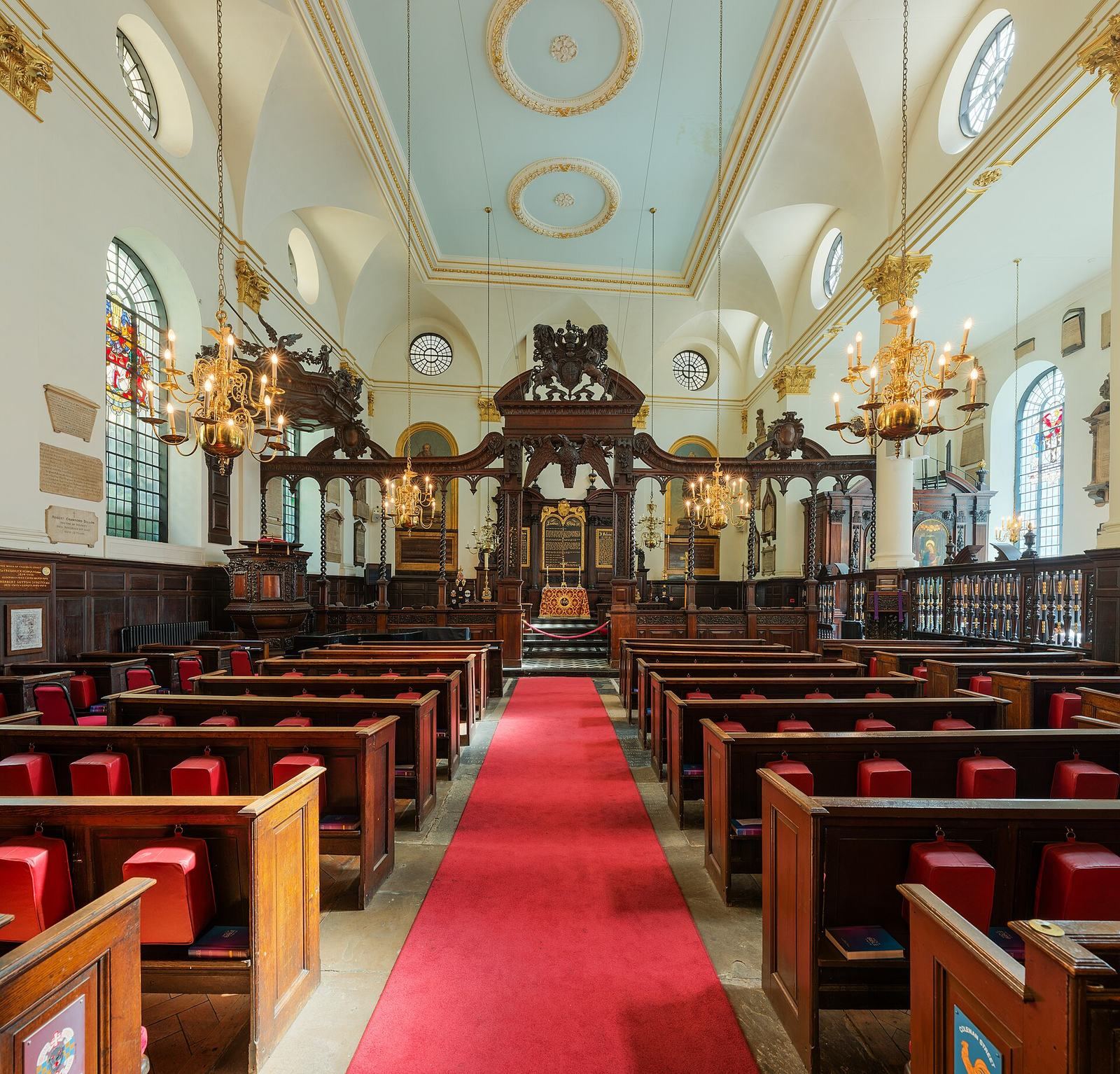
Several pieces of 17th-century woodwork were brought from Wren churches that were later demolished. The reredos, an ornamental structure behind an altar, communion rails and baptismal font came from St Olave Old Jewry. These furnishings are attributed to Grinling Gibbons, the English woodcarver and sculptor, although the attribution is uncertain. The pulpit sounding board, a canopy above the pulpit, and the rood screen, a partition within a church, came from All-Hallows-the-Great. Paintings of Moses and Aaron, transferred from St Christopher le Stocks in 1781, flank the high altar.
Organ
George Pike England built the organ in 1801. It stands on a gallery above the entrance at the rear of the church and retains its original case and nearly all its original pipework. The organ was restored in 1984.