Church of St Mary Bishophill Junior: A 10th-Century Church in York
Site at a Glance
- Rating
- 4.4
- Popularity
- Low
- Country
- United Kingdom
- Primary era
- Medieval
- Eras represented
- Medieval, Modern
- Civilizations
- Anglo-Saxon, British, English
- Site type
- Religious
- Remains
- Church
On this page8 sections
History
Early church and medieval development
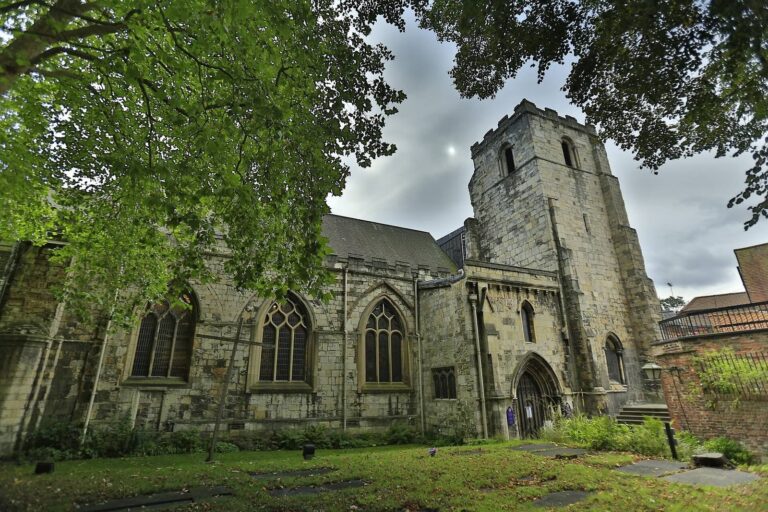
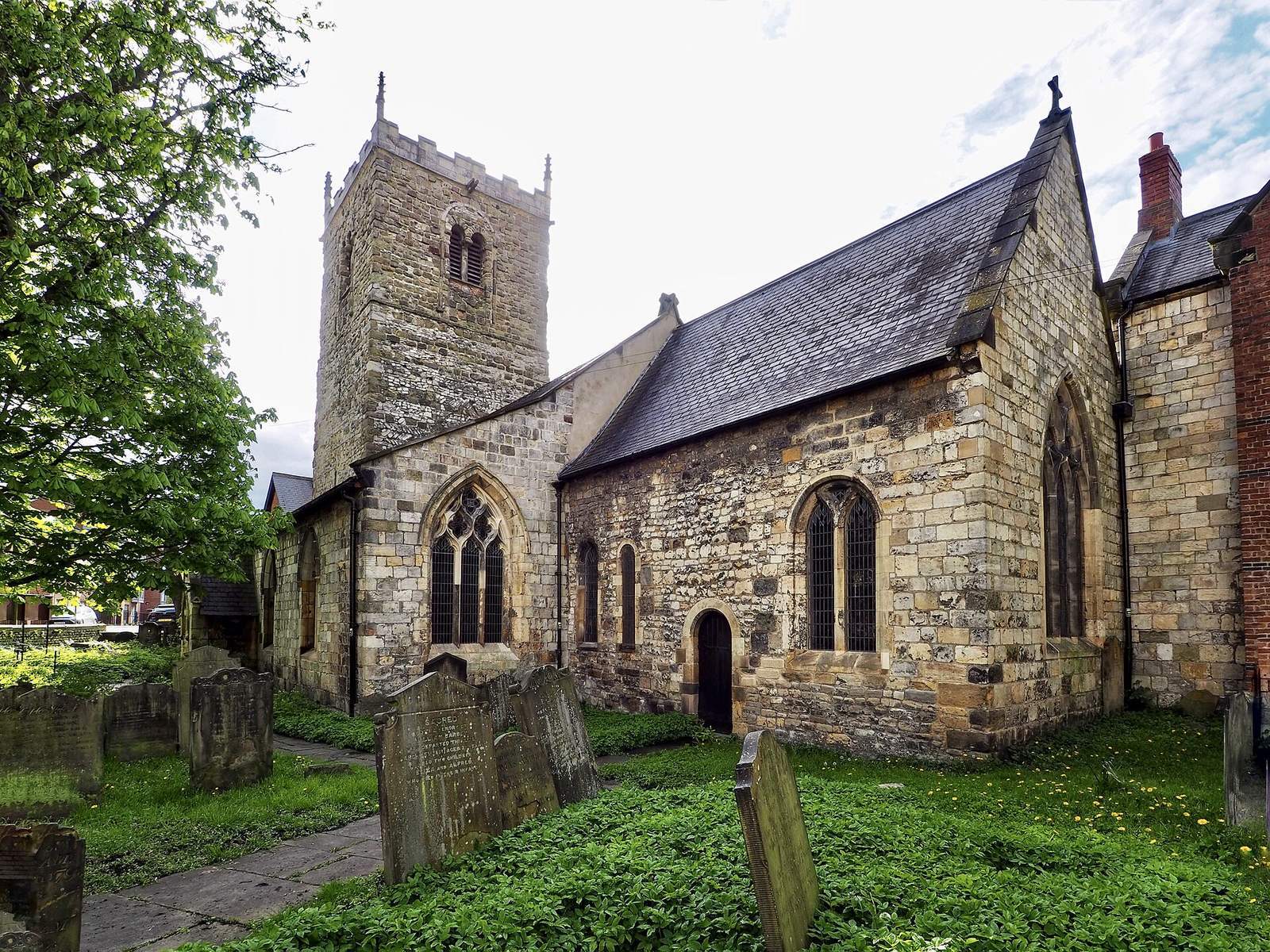
The Church of St Mary Bishophill Junior is a 10th-century church in York, United Kingdom, and is regarded as the oldest church within the city walls. It stands on the site of Eboracum, the Roman name for York. The tower was heightened in the 11th century, probably before the Norman Conquest, the Norman takeover of England in 1066. Battlements were added to the tower around 1411.
Restoration and continuing use
J. B. and W. Atkinson carried out a restoration in 1860–61, which the York Civic Trust has described as poorly conceived. During the same period, Ewan Christian renovated the chancel. The tower was restored in 1980. Dedicated to St Mary the Virgin, the church belongs to the Church of England and follows the Anglo-Catholic tradition, which emphasizes liturgy and practices associated with the historic Catholic church. It is within the Province and Diocese of York, a church district overseen by a bishop, and shares a parish with All Saints’ Church, North Street, in York. The church has been Grade I listed since 14 June 1954.
Remains
Tower and early stonework
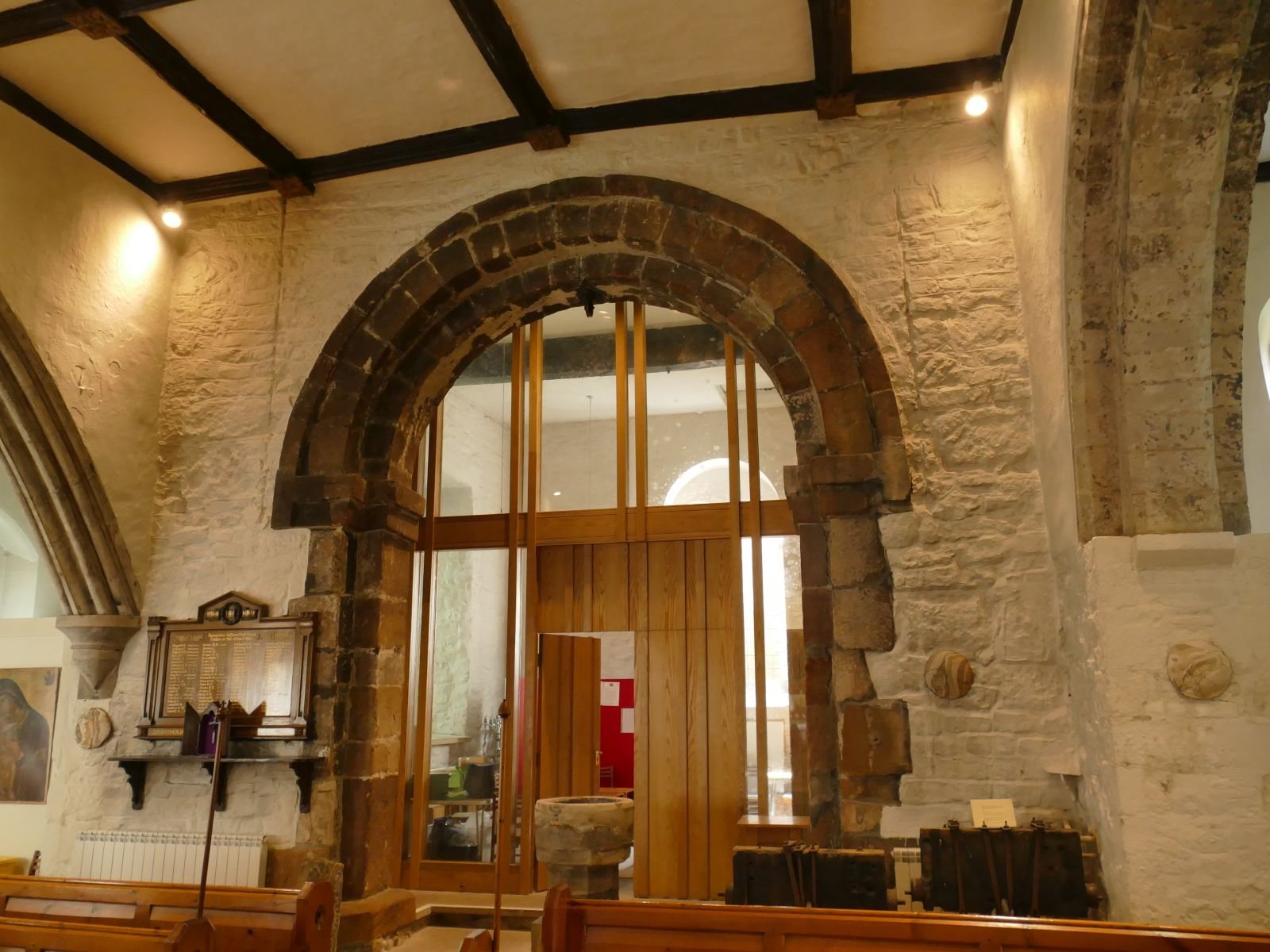
The tower is the oldest part of the church and incorporates reused Roman stone, some of which remains visible. Stone carvings dating from before the Norman Conquest are located inside the church.
Nave, aisle and chancel
The nave dates from the 11th century. Its north aisle and the row of arches along the north side date from the 12th century. The chancel, the area around the altar, was built in the 13th century. The font and bells are medieval.
Interior and later additions
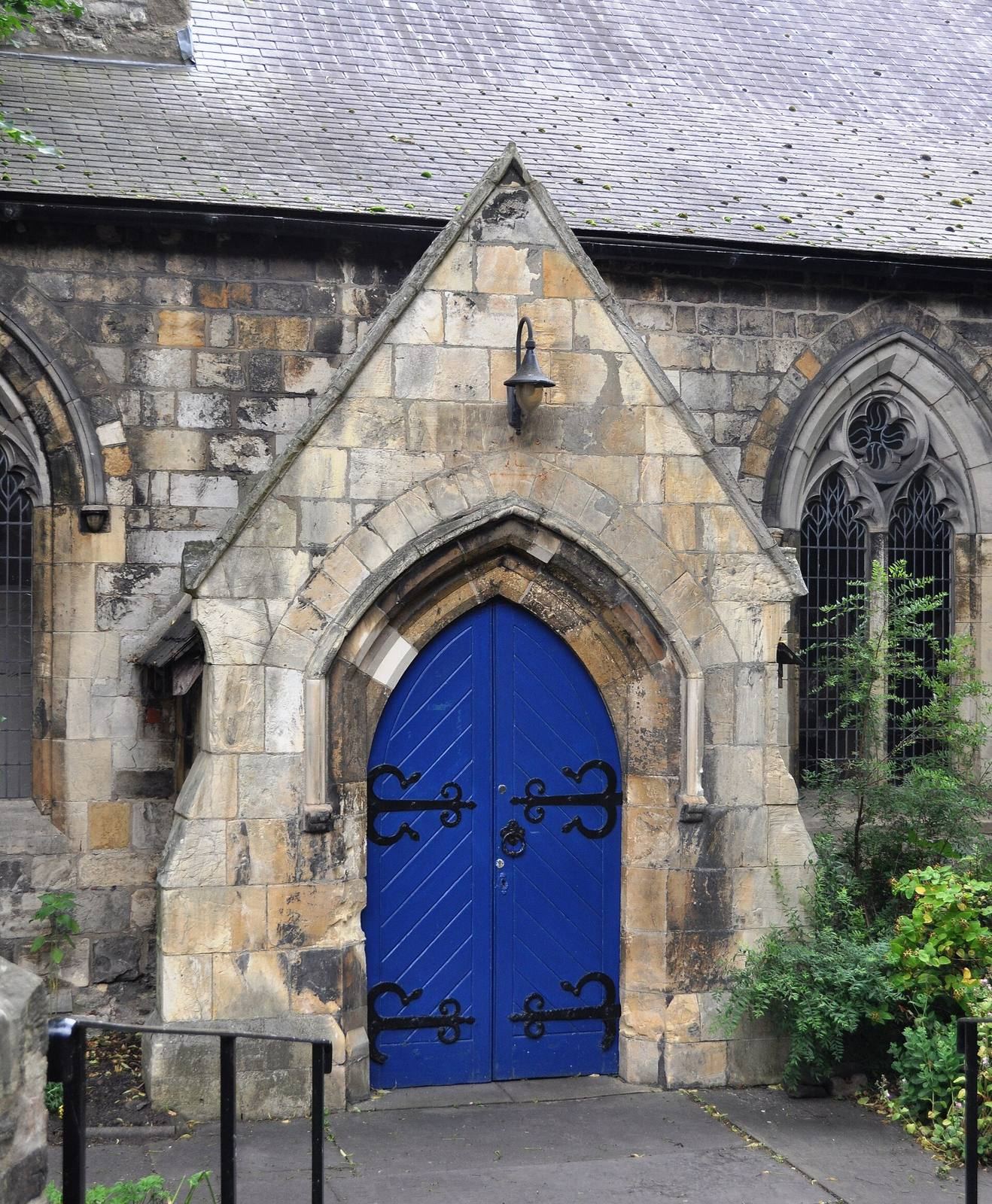
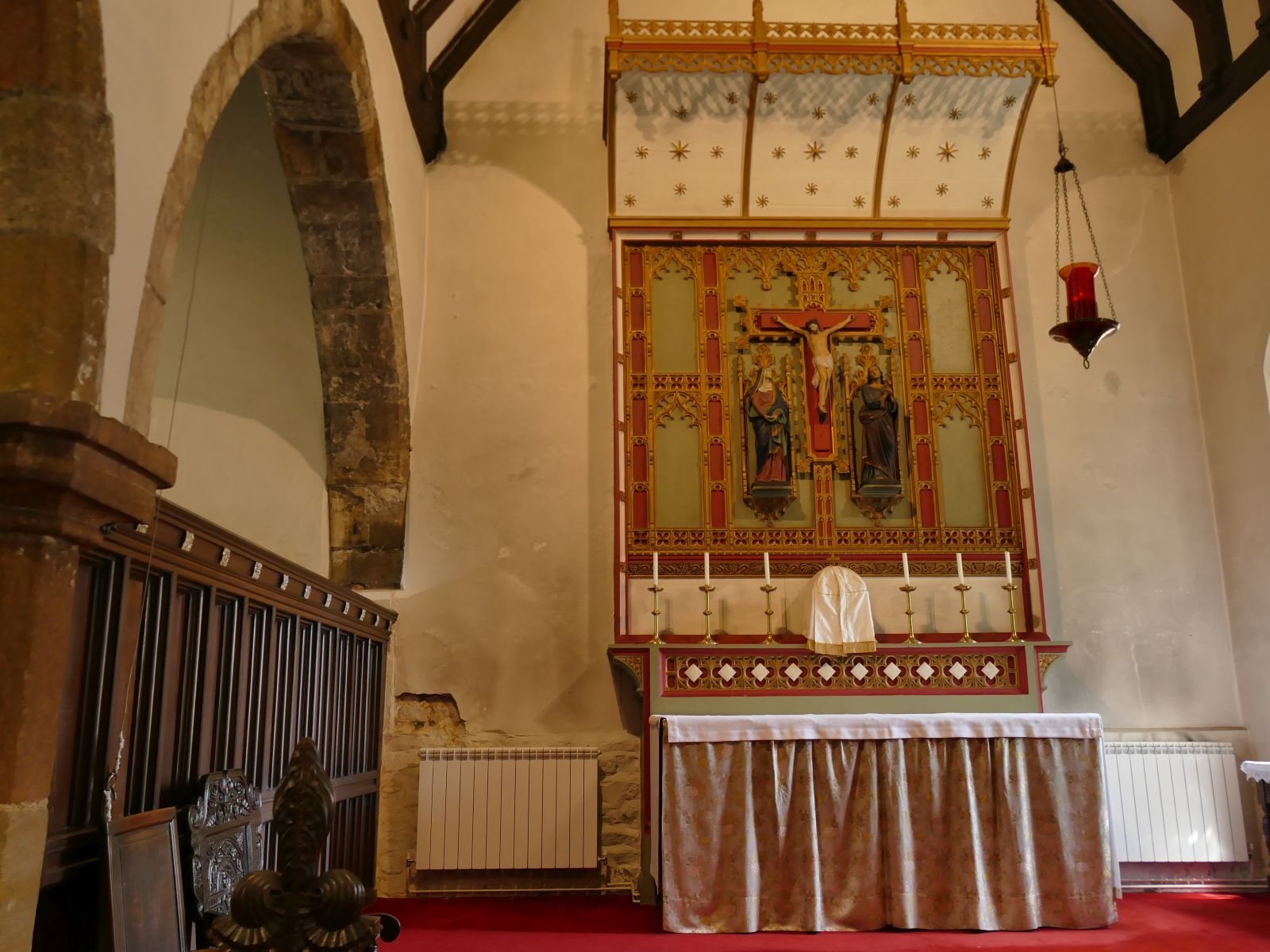
During the 1860–61 restoration, the old pews were removed and the floor was raised by 10 inches (250 mm) and concreted. Workers replaced a brick porch with a stone one, removed a wooden window and fitted new windows, and took down flat ceilings to expose the open timber roof. In 1889, Temple Lushington Moore added a pulpit and a reredos, a decorated panel behind the altar.
Pipe organ
The church had an organ before 1860. During that year’s restoration, it was converted into a Swell division, an enclosed group of pipes whose sound can be varied by shutters, and a new Great manual, the principal keyboard division, with seven stops, controls for sets of pipes, was added. F. D. Ward of Middlesbrough repaired and renovated the instrument in 1921. After 1930, an organ built in 1870 by Forster and Andrews for St Mary Bishophill Senior was installed here. The current pipe organ was made in 1864 by William Denman for the Spiritualist Church on Spen Lane in York. It later moved to Freemasons’ Hall and was installed at St Mary Bishophill Junior by Principal Pipe Organs in 1986.