King’s Hall, Cambridge: A College for Royal Chancery Clerks
Site at a Glance
- Popularity
- High
- Country
- United Kingdom
- Primary era
- Medieval
- Eras represented
- Medieval, Early Modern
- Civilizations
- English
- Site type
- Civic
- Remains
- University
On this page8 sections
History
Foundation and royal service
King’s Hall was a medieval college in Cambridge, United Kingdom, founded by Edward II on 7 July 1317 to supply clerks for the royal chancery, the government office responsible for documents and administrative business. It was Cambridge’s second college, after Peterhouse, and was comparatively wealthy beside Michaelhouse. Bishop of Ely John Hotham guided its foundation.
Edward III granted the college letters patent in 1337, formal public documents issued under royal authority. A master or warden is recorded in 1412, followed by a clerk in 1433.
Union with Michaelhouse and formation of Trinity
A parliamentary act of 1545 authorized Henry VIII to suppress colleges and take their property, during the wider seizure of Church lands from monasteries. Oxford and Cambridge feared that they might be targeted. Henry’s sixth wife, Catherine Parr, persuaded him to preserve the universities by creating a new college, though he did not want to pay for it from royal funds.
In 1546, Henry joined King’s Hall and Michaelhouse with seven hostels: Catherine’s, Garratt, Gregory’s, Margaret’s, Ovyng’s, Physwick, and Tyler’s. Physwick had previously belonged to Gonville and Caius. The combined institutions and confiscated Church lands made Trinity College the largest and wealthiest college. King’s Hall ended as an independent institution. Henry is thought to have planned Trinity as a grand architectural rival to Christ Church, Oxford, but he died a few weeks after its creation. Michaelhouse’s remaining buildings were demolished as the southern part of Trinity’s Great Court was completed.
Remains
Layout and surviving features
King’s Hall occupied the northern part of what is now Trinity College’s Great Court, north of the path between the Master’s Lodge and the Great Gate. Michaelhouse stood to the south. Features associated with King’s Hall survive in this altered college setting.
King’s Hall-period building
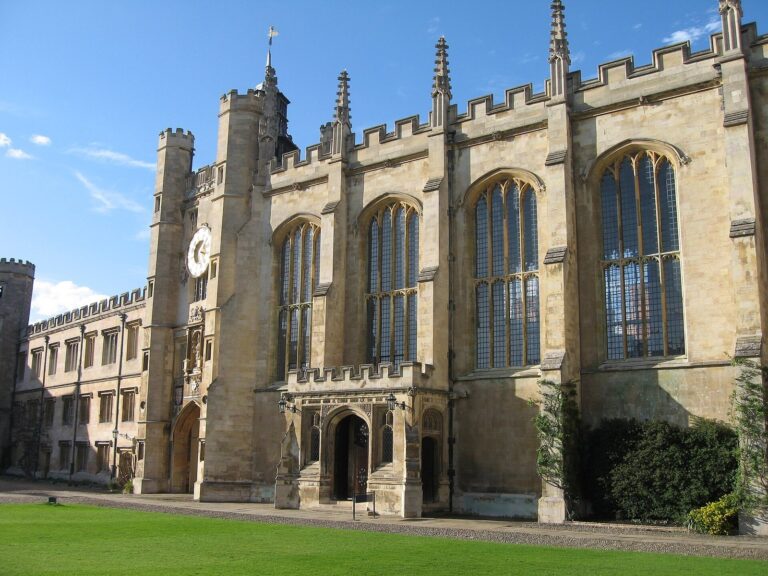
A building dating from King’s Hall’s period remains beside the chapel in the northern part of Great Court. It contains rooms associated with staircases C and D.
Clock tower
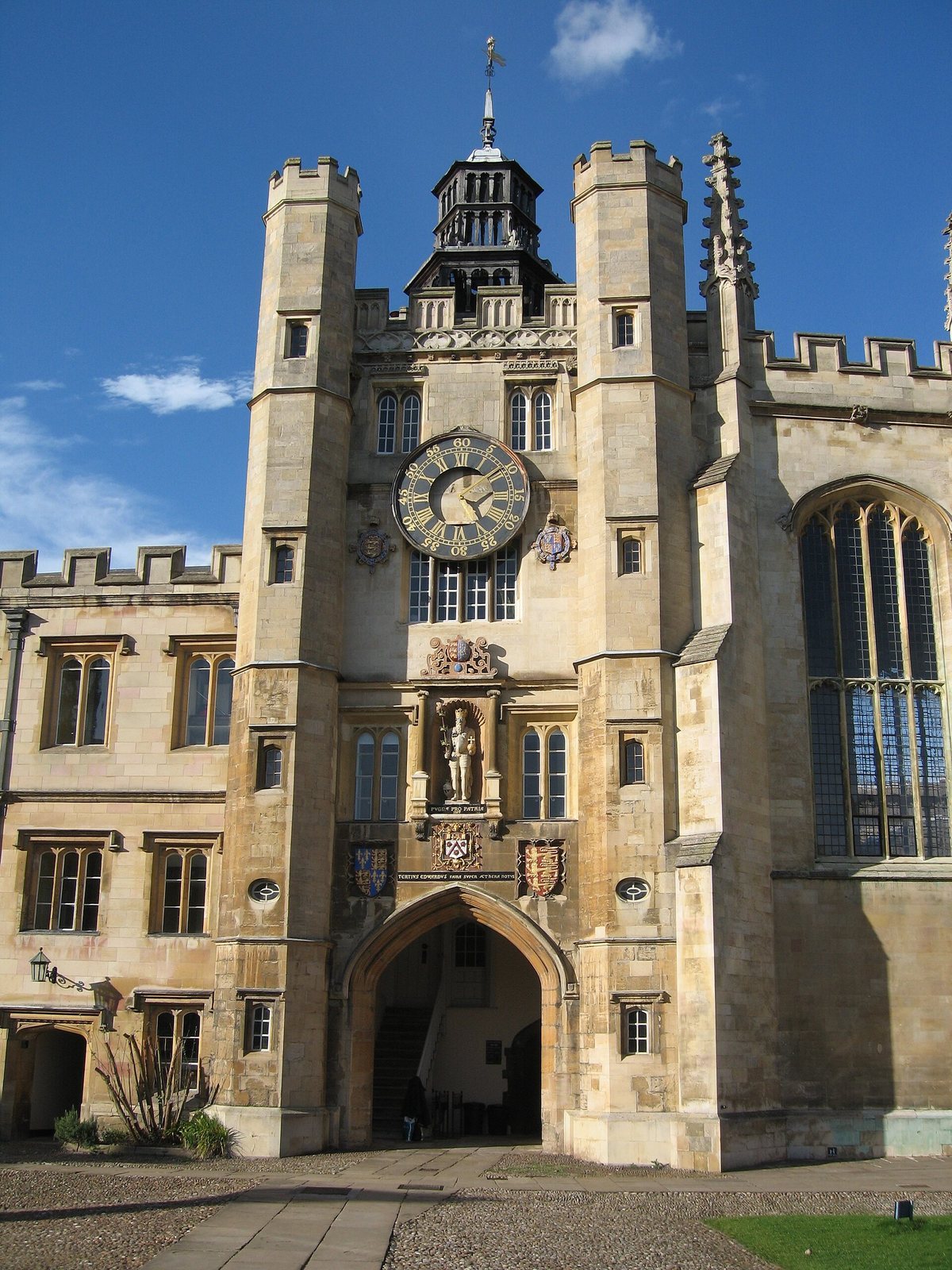
King’s Hall’s clock tower was moved from a location now marked by a sundial. It stands near Trinity’s Great Gate.
Great Gate and court plan
Built shortly before the merger, Trinity’s Great Gate still carries King’s Hall’s Latin name, Aula Regis, meaning “King’s Hall.” The layout of Great Court is chiefly attributed to Thomas Nevile, who served as Trinity’s master.