St Botolph’s Aldersgate: A Church of England Guild Church in London
Site at a Glance
- Rating
- 4.7
- Popularity
- Low
- Country
- United Kingdom
- Primary era
- Early Modern
- Eras represented
- Medieval, Early Modern, Modern
- Civilizations
- British, English
- Site type
- Religious
- Remains
- Church
On this page14 sections
History
St Botolph’s Aldersgate is a Church of England guild church on Aldersgate Street in London, United Kingdom, just outside the former city gate. A guild church serves people beyond a conventional parish congregation. Founded before 1291, the church was dedicated to St Botolph, also called Botwulf, a seventh-century East Anglian abbot venerated as a saint. By the late 11th century, Botolph was associated with boundaries and, in turn, with travel and trade. The church’s position beyond Aldersgate suited those associations. It was one of four London churches dedicated to him: three stood outside city gates, while the fourth was near the waterfront wharves and London Bridge.
Medieval church and institutions
The earliest recorded rector was John de Steventon, named in 1333. The church’s living, a benefice carrying responsibility for a church and its income, was initially held by the priory of St Martin’s-le-Grand. After the priory was dissolved, Henry VIII granted the benefice to the bishop of the newly established Diocese of Westminster. Patronage later passed to the dean and chapter, the senior clergy and governing body, of Westminster Abbey.
A medieval hospital for the poor stood outside Aldersgate. It belonged to the Cluniacs, a monastic order that followed the customs of the Abbey of Cluny. Henry V suppressed it as an alien house, meaning a religious house in England dependent on a foreign institution, and its lands and goods passed to St Botolph’s parish. The church remained Roman Catholic until 1534.
Repairs and rebuilding
In 1627, the church was repaired and its steeple rebuilt in Portland stone, with battlements and a turret. The steeple stood about 65 feet high and held six bells. Many pews were replaced, and a new clock and dial installed. A description from 1773 noted galleries on the north and west sides, oak pews and a carved oak pulpit.
The church suffered only minor damage in the Great Fire of London in 1666, the conflagration that devastated much of the City. It later fell into disrepair and became unsafe. The medieval building was demolished and replaced in 1788–91 under the supervision of City surveyor Nathaniel Wright; Nathaniel Evans designed the interior.
Later changes and present use
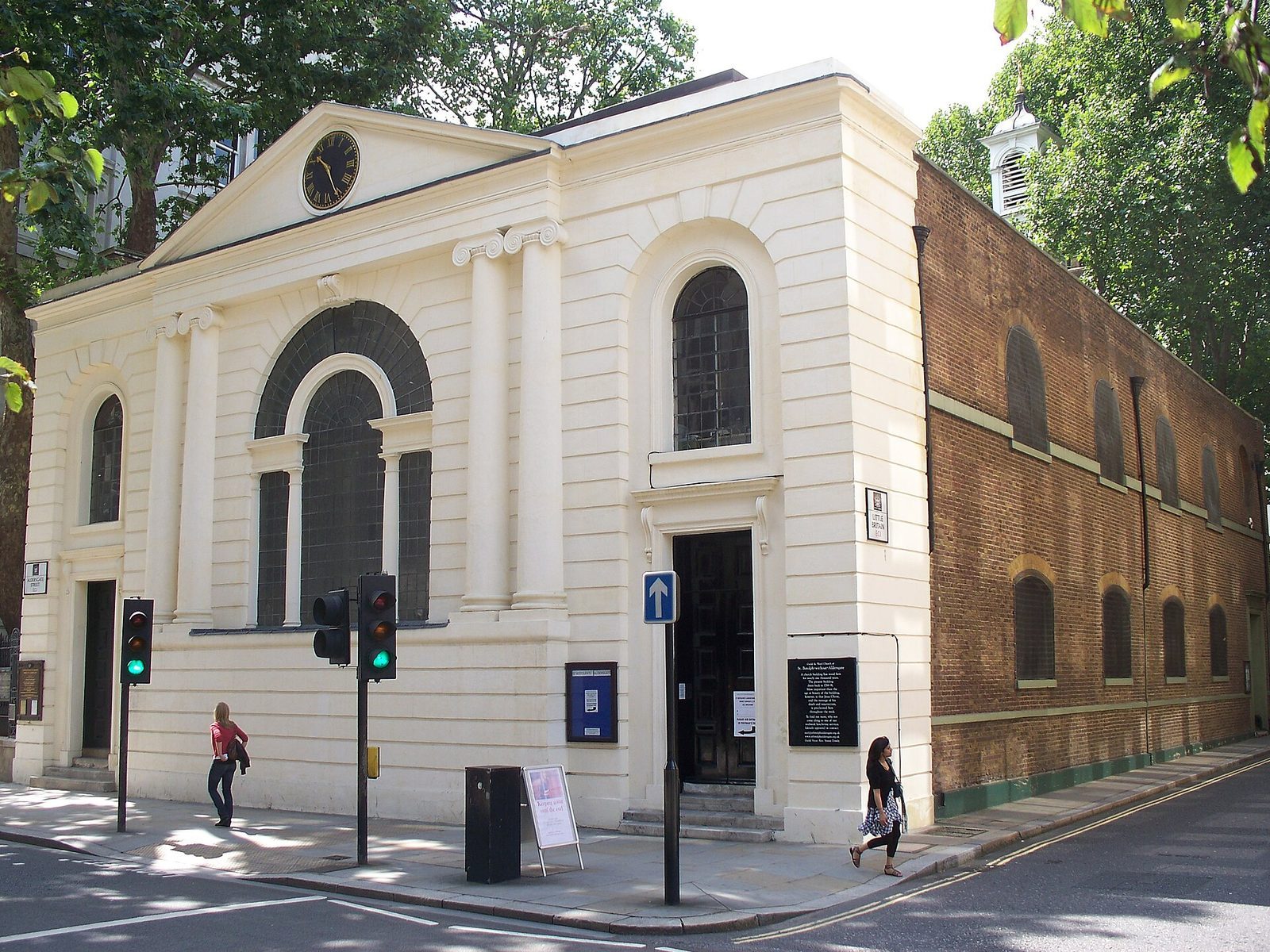
In 1831, the widening of Aldersgate Street required the church’s eastern end to be shortened. The former east front was removed and a new façade built. In 1880, the churchyard was joined with those of St Leonard, Foster Lane, and Christchurch, Newgate Street, to form Postman’s Park.
Bombing during the Second World War destroyed two of the smaller stained-glass windows. The church underwent several restorations during the 19th and 20th centuries, including work by Caroe & Partners in the mid-1980s; work on the east front was completed in 2008. In 1950, the building was listed at Grade I, England’s highest category of listed-building protection.
St Botolph’s is now a Church of England guild church. It has no parish and holds no Sunday Church of England services; weekday lunchtime services take place there, while London City Presbyterian Church, a congregation of the Free Church of Scotland, uses the building for Sunday worship.
In March 2023, after the Church of England’s General Synod approved the principle of blessings for same-sex couples, the guild vicar was announced as acting area dean of a new deanery chapter outside the Diocese of London’s official structures. An area dean coordinates a deanery, a subdivision of a diocese, while a chapter is a group of clergy. The new group was for clergy who felt compelled to resist all leadership by the Church of England’s House of Bishops. The Diocese of London described the move as unilateral and without legal substance; the Church Times called it schismatic.
Remains
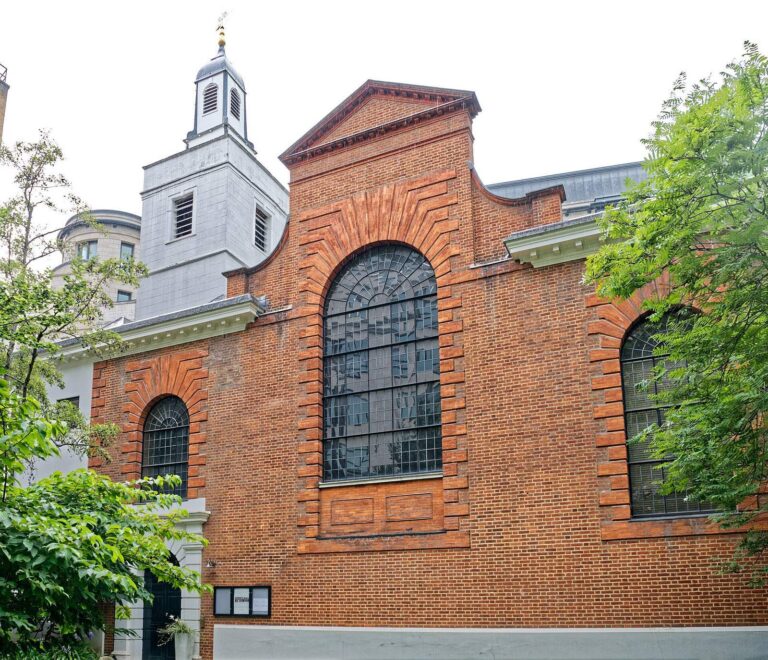
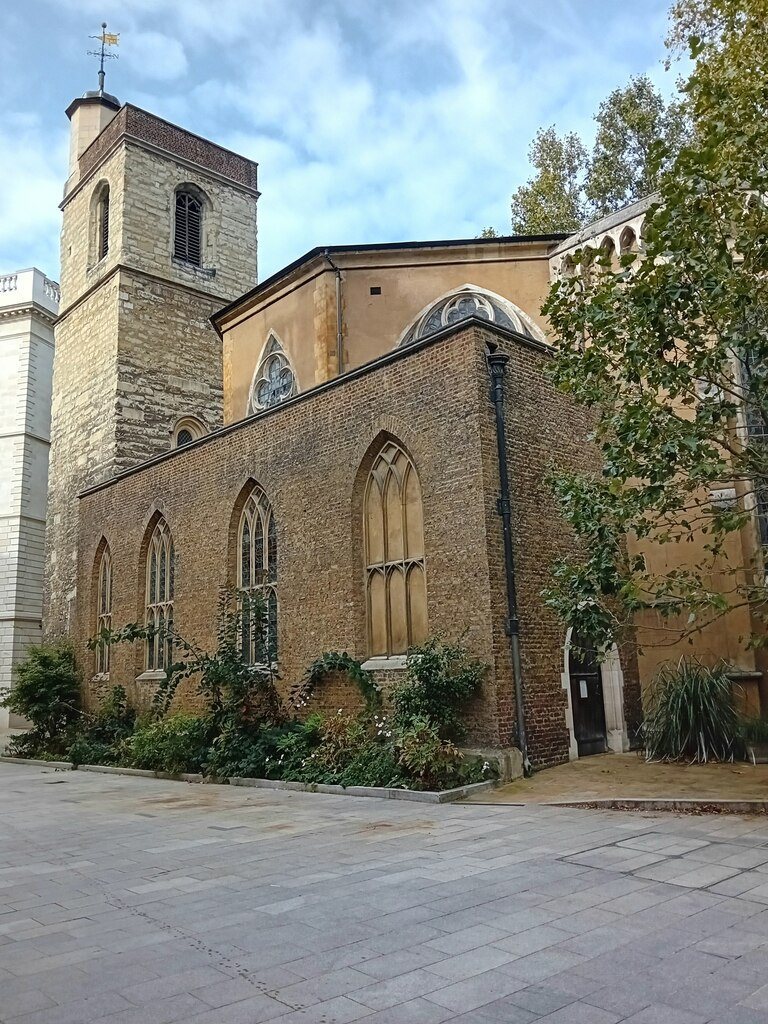
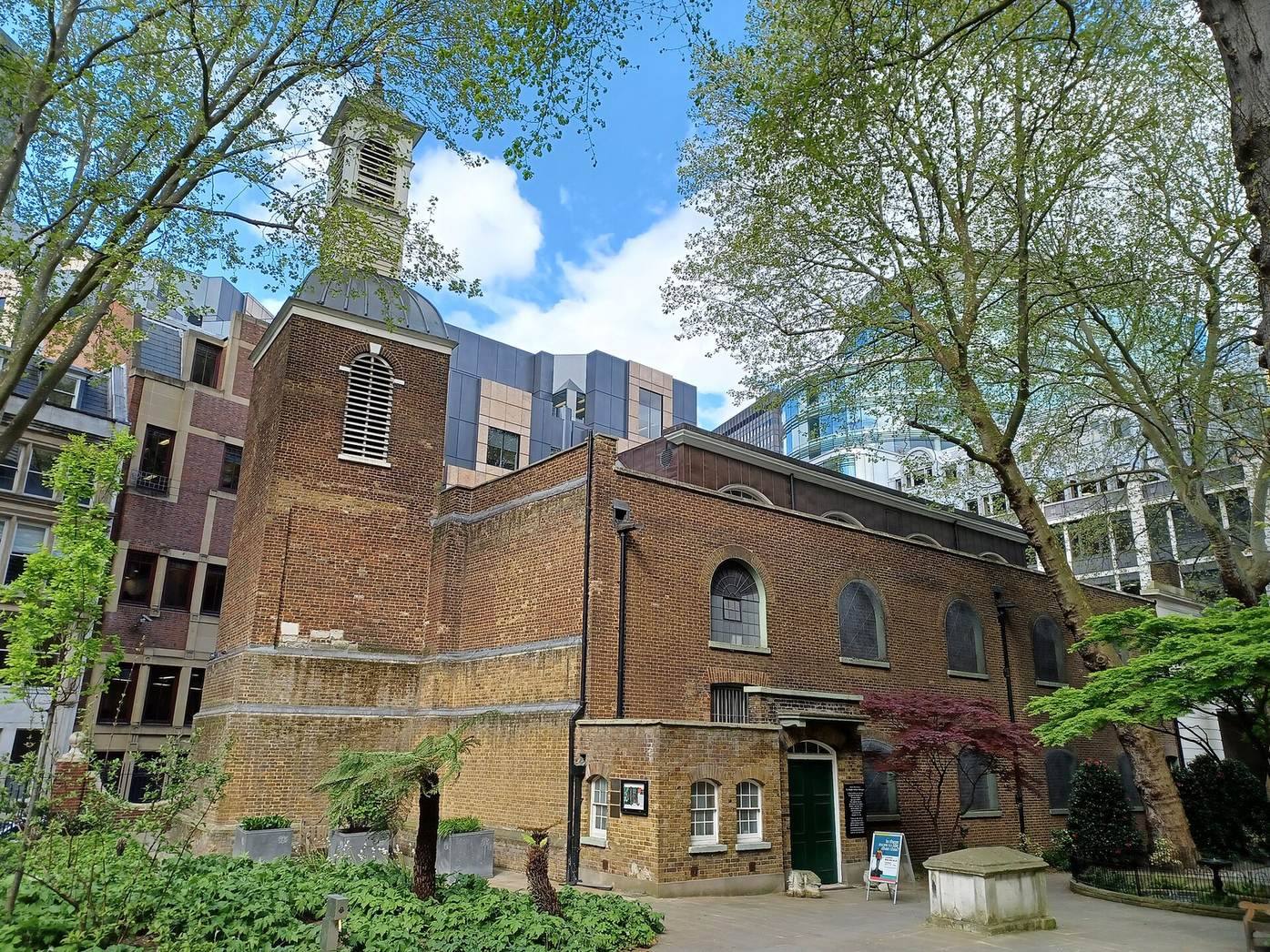
The present church is a plain brick building beside Postman’s Park. Its surviving fabric includes parts of the medieval church, while the later interior and east façade reflect successive rebuilding and alteration. The nearby park contains the Watts Memorial to Historic Self-Sacrifice, which commemorates civilian Londoners who died heroic deaths.
Church structure
Medieval fabric
The medieval church was Gothic, a style of medieval architecture. Its nave, the main body of the church, and side aisles were divided by rows of arches, and the east end had three gables. The building measured 78 feet long by 51 feet wide. Masonry from it survives in the lower part of the west tower and in the east wall; the low, square tower was built over the remains of the earlier stone tower.
Rebuilt church and interior
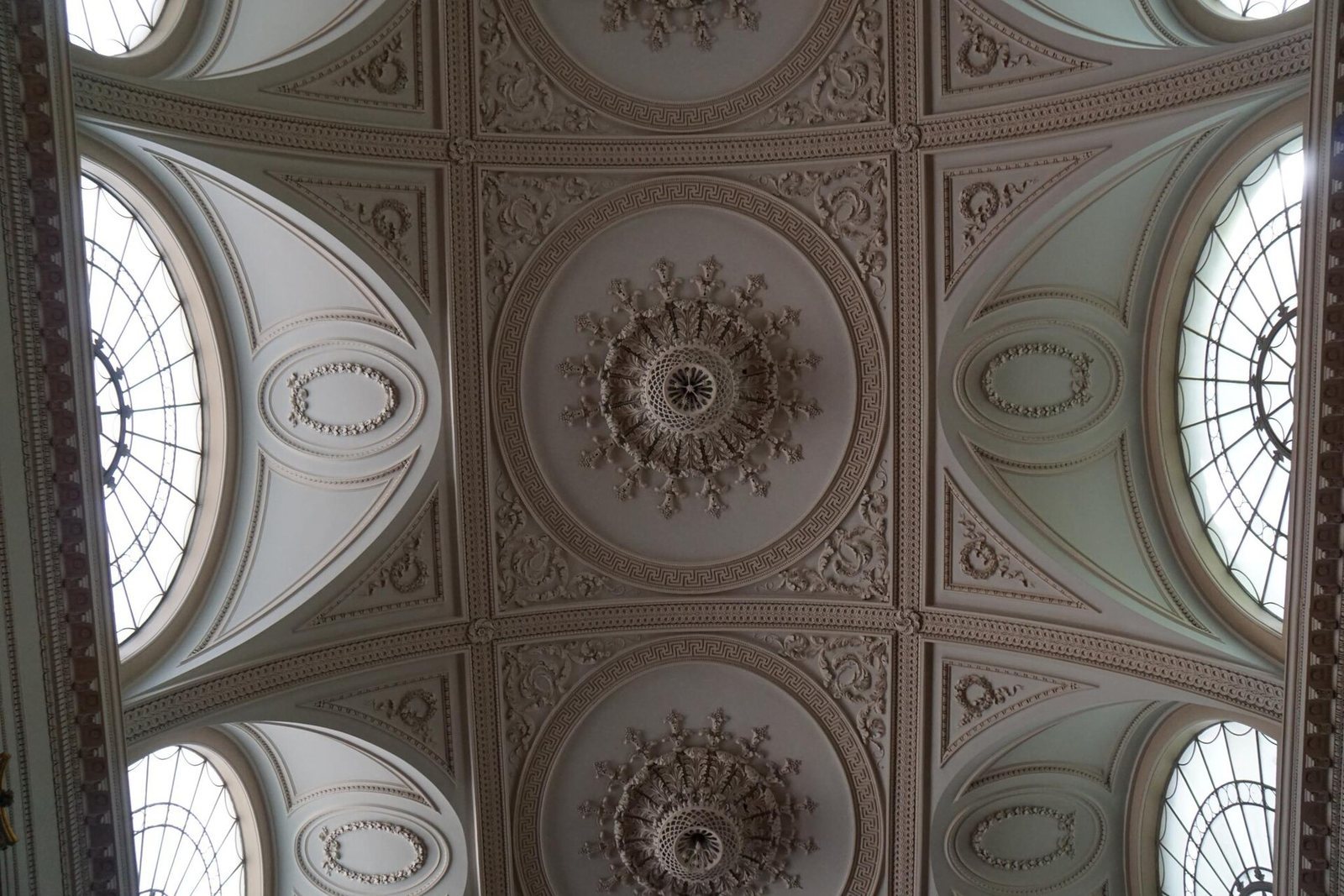
The rebuilt church is made of brick, with a plain exterior. Inside, wooden galleries run along three sides, supported by square, panelled columns. The eastern end forms an apse, a rounded end to a church, covered by a half-dome. The ceiling has elaborate plasterwork.
East façade
The east façade is a screen-like wall topped by a pediment, a triangular architectural feature. Four attached Ionic columns, a classical type with scroll-shaped capitals, stand on a high base. Between them is a Venetian window, a three-part window with a taller central opening.
Windows and furnishings
Stained glass
The east window, painted by James Pearson in 1788, depicts the Agony in the Garden of Gethsemane, where Jesus prayed before his arrest. It is the only surviving 18th-century stained-glass window in the City of London. Two smaller windows by Pearson once flanked it; modern windows now occupy their places. Most of the other glazing dates from the Victorian period, with some windows from the 1940s.
South aisle windows
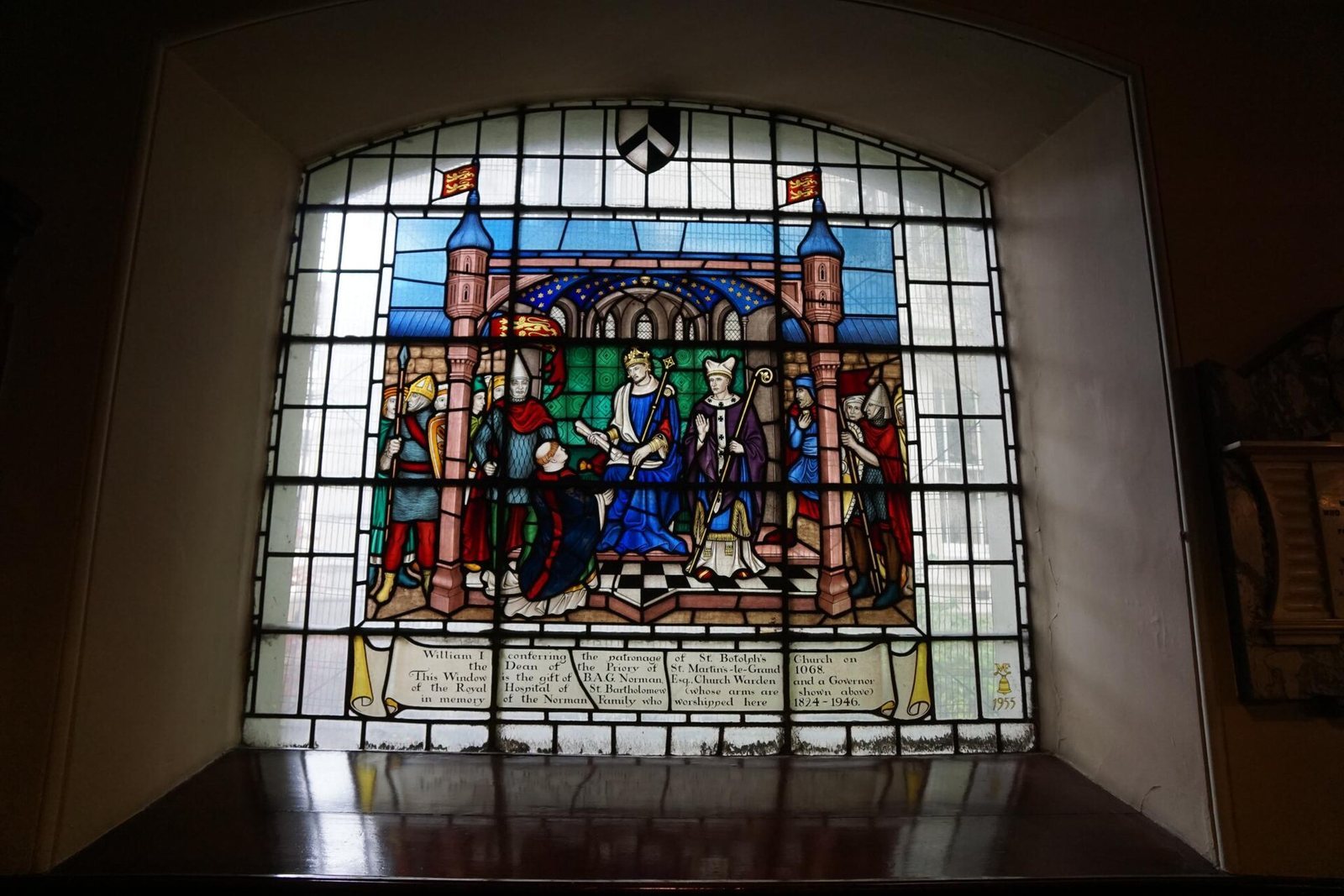
Four windows in the lower south aisle show historical scenes. They include James I entering the City through Aldersgate in 1618, Bishop Henry Compton giving refuge at his nearby residence to the future Queen Anne during the Revolution of 1688, and John Wesley preaching in Moorfields. Wesley and his brother Charles, Anglican clergy associated with the rise of Methodism, experienced a spiritual awakening while living near the church in 1738.
Tomb and furnishings
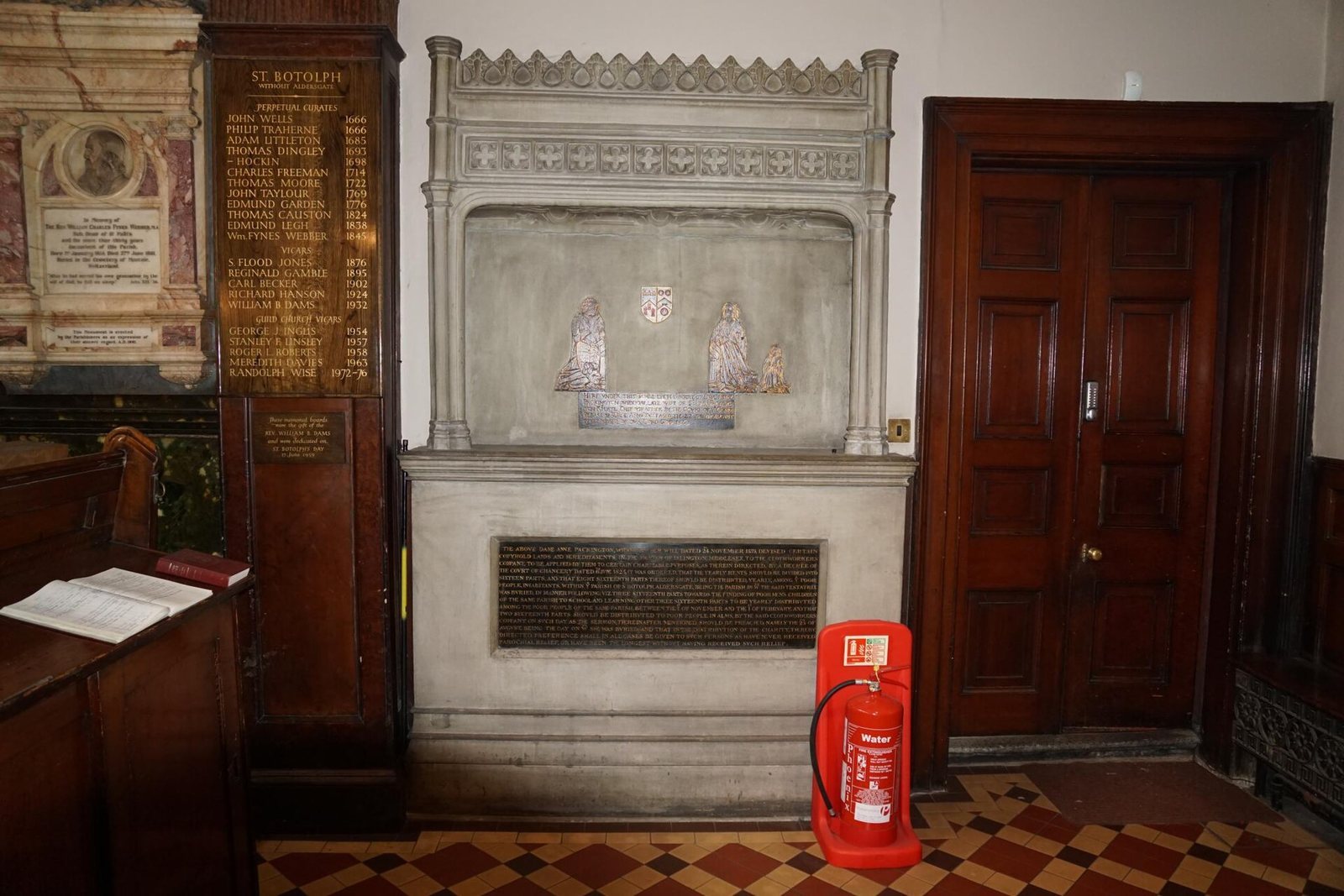
Monuments brought from the former church include the tomb of Anne Packington, who died in 1563. Many of the church’s furnishings date from the late 19th century.
Organ
The organ stands in the west gallery. Its oldest parts date from 1791, when Samuel Green built an instrument with two keyboards and a foot pedal, reusing some earlier sets of pipes. Henry Speechly rebuilt it in 1867, retaining the case but changing its central tower and much of its internal mechanism. In 1926, Hill, Norman & Beard altered the air supply and added an air-powered pedal mechanism. Goetze & Gwynn Ltd restored the instrument in 1999–2000. It has 22 stops, controls that activate sets of pipes, two keyboards and a pedal. About seven stops date from 1791, twelve from 1867, and two may date from 1894.