Arch of Drusus: A Roman Memorial and an Uncertain Surviving Monument
Site at a Glance
- Rating
- 4.7
- Popularity
- Medium
- Country
- Italy
- Primary era
- Classical
- Eras represented
- Classical
- Civilizations
- Roman
- Site type
- Civic
- Remains
- Arch
On this page7 sections
History
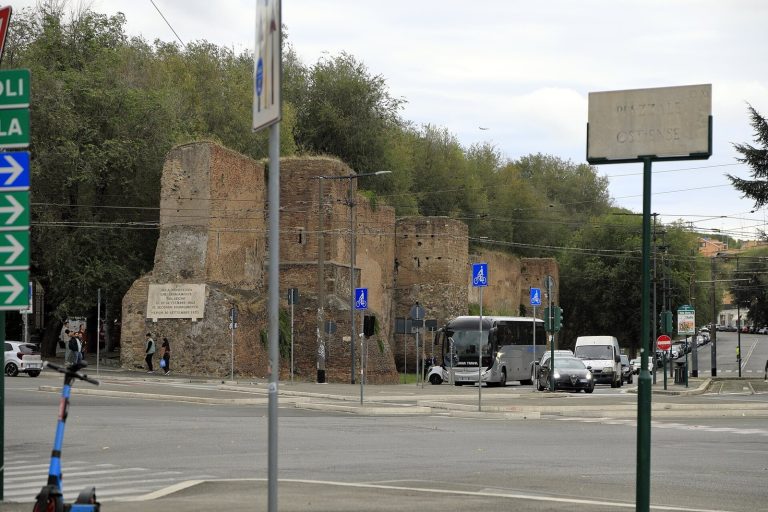
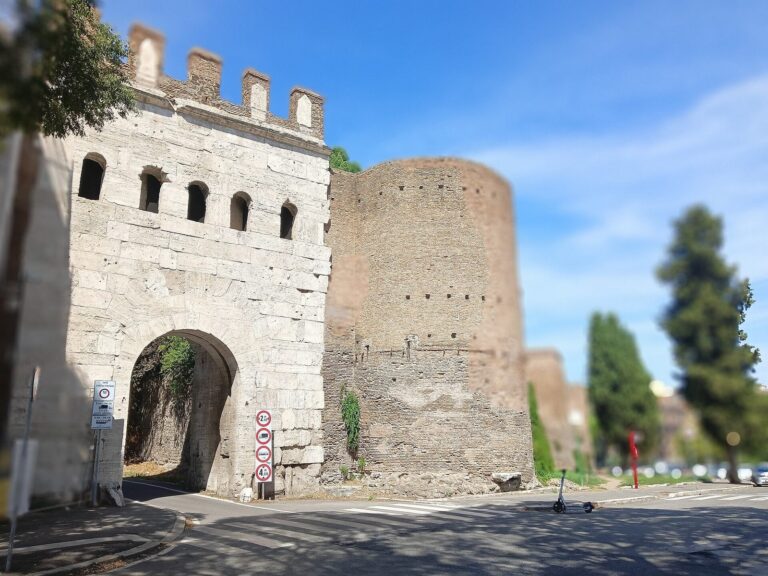
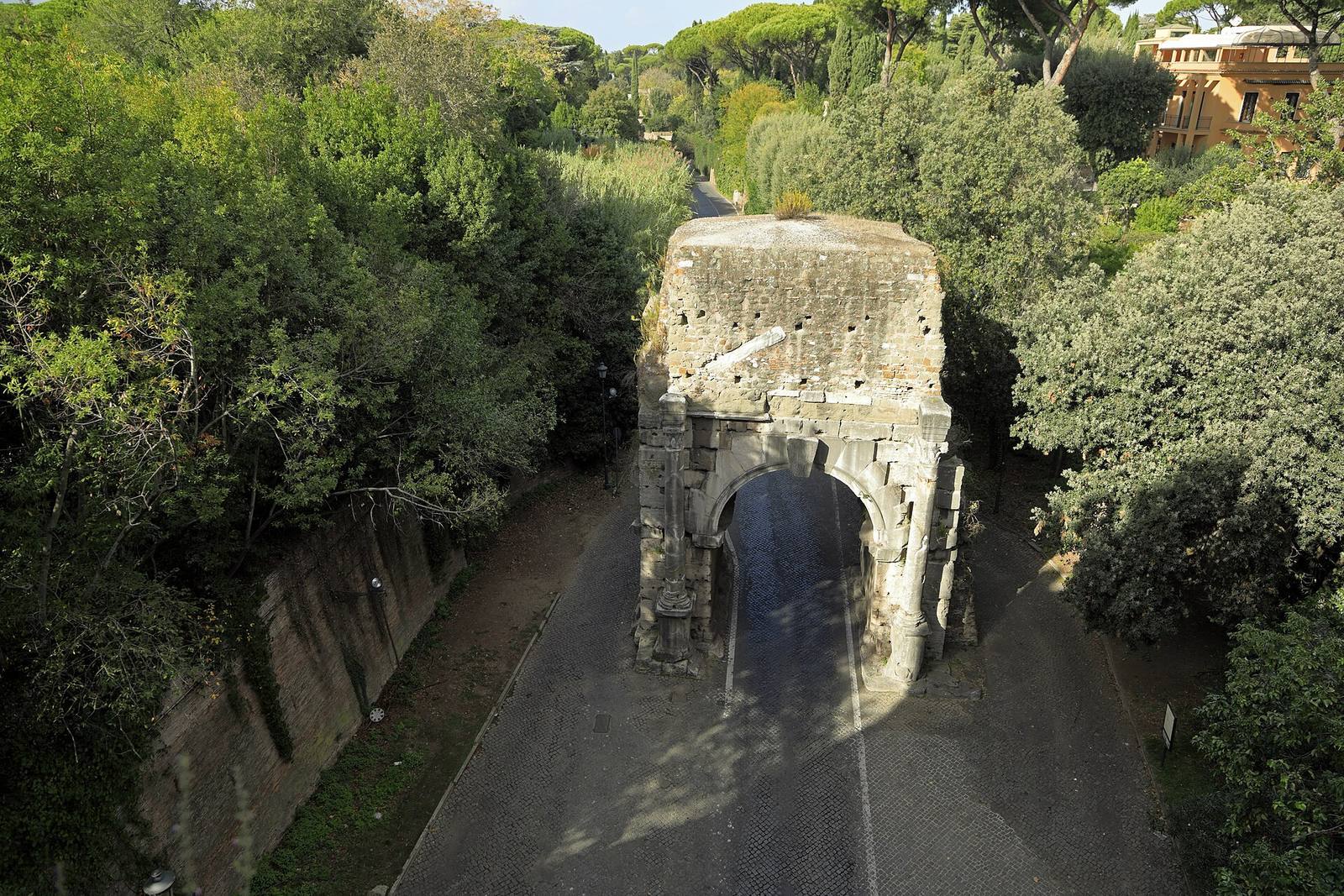
The Arch of Drusus is a Roman monument beside Porta San Sebastiano in Rome, Italy, associated with a memorial erected in 9 BCE, although the surviving arch is more likely to belong to a monument from Trajan’s period.
The Senate’s memorial to Drusus
Nero Claudius Drusus, a Roman general, stepson of Augustus and father of the future emperor Claudius, died in 9 BCE. The Senate erected an arch in his honor and voted for a marble triumphal arch adorned with trophies on the Appian Way. It also granted Drusus and his descendants the name Germanicus, an honorific associated with victories over Germanic peoples.
The original arch’s location is uncertain. It may have stood near the start of the Appian Way, where Porta San Sebastiano now stands. The nearby road called the Vicus Drusianus may have taken its name from the monument; the road ran northeast along a line roughly followed today by Via della Ferratella.
Use within Rome’s defences
The original arch served as a monumental entrance to Rome for people arriving along the Appian Way until Porta Appia was built. During rebuilding and enlargement of the gate from the third to the early fifth century, the arch appears to have been incorporated into its defences, perhaps under Emperor Honorius. It then served as an inner entrance behind the Aurelian Wall, Rome’s defensive circuit. Inscriptions transcribed in the eighth century mention Drusus, suggesting that the arch still stood at that time.
The uncertain identity of the surviving arch
The arch now identified as the Arch of Drusus is more likely to be the remains of the Arch of Trajan. The Drusus memorial itself no longer survives. Caracalla built the Aqua Antoniniana, a branch of the Aqua Marcia, in 213 to supply his new baths. One theory dates the present arch to 211–216 and interprets it as part of an aqueduct spur. A more likely explanation is that the arch was older and the water channel was carried over it.
A ninth-century guide to routes through Rome, the Einsiedeln Itinerary, names an Arcus Recordationis, or “Arch of Remembrance,” near the Baths of Caracalla. This may have been the original Arch of Drusus.
Remains
The arch beside Porta San Sebastiano
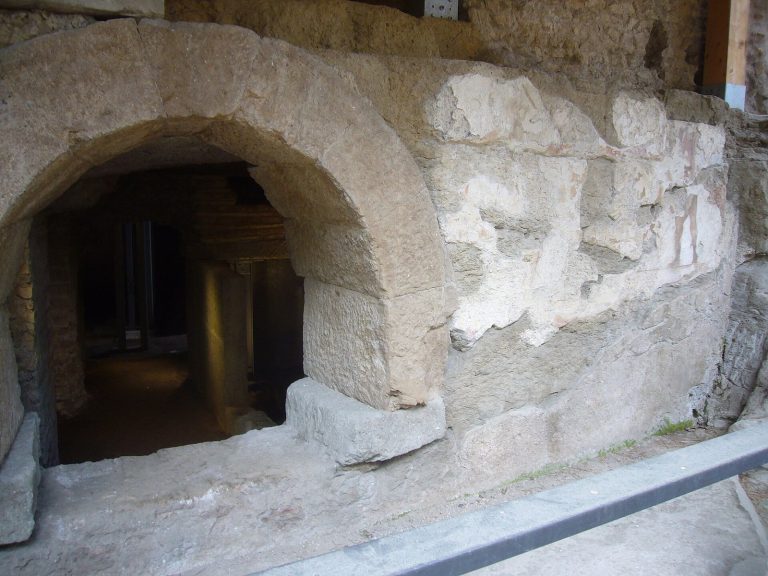
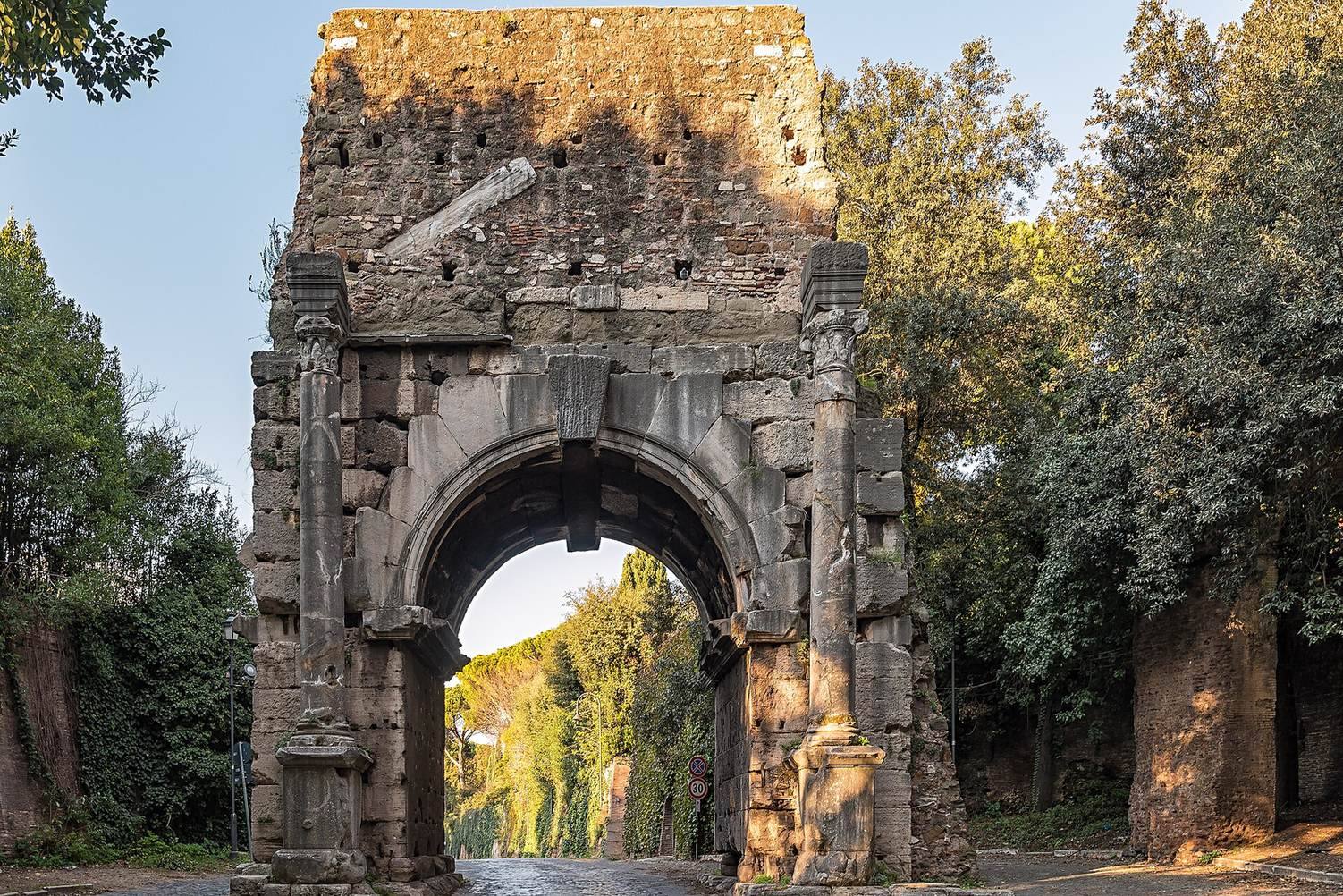
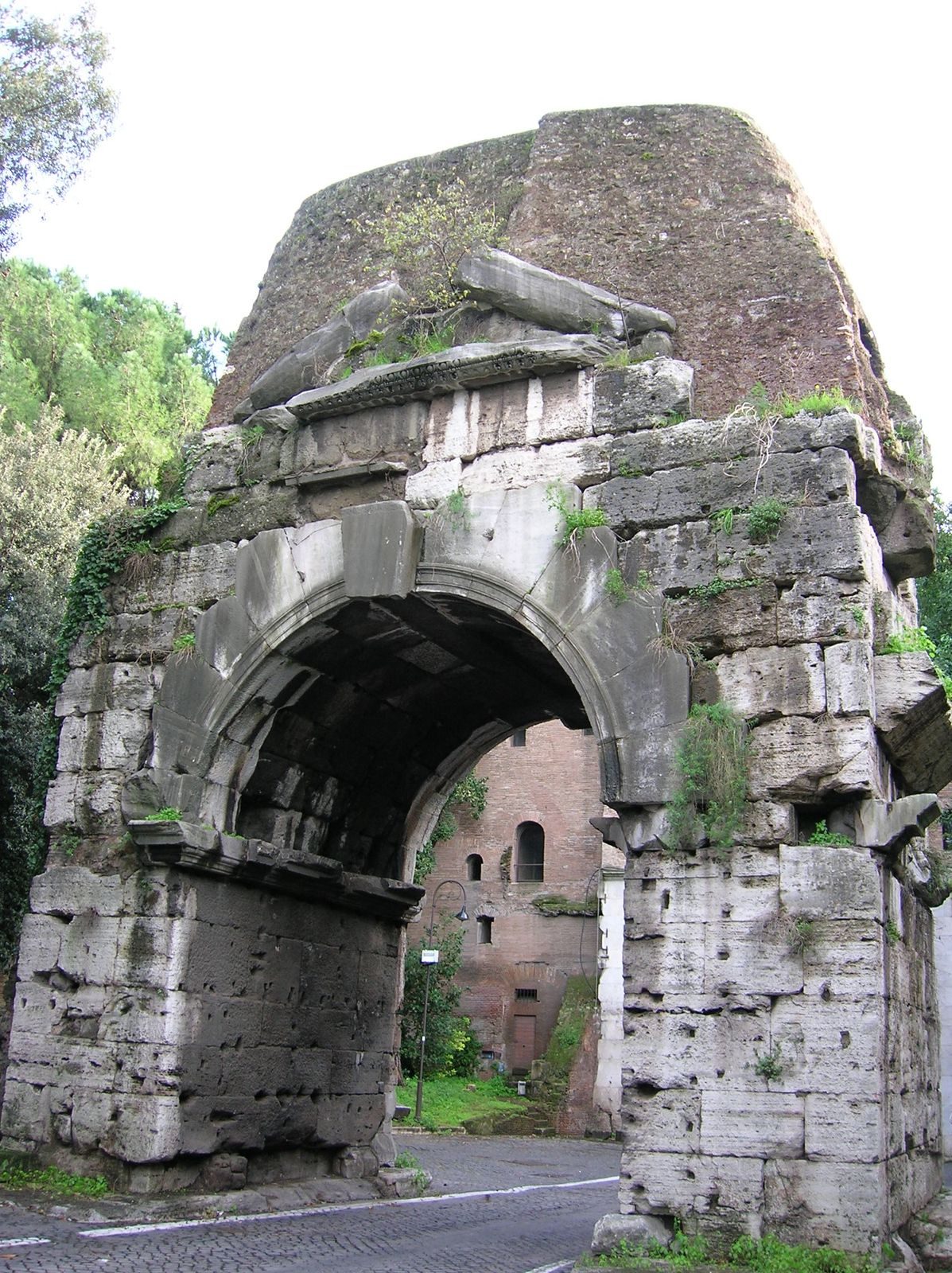
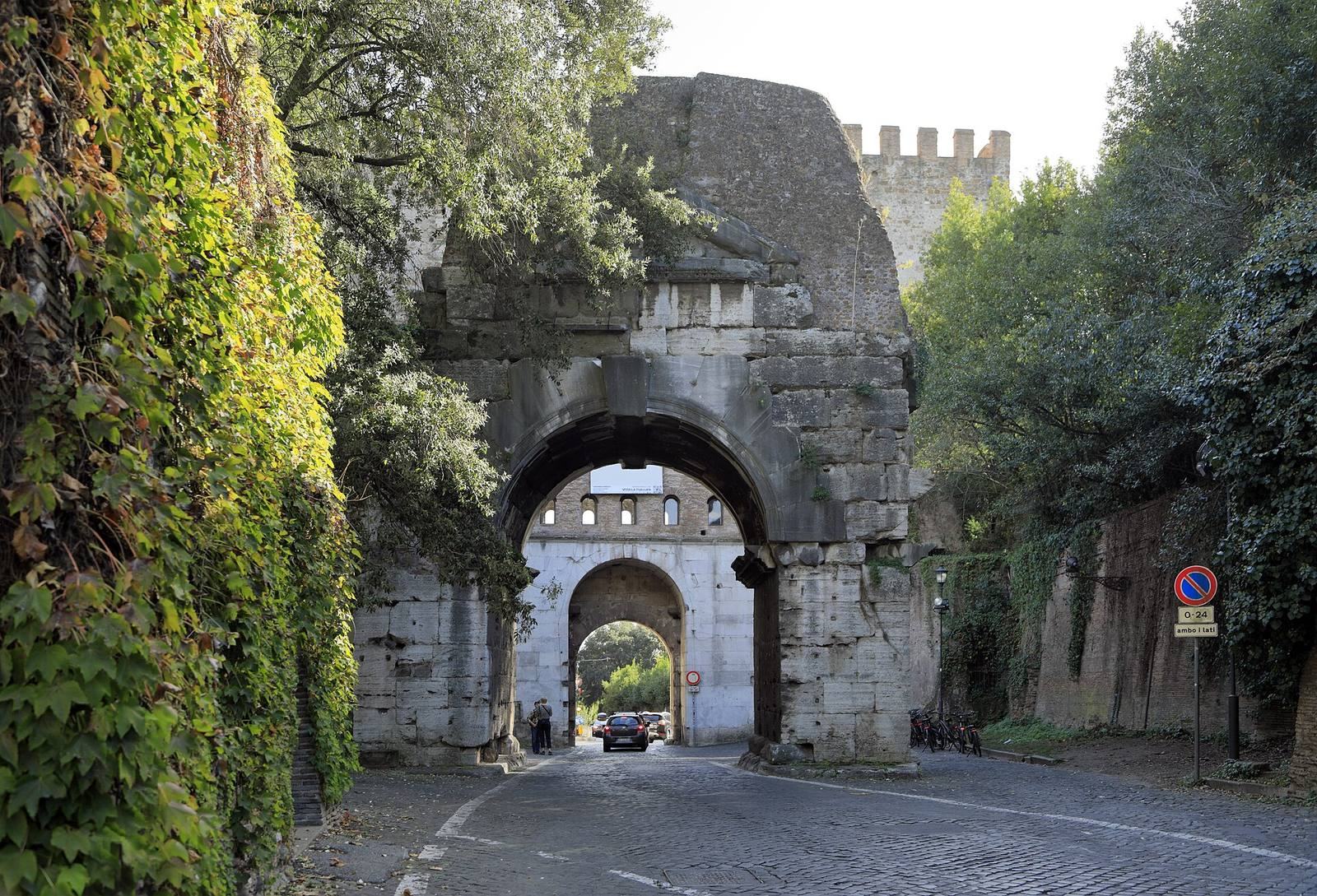
Beside Porta San Sebastiano, close to the first mile of the Appian Way, the surviving arch consists of a central section 7.21 metres high. It is built of travertine faced with marble. Numidian-marble columns on white-marble bases flank the opening, and a pediment and freestanding columns reflect features characteristic of Trajan’s period. The intended design included three openings, or at least projections on both sides, but the lateral sections were never completed. Brick-faced concrete visible at the top appears to belong to a later phase. The channel of the Aqua Antoniniana passed over the arch.
Possible foundations of the earlier memorial
Foundations dated to the late first century BCE were discovered in 1931 midway between Porta Appia and the Aqua Antoniniana. They may belong to the original Arch of Drusus, offering a possible clue to the location of the 9 BCE memorial.