Église Notre-Dame de Sainte-Marie-du-Mont: A Romanesque Parish Church
Site at a Glance
- Rating
- 4.7
- Popularity
- Medium
- Country
- France
- Primary era
- Medieval
- Eras represented
- Medieval, Early Modern, Modern
- Civilizations
- Duchy of Normandy, French
- Site type
- Religious
- Remains
- Church
On this page6 sections
History
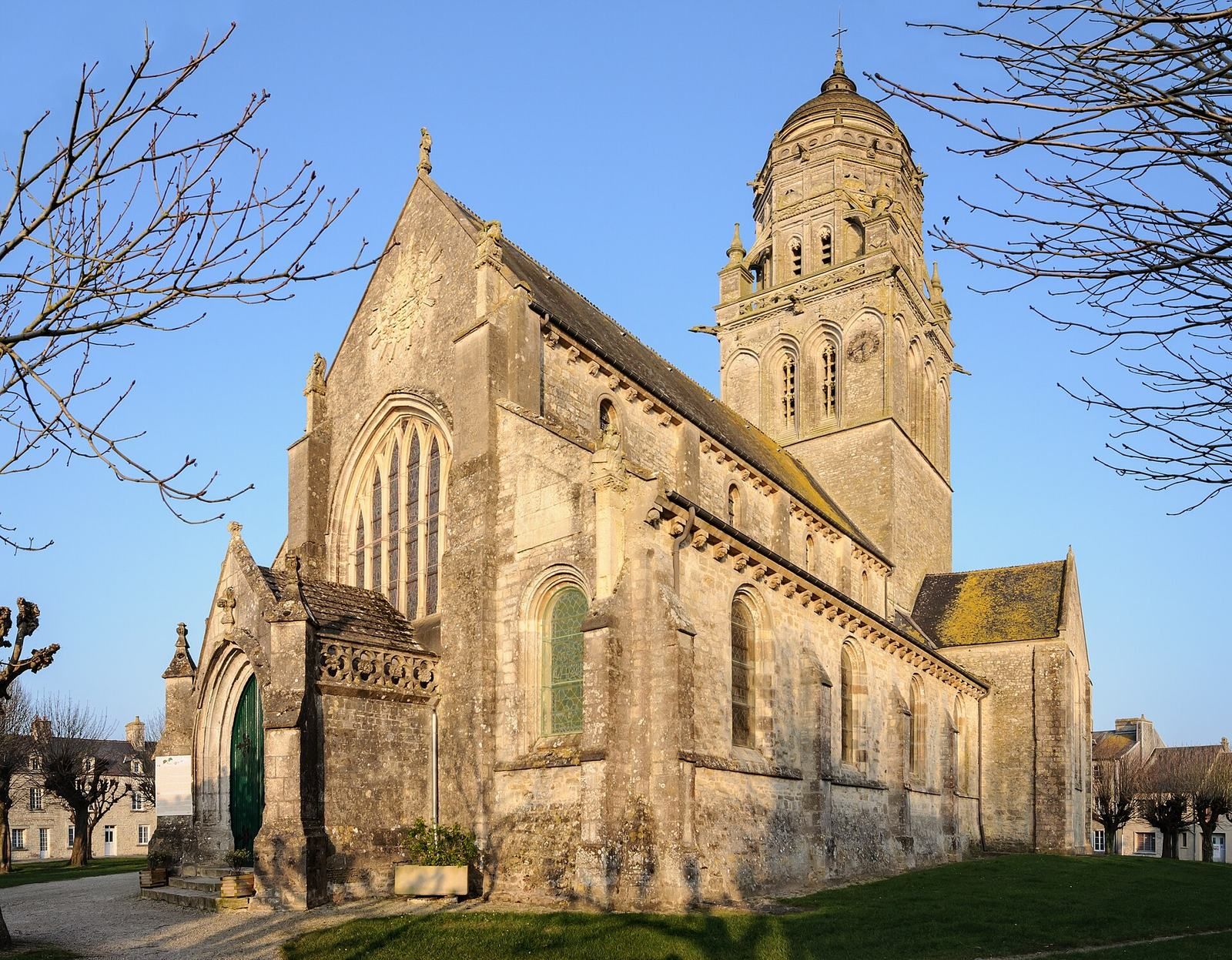
Église Notre-Dame de Sainte-Marie-du-Mont is a Catholic parish church in France whose origins lie in 11th-century Romanesque architecture, a medieval style associated with rounded arches. It is affiliated with the Diocese of Coutances and Avranches, a church territory overseen by a bishop, and the Parish of Our Lady of Peace of Sainte-Mère-Église, a local church community and administrative unit. It formerly belonged to the Diocese of Bayeux, along with churches at Sainte-Mère-Église, Vierville, Neufville, Chef-du-Pont and Lieusaint.
In the early months of 1440, the church’s priest, Jehan Galon, was implicated in a conspiracy in the Cotentin, a peninsula in Normandy. The English arrested and imprisoned him. After an investigation lasting several months failed to reach a conclusion, they released him.
The church was classified as a historic monument in 1840. The ground of the adjacent Church Square received its own classification by order on 11 May 1948.
Remains
Nave, aisles and lantern tower
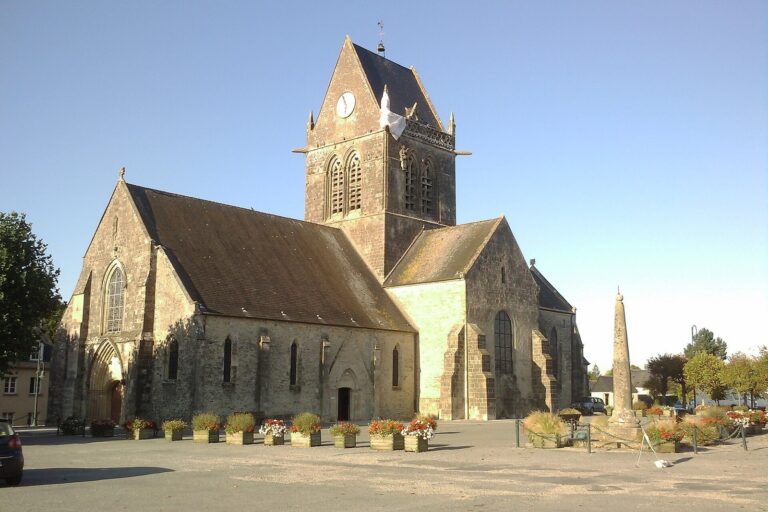
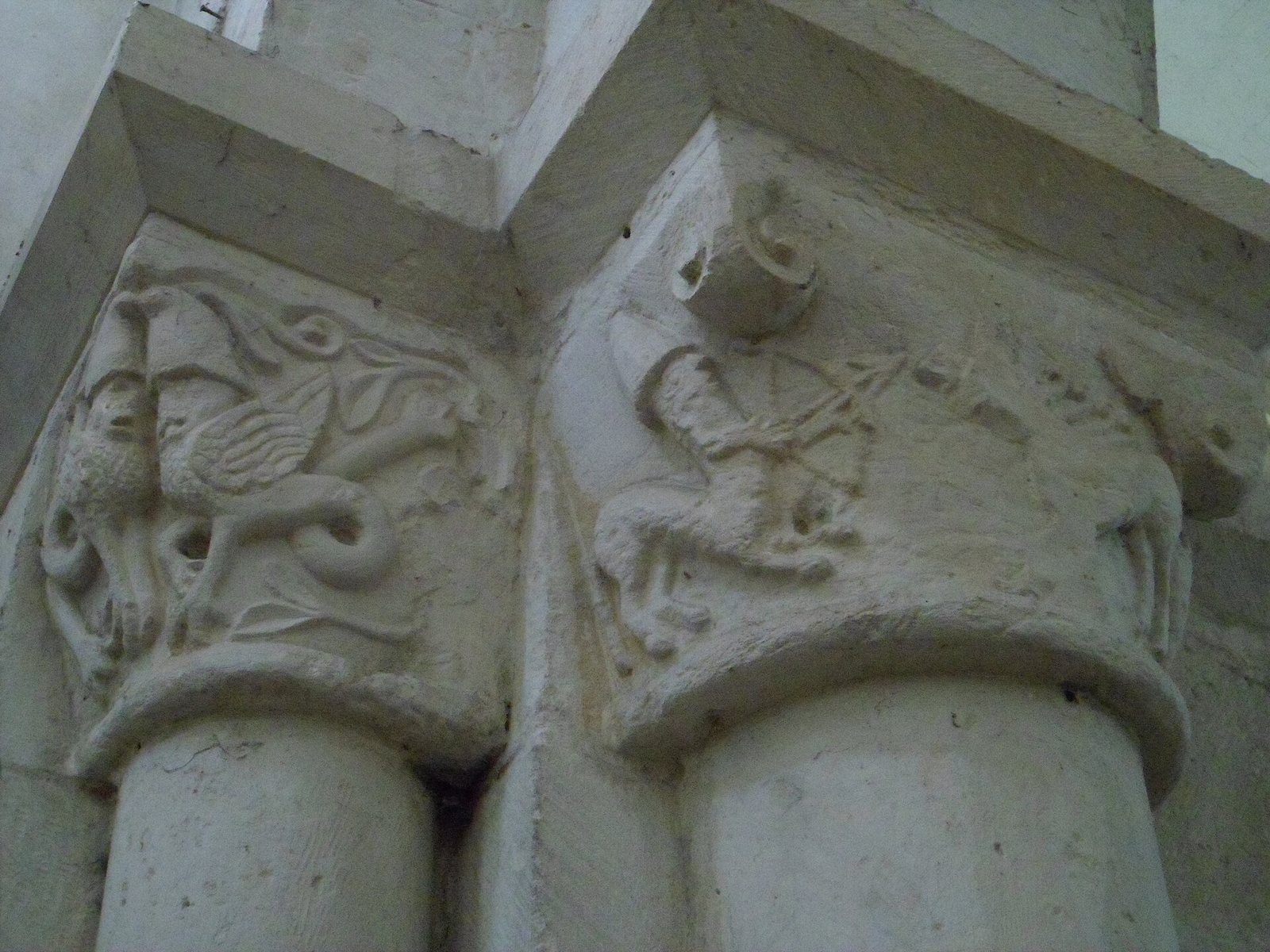
The building brings together a Romanesque nave, Gothic elements associated with later medieval pointed-arch architecture, and a Renaissance-style dome, reflecting a revival of classical forms. The nave, the principal body of the church, is divided into four bays and opens onto side aisles through plain rounded arches arranged in several tiers. Capitals, the shaped tops of columns or piers, support the arches, and some carry carved figures or scenes. The remainder of the building dates to the 14th and 15th centuries. After the spire collapsed, a lantern tower, a roof structure that admits light, was built in the second half of the 15th century. It is crowned by an octagonal Renaissance dome, a form also found at Montebourg and Carentan.
Carved stone decoration
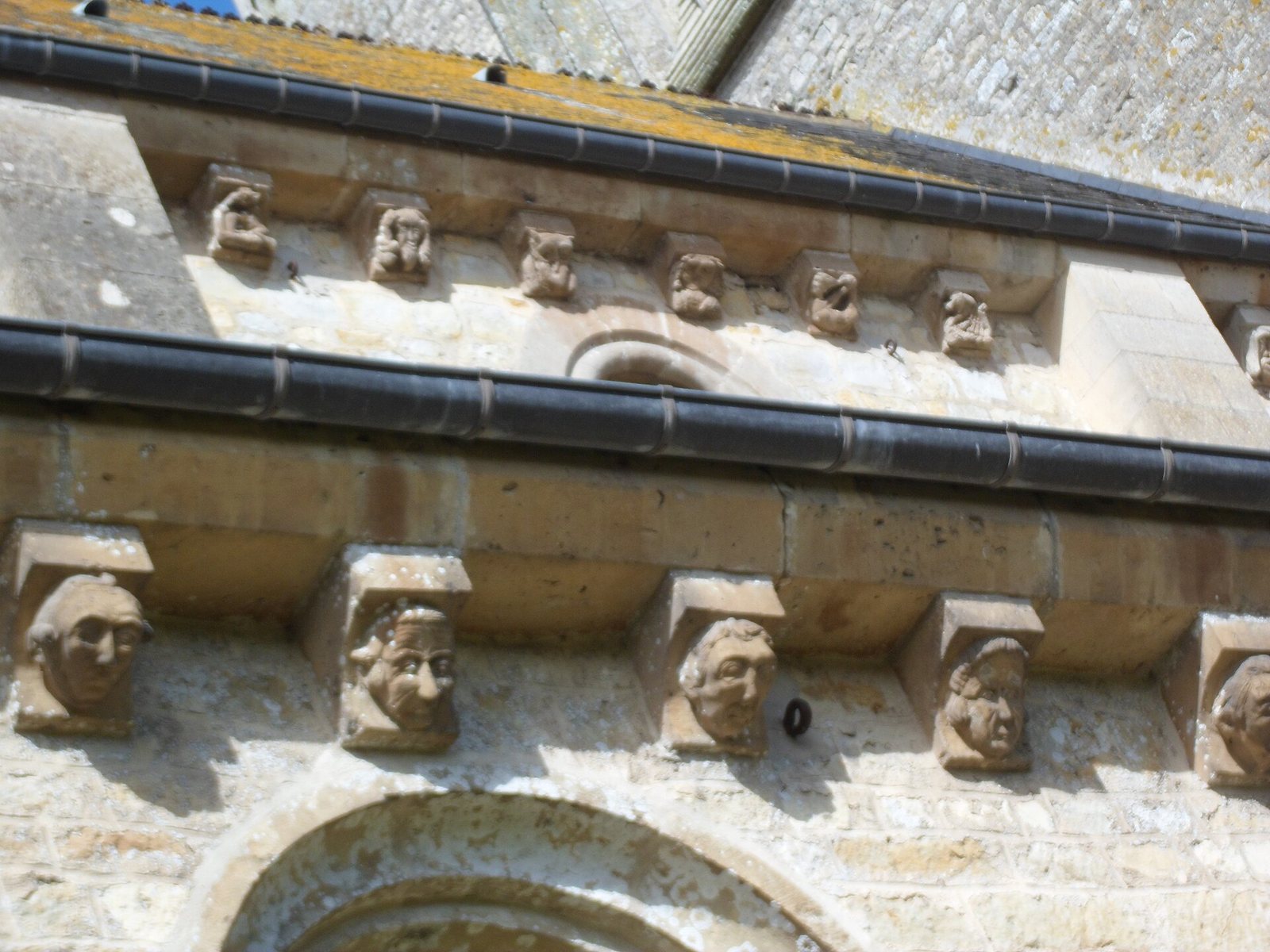
Interlacing patterns, animals and plant forms decorate the capitals and corbels, which are projecting supports. The church is the oldest in a group of Romanesque churches in the Plain, a traditional region of the Cotentin, with related sculptural decoration. The group includes churches at Foucarville and Boutteville, as well as the more distant church at Tollevast. Some capitals show chimeras, fantastical hybrid creatures, wearing Phrygian caps, soft caps associated with ancient Phrygia. This motif is unmatched in the region and characteristic of a single sculpture workshop active in the early 12th century. Other carvings include deer and dogs biting their own tails. Among the varied corbels are a scene of Samson, the biblical figure famed for strength, defeating a lion, a lyre player, and a man seated on a jug and surrounded by a serpent.
Funerary monument
A funerary monument on the north wall commemorates Henri Robert aux Espaules (1562-1607), lord of the area and lieutenant-general of Normandy, a senior official exercising delegated authority. It depicts him kneeling on a cushion in armor. His three daughters, including Jeanne aux Épaules, commissioned the monument, which originally stood at the entrance to the choir.
Stained-glass windows
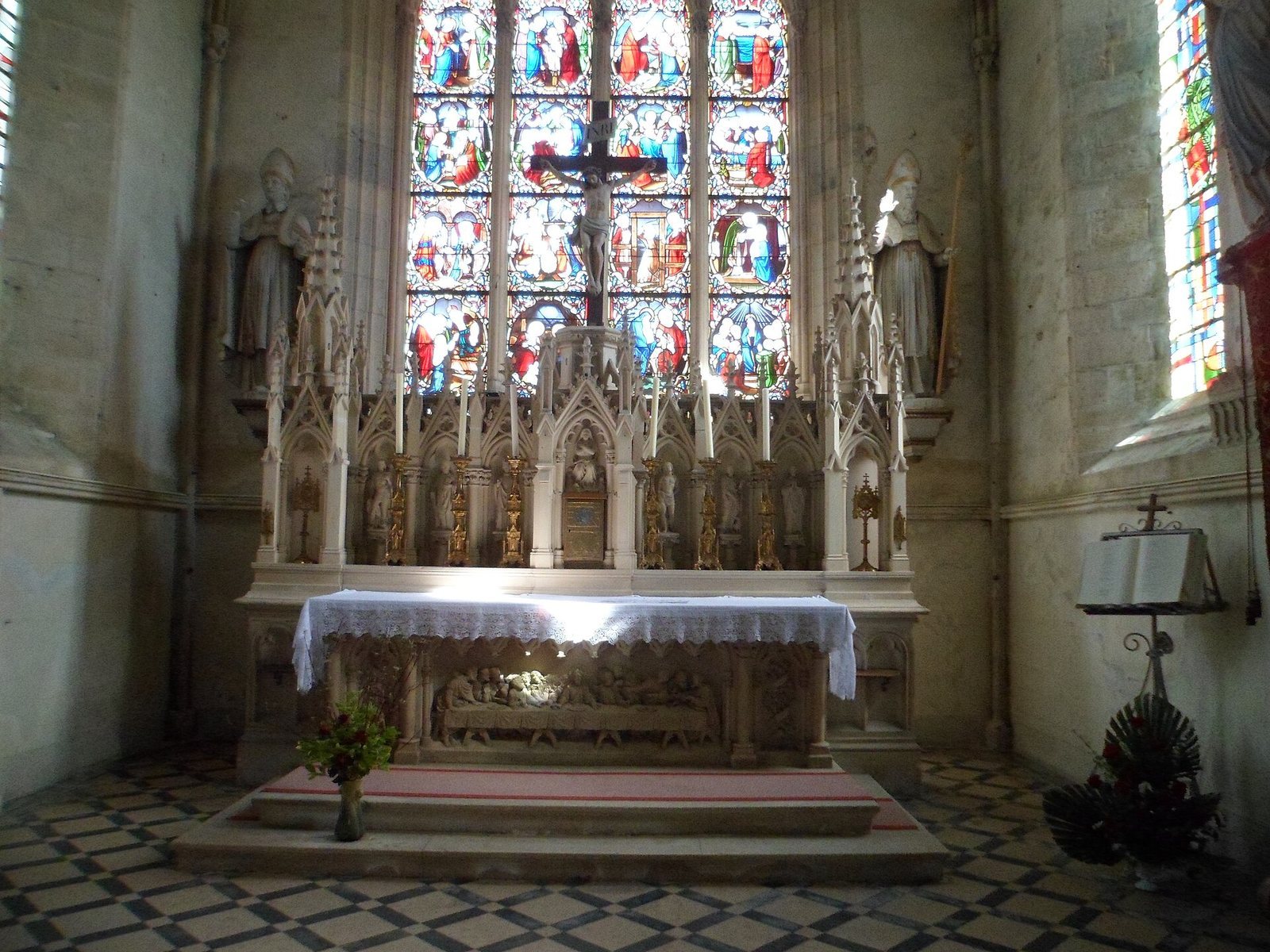
The stained-glass windows date to 1958 and were made by Philippe Devivier.