Church of Holy Trinity in Křemešník: A Roman Catholic Pilgrimage Church
Site at a Glance
- Rating
- 4.7
- Popularity
- Medium
- Country
- Czechia
- Primary era
- Early Modern
- Eras represented
- Medieval, Early Modern, Modern
- Civilizations
- Habsburg, Habsburg Austria, Holy Roman Empire, Kingdom of Bohemia
- Site type
- Religious
- Remains
- Church
On this page10 sections
History
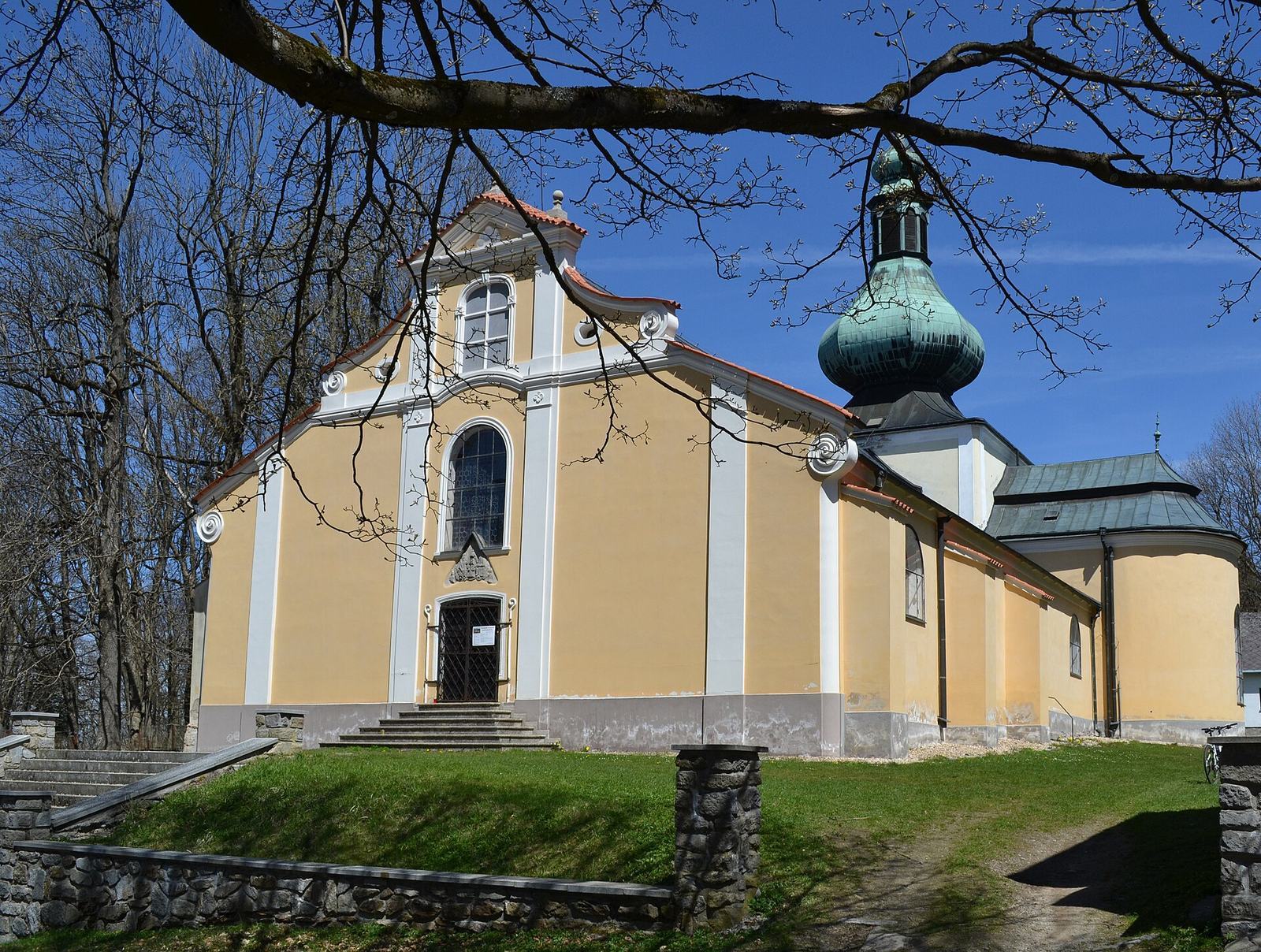
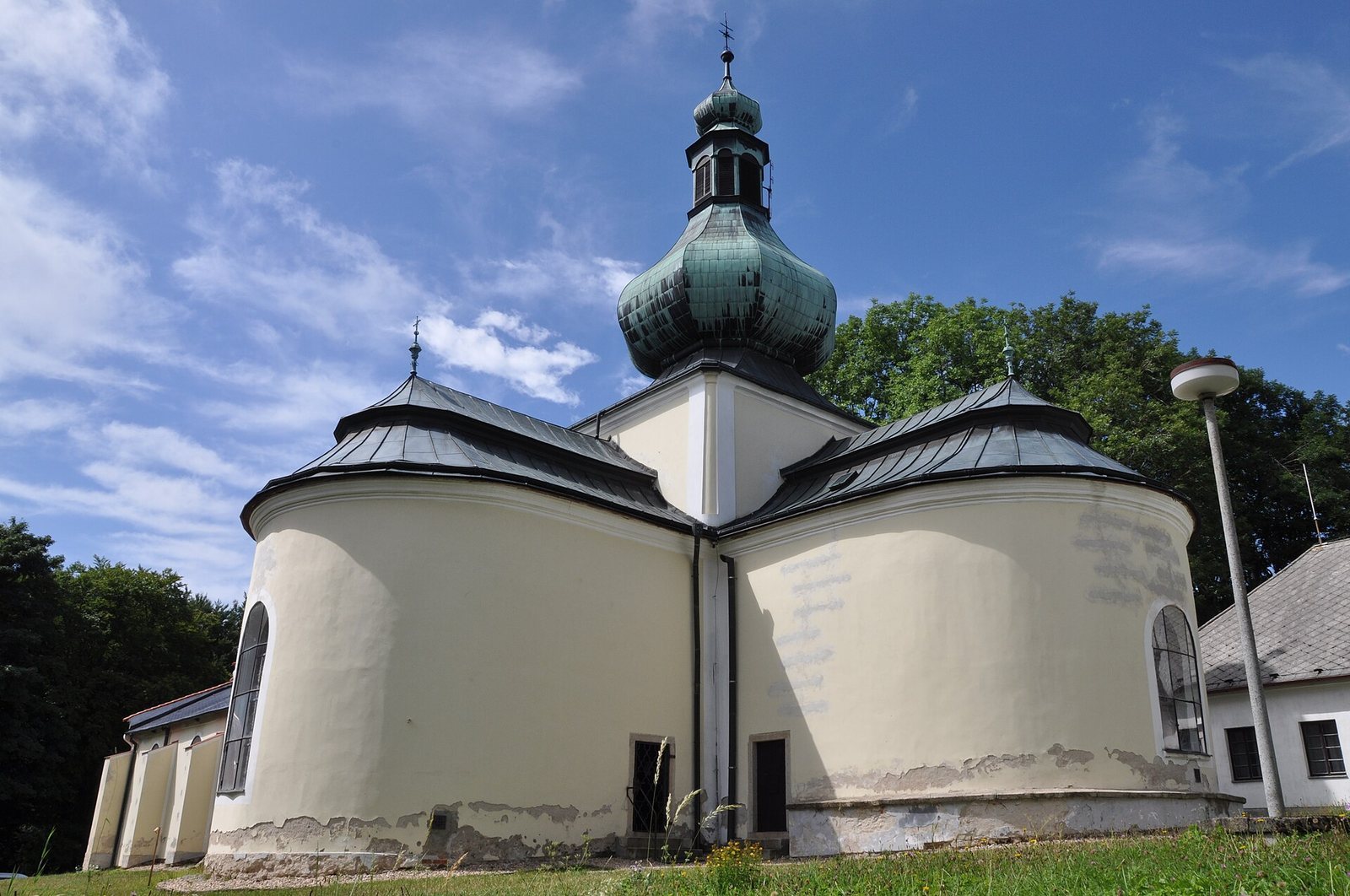
The Church of Holy Trinity in Křemešník is a Roman Catholic pilgrimage church on Křemešník hill, in the village of Křemešník within Nový Rychnov municipality, Pelhřimov District, Czechia. Dedicated to the Holy Trinity, the Christian doctrine of one God as Father, Son, and Holy Spirit, the church is assigned a construction date before 1361.
The wooden chapel and Baroque church
A memorial-book entry recounts that in 1555 the Pelhřimov burgher Matouš Chejstovský fell into a silver mine while escaping robbers. After returning to Pelhřimov, he arranged for a wooden chapel dedicated to the Holy Trinity to be built on Křemešník.
In 1652, an early Baroque pilgrimage church replaced the wooden chapel. Arnošt Harrach, a cardinal, or senior Catholic church official, and Archbishop of Prague, consecrated it. Relics, revered remains or objects associated with saints, of Saint Candidus, Saint Ursula, and Pope Saint Martin were brought to the church.
Expansion and continuing use
Pilgrim numbers grew until the church could no longer hold those who came. Between 1730 and 1752, it was rebuilt and enlarged to accommodate them.
Repairs were supported through the Architectural Heritage Rescue Programme from 1995 to 2014. The church remains in regular Roman Catholic use. It belongs to the Czech Province, which groups dioceses, and the Diocese of České Budějovice; locally, it is part of the Pelhřimov Vicariate, an administrative grouping of parishes, and the Pelhřimov parish.
Remains
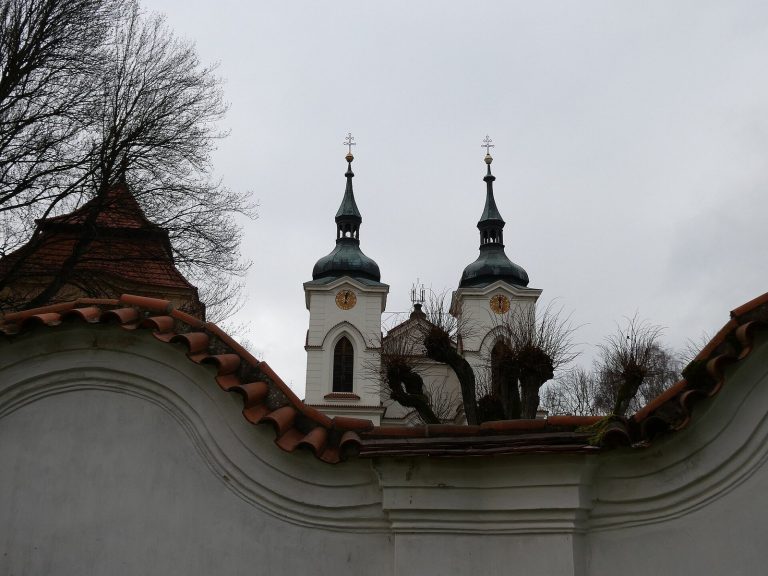
The church has a cross-shaped plan centered on a rectangular main nave. Its three aisles consist of a central nave flanked by two side aisles, and three chapels stand on its northeastern side. The church forms part of an extensive pilgrimage complex on the hill.
The church building
Doorway relief
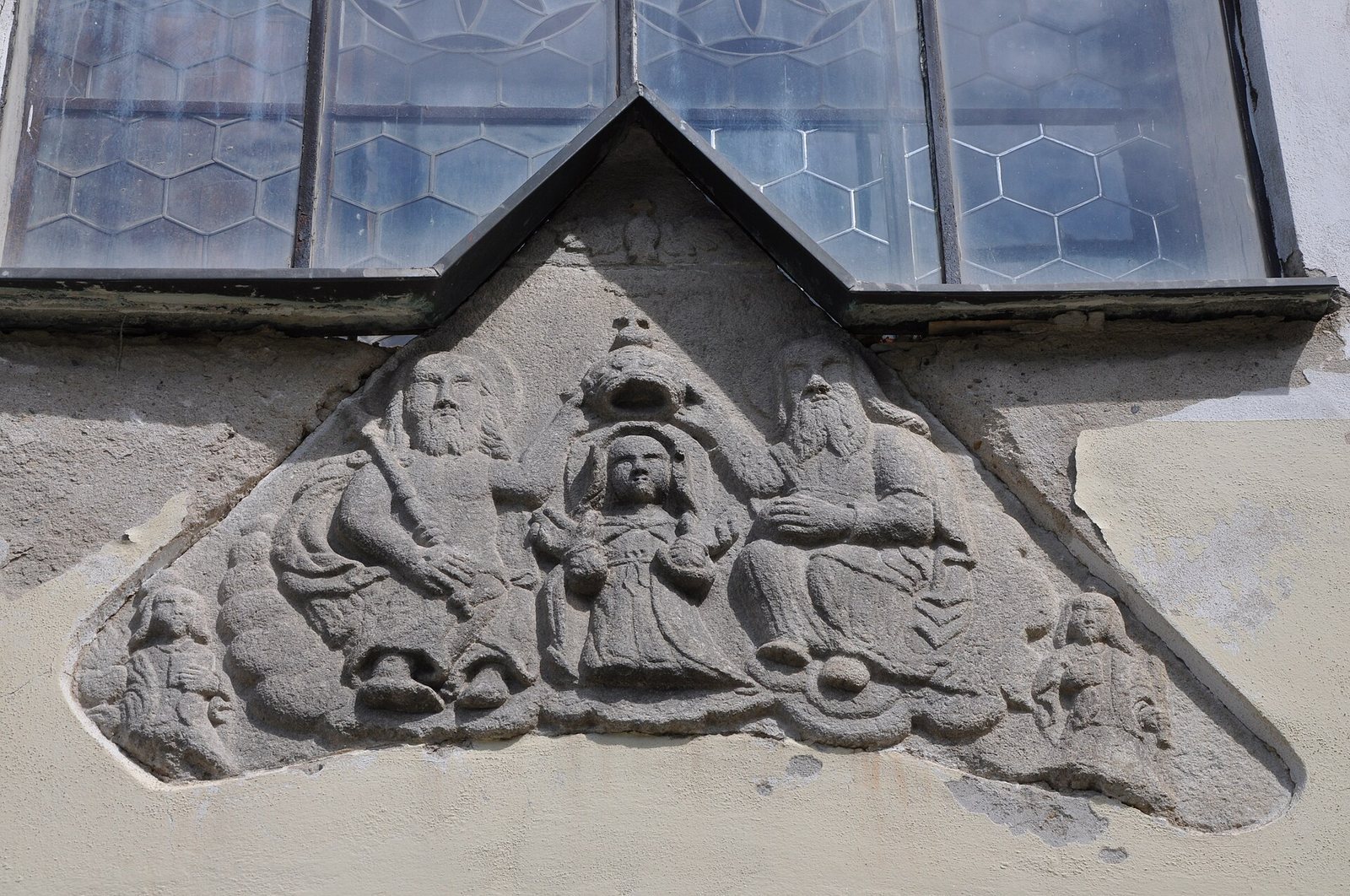
A triangular relief above the doorway dates to the second half of the sixteenth century. It depicts the Coronation of the Virgin Mary.
Paintings, windows, and altars
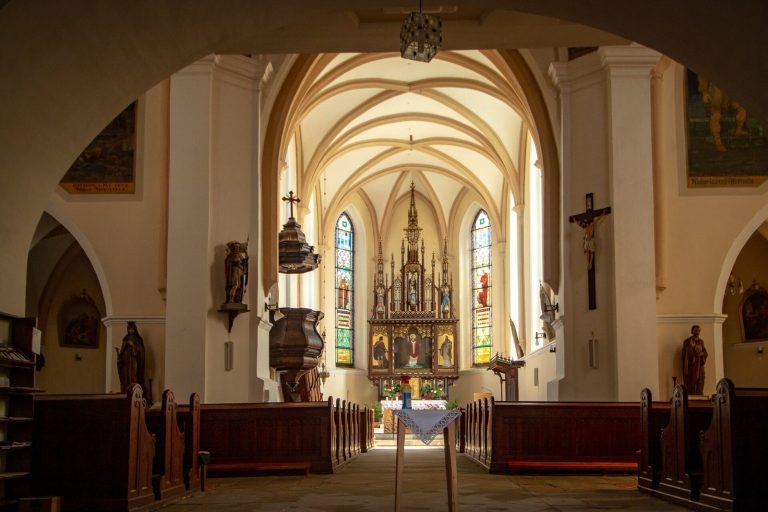
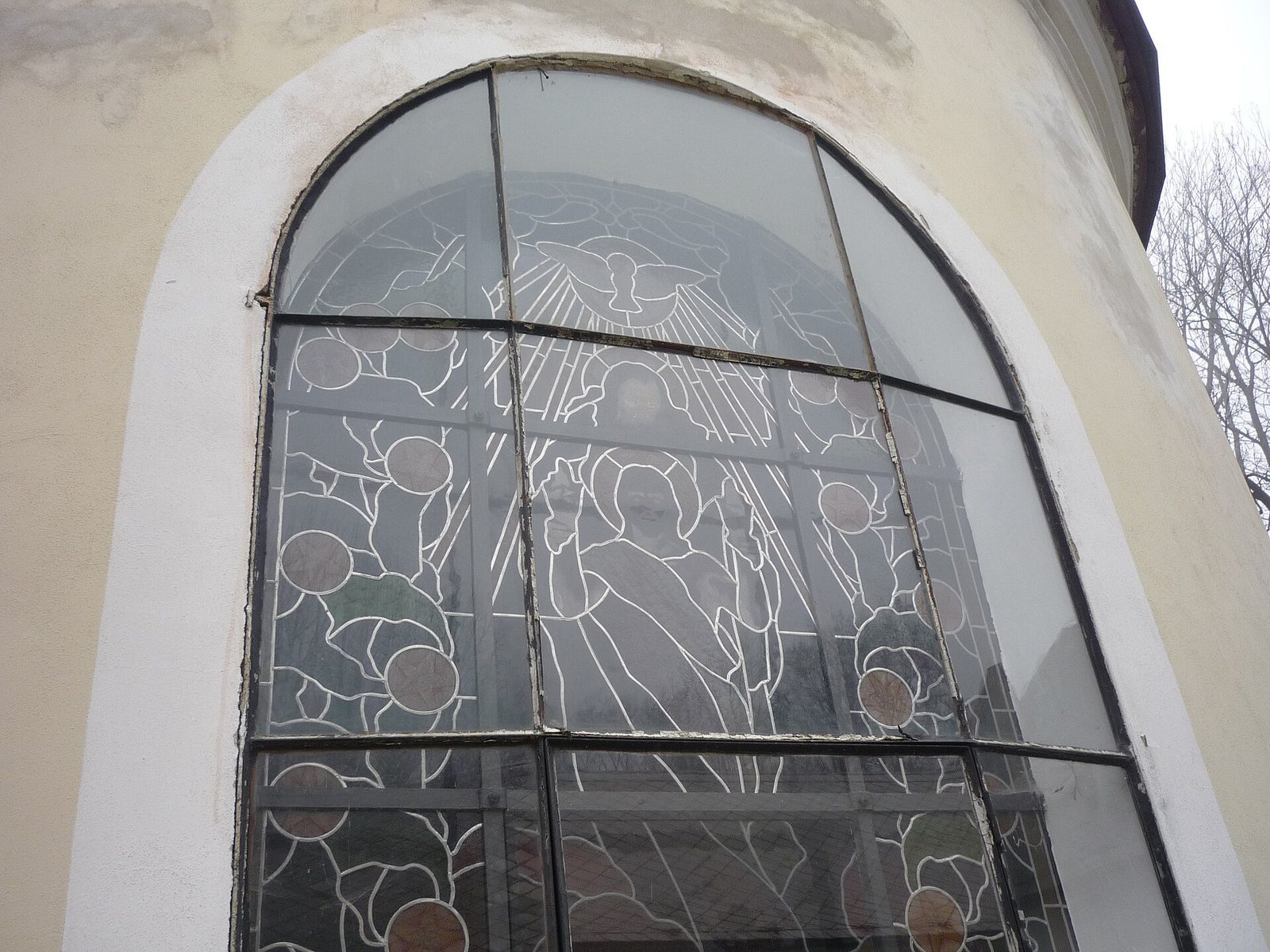
Most interior paintings are by Jan Kalina and depict the will of God, the Eight Beatitudes, or blessings attributed to Jesus in the Sermon on the Mount, and divine virtues. The stained-glass windows date to 1936. The main altar, from 1752, is dedicated to the Holy Trinity. Two side altars stand beside it, one dedicated to the Sacred Heart of Jesus and the other to the Virgin Mary. The main altar is three-sided, a form the Czech Book of Records identifies as the only one of its kind in the country.
The surrounding pilgrimage complex
Chapels, arcades, and supporting buildings
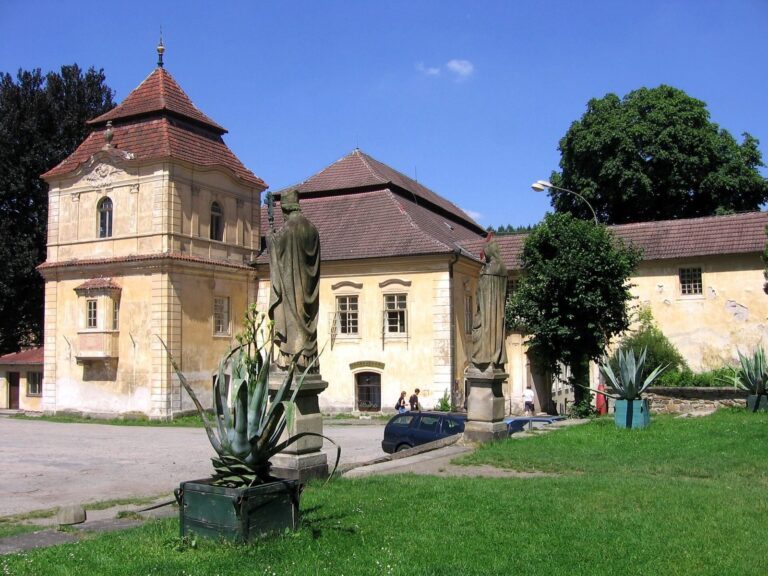
The wider complex includes the Chapel of the Dead, the Chapel of the Coronation of the Virgin Mary, a rectory, and a school. Covered arcades with a roof structure are also part of the complex, and a sundial stands behind the church. A chapel within the arcades contains a holy-water font made by František Bílek.
Devotional route and monuments
A Stations of the Cross route, a devotional sequence recalling events of Jesus’s Passion, dates to 1906 and leads from the Miraculous Spring toward the church. The complex also includes a Golgotha, the biblical place of Jesus’s crucifixion, and a station belonging to the route. Its Holy Sepulchre, representing Jesus’s tomb in Christian tradition, contains a statue of Christ by Antonín Bílek.