Hyrcania: A Hasmonean Fortress and Monastic Site in the Judean Desert
Site at a Glance
- Rating
- 4.6
- Popularity
- Medium
- Country
- Palestine
- Primary era
- Classical
- Eras represented
- Classical
- Civilizations
- Roman
- Site type
- Military
- Remains
- Fort
On this page13 sections
History
Hyrcania was a fortress of the Jewish Hasmonean dynasty in Israel’s Judean Desert, with its foundation generally dated to the second or first century BCE. The Hasmoneans ruled Judaea during the Hellenistic and early Roman periods. Hyrcania’s founding is attributed either to John Hyrcanus or to his son Alexander Jannaeus, but the precise date and founder remain uncertain.
Hasmonean rule and Roman intervention
The fortress is first recorded around 75 BCE, during the reign of Salome Alexandra, Jannaeus’s wife. She retained Hyrcania, Machaerus, and Alexandrion because they held her treasures, while transferring control of her other strongholds to the Pharisees, a Jewish religious and political group.
In 57 BCE, Alexander, son of Aristobulus II, prepared to restore Hyrcania’s defenses during his revolt against Hyrcanus II and Aulus Gabinius, the Roman governor of Syria. Alexander surrendered, and Gabinius razed the fortress. The writer Strabo also describes its destruction, attributing the order to Pompey, Gabinius’s superior and a Roman general.
Herod’s stronghold
In 33–32 BCE, the Hasmonean princess Alexandra led a revolt against Herod the Great at Hyrcania. She was the sister of Antigonus, a Hasmonean king whom Herod had executed. Herod recaptured and enlarged the fortress. Alexandra may have remained in control until about 31 BCE, when Herod suppressed the revolt and may have put her to death.
Herod used Hyrcania to confine and kill people he regarded as enemies, including royal prisoners held indefinitely or condemned to death. After ordering the execution of his son and heir Antipater, Herod had him buried at the fortress. In 15 BCE, Herod showed Hyrcania’s defenses to Marcus Vipsanius Agrippa, a Roman general visiting Judaea.
Monastic use and later investigations
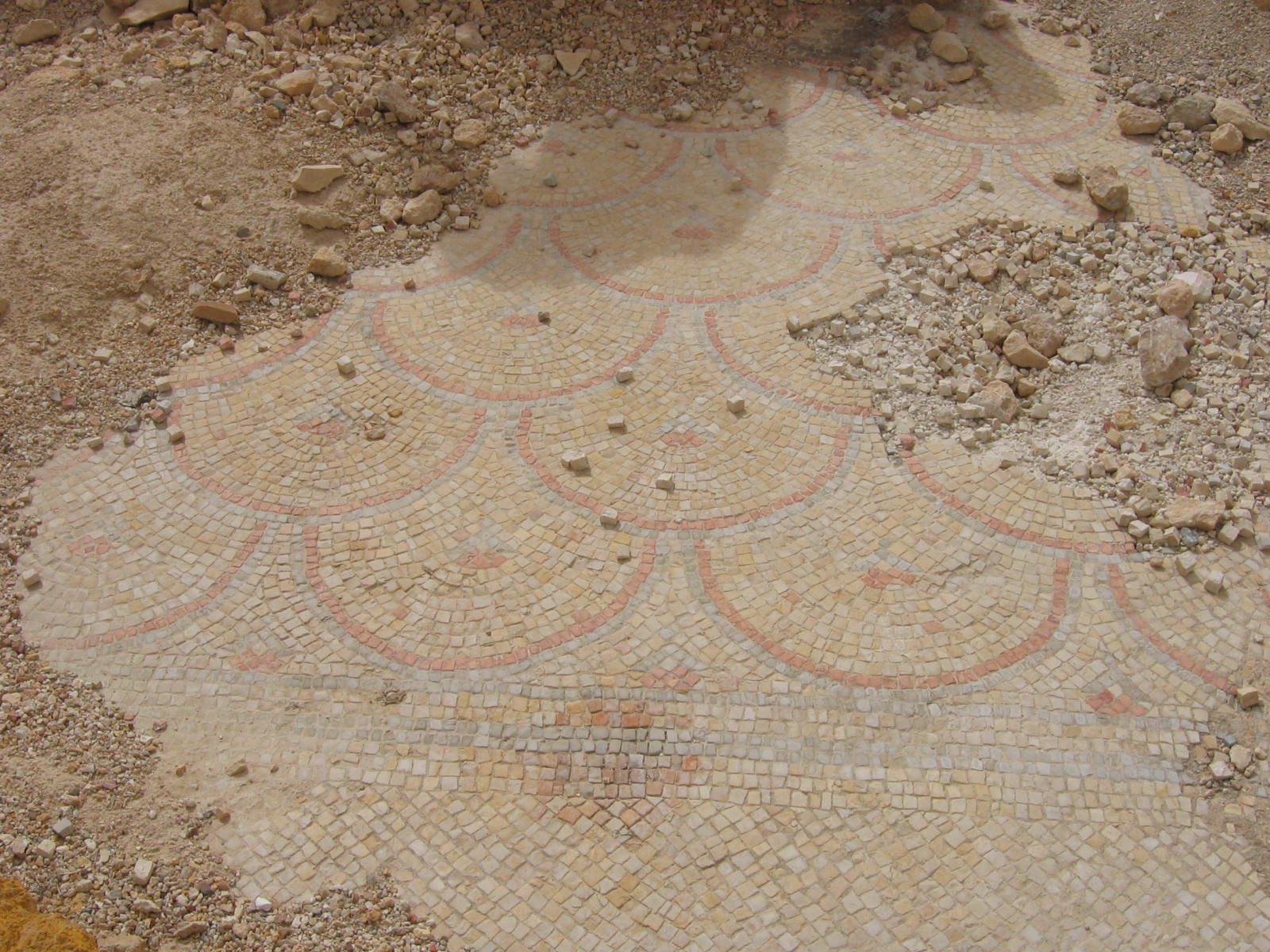
Hyrcania was abandoned after Herod’s death. In 492 CE, during the Byzantine era of the Eastern Roman Empire, the Christian monastic leader Saint Sabbas established a communal residence for hermits on the ruined fortress. Called Kastellion, meaning little castle, it formed part of the monastic community associated with Mar Saba, about four kilometres to the southwest. The monastery remained active until the early ninth century, while hermits continued living at the site until the fourteenth century.
The fortress was identified in 1880. A brief attempt to renew monastic life took place between 1923 and 1939, and Bedouins destroyed the modern monastery in the 1930s. Excavations in 1950 recovered a large group of papyri associated with one or more monastic libraries of the seventh and eighth centuries. The material is now held at the University of Leuven and the Rockefeller Museum. A new archaeological excavation campaign began in May 2023 under archaeologists Oren Gutfeld and Michal Haber. Before then, investigation had relied mainly on surveys, measurements, and limited trial excavations.
The valley below the fortress has been proposed as the biblical Valley of Achor. The Copper Scroll, one of the Dead Sea Scrolls, lists places associated with hidden treasure and names a Valley of Achor; the proposed identification has drawn treasure hunters to the area. Herodian- and Byzantine-period graves nearby were looted in the remote past.
Remains
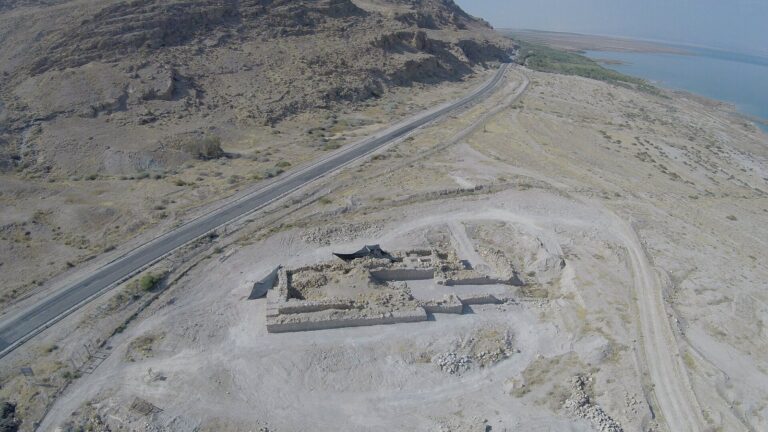
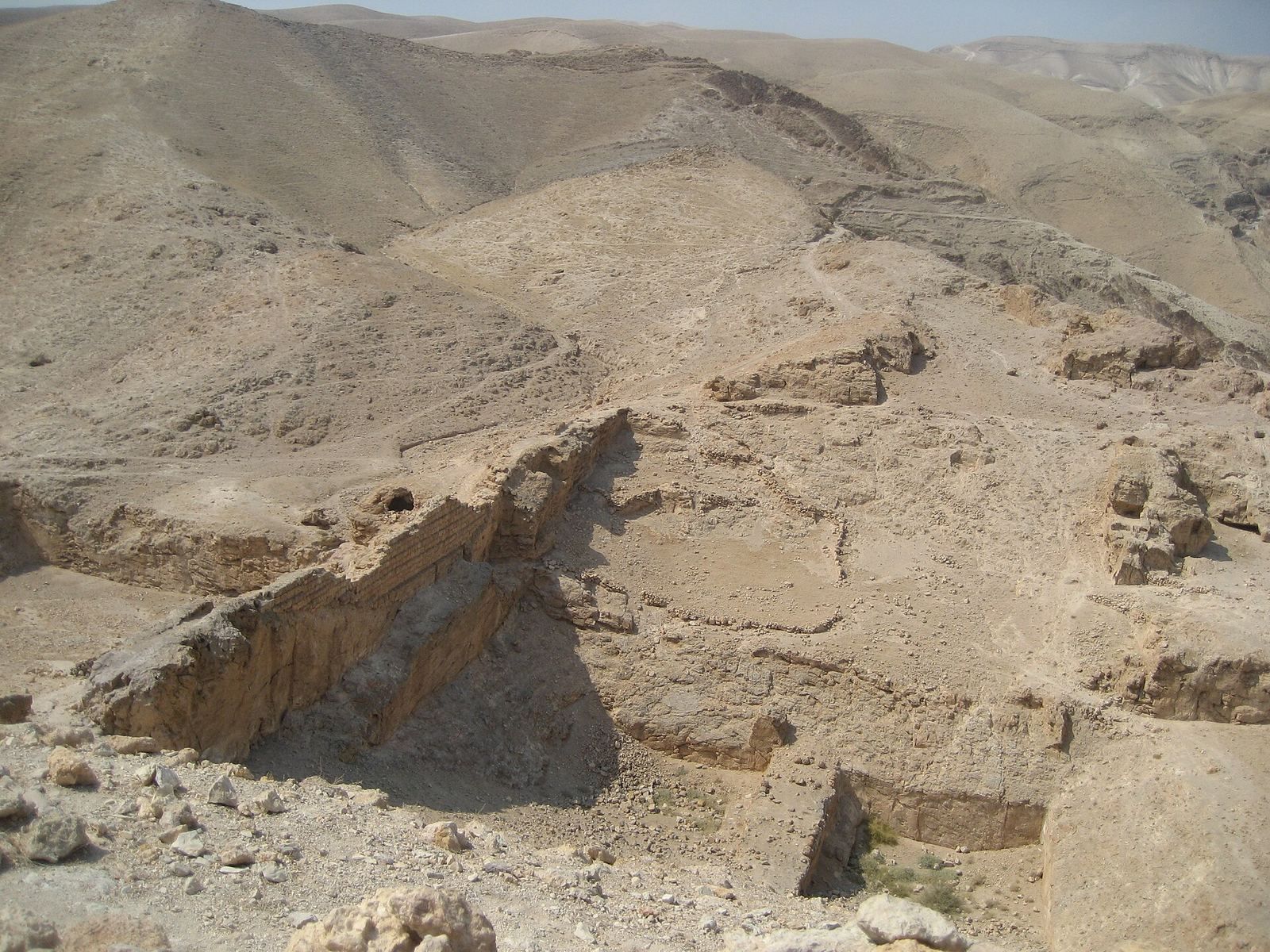
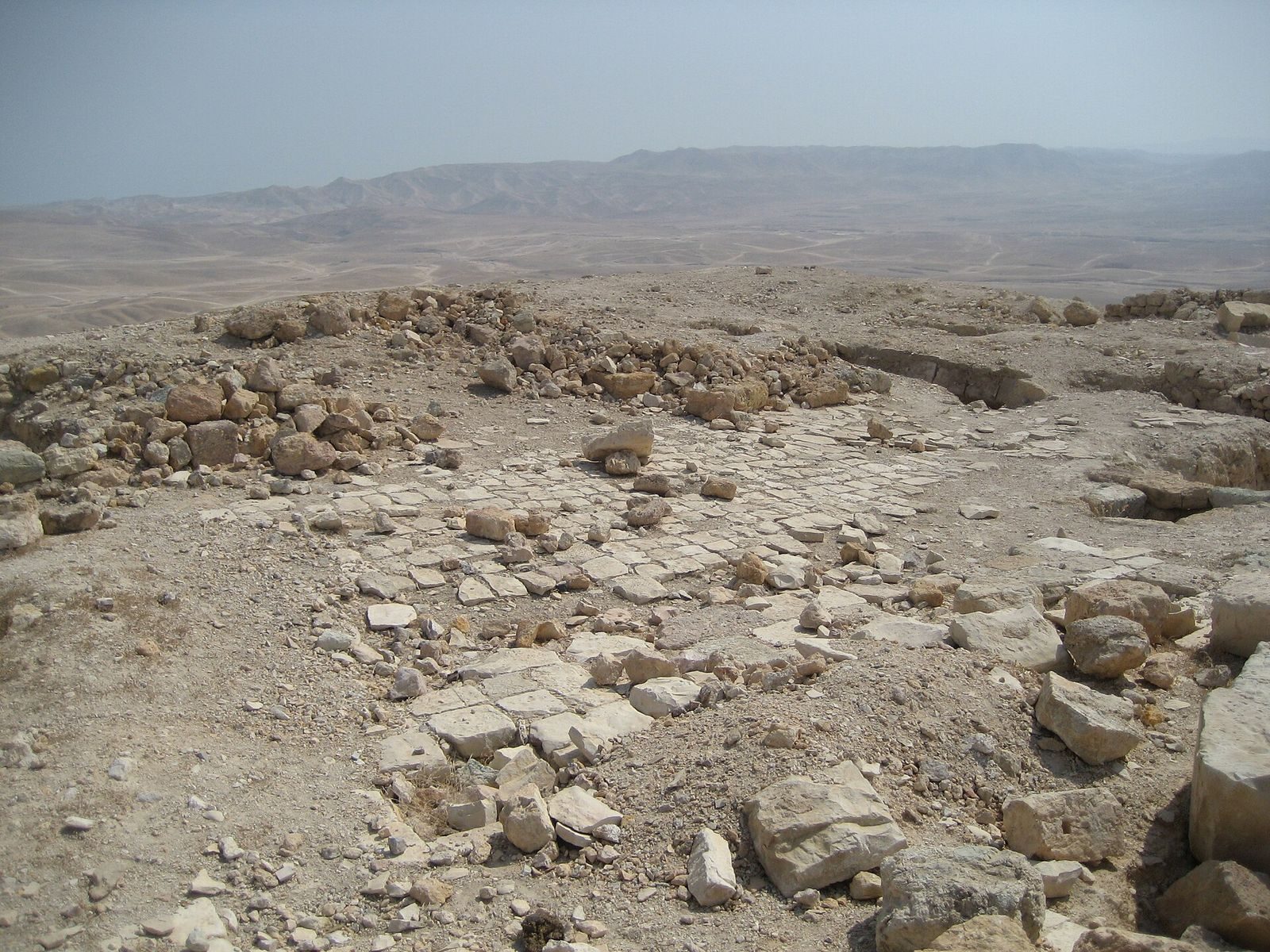
The ruins occupy an isolated hill on the western edge of the Hyrcania Valley, about 200 metres above the valley floor and approximately 270 metres above sea level. The hill lies about five kilometres west of Qumran and sixteen kilometres east of Jerusalem. The remains include summit fortifications and water installations, a burial cave in the hill’s southwestern part, and rock-cut tunnels in a nearby narrow wadi.
Fortress and water system
Summit structures
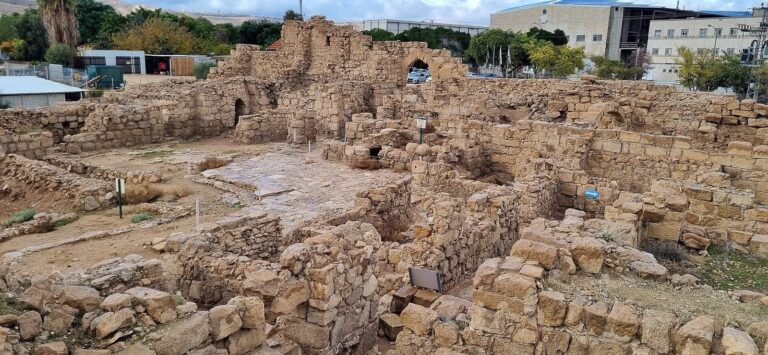
Excavations at the southwestern end of the summit in 2023 exposed a wall and watchtower belonging to the Second Temple period, the era between the Temple’s rebuilding in the sixth century BCE and its destruction in 70 CE. The fortress survives in ruins. In the northwestern part of the hill, excavation removed fallen building stones from a basement room in one of the structures.
Water installations
Channels, some open to the air, carried floodwater from nearby wadis to large storage pools at the foot of the hill. The fortress also had large cisterns within its walls and a series of cisterns on its southern side. An orchard beside one of the storage pools provided crops for the inhabitants.
Monastic cave and written finds
Burial cave
A cave in the fortress’s southwestern part probably served as a cemetery for monks of Kastellion during the Byzantine period. Its walls once carried paintings of thirty-six Christian saints, each shown with a name. Some of the saints had been unknown before the paintings were found, and some images were deliberately damaged.
Manuscripts
The monastic remains include papyrus and parchment fragments. Sixth-century pieces from a manuscript in Christian Palestinian Aramaic, a dialect used by Christian communities in Palestine, preserve a Western version of Acts 10:28–29 and 32–41. Other fragments contain passages from Joshua, Luke, John, and Colossians. The finds also include the only known papyrus letter in this Western Aramaic dialect.
Inscriptions and small finds
Two fragments of a monumental Jewish stone inscription date to the second or first century CE. They were carved in Aramaic using Jewish script. A short inscription in Christian Palestinian Aramaic came from the neighboring Khirbet el-Mird cave. Two inscriptions in common Greek were discovered in 2023. One remains undeciphered; the other, painted in red on a building stone and dated no later than the first half of the sixth century, adapts Psalm 86 by addressing Jesus Christ in place of the Lord. A cross appears above the text, which is associated with the Byzantine Christian monastic community.
A child-sized ring set with turquoise was also found in 2023. Its inscription uses Kufic, an early angular style of Arabic writing.
Rock-cut tunnels
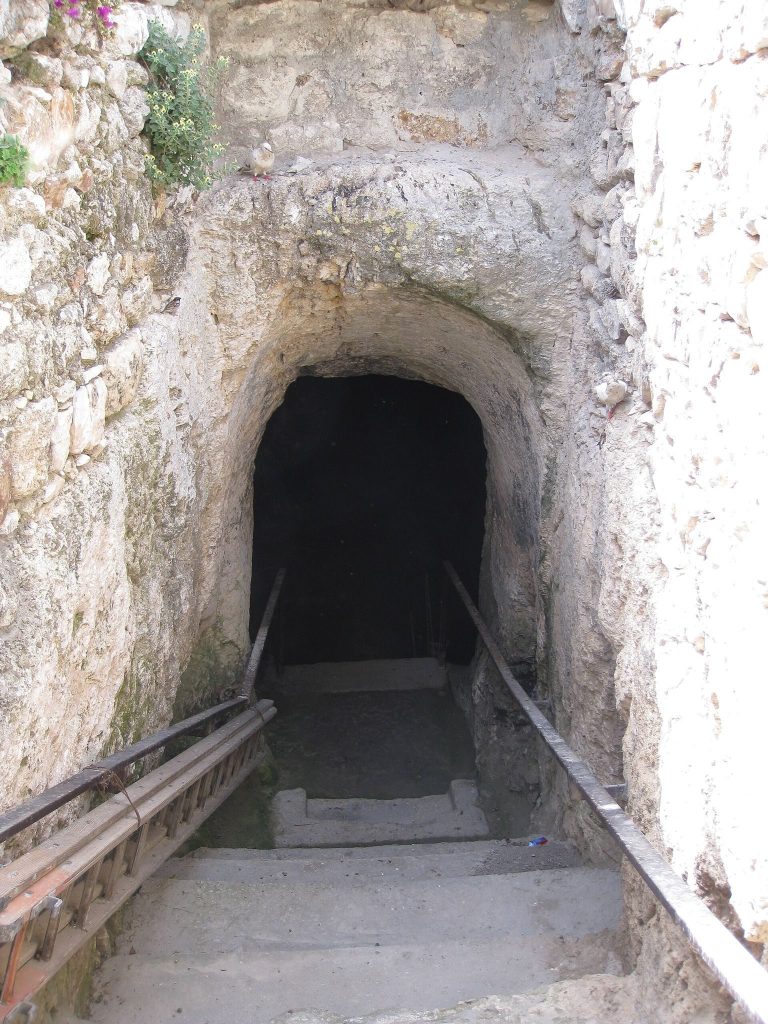
Four steep tunnels descend through a cliff face beside a narrow, canyon-like wadi near the fortress. Three run north to south and one east to west. Two stepped tunnels were cleared of flood-borne deposits. The passages descend to depths of about 50–80 metres and 120 metres. Work in one stopped at about 100 metres, while excavation of the other was not completed. The lower tunnel had been surveyed in the 1960s and excavated in 2000; investigations of the tunnels took place between 2000 and 2006.
One cleared tunnel contained a Hasmonean-period clay vessel and the unburied skeleton of a young woman with severe sword cuts. A separate tunnel, which divides into two passages, yielded a few Iron Age II and Early Roman potsherds, Hasmonean coins, and a hyrax skeleton dated by radiocarbon analysis to 590 BCE. Seasonal flash floods may have carried finds into the passages, so they do not establish when the tunnels were made. Their purpose and date remain uncertain. Suggestions include a monumental tomb linked to the fortress, a water supply for an Iron Age II settlement about two kilometres east, or a Herodian forced-labour project intended as punishment rather than practical construction. Other proposals identify them as hiding places or tombs for Herod’s opponents, possibly including Antipater, or connect them with the Copper Scroll’s treasure, or with worship of the sun and stars.