Vrdnik-Ravanica Monastery: A Serbian Orthodox Pilgrimage Centre
Site at a Glance
- Rating
- 4.9
- Popularity
- High
- Country
- Serbia
- Primary era
- Modern
- Eras represented
- Early Modern, Modern
- Civilizations
- Austrian Empire, Habsburg, Habsburg Austria, Hungarian, Serbian
- Site type
- Religious
- Remains
- Monastery
On this page15 sections
History
Vrdnik-Ravanica Monastery is a Serbian Orthodox monastery in Vrdnik, on Fruška Gora in northern Serbia. Its foundation is placed between the late 15th and early 16th centuries, though its founder is unknown. Its reputation as a spiritual centre and pilgrimage destination grew through its association with Prince Lazar, a medieval Serbian ruler venerated as a saint.
Foundation and Ottoman period
The monastery was originally for monks and dedicated to St John the Baptist. Church construction is associated with Metropolitan Serafim Jovanović in the second half of the 16th century. Ottoman records from the 1560s describe a demand for 3,000 akçe, Ottoman silver coins, to secure the monastery’s release. The monks could not pay and dispersed; a local man named Pejo is said to have paid the sum. An Ottoman imperial decree, or firman, also exempted the monastery from taxes.
In 1589, Georgije, a monk ordained as a priest, copied a Menaion, an Orthodox liturgical book arranged by month, at the monastery. By the middle of the 17th century, Vrdnik had fallen into neglect.
Prince Lazar’s relics and the pilgrimage centre
After Ottoman forces destroyed Ravanica Monastery in Serbia in 1690, monks from there settled at the abandoned Vrdnik monastery during the 1690s, bringing Prince Lazar’s relics with them. Vrdnik became known as Little Ravanica and developed into an important Serbian spiritual centre and pilgrimage destination. It was initially poor, but donations from pilgrims grew, and monks travelled to Russia to seek financial support.
From the late 17th century into the 1710s, the monastery served as the seat of Stefan (Metohijac), Metropolitan of Bačka. Its 18th-century history includes substantial donations, including support from Russia, and imperial decrees issued by Russian empresses Elizabeth Petrovna in 1748 and Catherine II in 1768. A description from 1753 incorrectly named Prince Lazar as Vrdnik’s founder. The charter associated with him concerned a different Serbian monastery, Ravanica.
The relics were moved to Futog in 1716 because of the threat of Ottoman capture. Vidovdan, observed on 28 June and associated with the Battle of Kosovo, is the monastery’s annual patronal feast, a yearly celebration associated with its dedication.
Church rebuilding and the relics
Funds for a new church were gathered over nearly a century. Its building campaign ran from 1791 to 1811, with the foundations consecrated in 1801, during Metropolitan Stefan Stratimirović’s tenure. Bishop Josif Stojanović established a building fund of 3,348 florins. Kornelije Serb and Kosta Zmijanović built the church, which Archimandrite Gideon Petrović consecrated on Vidovdan in 1811. Prince Lazar’s relics were transferred from the earlier church to the new one.
In 1848, amid concern about Hungarian forces, the relics were taken to Klenak. They stayed there for three months before returning to Vrdnik. An earthquake damaged the church in 1893, and repairs followed in 1898.
War, loss and later changes
Before the Second World War, the monastery had a substantial library and a scriptorium, a place where manuscripts were copied. Its rare liturgical and church books included works printed in Ukraine, such as psalters, liturgies, Bibles, saints’ lives, apostolic texts, canons and spiritual alphabets.
During the Second World War, Fruška Gora became part of the Independent State of Croatia, the wartime state in which the region was incorporated. Ustaše forces, members of a Croatian fascist movement, persecuted the monks, used monastery buildings as barracks and the church as an arms store, and looted the property. The monastery’s archive, containing documents dating from 1690 to 1941, was lost. On 10 September 1941, a Zagreb museum commission took 83 items of church equipment, seven portraits and valuables from the sacristy and library into its custody.
The relics were taken to Bešenovo Monastery in 1941 and 1942, then moved to Belgrade. On 14 April 1942, Radoslav Grujić, a senior priest and professor at the Faculty of Theology, transferred them to Belgrade Cathedral. During commemorations of the 600th anniversary of the Battle of Kosovo in 1989, the principal relics returned to Ravanica in Serbia.
The monastery was restored after the war. In 1946, following the Yugoslav communist government’s transfer of church lands out of church control, its holdings fell from 1,420 hectares in 1941 to 15 hectares of arable land and 25 hectares of forest. Further restoration took place in the 1970s and 1980s. The monastery became a women’s community in the 1990s, having previously been for monks. It was declared a Monument of Culture of Exceptional Importance in 1990 and is protected by the state. NATO bombing damaged the monastery on the night of 2–3 April 1999.
Remains
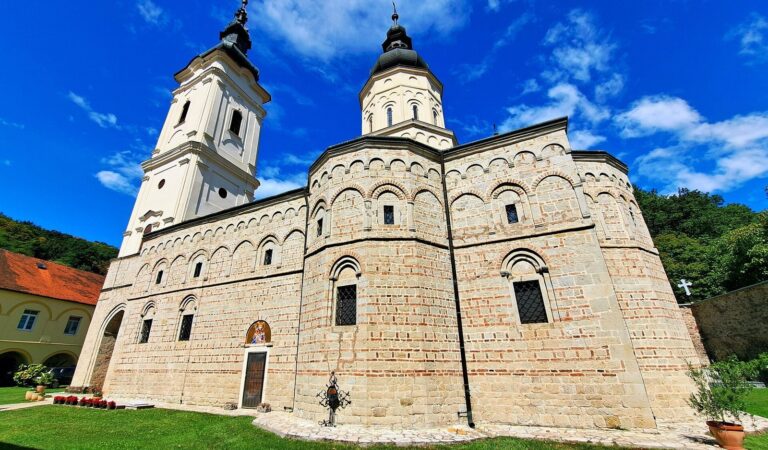
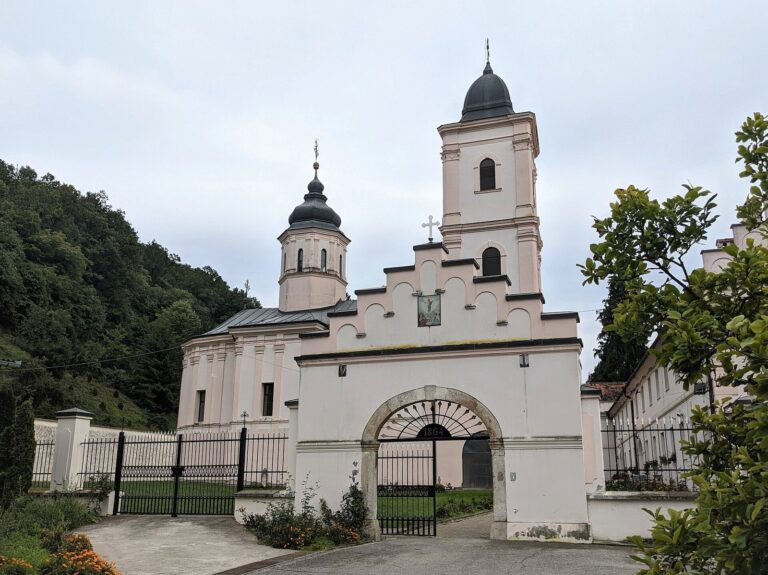
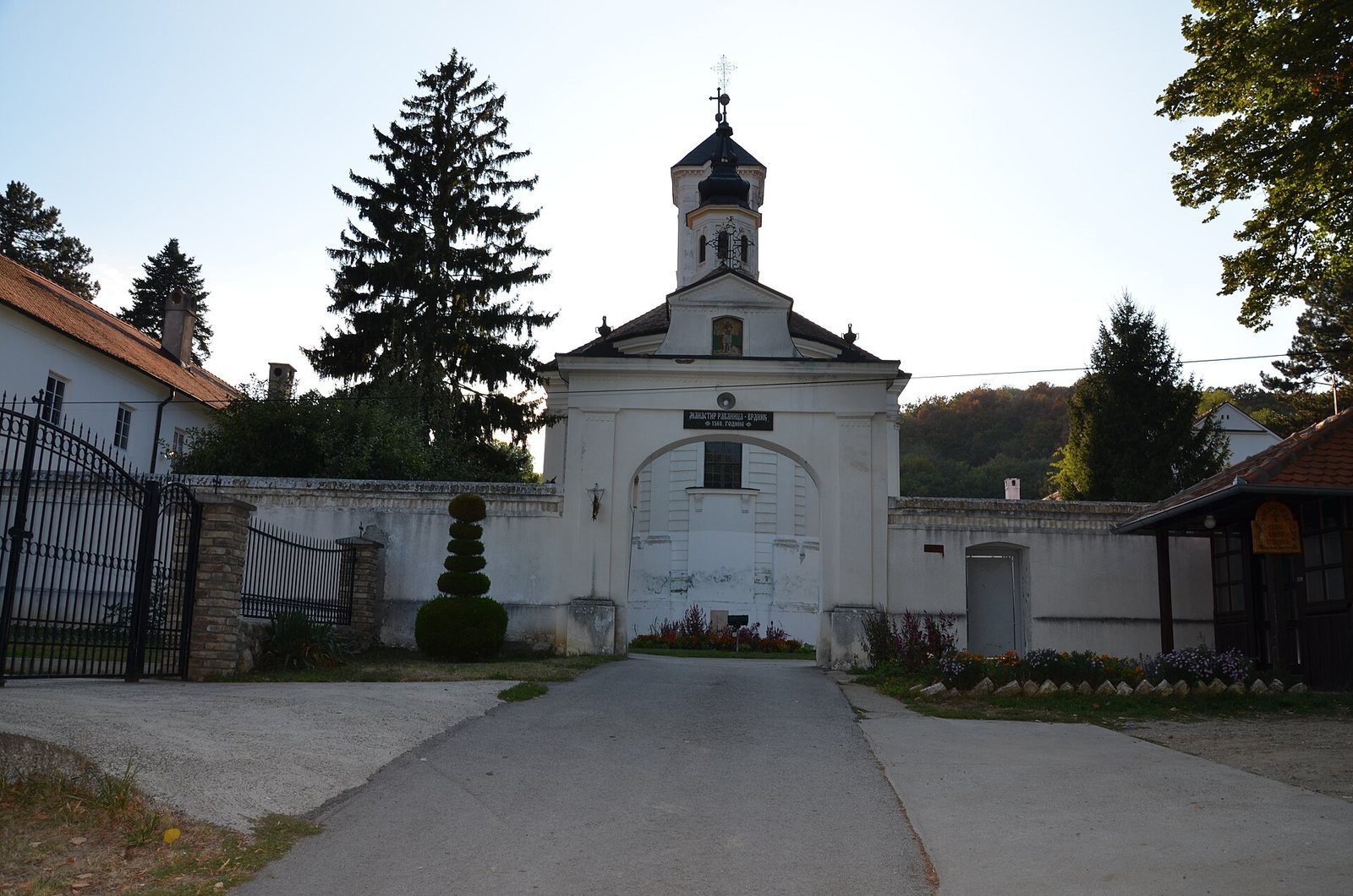
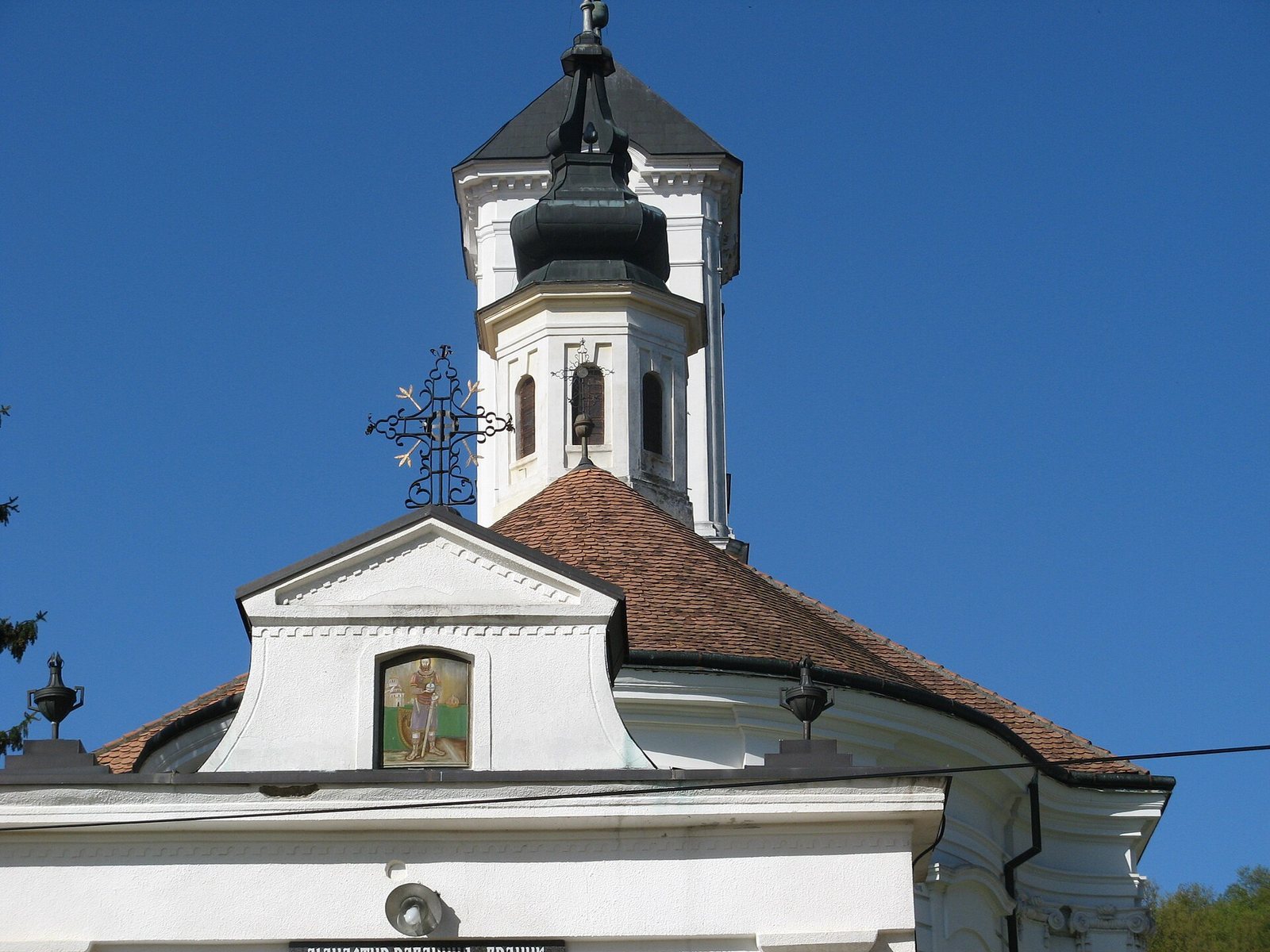
The complex includes a stone church and a group of monastic buildings containing the brotherhood quarters and refectory. The monastic buildings form three joined wings in a U-shaped arrangement, closed by gates, with a two-storey Baroque bell tower above them.
Church
Church structure
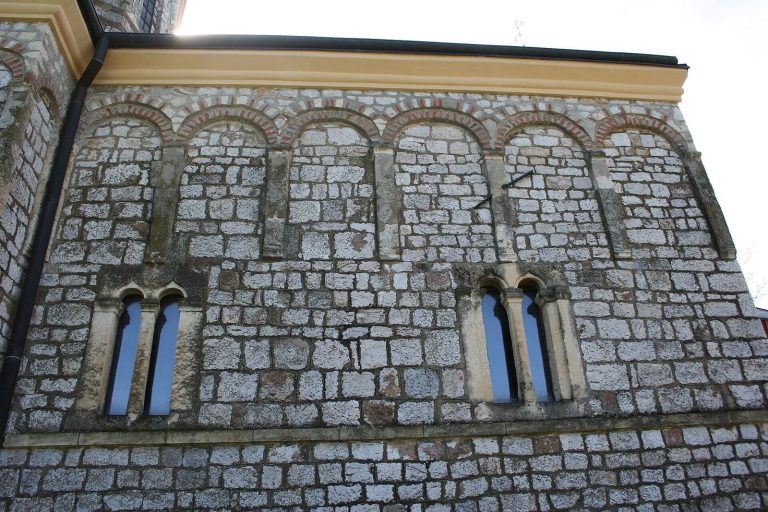
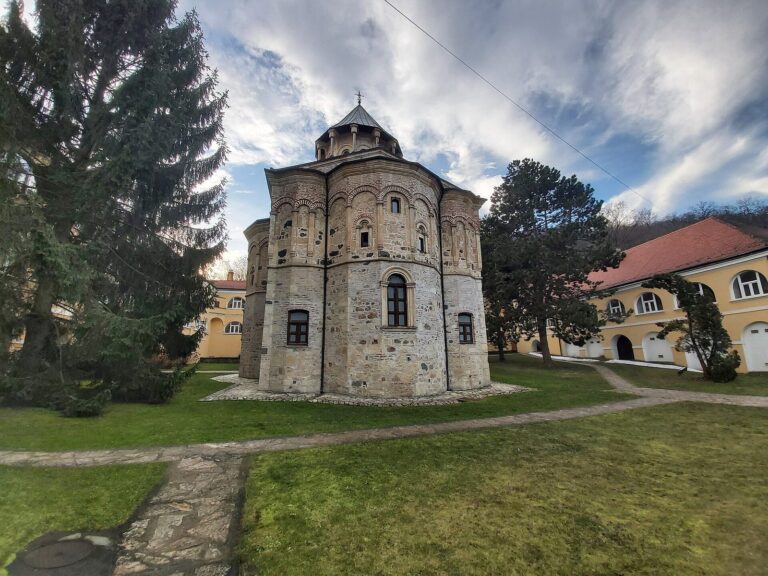
The present church is a stone building with one main space, a semicircular sanctuary end, a small dome and a Baroque bell tower. A description from 1753 records the earlier church as a stone, cross-shaped building with a brick vaulted ceiling, an oak-shingle roof and whitewashed walls. That church was dismantled in 1813.
Iconostasis and paintings
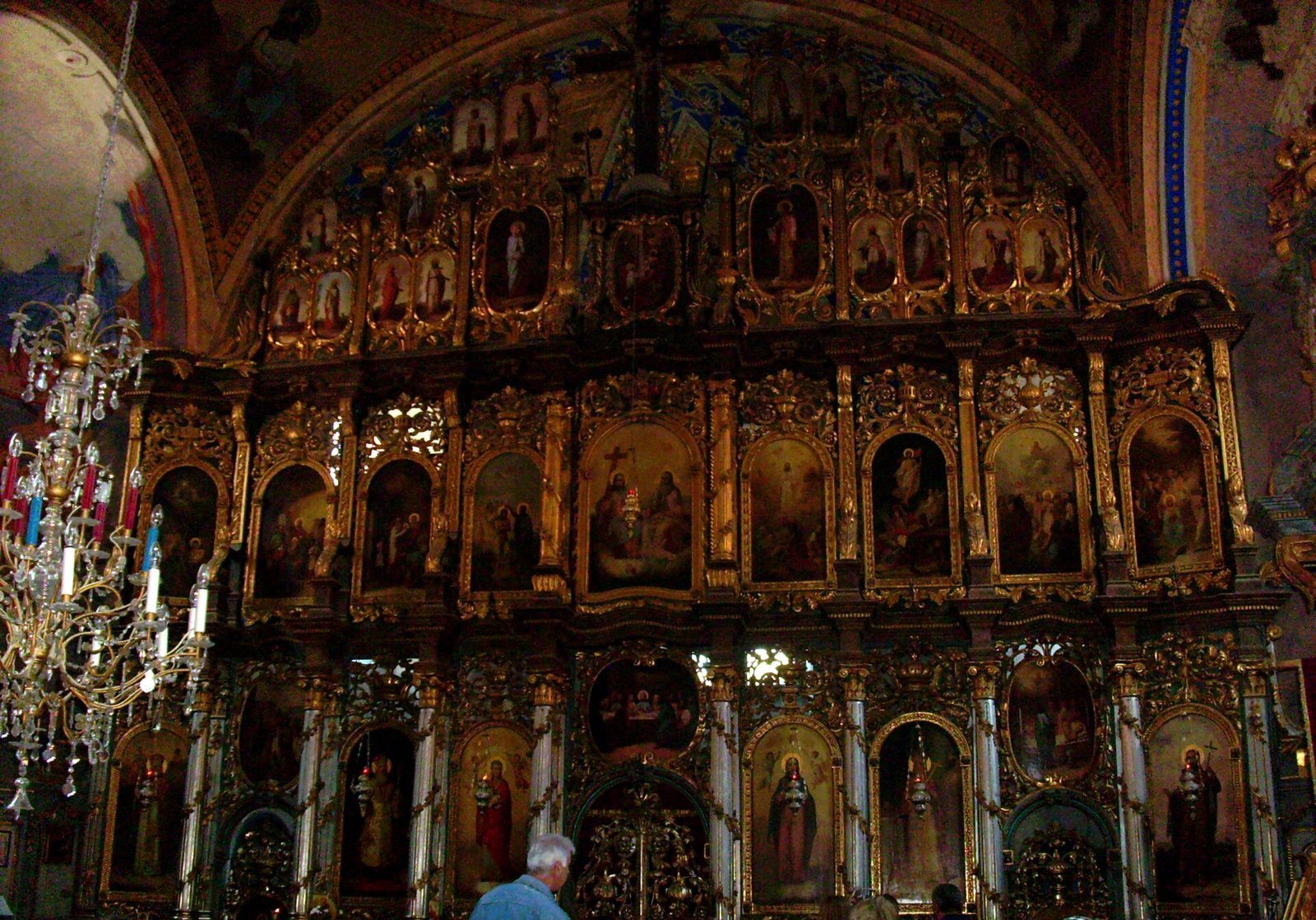
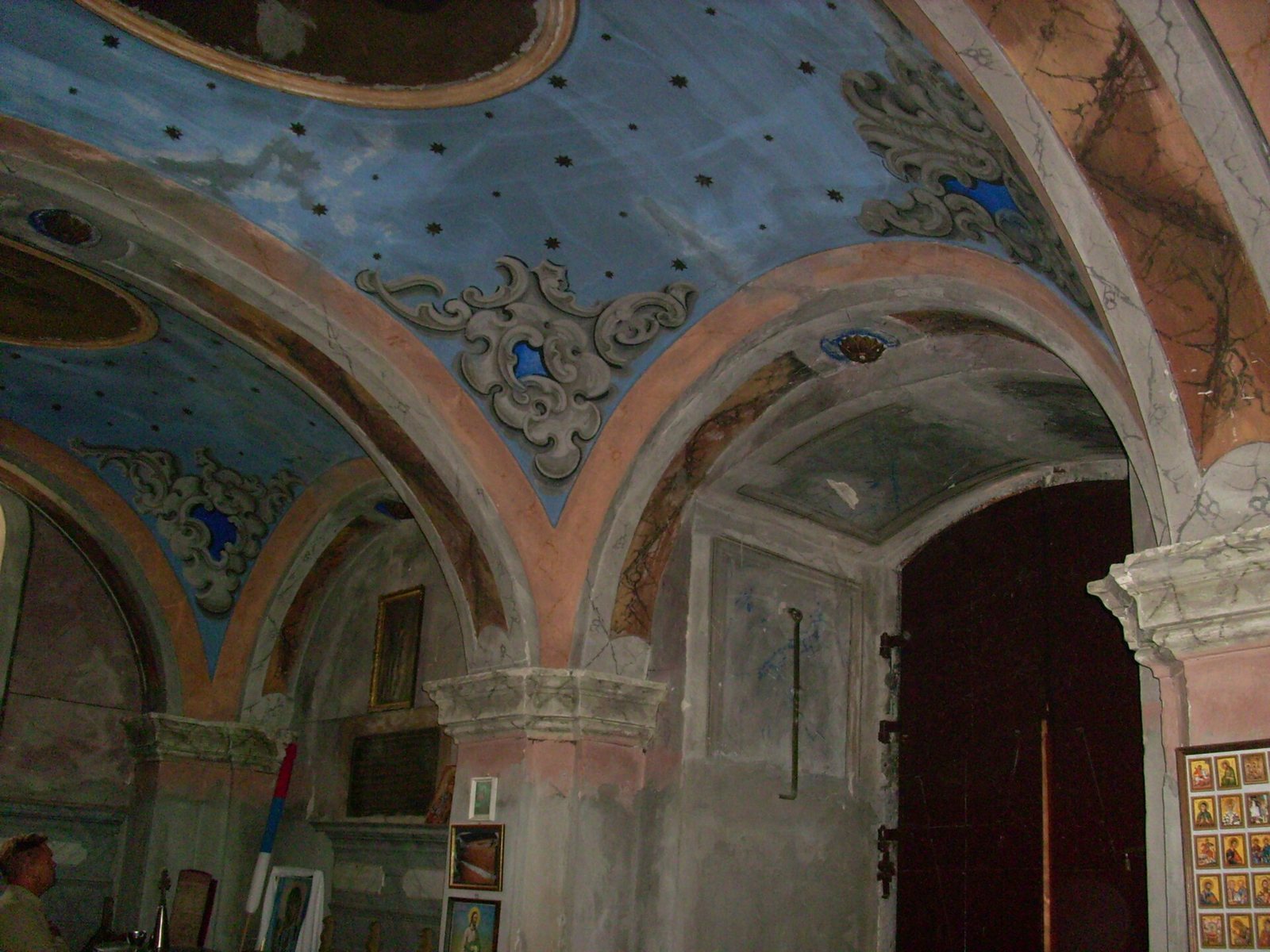
The iconostasis, a screen of icons separating the sanctuary from the main church, was carved by Karlovci woodcarver Marko Vujatović between 1809 and 1814 and gilded by Petar Čortanović. Its design marks a transition from Baroque to Classicism; its royal doors and tier devoted to Mary are especially noted. Stanoje Popović made the iconostasis for the earlier church. Dimitrije Avramović painted the church’s vaulted ceilings between 1851 and 1853, and the iconostasis images date to 1853.
Relics and devotional objects
A cypress reliquary, a container for sacred remains, was made in 1826 and placed to the right of the altar beneath the principal icons. It once held Prince Lazar’s relics. A fragment of his collarbone remains at the monastery, displayed in a glass container built into the reliquary. Relics of St Anastasia and St Theodore Tiron, Christian martyrs revered in the Orthodox tradition, are displayed in front of the iconostasis, along with a shrine associated with the Holy Sepulchre, the traditional site of Jesus’s burial and resurrection in Jerusalem.
Monastic complex
Brotherhood quarters
The brotherhood quarters were built in the mid-18th century and have been rebuilt repeatedly. The present arrangement consists of three wings joined in a U shape and closed by gates, above which stands a two-storey Baroque bell tower.
Refectory
The monastery’s refectory, its communal dining room, was built in the mid-18th century. In 1776, the monk Ambrosije Janković painted seven scenes depicting the monastery’s history there.
Winter chapel
A winter chapel was established in the brotherhood building in 1978. It commemorates the burning of the relics of St Sava, the first archbishop of the Serbian Orthodox Church, by the Ottomans. The chapel was conserved between 1987 and 1994.
Courtyard bust
A bust of Milica Stojadinović Srpkinja, a 19th-century Serbian poet and writer, has stood in the monastery courtyard since spring 1912. Jovan Pešić sculpted it.