Holy Trinity Church, Leeds: An Eighteenth-Century Parish Church
Site at a Glance
- Rating
- 4.8
- Popularity
- Low
- Country
- United Kingdom
- Primary era
- Early Modern
- Eras represented
- Early Modern, Modern
- Civilizations
- British
- Site type
- Religious
- Remains
- Church
On this page11 sections
History
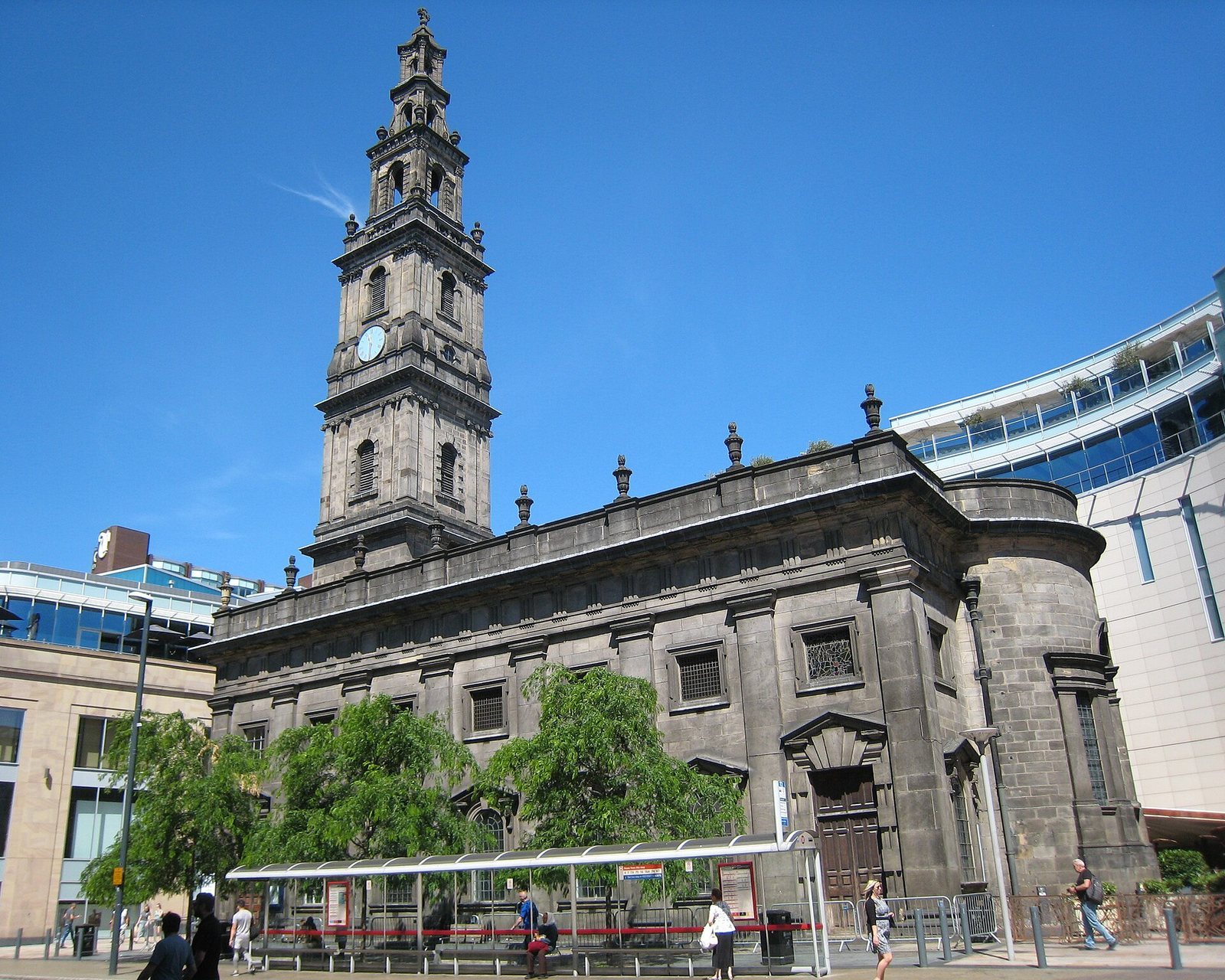
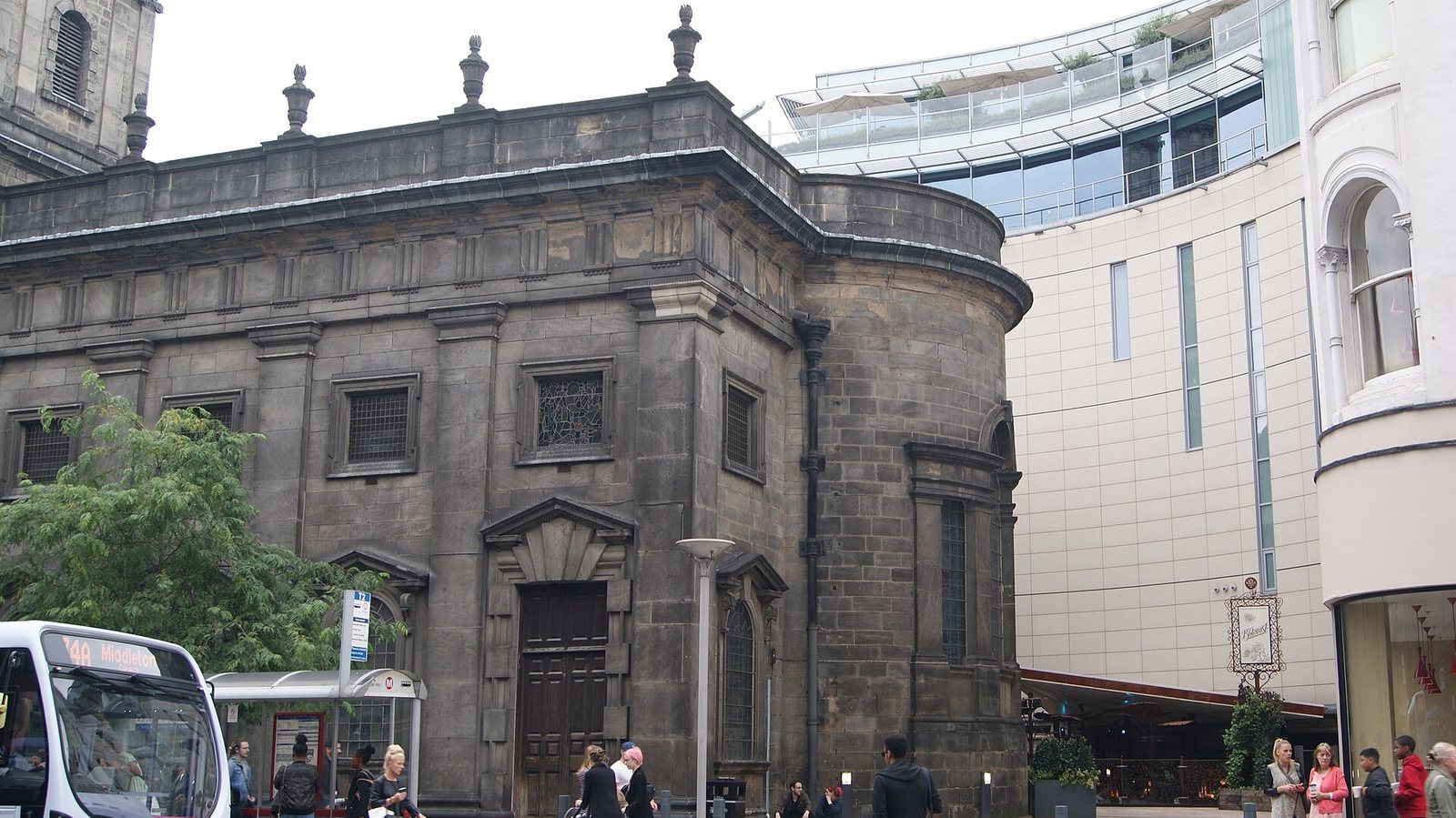
Holy Trinity Church, Leeds, is an eighteenth-century Church of England parish church on Boar Lane in central Leeds, United Kingdom. Its foundation stone was laid on 27 August 1722, and it was consecrated in 1727. The church belongs to the evangelical tradition, which emphasizes the authority of the Bible and personal faith.
Planning and construction
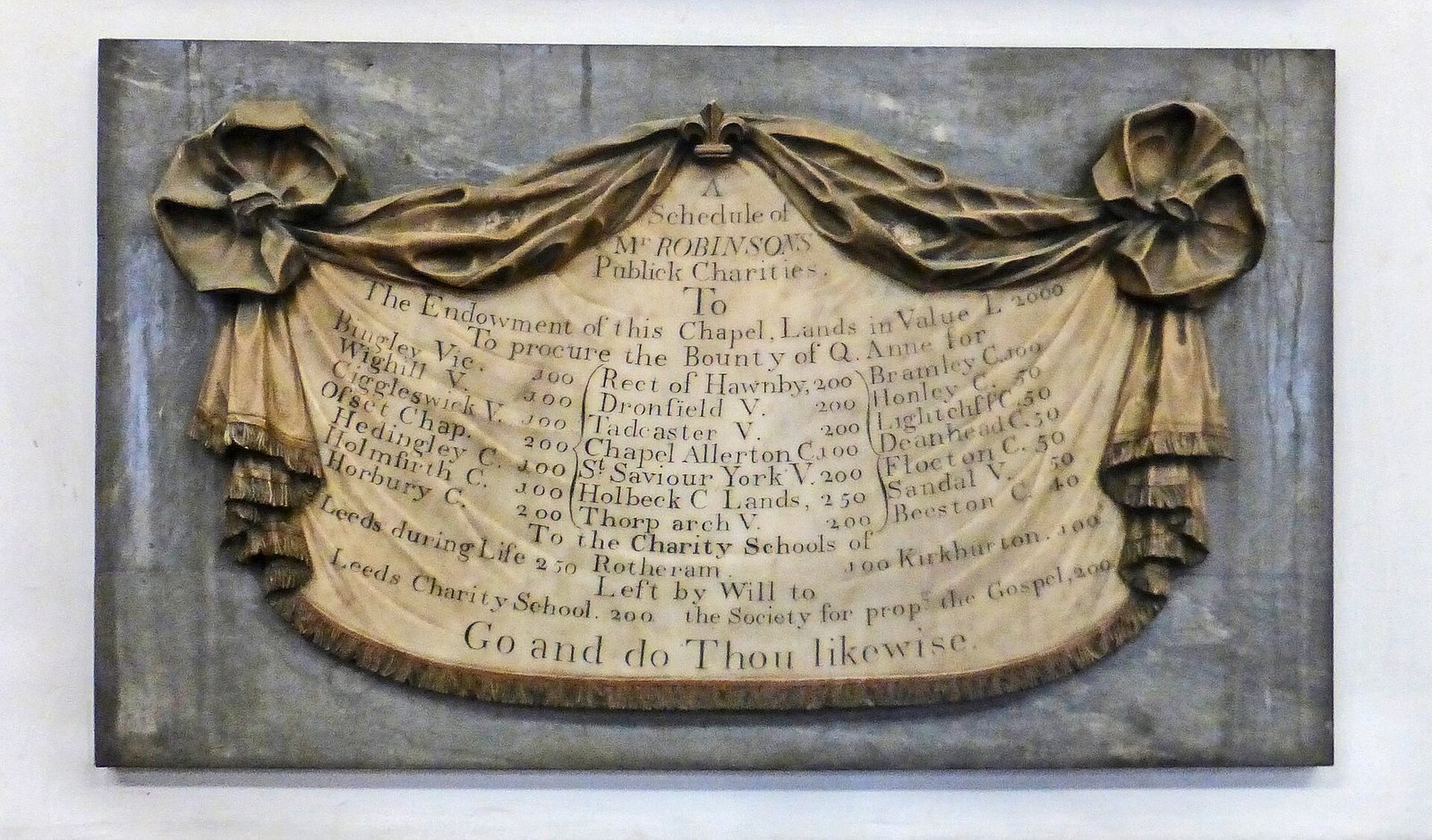
A campaign to establish a new church in central Leeds began in 1714, led by local antiquary and historian Ralph Thoresby. The effort initially faltered because too few people pledged support. Lady Elizabeth Hastings of Ledston revived the project in 1722 with backing from prominent merchants. Hastings and the Reverend Henry Robinson were among its wealthy contributors.
Robinson laid the foundation stone, and construction continued until the church’s consecration by Lancelot Blackburn, Archbishop of York, in 1727. William Halfpenny prepared an early design that was not adopted. His proposal included a west tower with an open row of columns and an obelisk-shaped spire. The church was instead designed by William Etty of York. In April 1723, Etty made a wooden model of his scheme, which survived into the nineteenth century.
Worship and alteration
During the years when preacher and pamphleteer James Scott served at Holy Trinity (1727–1782), demand for space increased. Galleries were added in 1755. In the late nineteenth century, during Richard Bullock’s ministry as vicar (1882–1899), the galleries were removed, the pulpit-and-altar arrangement was relocated, and the pews were reorganized.
Parish identity and later ministry
Holy Trinity is a parish church in the Parish of Leeds St George, within the Diocese of Leeds, a church-administrative area overseen by a bishop. Its Grade I listing, awarded in 1963, places it in England’s highest category of protection for buildings of exceptional architectural or historic interest.
A refurbishment in 2020 prepared the building for a midweek ministry serving city-centre workers. In 2021, St George’s Church took responsibility for the City Centre Mission, an urban Christian outreach ministry based at Holy Trinity. The church works with St George’s and St Augustine’s Church, Wrangthorn.
Remains
Exterior
Church and tower
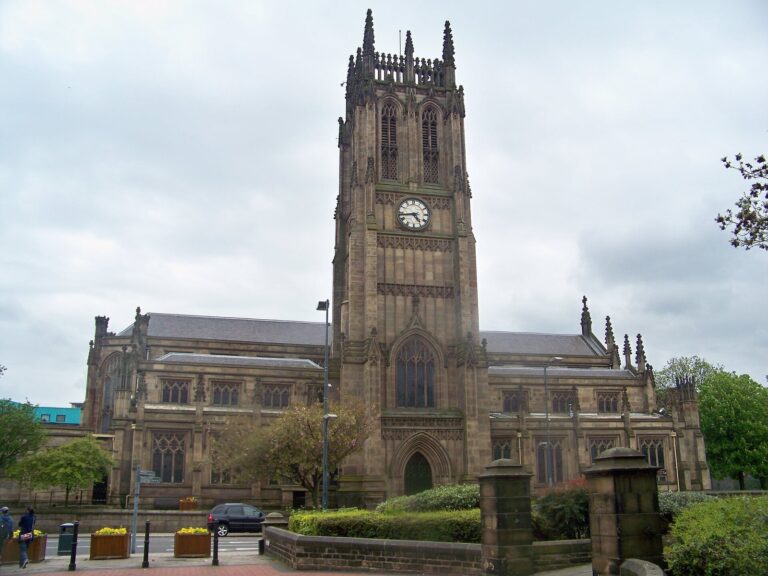
The church is built of stone and has a single tower. Etty’s design did not include a spire, which was added later.
Stone steeple
The church’s wooden spire fell in 1839. Architect Robert Dennis Chantrell designed the replacement, a taller stone steeple formed of three levels that diminish in size as they rise.
Interior
Founder’s monument and Lady Chapel
The oldest monument in the church commemorates Henry Robinson as its founder. He was buried at Holy Trinity in 1736. The interior also contains a Lady Chapel, a space dedicated to the Virgin Mary. An image of the Annunciation, the Christian account of the angel Gabriel telling Mary she would bear Jesus, stands at its centre. The chapel serves as a place for quiet and prayer.
Symbols and royal arms
A depiction of a pelican refers to Holy Communion, the Christian sacrament that commemorates the Last Supper. The interior also contains royal arms, the monarch’s heraldic emblem, dating from the period 1714 to 1800.