Church of the Holy Trinity, Berwick-on-Tweed: A Commonwealth-Era Parish Church
Site at a Glance
- Rating
- 4.6
- Popularity
- Medium
- Country
- United Kingdom
- Primary era
- Early Modern
- Eras represented
- Early Modern, Modern
- Civilizations
- British, English
- Site type
- Religious
- Remains
- Church
On this page10 sections
History
Foundation and construction
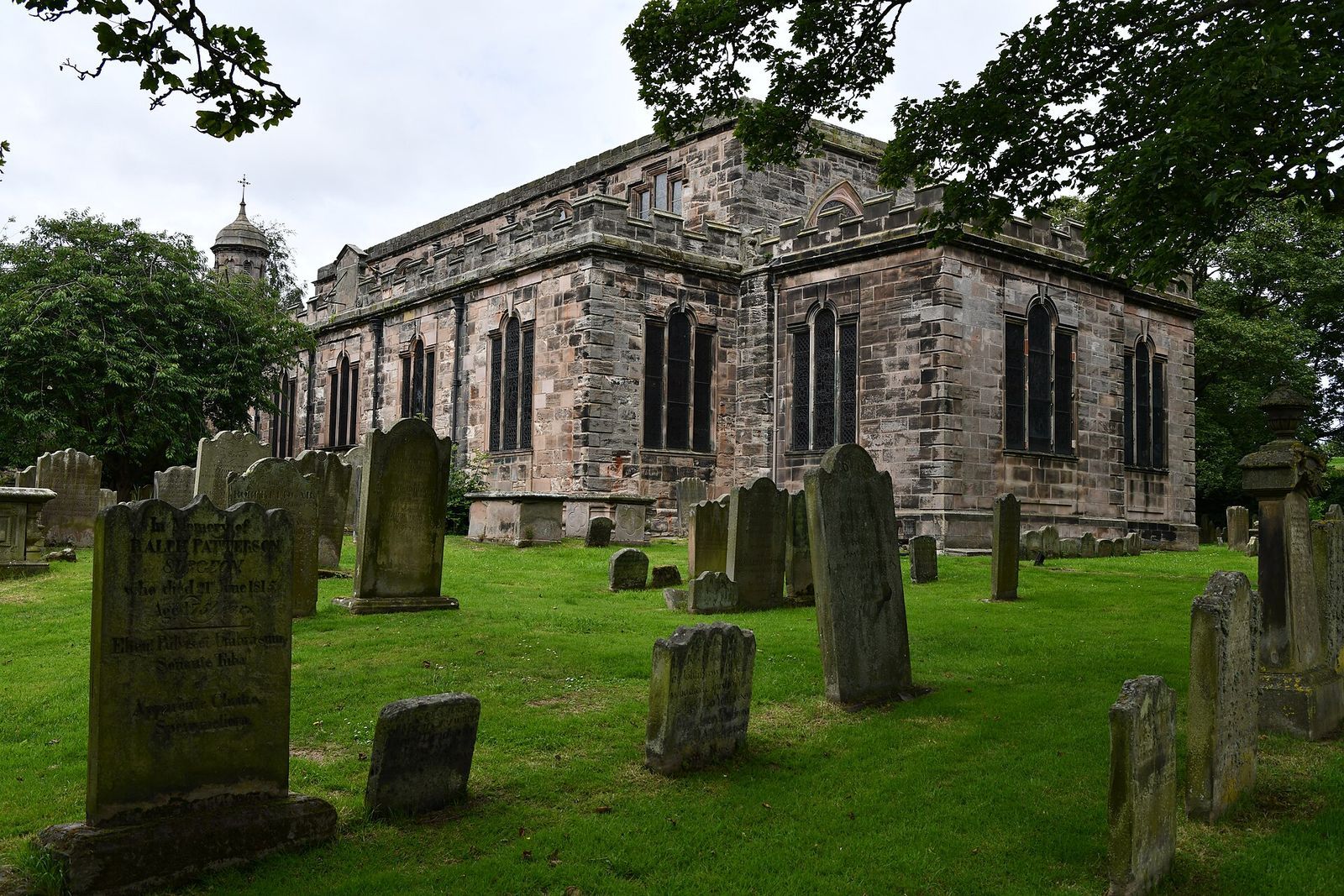
The Church of the Holy Trinity, Berwick-on-Tweed, is a parish church of the Church of England, the Anglican church in England, in Northumberland, United Kingdom. Its foundation is dated to 1648, and it was completed in 1652 during the Commonwealth, the republican period following the abolition of the monarchy.
In 1641, King Charles I provided money to replace Berwick’s dilapidated old church. The English Civil War began the following year, but further funds were still collected. In 1650, London mason John Young was contracted to build the new church. It became one of the few churches erected during the Commonwealth.
Consecration and later changes
Bishop of Durham John Cosin consecrated the church in 1660, when the Restoration returned the monarchy. He required a chancel at the east end, the part of a church traditionally reserved for clergy and altar, to accommodate a communion table. The chancel was added in 1855, when many of the original Gothic windows were also redesigned in the Classical style.
The churchyard served as Berwick’s main cemetery until about the 1860s, when its burial space was exhausted. Berwick and nearby Tweedmouth subsequently had their own cemeteries.
The organ and continuing use
Byfield and Green of London installed an organ in 1773. Nicholson of Newcastle upon Tyne rebuilt it in 1855, and Harrison and Harrison rebuilt it again in 1869, placing it on either side of the west window in the west gallery. In 1905, after the north and south galleries were removed, the organ was transferred to a purpose-built chamber north of the chancel. Ingrams overhauled it in 1928, while an attempted restoration in the late 1970s had damaging results.
The organ remained in use until the early 2000s, when an electronic instrument served temporarily while funds were raised for restoration. A parish restoration group formed in 2006, and the work has since been completed. Worship continues in the church.
Remains
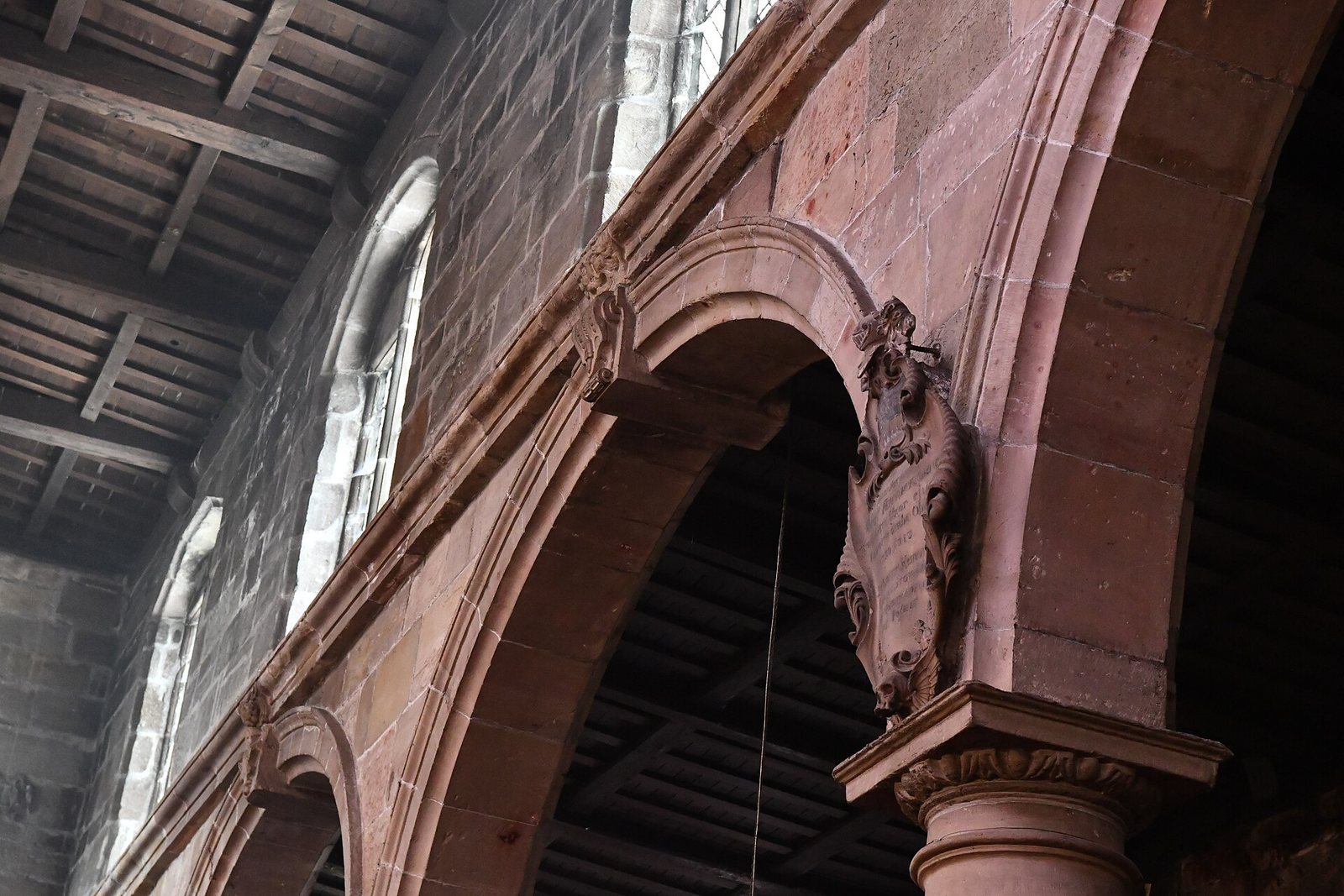
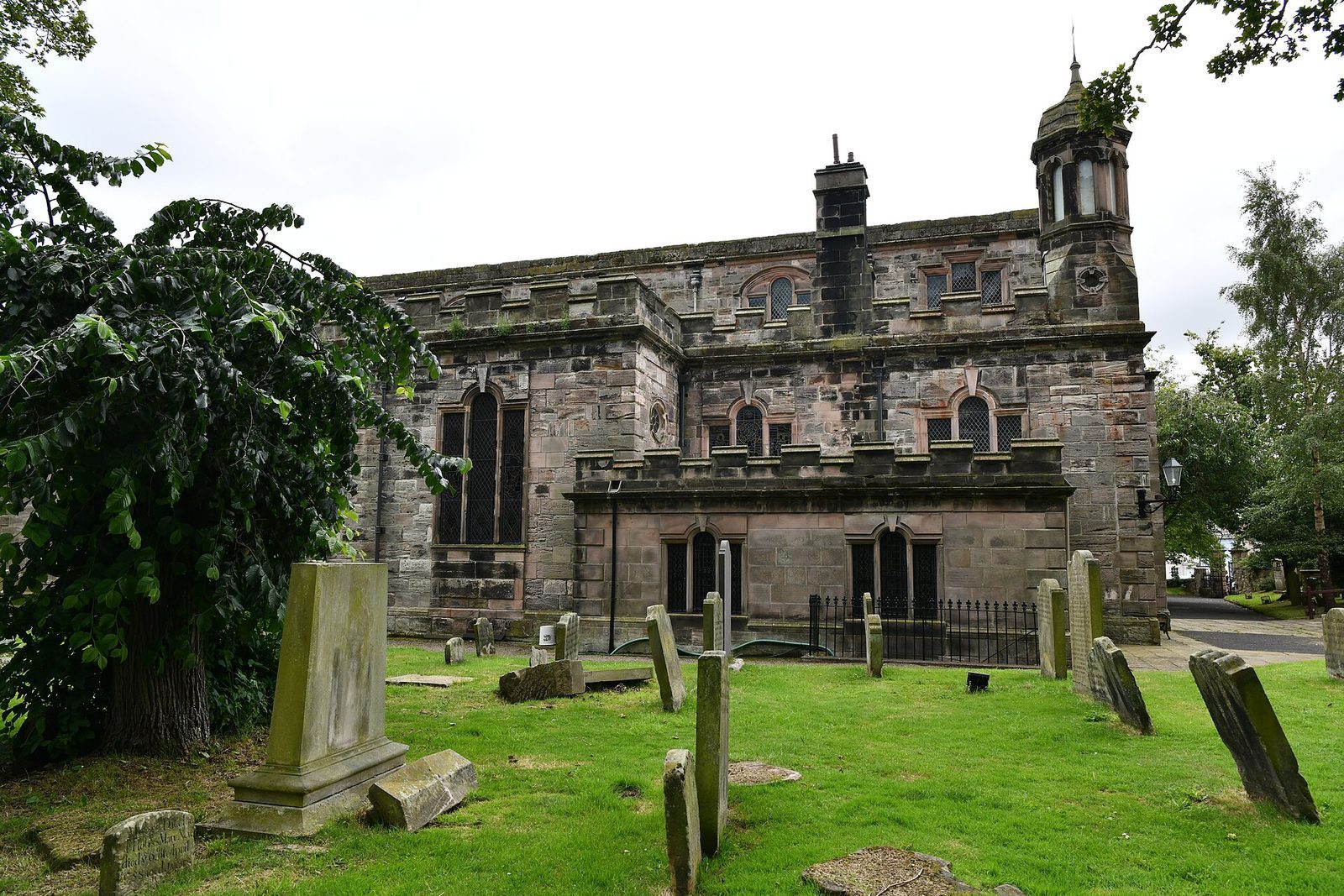
The church is arranged around a nave with an aisle on each side and arcades in the Tuscan order, a plain classical architectural form. Its walls were built with stone taken from old Berwick Castle. A chancel occupies the east end.
Interior fittings
West window
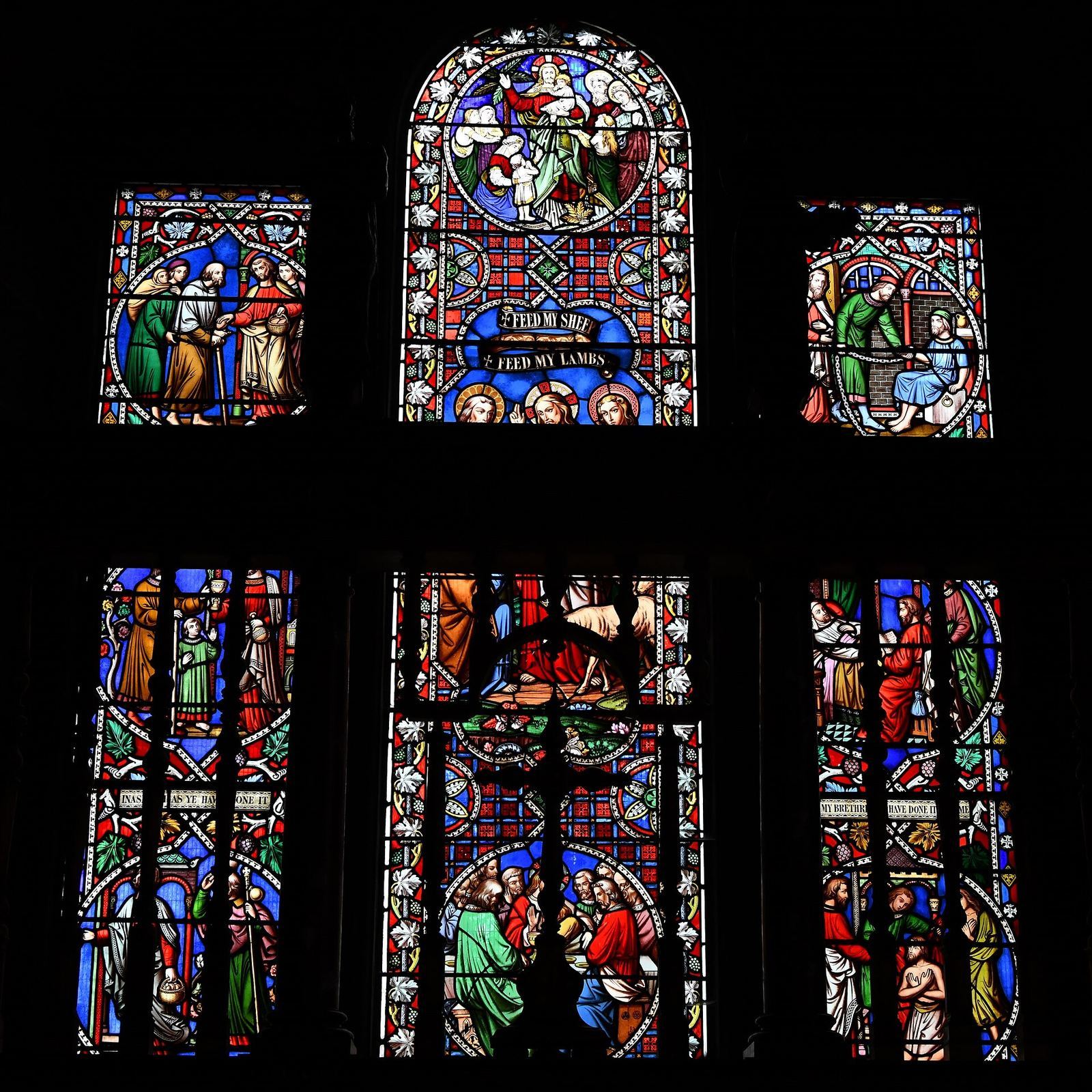
The west window dates to 1855 and contains Flemish roundels, or circular decorative panels, from the 16th and 17th centuries. They once belonged to the private chapel of the Duke of Buckingham at Canons Park, Middlesex.
Pulpit
The pulpit is thought to have been made for Scottish Protestant reformer and minister John Knox during his stay in Berwick.
Organ
The restored organ stands in a purpose-built chamber north of the chancel. It has two keyboards and a pedalboard played with the feet; originally, it had three keyboards and a pedalboard. Much of the choir-organ pipework was not original and was not restored.
Western turrets and churchyard
Two small turrets stand at the west end of the church. One contains a single bell used to summon worshippers. The wooded churchyard serves as a nature reserve.