Dioscuri Temple: A Greek Sanctuary Rebuilt in Roman Naples
Site at a Glance
- Popularity
- Medium
- Country
- Italy
- Primary era
- Classical
- Eras represented
- Classical
- Civilizations
- Ancient Greek, Roman
- Site type
- Religious
- Remains
- Temple
On this page10 sections
History
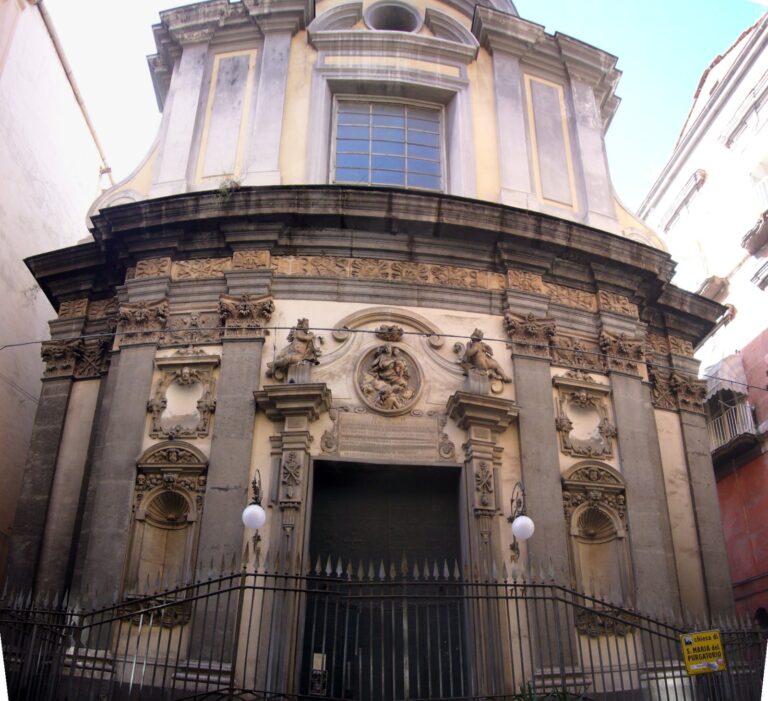
The Dioscuri Temple was a Greek sanctuary in ancient Neapolis, at the site of the present-day Basilica of San Paolo Maggiore in Naples, Italy. Its earliest phase dates to the fifth century BC, around the time Neapolis was founded, and it was later reconstructed under Roman rule. Dedicated to Castor and Pollux, twin figures in Greek mythology, the temple served a cult with strong maritime associations in southern Italy and Sicily. The Dioscuri were also linked with poetry, music, and dance, and were worshipped in Neapolis alongside Apollo and a form of Demeter associated with Attica.
Greek Sanctuary and Roman Rebuilding
The sanctuary stood within Neapolis’s central civic district. The area had served first as a Greek agora, a civic and commercial gathering place, and later as the Roman forum, a comparable central space. The temple was probably rebuilt during Emperor Tiberius’s reign, between AD 14 and 37, as part of a reorganization of the district. By then, worship of the Dioscuri had developed a dynastic aspect, connecting religious honors with the imperial family and its succession.
A Greek dedicatory inscription names Tiberios Iulios Tarsos and Pelagon, both imperial freedmen from the eastern regions. Freedmen were formerly enslaved people who had been legally freed; imperial freedmen had been freed by the emperor or his household. Tarsos dedicated the temple and its contents to the Dioscuri and the city. Pelagon, an imperial procurator, or administrative official, paid to complete the work and consecrated it.
Church and Later History
By the end of the Roman period, the temple was serving as a church. Between the eighth and ninth centuries, it became part of the church of San Paolo, while its façade was retained. The square was known in later centuries as Augustus Square or the Old Market, and served as a meeting place for merchants visiting Naples. It is now Piazza San Gaetano.
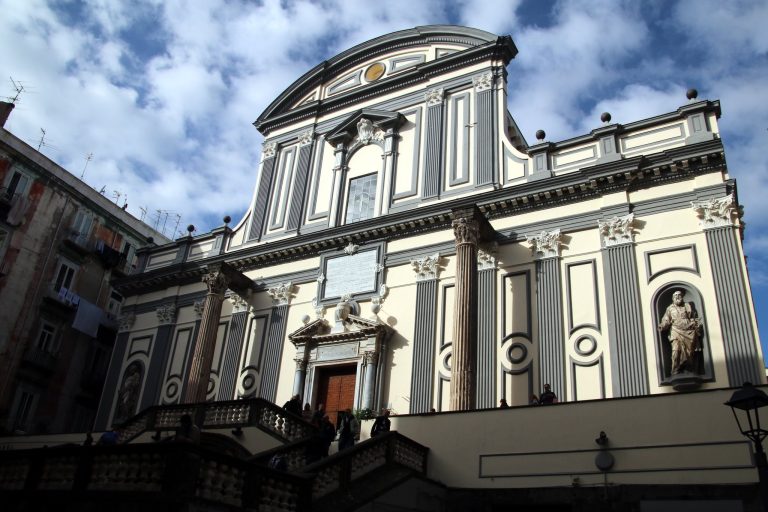
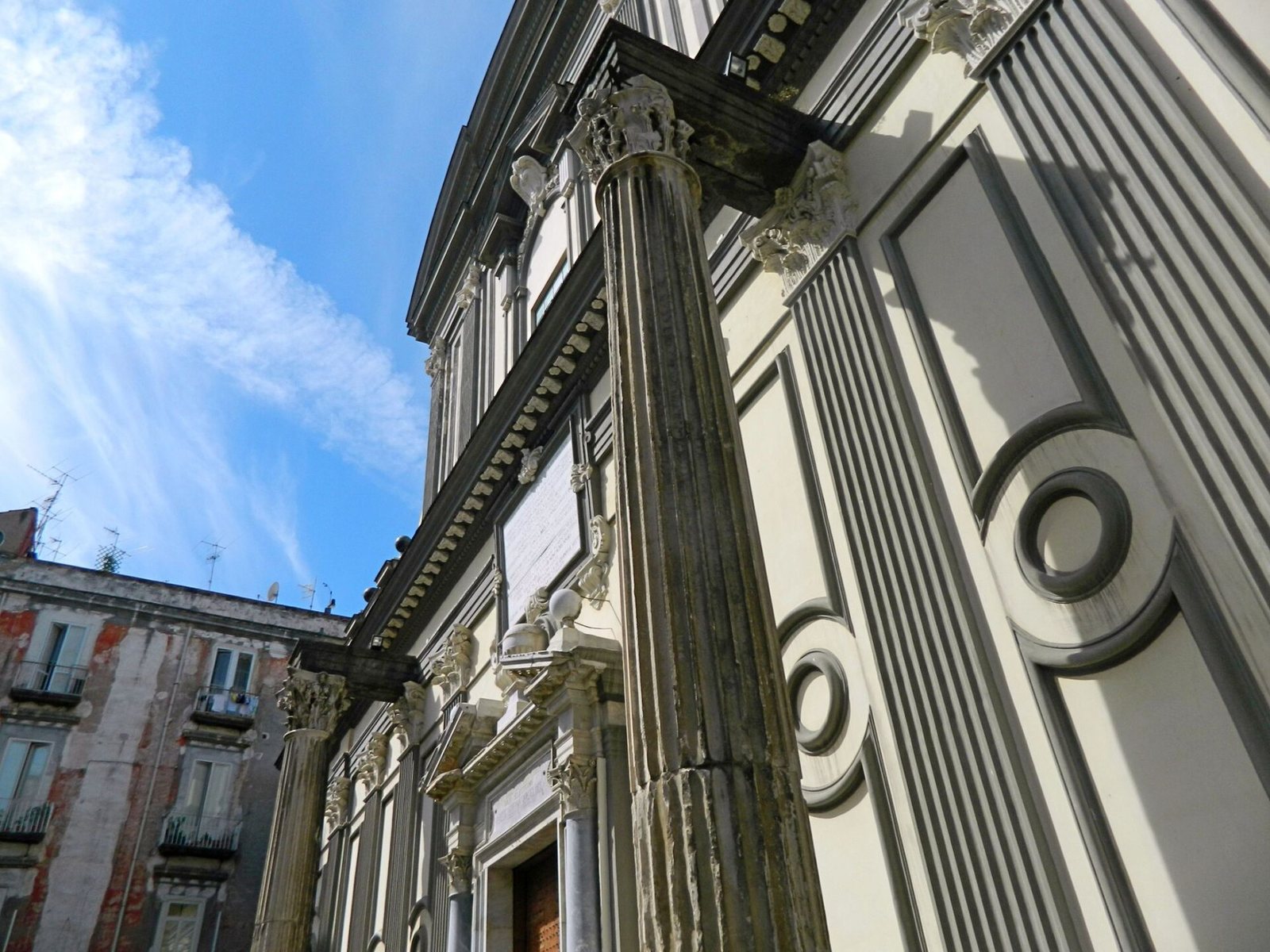
San Paolo Maggiore was rebuilt between 1583 and 1603 as part of a convent established by Gaetano of Thiene. The ancient temple porch remained incorporated into the church façade. Earthquakes struck between 1686 and 1688, severely damaging the front. In 1688, most of its columns and the pediment collapsed. Four columns remained standing, but two were removed in the early eighteenth century; fallen architectural pieces left in the street were gradually dispersed.
Remains
Temple Layout and Façade
Raised Platform and Columns
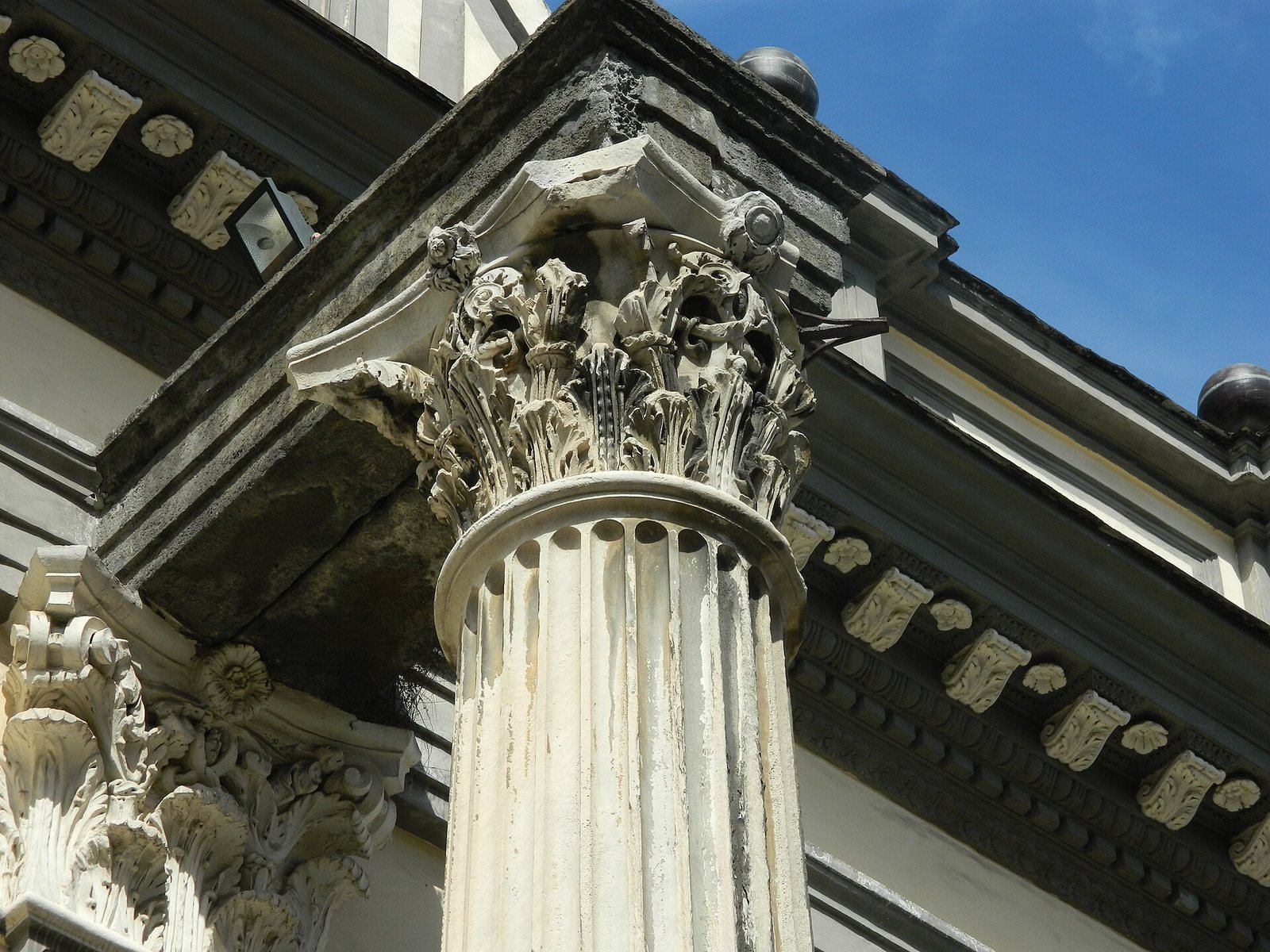
The temple occupied an unusually high raised platform, with its front facing south toward Neapolis’s principal east-west street, now Via Tribunali. Its Roman façade had eight marble columns, each about 13 metres tall. They followed the Corinthian style, whose capitals are decorated with foliage. Two columns survive in the exterior façade of San Paolo Maggiore, one on each side of the main entrance.
Dedication
A Greek inscription was carved on the marble beam above the columns. This dedicatory text formed part of the temple’s façade and recorded its association with the Dioscuri and the city.
Sculptural Decoration
Pediment Figures
The temple front’s triangular upper section, called a pediment, carried sculptural decoration. Its appearance is reconstructed from a 1540 drawing by the Portuguese artist Francisco de Holanda. The drawing shows a central group with Castor and Pollux and a personification of Neapolis, surrounded by Tritons, sea-associated figures in classical mythology, and other divine or personified figures.
Statue Torsos
Oversized torsos of Castor and Pollux were known from the sixteenth century. They were later placed in matching niches on the church façade, beneath statues of Saints Peter and Paul, with Latin verses above them dating from the seventeenth century. The torsos were probably transferred to an archaeological museum in 1972.