Temple of Veiovis: A Roman Sanctuary on the Capitoline Hill
Site at a Glance
- Rating
- 4.6
- Popularity
- Very Low
- Country
- Italy
- Primary era
- Classical
- Eras represented
- Classical
- Civilizations
- Roman
- Site type
- Religious
- Remains
- Temple
On this page10 sections
History
The Temple of Veiovis was a Roman sanctuary on the Capitoline Hill in Rome, Italy, devoted to Veiovis, an ancient Italian deity associated with the underworld. Lucius Furius Purpurio, a senior Roman magistrate who could hold military command, pledged its construction in 200 BC during the Battle of Cremona in Rome’s conflict with the Boii, a Celtic people of central Europe and northern Italy.
Foundation and sanctuary
The construction contract was assigned in 196 BC, and Quintus Marcius Ralla dedicated the temple in 192 BC. Roman tradition traced Veiovis’s cult to the regal period, the monarchy before the Republic, although this early origin remains uncertain.
The Capitoline cult may have been connected with sanctuary rights traditionally associated with Romulus. In Rome’s foundation legend, Romulus welcomed fugitives from elsewhere in Latium to help populate the new city. They included escaped slaves, Latins and Etruscans; the Roman historian Florus also names Phrygians and Arcadians. The nearby Asylum was a sanctuary-refuge linked to this story. Veiovis may have protected those seeking shelter there, while one interpretation holds that people who violated sanctuary could be consecrated to the god.
Veiovis was also described as youthful and as a protector of fertility and sacred groves. His possible connection with Apollo, a Greco-Roman god of prophecy, healing and the arts, has been associated with Apollonian qualities attributed to the cult statue. Interpretations have also considered the resemblance between his name and Iovis, the Latin possessive form of Jupiter, and the proposed underworld meaning of the prefix Ve-.
Republican rebuilding
The temple underwent a major alteration around 150 BC. A further rebuilding phase followed around 78 BC, alongside work on the Asylum and the construction of the Tabularium, Rome’s public records building. The temple’s plan remained broadly similar, and the Tabularium’s southwest corner was recessed to make room for it.
Imperial restoration and rediscovery
After the great fire of AD 80, Emperor Domitian restored the temple. The work changed its inner chamber and decoration.
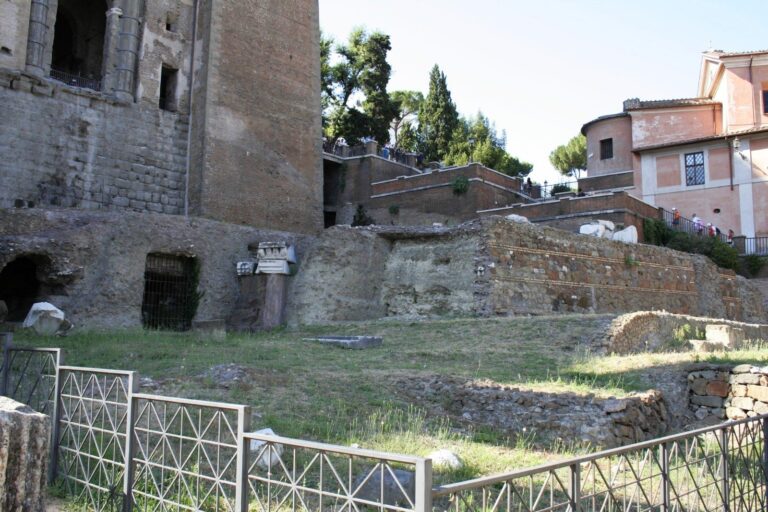
Workers uncovered the remains in December 1939 while making an underground passage beneath Piazza del Campidoglio. Excavations continued in 1940–41. The identification as the Temple of Veiovis drew on ancient descriptions and a cult statue found at the site. Later buildings’ foundations had protected the remains.
Remains
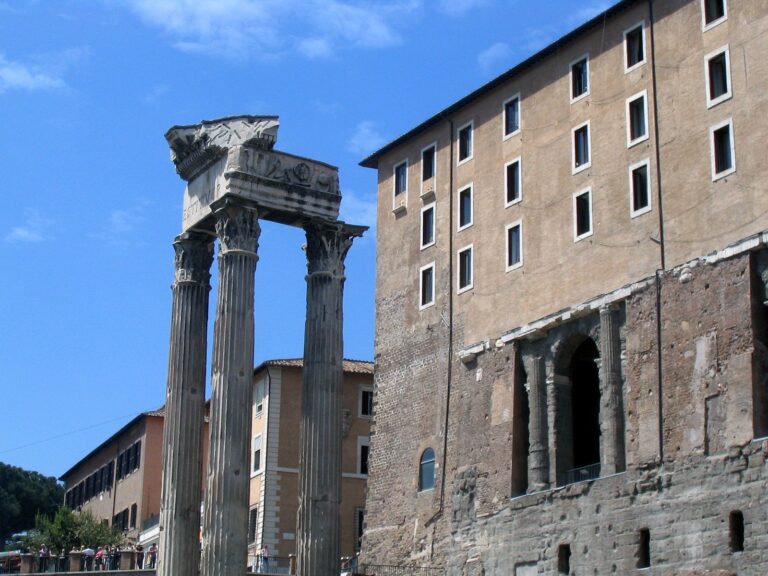
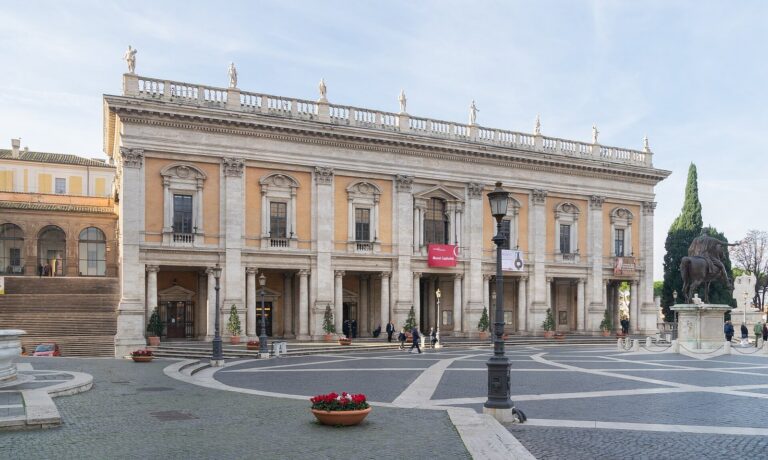
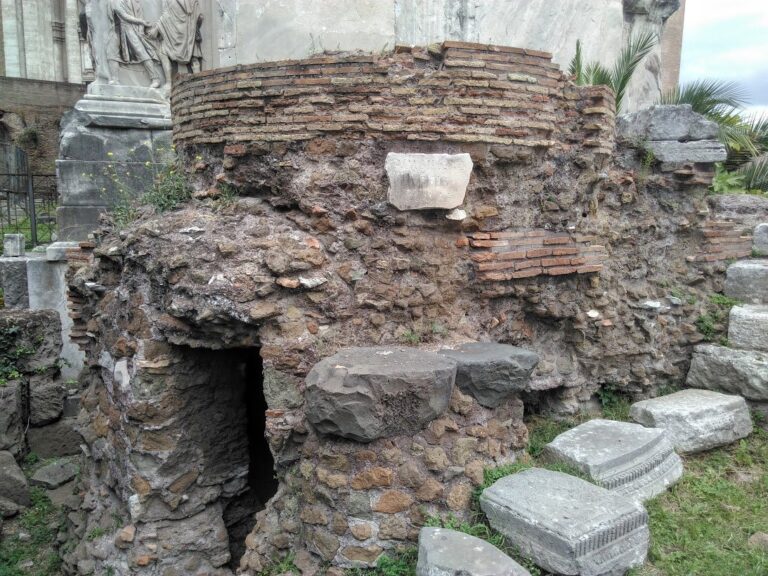
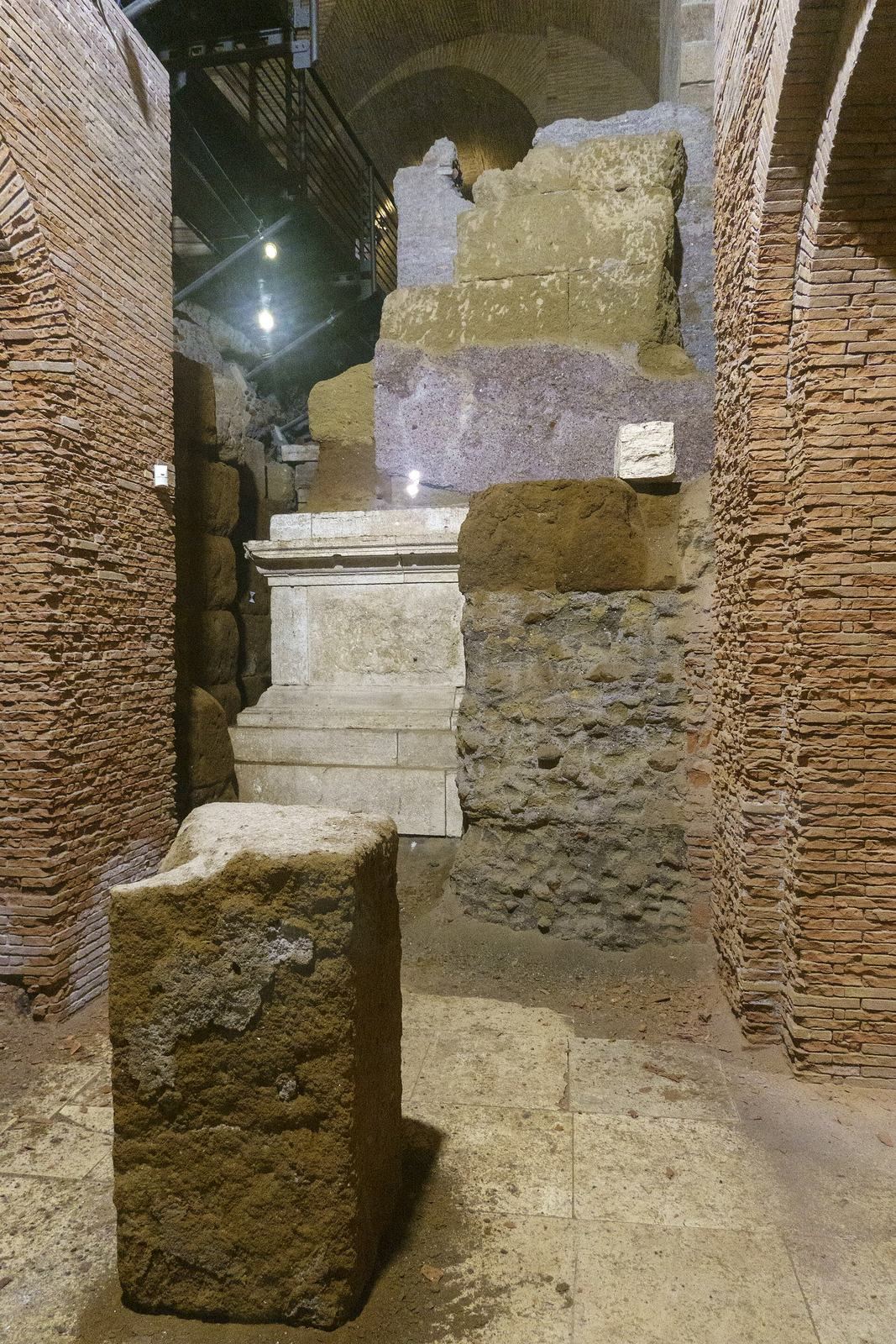
The temple occupied the saddle between the Capitoline Hill’s two peaks. Its surviving layout centers on a raised platform and a compact rectangular building. The remains are visible in the Tabularium beneath the Capitoline Museums, under the southwest corner of Palazzo Senatorio.
Architectural remains
Site and orientation
The site lay near the Asylum, in an area described as between two sacred groves. The citadel, or Arx, with the temple of Juno Moneta, was on one side; the Capitolium, where the temple of Jupiter Optimus Maximus stood, was on the other. The temple’s facade aligned with the road ascending the Capitoline, and the building also faced the Sacred Way, an important Roman street.
Plan and construction
The earliest identified building phase had a platform made from hard volcanic tuff and a form typical of contemporary temples in Italy. A later, substantially altered plan had a rectangular inner chamber and a small entrance porch centered on its long side, supported by four Ionic columns with scroll-shaped capitals. The chamber measured 15 by 8.9 metres, making it wider than it was deep. This unusual proportion may have resulted from restricted space. The plan has been compared with those of the Temple of Concord and the Temple of the Dioscuri at the Circus Flaminius.
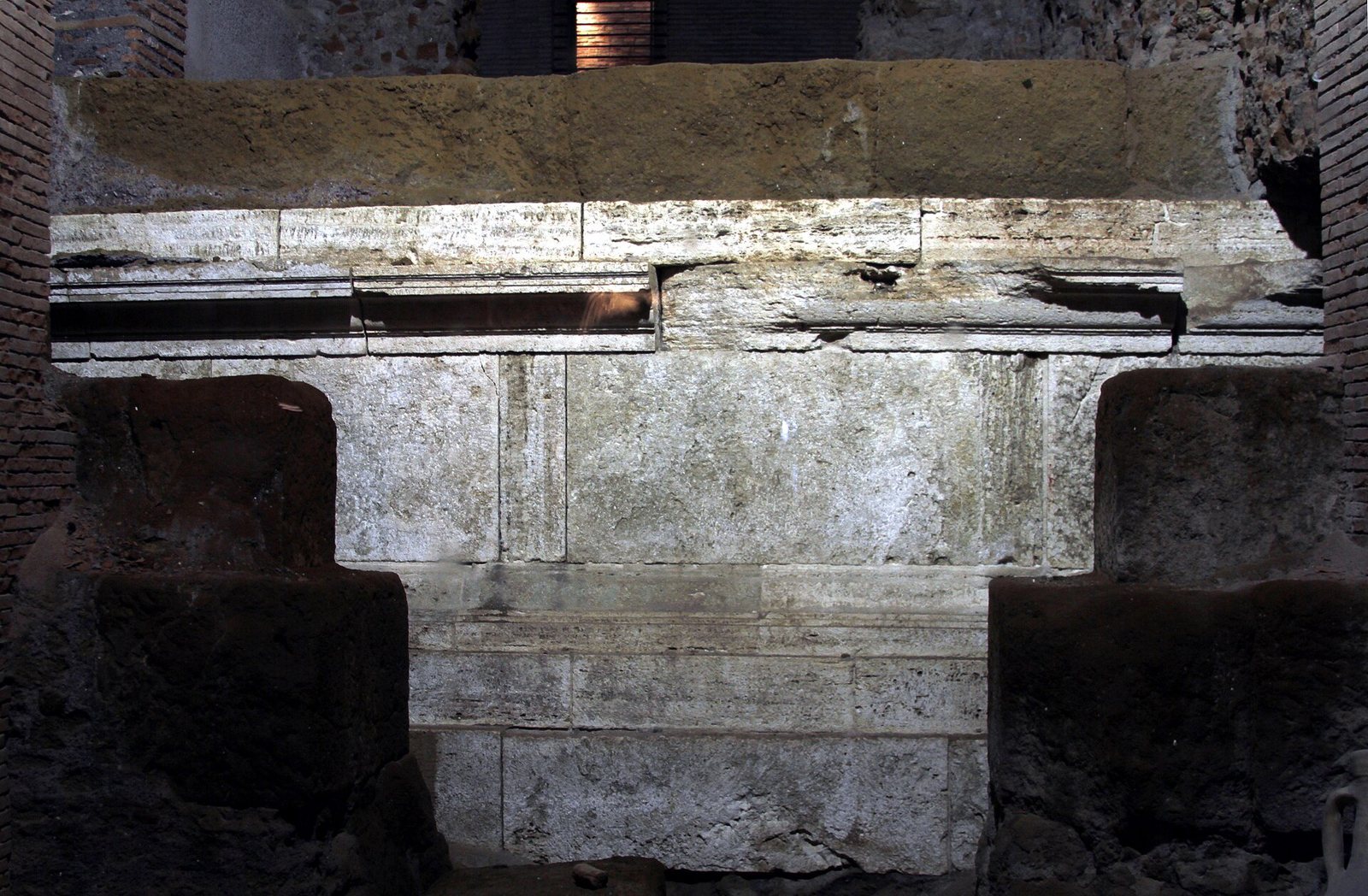
The high platform had a lime-and-mortar core faced with travertine, which also paved the temple court. Its mouldings followed the Hellenistic style, a Greek-influenced artistic tradition. A long flight of steps led to the porch.
Interior
Stone paving covered the inner chamber. Flat wall supports, known as pilasters, stood at its corners and beside the entrance porch. A small marble altar occupied the middle of the porch.
Sculptural remains
The marble cult statue was about twice human size and dates to Domitian’s reign in the late first century AD. It is now held by the Capitoline Museums. Ancient descriptions portray Veiovis as beardless and carrying a bundle of arrows in his right hand. A statue of a goat stood beside the deity’s image.