Huaca Santa Catalina: A Ychsma and Inca Ceremonial and Administrative Site
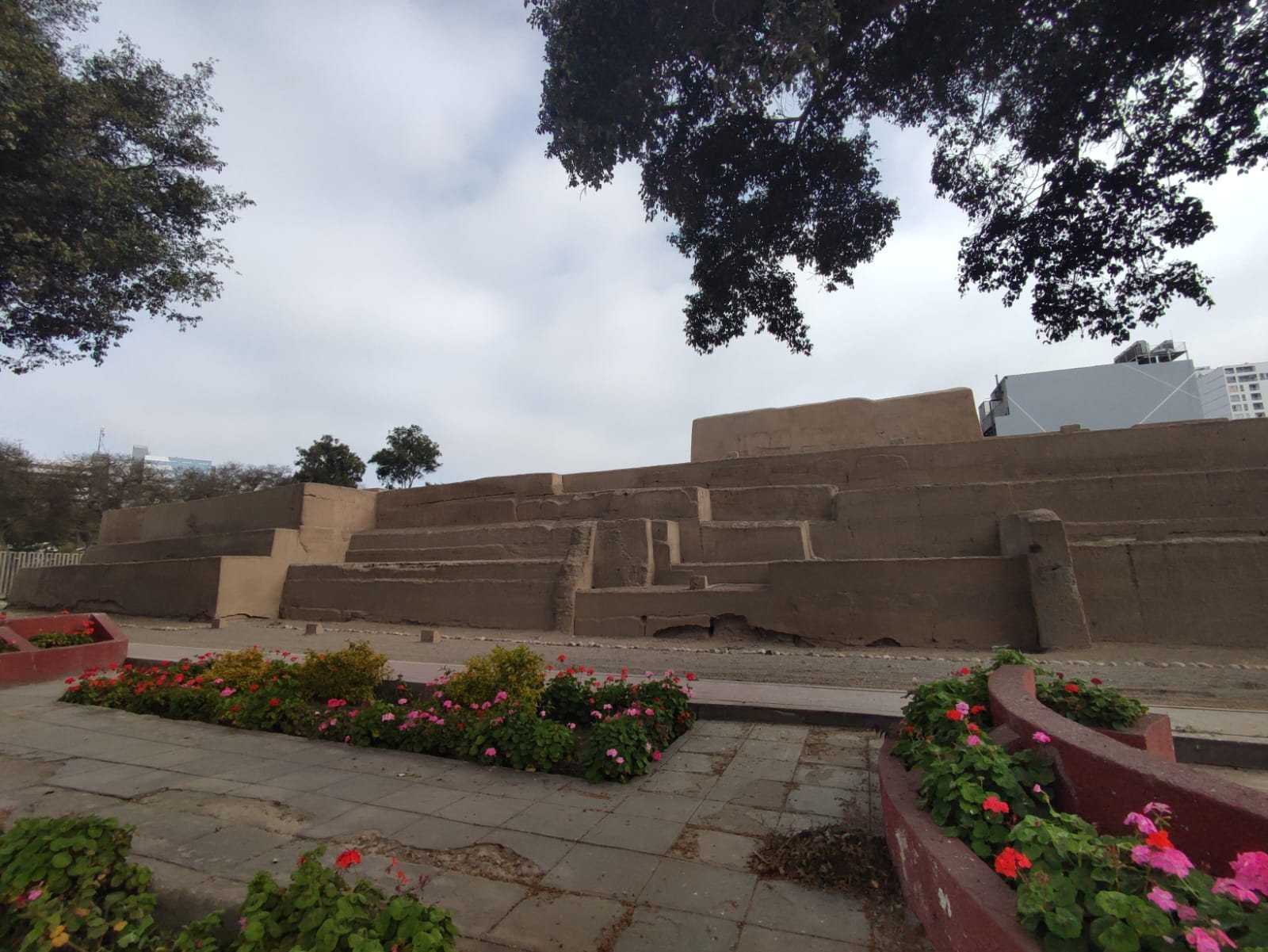
Site at a Glance
- Popularity
- Medium
- Country
- Peru
- Primary era
- Medieval
- Eras represented
- Medieval
- Civilizations
- Unclassified
- Site type
- Religious
- Remains
- Sanctuary
On this page11 sections
History
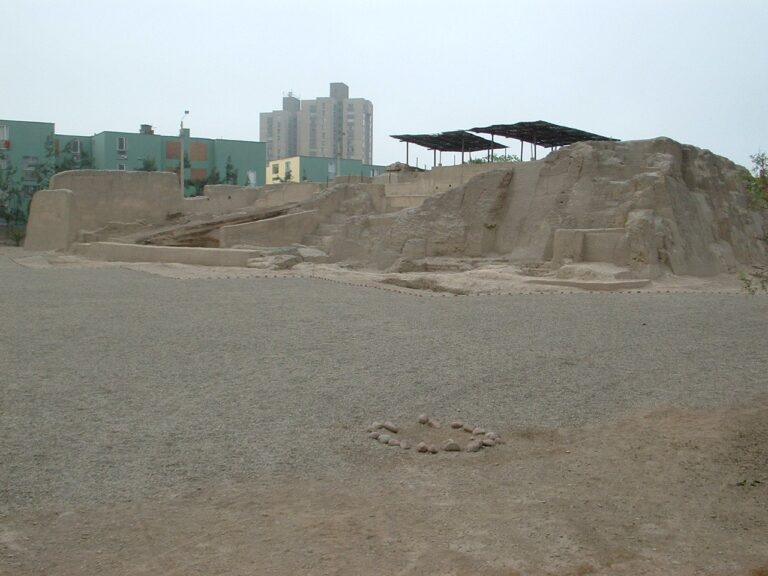
Huaca Santa Catalina is a sacred Andean site and Ychsma ceremonial and administrative center in La Victoria District, Lima, Peru. Its construction and greatest importance date to the Late Intermediate Period, about 1100–1440. It was an important meeting place for Ychsma and Inca communities and may represent an early expression of Ychsma culture.
Ychsma period
The huaca belonged to the Limatambo chiefdom, a local Andean political unit within the Ychsma sphere of influence. The Ychsma lived in the Rímac and Lurín valleys for about three centuries and relied on agriculture, fishing, and large-scale trade. Their principal ceremonial center was Pachacamac, a major regional deity and the name of an important sanctuary.
Inca rule
During the fifteenth century, the Inca Empire, an Andean state that incorporated other peoples and territories, peacefully annexed the Ychsma kingdom. Inca presence at Santa Catalina is associated with the annexation led by ruler Túpac Yupanqui around 1440. The Incas respected worship of Pachacamac, and the huaca gained importance under their rule. It served religious and administrative purposes, forming part of the Inca road network as a station for travel, storage, and administration. Ychsma ceramic production continued under Inca influence, but no longer as an independent tradition. The site retained prestige through successive occupations.
Excavation and protection
The first excavations and restoration took place from 1969 to 1974 under archaeologists Humberto Ghersi and Jorge Zegarra. Huaca Santa Catalina became Cultural Heritage of the Nation in 2002, and improvement work followed in 2011.
Remains
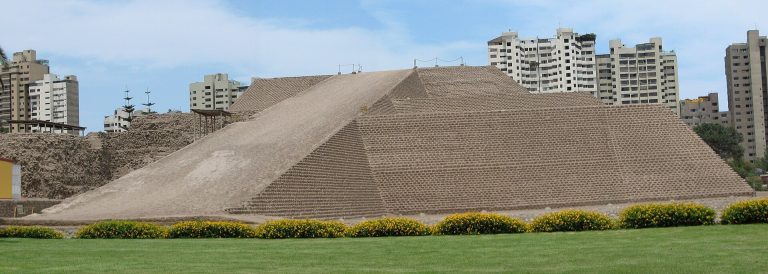
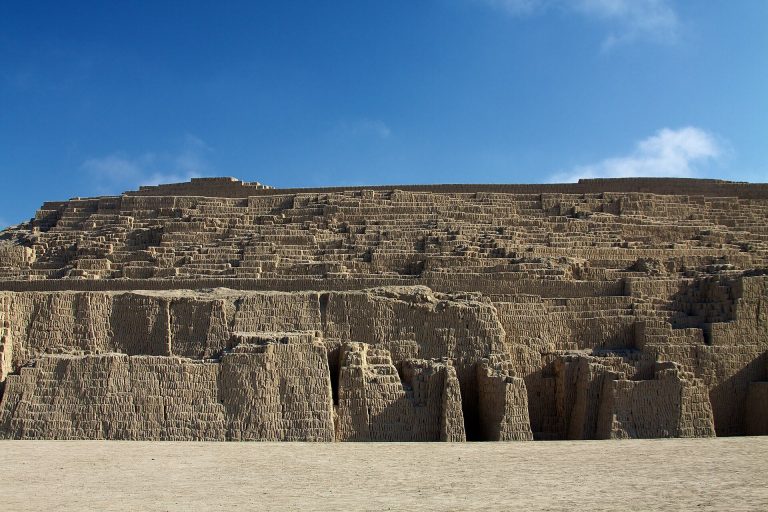
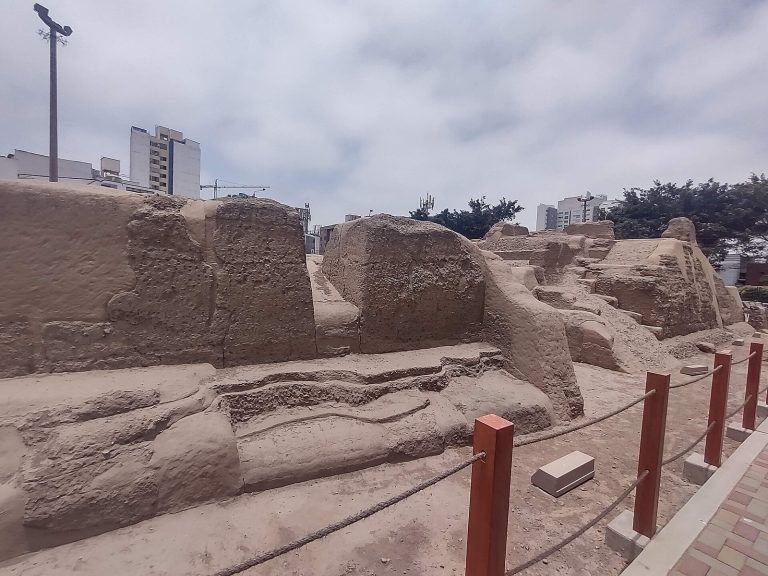
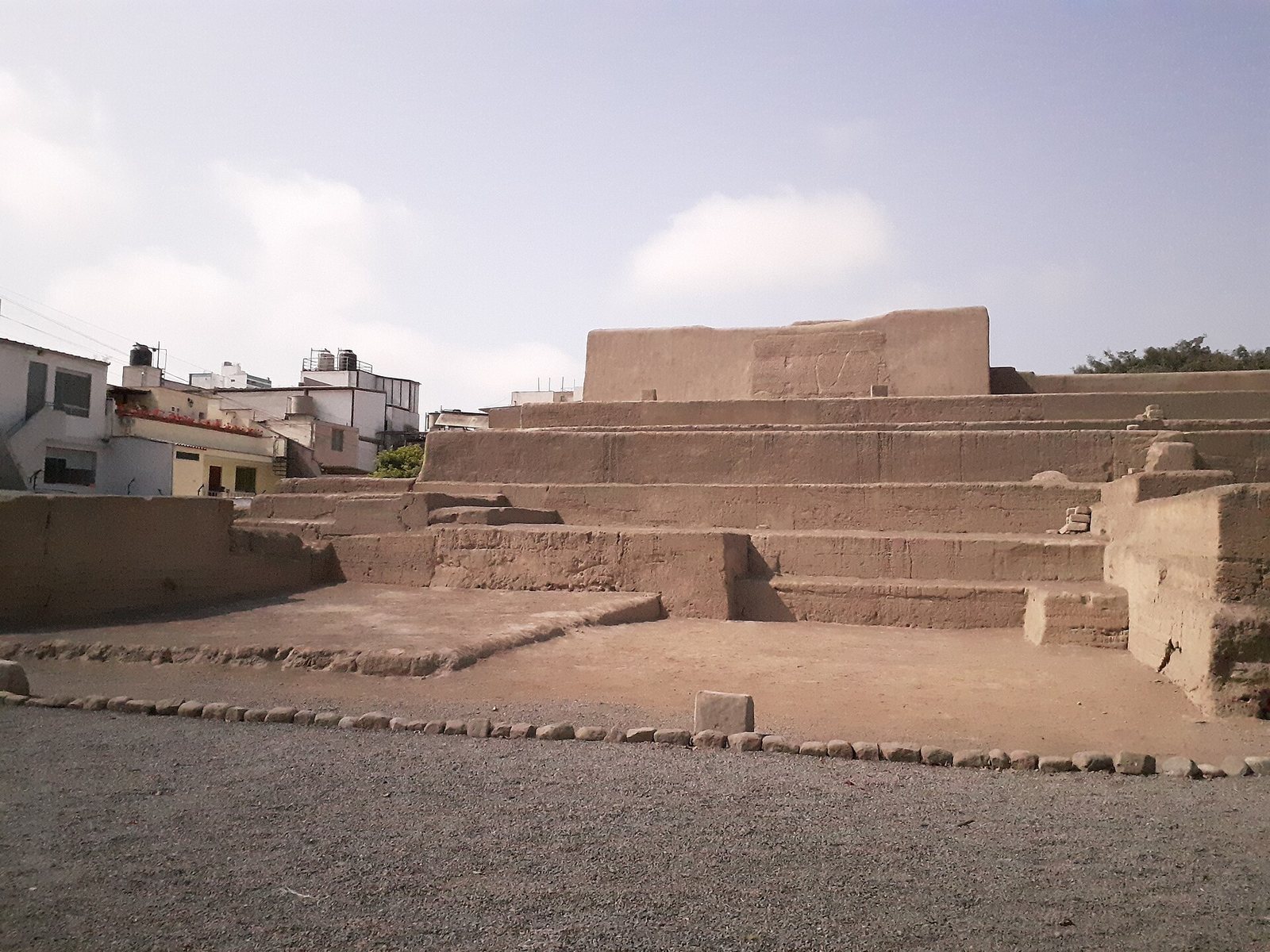
The archaeological site covers 24,940 square metres at an elevation of 138 metres above sea level. Its principal structure is a stepped pyramid with an almost square plan, built from adobe blocks, a material made from earth and hardened by drying. Some parts use cylindrical blocks alongside the more usual rectangular ones. The site is in very good condition.
Pyramid and summit labyrinth
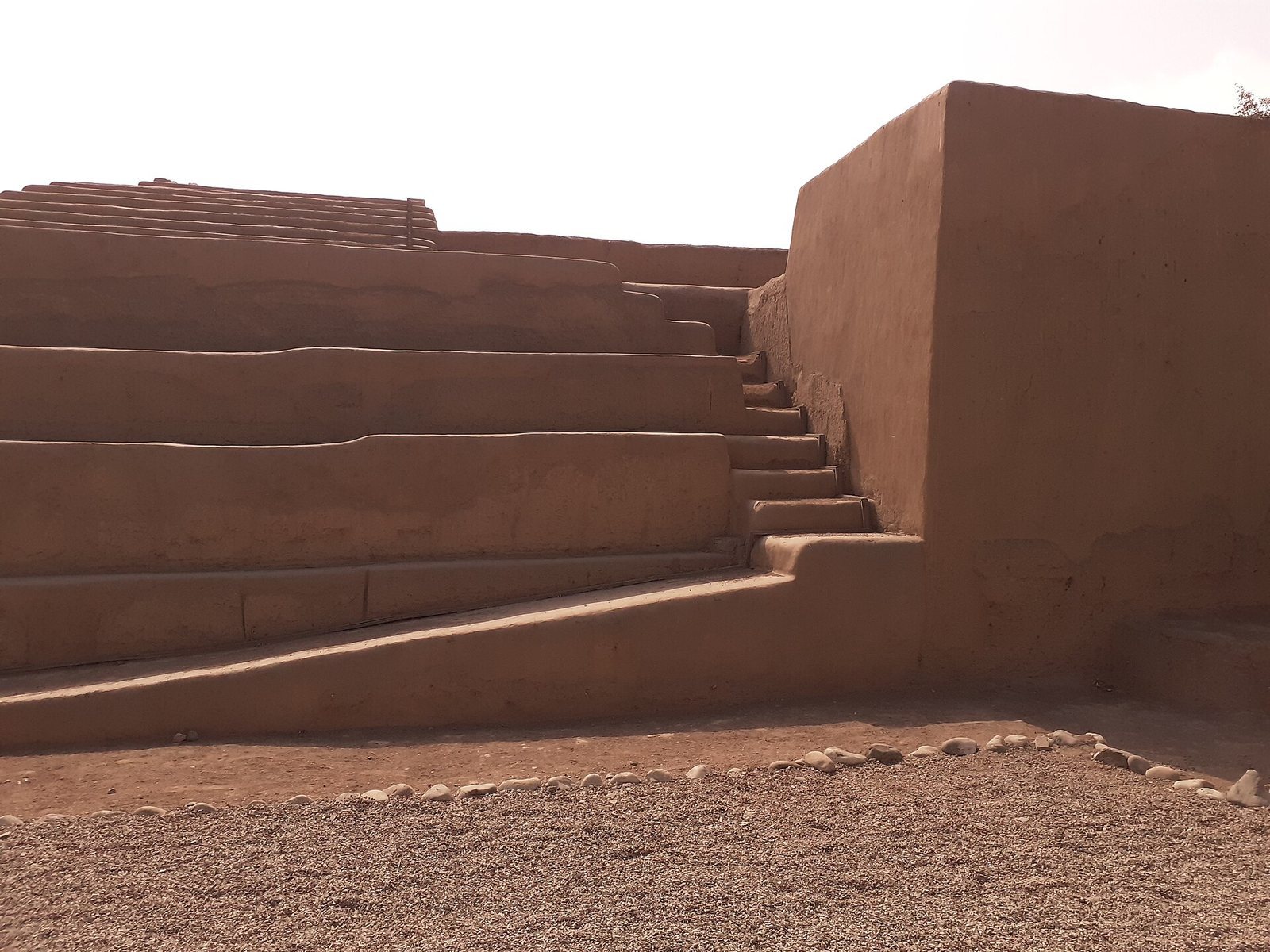
A small ramp with steps provides access on the pyramid’s eastern side. A labyrinth occupies the upper area; its arrangement interacted with sunrise and sunset to cast shadows associated with deities.
Storage features
Large vessels and storage facilities are associated with the site’s administrative function. Large jars from the Inca period may have held water or chicha, a fermented drink often made from maize.
Excavated materials
Excavations recovered bundles, textiles, tools, and marine shells. These finds accompanied ceramics associated with both Ychsma and Inca traditions.
Ceramic finds
Ychsma pottery
Ychsma pottery has relatively restrained use of multiple colors and sculpted forms. Examples include human-shaped figurines associated with fertility rituals and jars with faces modeled on their necks. Some vessels have a red surface coating with evenly applied white drips covering part of the exterior.
Inca pottery
Inca pottery from the site varies in form and decoration. Human-shaped aryballos, narrow-necked vessels with rounded bodies, include small faces and a slight hump on the back. One vessel of uncertain archaeological context has three teardrop-shaped marks painted on each cheek. Other examples include plant-shaped vessels and large jars, with geometric designs.