Savoy Chapel: A Former Hospital Chapel and Royal Place of Worship
Site at a Glance
- Popularity
- Very High
- Country
- United Kingdom
- Primary era
- Early Modern
- Eras represented
- Early Modern, Modern
- Civilizations
- British, English
- Site type
- Religious
- Remains
- Chapel
On this page9 sections
History
Savoy Chapel is a historic chapel in the United Kingdom, built for Henry VII’s Savoy Hospital in the Perpendicular style, a late-medieval English Gothic form marked by strong vertical lines and elaborate window tracery, with Tudor features. Construction began around the turn of the sixteenth century, and the chapel was completed in 1512. First established as a side chapel to the hospital, it later served different congregations and became a royal place of worship.
Medieval origins and hospital foundation
A medieval chapel associated with Savoy Palace stood on the site until 1381, when the palace and chapel were destroyed during the Peasants’ Revolt. Henry VII established Savoy Hospital on the former palace grounds as a charitable institution for 100 poor and needy men from London.
The present chapel was built as a side chapel to the hospital’s secular main hall. Its construction began around the turn of the sixteenth century, during the reign of Henry VII, the first Tudor king. Completed in 1512, it received its first charter that year to operate as part of the hospital.
Congregations and the hospital’s decline
The congregation of St Mary-le-Strand worshipped in the chapel from 1549 to 1714 while it had no church of its own. A German Lutheran congregation in Westminster also gained royal permission to worship there after separating from the Lutheran congregation of Holy Trinity. Lutheranism is a branch of Protestant Christianity shaped by the teachings of Martin Luther. In 1694, the congregation’s first pastor, Irenaeus Crusius, dedicated the chapel as the German Church of St Mary-le-Savoy.
Savoy Hospital closed in 1702 and subsequently fell into ruin. After a prolonged dispute over its estate, the chapel passed to the Duchy of Lancaster in 1772. The Duchy is a royal estate whose revenues belong to the reigning monarch.
Eighteenth-century use and marriage practices
Archibald Cameron of Lochiel was buried at the chapel in 1753 after his execution for treason. A Jacobite, he supported restoring the Stuart dynasty to the British throne and was the last Jacobite leader executed for treason.
As an Anglican place of worship, the chapel became known in the eighteenth century for marriages performed without banns, the public announcements traditionally made in church before a wedding. In 1755, Joseph Vernon and Jane Poitier married there without a licence. The curate and vicar who conducted the ceremony were transported for fourteen years. During chaplain Hugh Chapman’s tenure, divorced people could marry at the chapel or have their civil marriages blessed. His successor, Cyril Cresswell, ended the practice.
Rebuilding and royal chapel status
During the nineteenth century, most of the hospital buildings were demolished. The eastern end of the estate was ceded to create an approach to Waterloo Bridge, and the chapel was the only building to survive. A fire in 1864 destroyed the chapel apart from its outer walls, after which it was rebuilt. Richard D’Oyly Carte, a theatrical producer, married there in 1888.
In 1912, Victor Duval and Una Dugdale’s suffragette wedding drew prominent women’s-rights campaigners and public attention. Dugdale refused to promise to obey her husband, despite the Archbishop of Canterbury’s intervention.
The chapel became the chapel of the Royal Victorian Order in late 1937. The Royal Victorian Order is a British order of chivalry, and the chaplain, appointed by the Duchy of Lancaster, has also served as the Order’s chaplain since that year. The chapel was announced as the King’s Chapel of the Savoy in 1939, while the name Queen’s Chapel was used during much of the reigns of Queen Victoria and Elizabeth II.
The chapel was damaged during the London Blitz in 1940 and restored in 1957–58. It was listed as a Grade II* building in 1958, a category for buildings of particular importance and special interest. It remains an Anglican place of worship in the Church of England and is owned by the Duchy of Lancaster. As a Royal Peculiar, it lies outside a diocesan bishop’s jurisdiction and is under the monarch’s authority. In 2016, it was brought under the Chapel Royal, a royal ecclesiastical establishment serving the sovereign, for ecclesiastical purposes. Full gatherings of the Royal Victorian Order take place at St George’s Chapel, Windsor Castle, to accommodate those attending.
King Charles III is the chapel’s patron. Anglican services use the 1662 Book of Common Prayer, a historic form of the Church of England’s principal liturgical book, and the King James Bible, an English Bible translation first published in 1611.
Remains
Plan and exterior
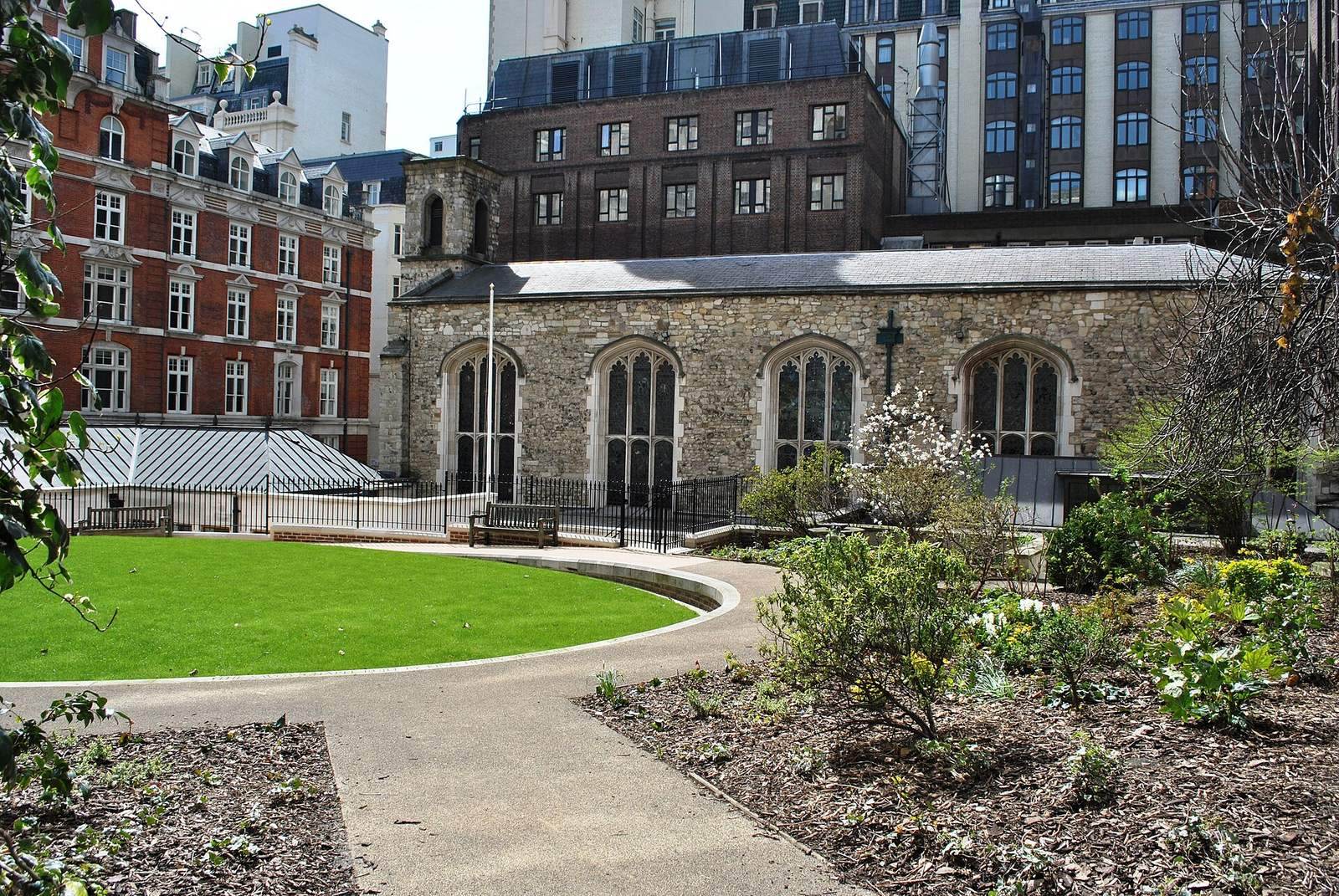
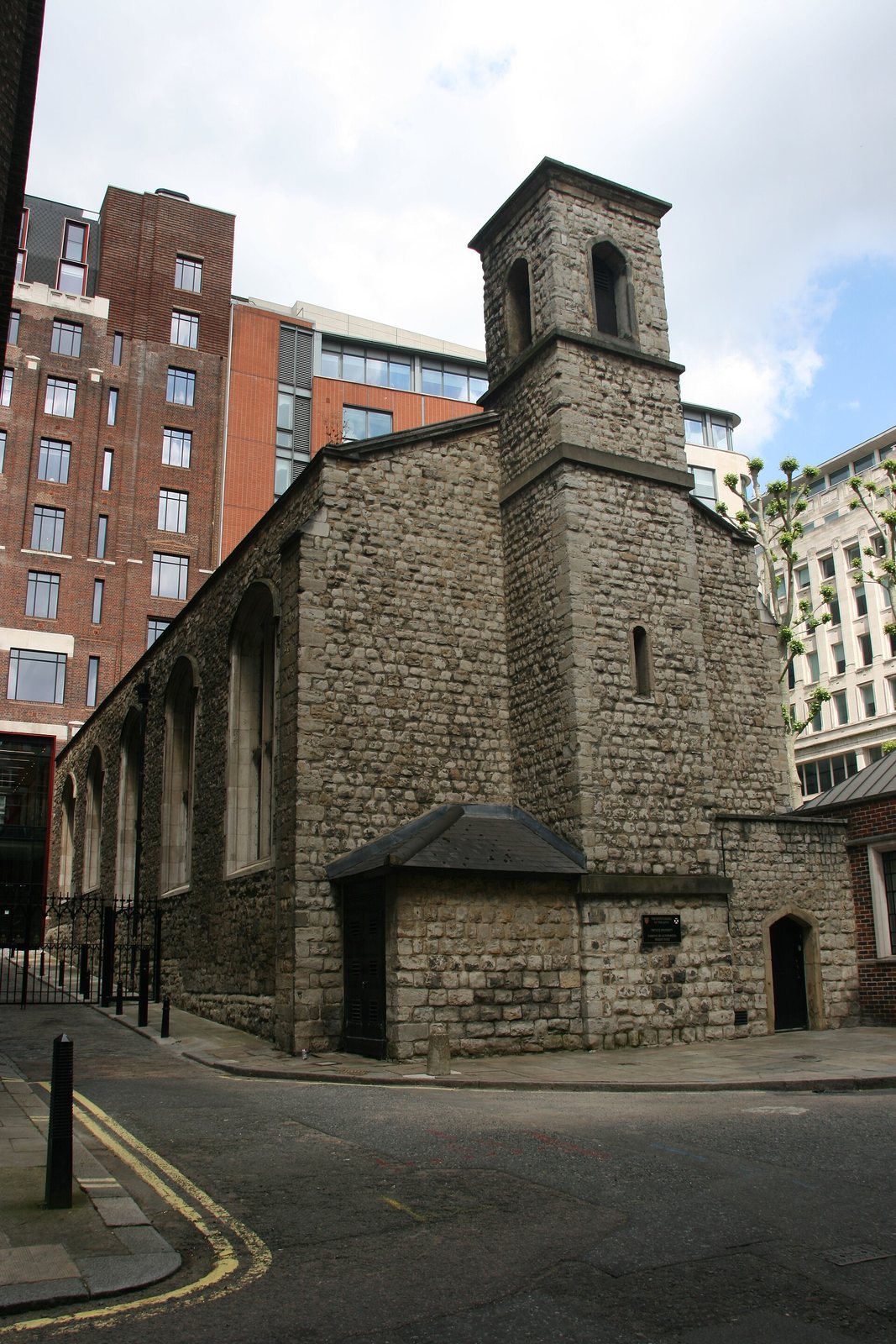
The chapel is a rectangular hall built of rubble stone, with a small bell tower at its western end. Each long side has four windows divided into three openings by tracery, the ornamental framework within a window. A five-part window occupies the eastern end. The building began as a side chapel to the hospital’s secular main hall, which measured about 200 feet (61 metres) in length, contained 100 beds, and was demolished in the nineteenth century.
Interior memorials and fittings
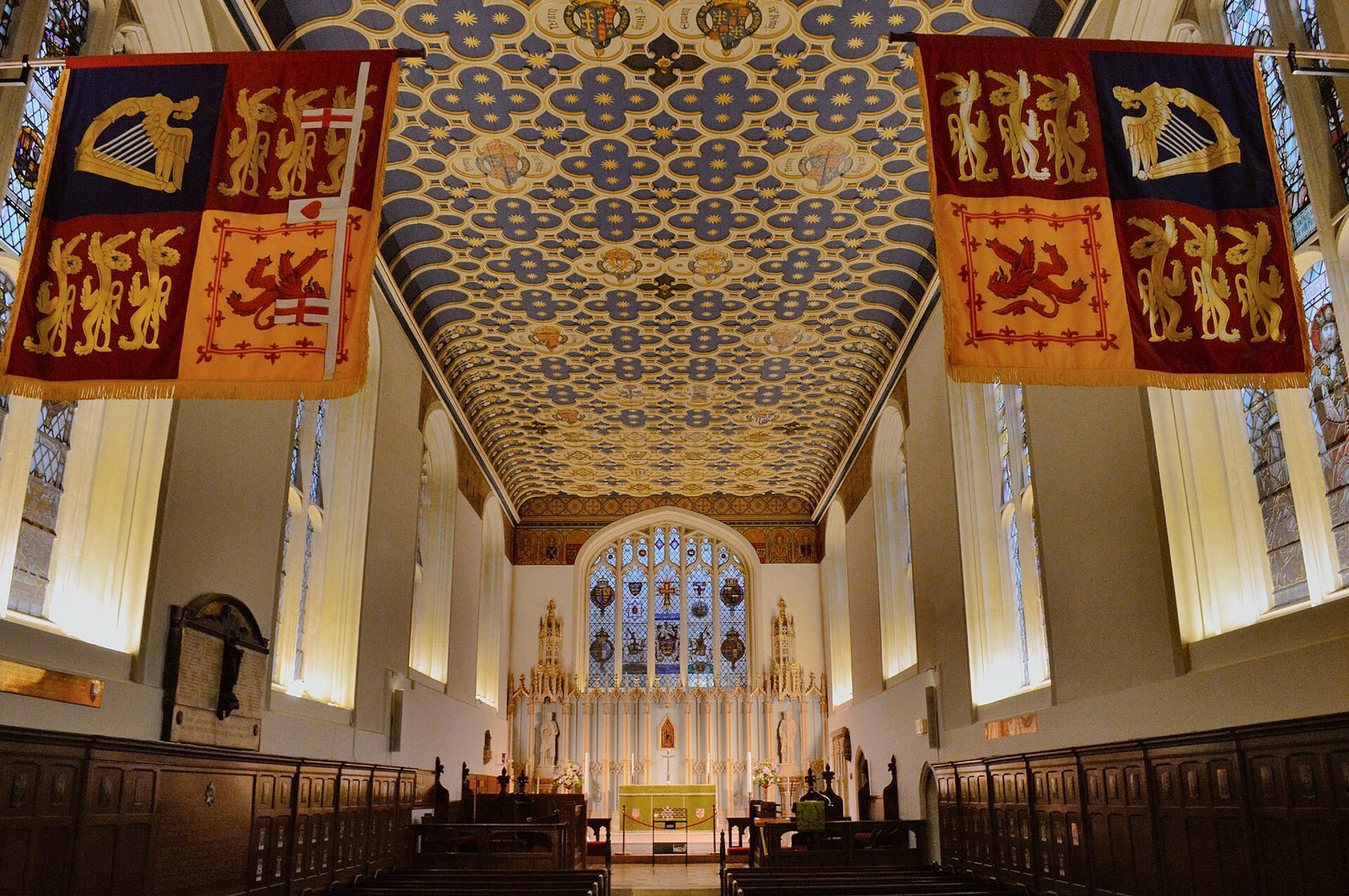
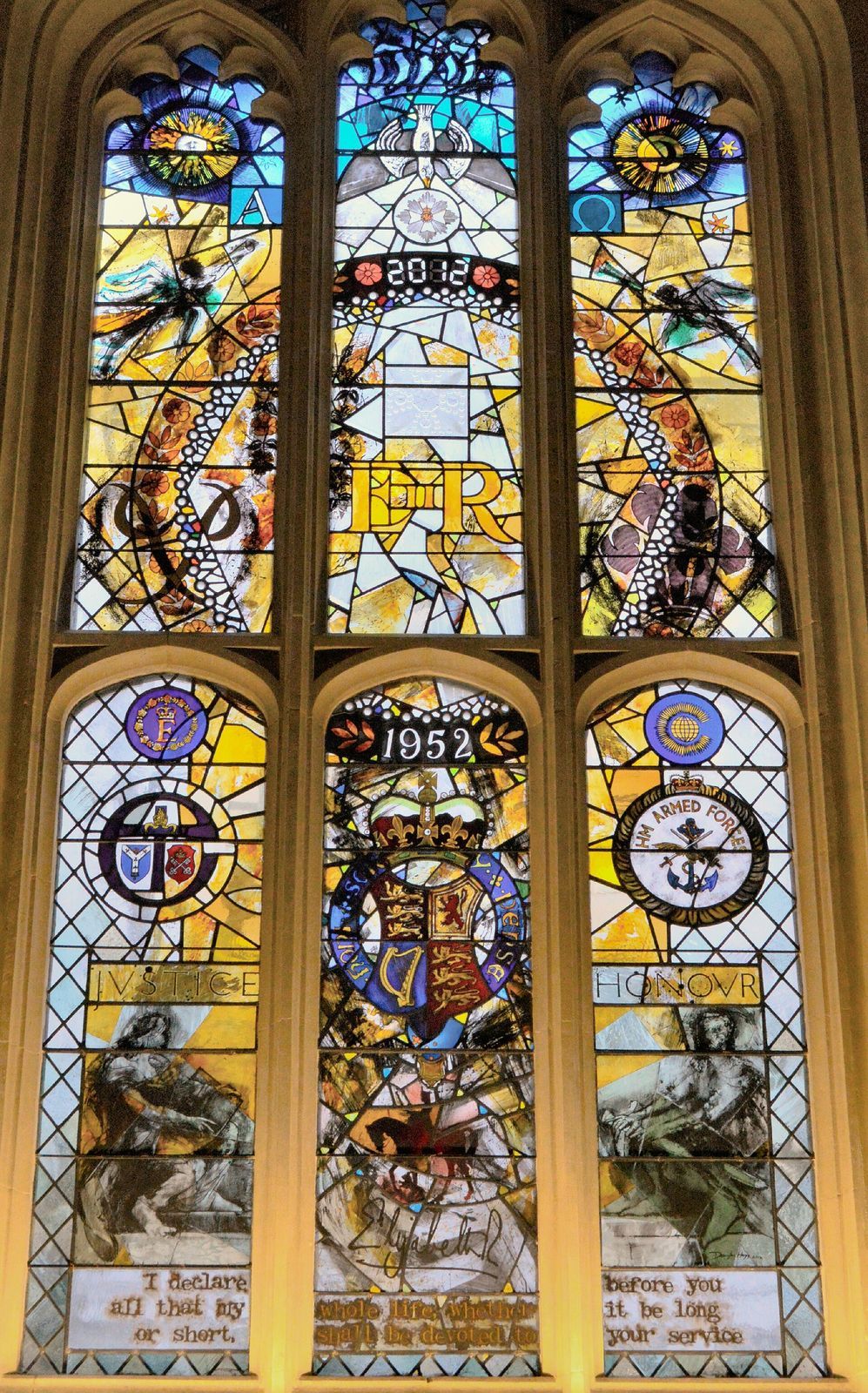
Sixteenth-century tomb monuments and stained glass form part of the chapel’s interior. A surviving three-panel stained-glass work depicts a procession of angelic musicians and commemorates Richard D’Oyly Carte. Sir Henry Irving unveiled it in 1902, and the names of Rupert D’Oyly Carte and Dame Bridget D’Oyly Carte were added after their deaths. The west window has stained glass commemorating Elizabeth II’s Diamond Jubilee, unveiled in 2012. Many other windows were destroyed during the London Blitz. The chapel also has a richly painted wooden ceiling in a revival of Tudor design, restored in 1999, and wooden wall panelling installed in 1938–39. Plates bearing coats of arms commemorate past and present members of the Royal Victorian Order.
Organ and garden
Elizabeth II presented the chapel with a pipe organ with three keyboards. Built by J. W. Walker & Sons Ltd to specifications by organist William Cole, it was dedicated on 27 October 1965 at a service marking the Duchy of Lancaster’s 700th anniversary. The associated garden was landscaped in 2002 for Elizabeth II’s Golden Jubilee, and the chapel floor was renewed in 2013.