Croydon Minster: A Parish and Civic Church
Site at a Glance
- Popularity
- High
- Country
- United Kingdom
- Primary era
- Modern
- Eras represented
- Medieval, Early Modern, Modern
- Civilizations
- British, English
- Site type
- Religious
- Remains
- Church
On this page11 sections
History
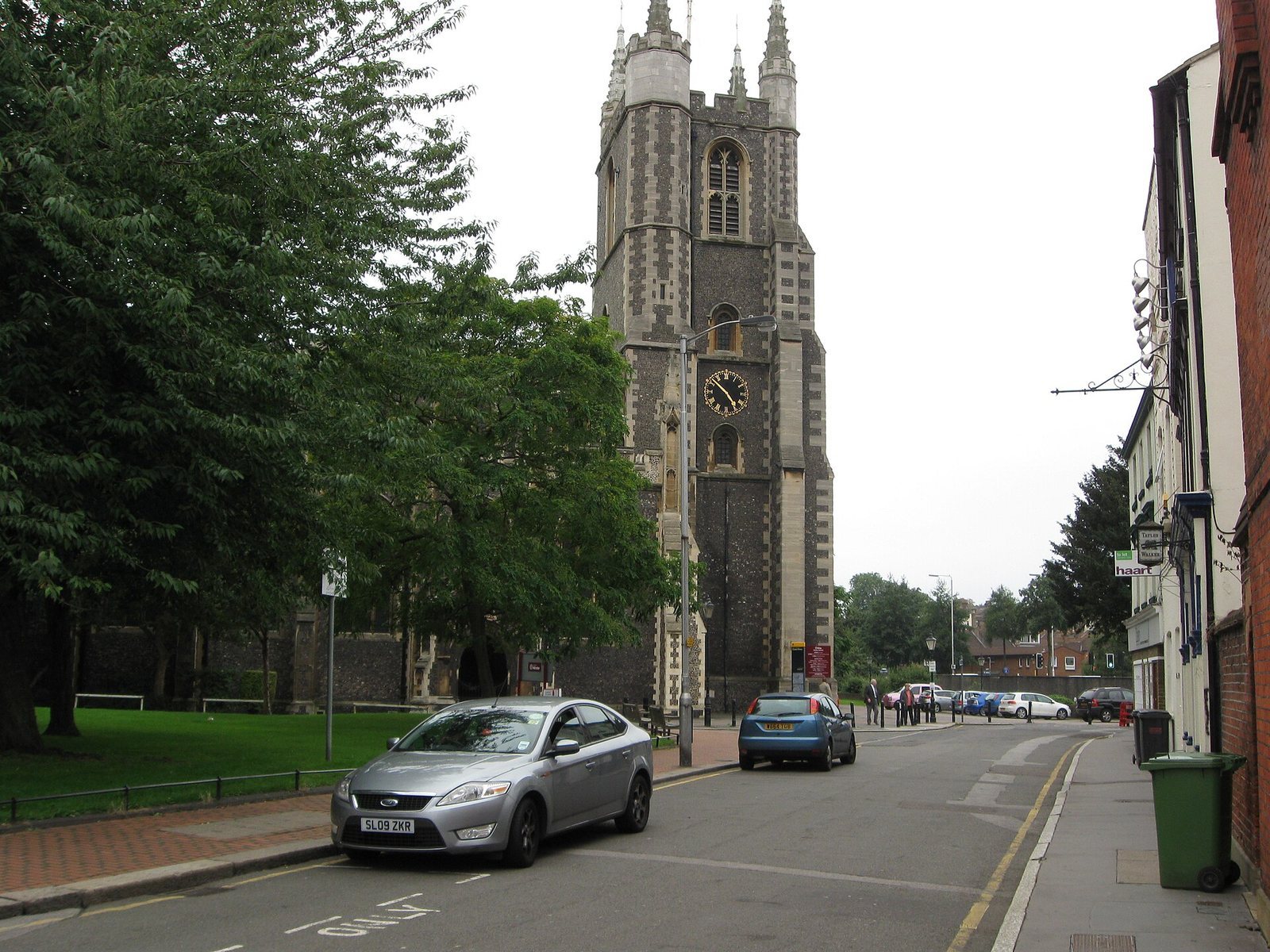
Croydon Minster is a parish and civic church in Croydon, United Kingdom. Established in Anglo-Saxon England during the Middle Saxon period, broadly the seventh to ninth centuries, it developed into a chiefly Perpendicular Gothic church in the late 14th and early 15th centuries. Perpendicular is a late medieval style distinguished by strong vertical lines. The church is thought to have been a minster, a church with a community of clergy serving a wider area, possibly including pastoral care.
Early church and medieval development
A charter issued by King Coenwulf of Mercia, an Anglo-Saxon kingdom, refers to a council held near Croydon’s minster. Around 960, Elfsies, priest of Croydon, witnessed an Anglo-Saxon will. The church also appears in the Domesday Book of 1086, a survey of landholding and resources in England ordered by William the Conqueror.
Fishmonger John de Croydon’s will, dated 6 December 1347, made a bequest to the church and provides the earliest clear evidence of its dedication to St John the Baptist. In its late medieval form, the church was chiefly Perpendicular in style. Archbishops Courtenay and Chichele are believed to have supported its development.
Archbishops and rebuilding after the fire
Six Archbishops of Canterbury were buried in the church: Edmund Grindal, who died in 1583; John Whitgift, in 1604; Gilbert Sheldon, in 1677; William Wake, in 1737; John Potter, in 1747; and Thomas Herring, in 1757. The archbishop is the senior episcopal office in the Church of England.
The church underwent restoration in 1851 and again from 1857 to 1859 under architect George Gilbert Scott, a leading figure in the Gothic Revival. On the night of 5 January 1867, a fire gutted the building. Overheated flues serving recently installed Gurney stoves may have caused the blaze. While the church was rebuilt, services took place in a temporary iron church erected on Scarbrook Road in April 1867, with seating for 1,000.
Scott directed the rebuilding from 1867 to 1869, incorporating parts of the earlier church that had survived the fire. Archbishop Archibald Tait reconsecrated the church on 5 January 1870.
Modern status
Croydon Minster became a Grade I listed building in 1951, England’s highest category of statutory protection for buildings of exceptional architectural or historic interest. On 29 May 2011, it received the honorific title of Croydon Minster, the first such title change in the Diocese of Southwark. Today it is a Church of England parish and civic church in that diocese, following an inclusive Liberal Catholic tradition. In practice, it also serves as Whitgift School’s chapel and is linked with The Minster Schools. Its bell ringers are affiliated with the Surrey Association of Church Bell Ringers.
Remains
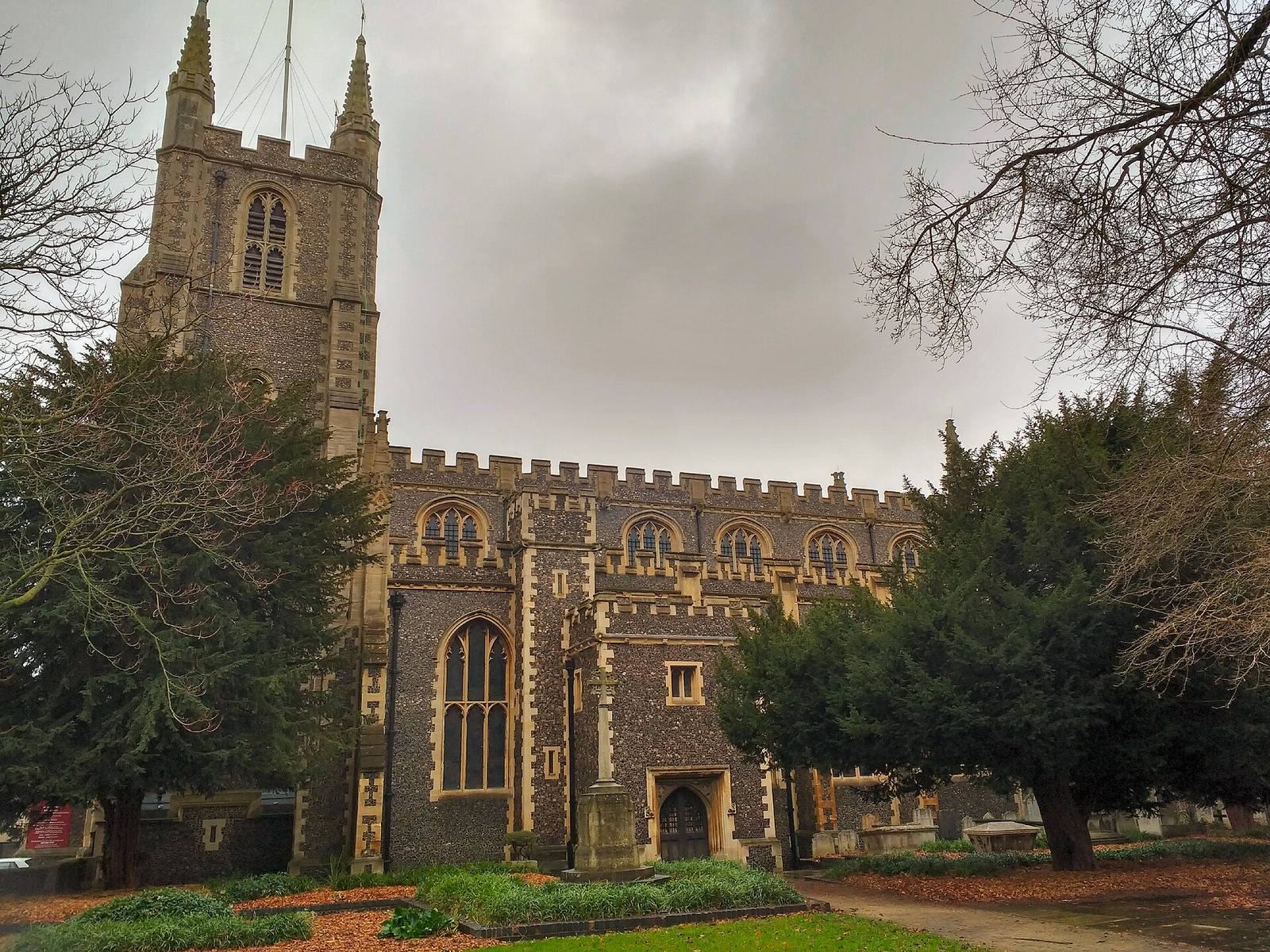
The rebuilt church follows the medieval plan, with its footprint extended eastward through a lengthened chancel. It has a three-aisled basilican layout, meaning a central nave flanked by side aisles, and combines surviving earlier fabric with English Gothic work.
The church
Nave and chancel
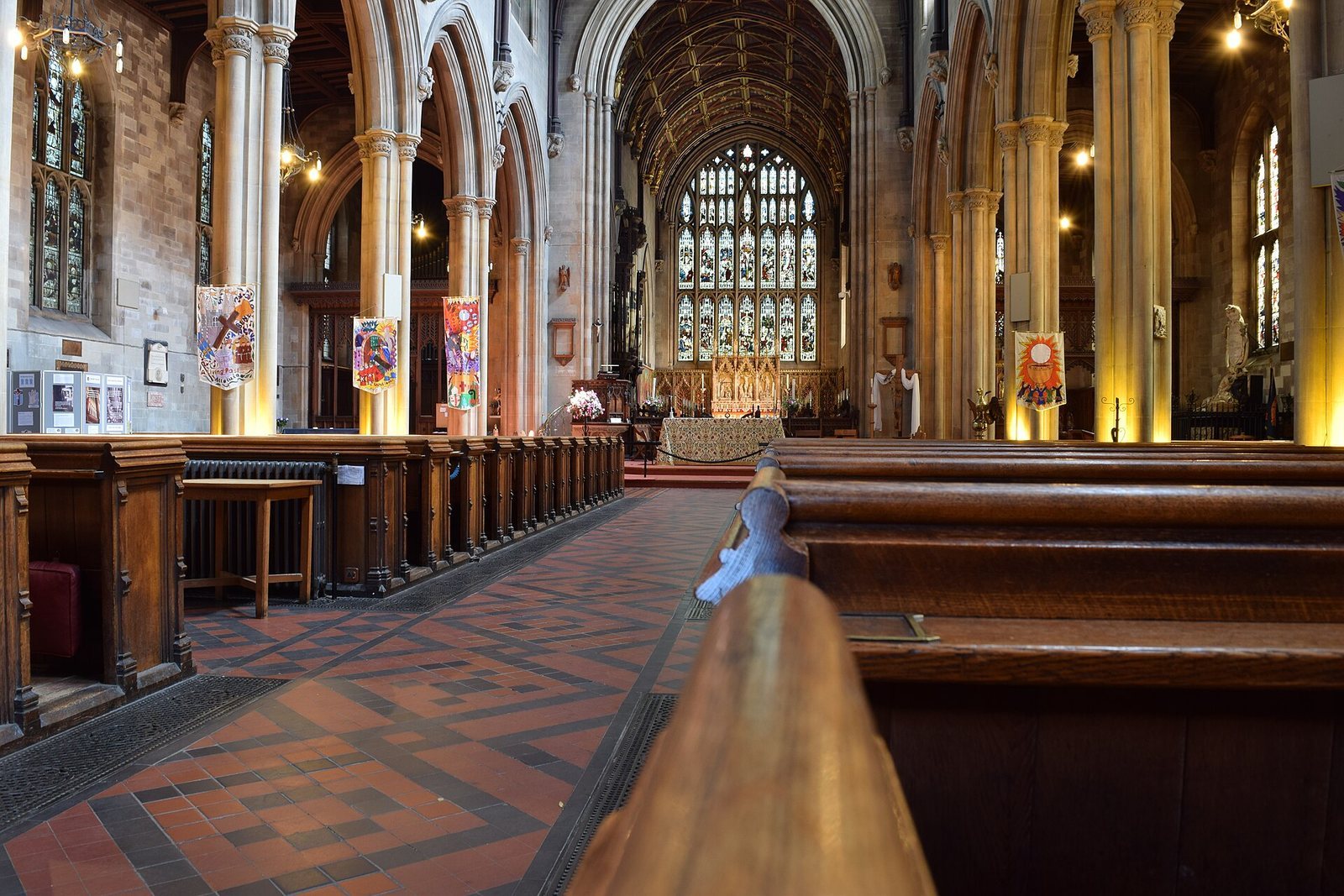
The nave has slightly sloping, flat wooden ceilings supported over wooden arches, while the side aisles have flat ceilings. The enlarged chancel has a vaulted ceiling with recessed panels and a Neo-Perpendicular window, a later revival of the medieval style’s vertical features.
West tower and south porch
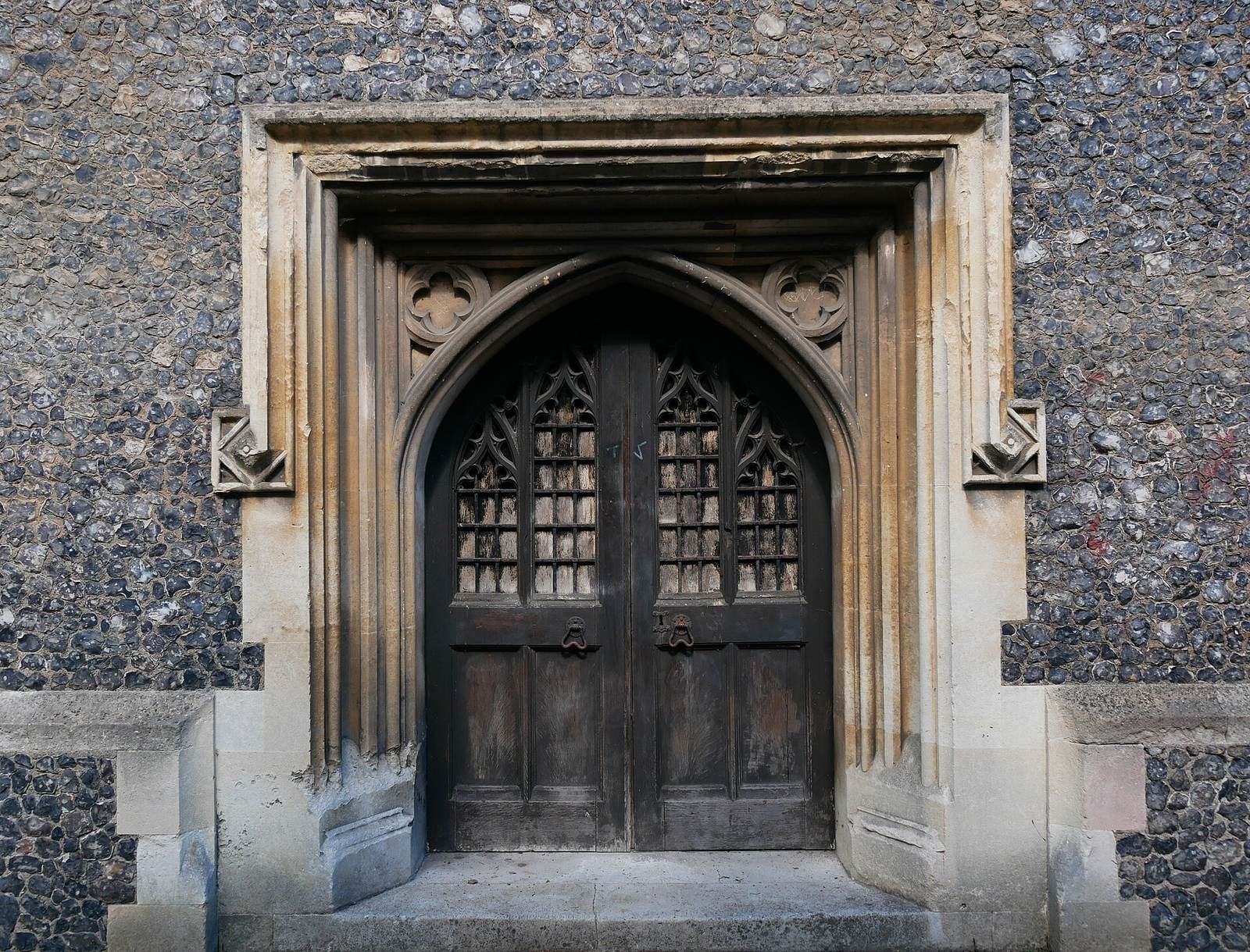
The buttressed west tower, identified with the date 1792, survived the 1867 fire largely intact and was incorporated into the rebuilt church. The south porch was also retained from the earlier building.
Monuments and arms
Several monuments and fittings from the fire-damaged church remain inside. The building also bears the arms of Archbishops Courtenay and Chichele.
Organs and bells
The church has a large pipe organ with four hand-operated keyboards. Much of it was made by William Hill & Sons and dates to 1869. A smaller organ in St Nicholas Chapel came from St Mary the Virgin, Preston Candover, in 1997.
The tower holds 12 bells cast in 1936 by the Croydon firm Gillett & Johnston. They replaced an earlier ring of eight bells, which were recast and rehung with new fittings in a new frame alongside four additional treble bells. The Bishop of Croydon dedicated the new ring on 12 December 1936. Its first peal, a formal sequence of changes rung on bells, was performed for the 1937 coronation of King George VI and Queen Elizabeth.
St John’s Memorial Garden
The garden lies south of the church and covers 2 acres (0.81 hectares) on the site of the former cemetery. By 1957 the cemetery was no longer in use and had become neglected. Earlier gravestones and tombs were relocated or reused in walls and paving, and a war memorial was also repositioned.