Santoni: A Rock-Cut Sanctuary of Cybele in Sicily
Site at a Glance
- Popularity
- Medium
- Country
- Italy
- Primary era
- Classical
- Eras represented
- Classical
- Civilizations
- Ancient Greek
- Site type
- Religious
- Remains
- Sanctuary
On this page10 sections
History
The Santoni sanctuary is a rock-cut shrine in Sicily, Italy, dated to about the fourth or third century BC and dedicated to Cybele, the mother goddess also called the Magna Mater, or Great Mother. It is thought to have been the principal centre of her cult on the island.
Akrai and its setting
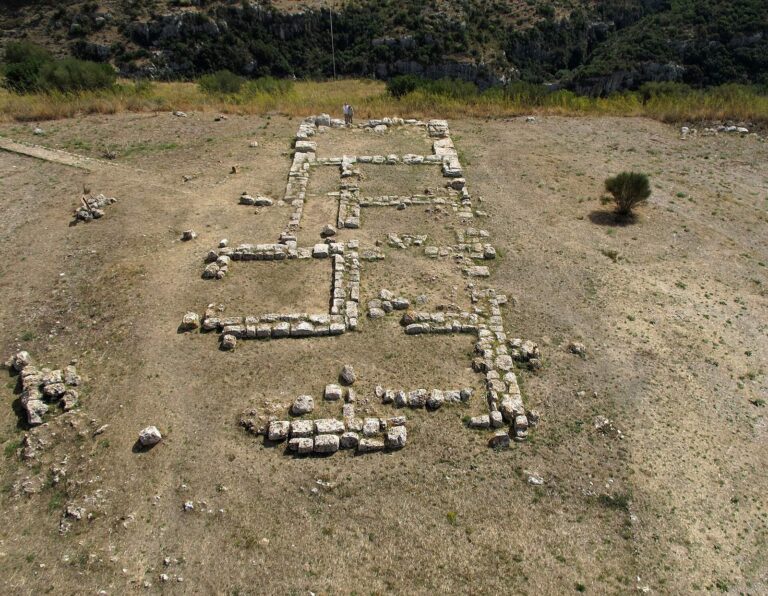
The hill later occupied by Akrai had a much earlier history of human use. A shelter on its northern slope yielded abundant Upper Palaeolithic stone tools, the earliest securely identified evidence of habitation in Sicily. Syracusans founded Akrai in 665/4 BC on a plateau bounded by steep cliffs and four streams. The city served as a fortress, guarding routes between Syracuse, Greek cities on Sicily’s southern coast, and inland communities of the indigenous Sicel people.
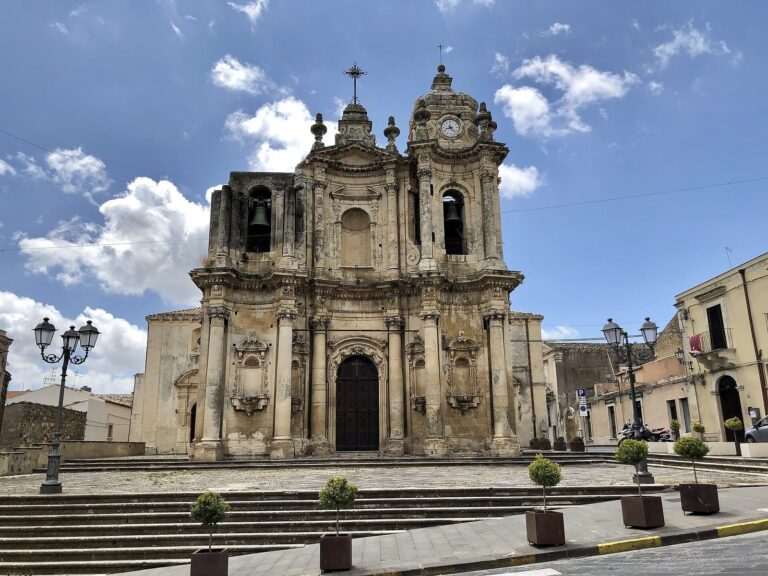
In the fourth and fifth centuries AD, Akrai became eastern Sicily’s leading Christian centre after Syracuse, a standing associated with its extensive catacombs. The city’s end is uncertain, although the historian Michele Amari proposed that it was destroyed in 827 during the Muslim conquest of Sicily. Medieval Palazzolo Acreide developed nearby and was first mentioned in the geography of Edrisi.
Discovery and interpretation
Jean Houel saw the sculptures in 1777 and later published drawings and descriptions, interpreting them as funerary monuments. His drawings included errors, such as depicting lions as dogs, and contributed to later confusion over the figures. Ignazio Paternò Castello, Prince of Biscari, also discussed the Santoni in a book published in 1781. In the nineteenth century, Gabriele Iudica excavated while searching for the tombs Houel had proposed, but he shared Houel’s funerary interpretation.
In 1840, Domenico Lo Faso, Duke of Serradifalco, published an illustrated description and proposed that the principal figure was Isis-Persephone. Alexander Conze had argued in 1880, using Francesco Saverio Cavallari’s illustrations, for a connection with Greek and Anatolian images of Cybele. In the following century, Paolo Orsi and Pace interpreted the sculptures as Demeter and Kore-Persephone.
During excavations in 1953, Rosario Carta prepared detailed drawings and Luigi Bernabò Brea photographed the sculptures. The resulting publication considered the sanctuary within the broader spread of Cybele’s cult in the Greek and Roman worlds. Giulia Sfameni Gasparro later interpreted the complex as a unified sanctuary, comparing its reliefs with religious and historical evidence while accounting for their poor preservation.
Remains
Rock-cut setting and layout
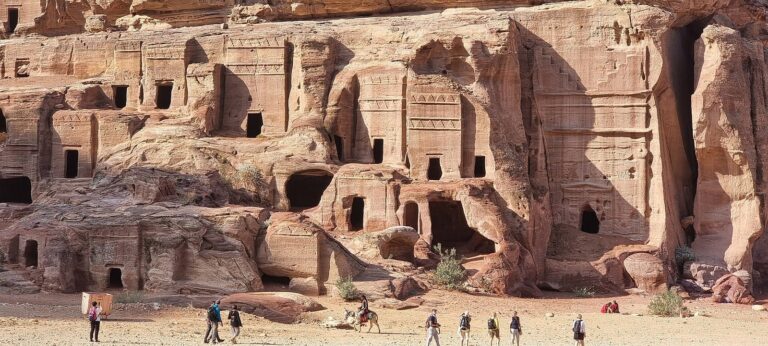
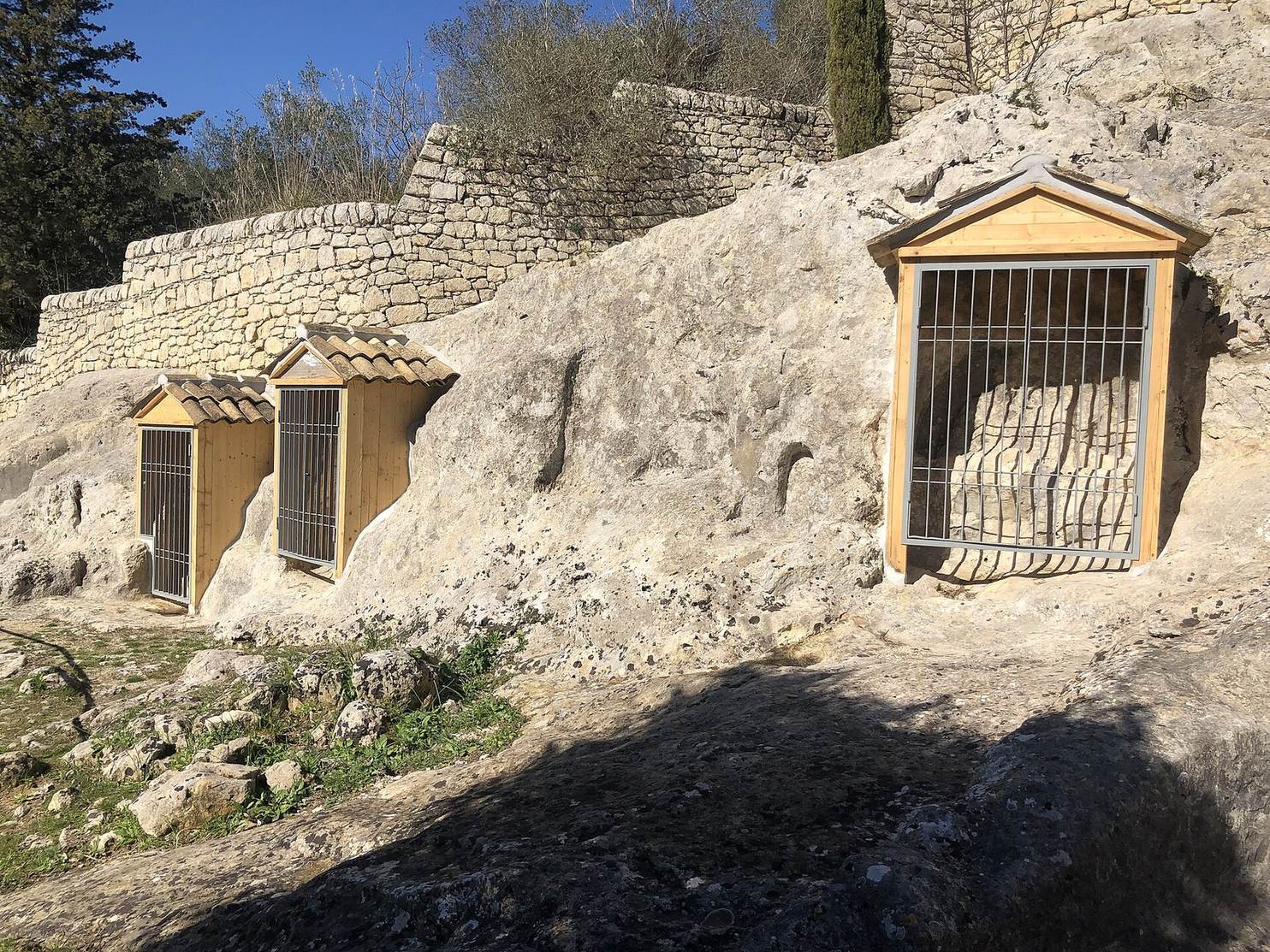
The sanctuary occupies a rocky outcrop on the southern side of Orbo Hill. It overlooks a path with a level, semicircular area at each end. Circular stones in these areas and along the path are probably the bases of altars. Twelve broad niches are cut into the rock, eleven at one level and one below them; smaller niches are also present. Lamps, pottery vessels, and small shallow ritual dishes were recovered at the site.
Sculpted figures
Cybele and the principal reliefs
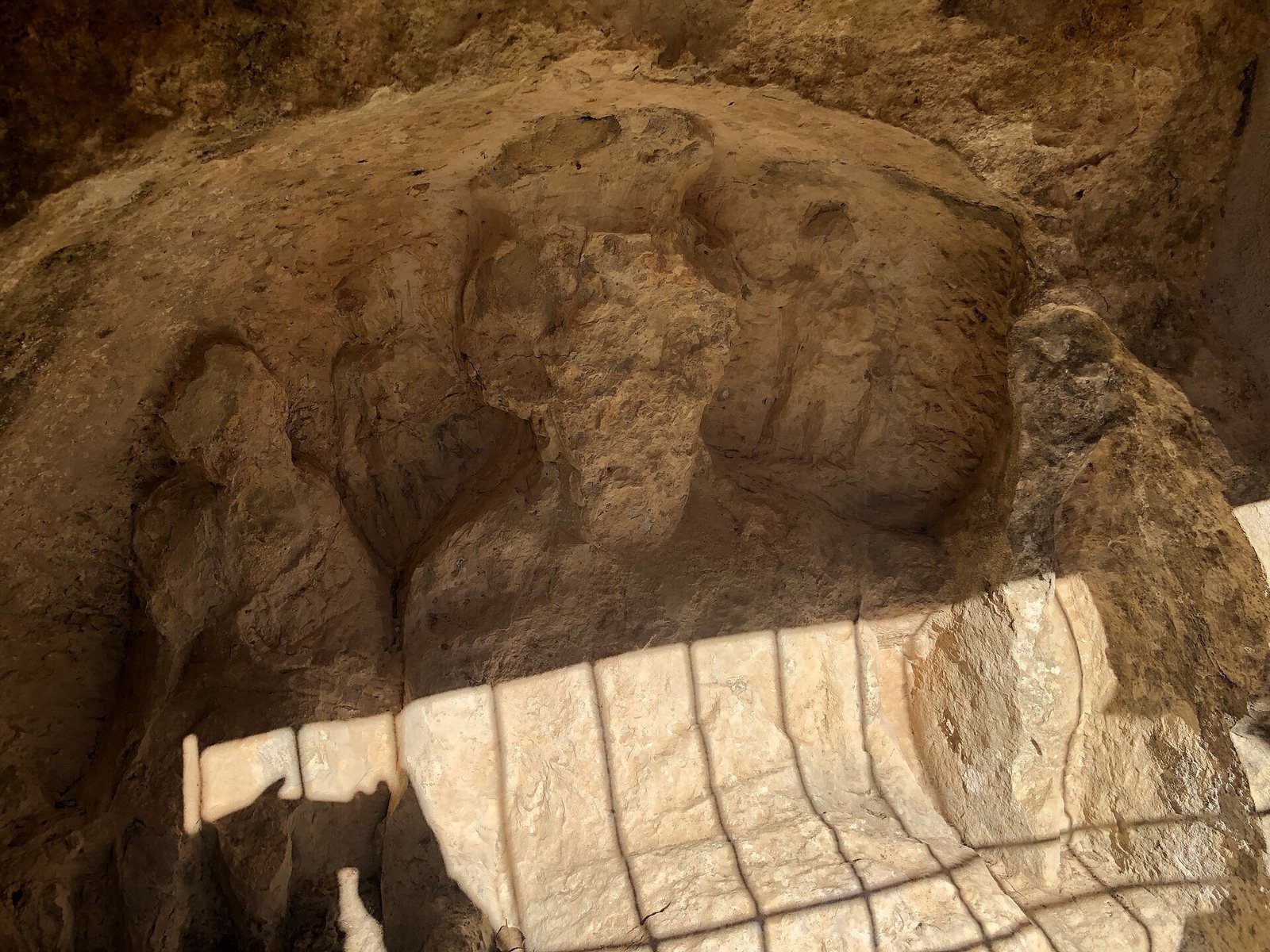
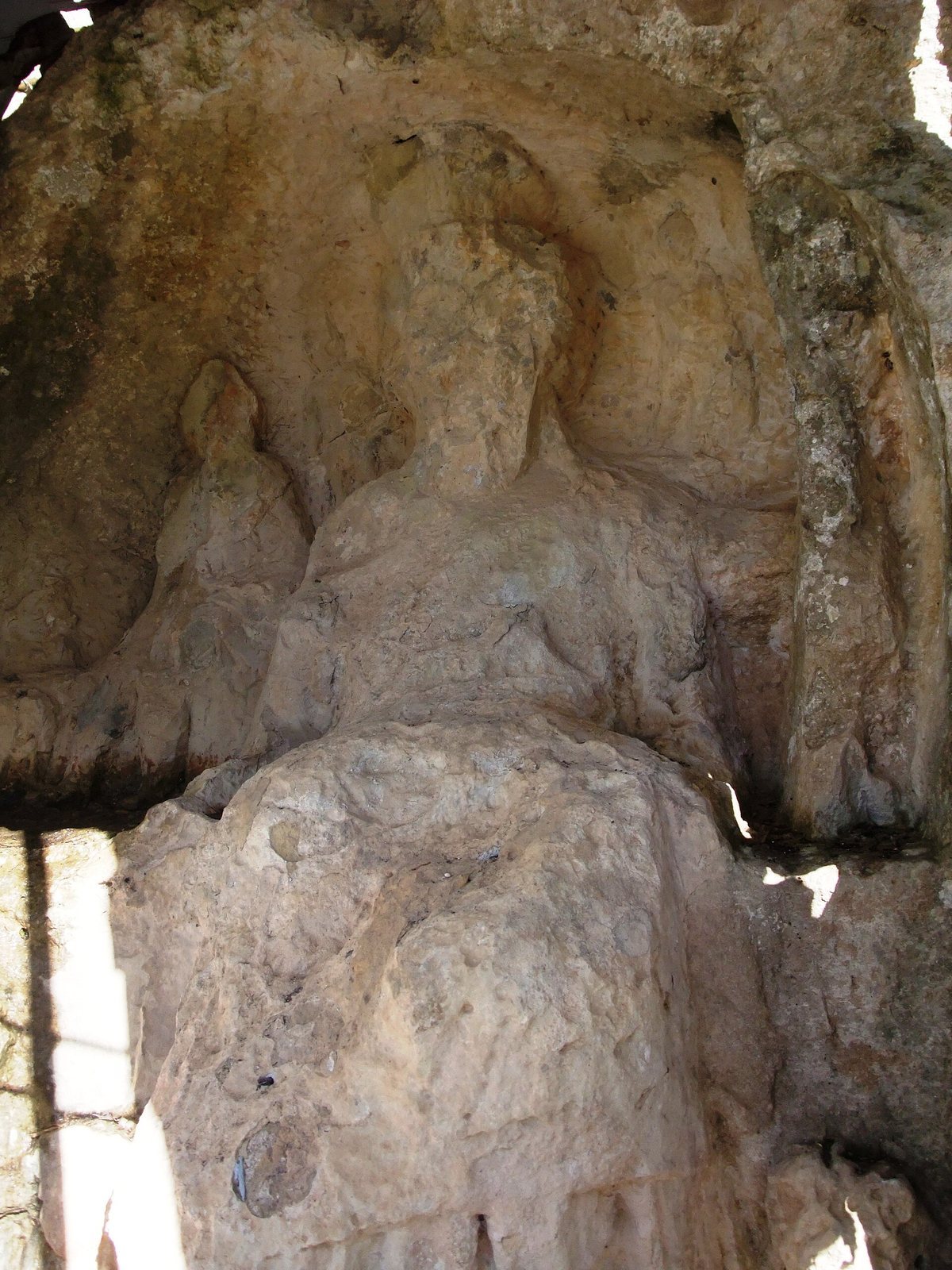
Ten of the main niches show a goddess facing forward on a throne, surrounded by other figures. Another relief depicts a life-sized standing goddess, while the central figure in the lower niche has an uncertain identity. The identification of the other principal images as Cybele draws on comparisons with representations in the Greek world, especially at Athens. She wears a pleated tunic and a draped outer garment falling from her left shoulder and gathered over her knees. Her hair is arranged in rounded sections, with long locks over her shoulders, and she wears a tall headdress. In some reliefs, she holds a shallow ritual dish in her right hand and a frame drum in her left; in damaged examples, faint traces and comparison with better-preserved images provide the basis for these identifications.
Regional forms and comparisons
The seated goddess sometimes appears within a small shrine-like frame, while another relief presents her standing. These forms have parallels in images associated with northern Ionia, southern Aeolis, and southern Ionia, as well as in Phrygian rock sculpture and rural sanctuaries in Asia Minor. Comparable settings include the sanctuary of Meter Steunene at Aizanoi, a small sanctuary at Kapikaya near Pergamon, and the sacred complex at Panajir Dagh near Ephesus.
Attendant figures
Smaller figures appear beside Cybele in at least five niches, although damage makes the original number uncertain. In the largest relief, the standing goddess extends her arms protectively, resting her hands on Hermes to her right and Attis to her left. Hermes is identified by a caduceus, or herald’s staff; Attis is marked by a shepherd’s staff and crossed legs. A poorly preserved female figure beside Attis may be Hecate, a goddess sometimes shown with a torch. Two figures riding large horses are probably the Dioscuri, the twin heroes Castor and Pollux.
In five reliefs, two small figures flank Cybele’s head. They have been identified as Galli, priests of Cybele, and Corybantes, figures associated with her in myth and ritual. They wear tunics, sometimes with an overcloak, and each carries a frame drum and a rod.
Condition and damage
The reliefs are in very poor condition, with some details faint or defaced. Houel noted that local shepherds sometimes threw stones at the figures’ heads, apparently without intending to harm them. The heads are among the parts damaged by this stone-throwing.