Napata: A Kushite Capital and Religious Center in Sudan
Site at a Glance
- Popularity
- Very High
- Country
- Sudan
- Primary era
- Iron Age
- Eras represented
- Bronze Age, Iron Age, Classical
- Civilizations
- Egyptian, Kushite
- Site type
- Settlement
- Remains
- City
On this page13 sections
History
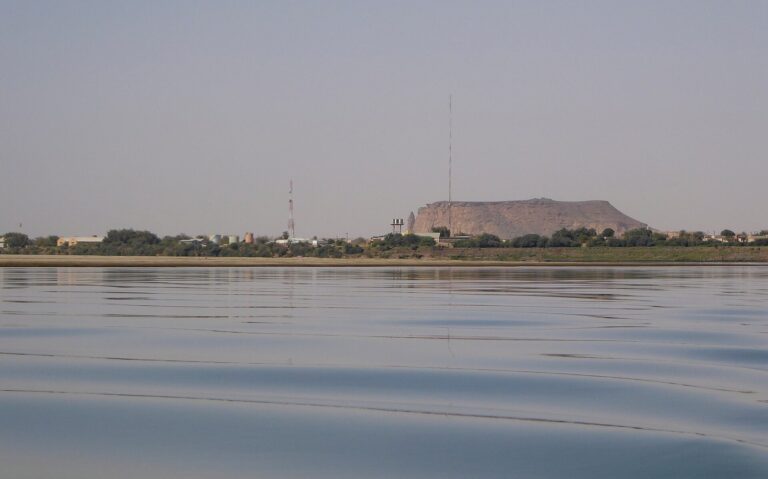
Napata was an ancient city at the foot of Gebel Barkal in Sudan, founded by the Egyptian pharaoh Thutmose III around 1450 BC. It became an important religious center in Nubia, the region south of Egypt, and the southernmost permanent Egyptian settlement during the New Kingdom, a period of Egyptian history lasting broadly from the sixteenth to the eleventh centuries BC.
Egyptian rule and the rise of Napata
Under the Eighteenth Dynasty, worship of Amun, a major Egyptian god whose cult was centered at Thebes, took root at Napata. It merged with an older local tradition associated with a sacred ram. Amun of Napata became linked to the sacred mountain, and the city drew worshippers and pilgrims. Its position on routes connecting the Nile with central Africa and the Red Sea also supported its prosperity.
Napata belonged to a region governed for the pharaoh by the viceroy of Kush, a military governor whose base was at Aniba rather than in the city. Near the end of the Twentieth Dynasty, Ramses XI called on Nubian forces to help restore order in Egypt. After the viceroy Panehesy was replaced by Herihor, a high priest of Amun at Thebes, Egyptian authority in the region weakened. Napata gained importance and took over Aniba’s role as the regional administrative center. During the Twenty-first Dynasty, control of Upper and Lower Nubia may have been divided between Amun priesthoods based at Napata and Thebes.
The Twenty-fifth Dynasty
An eighth-century BC stone inscription presented a Kushite king, whose royal title had been erased, as the sole ruler authorized by Amun. It portrayed him as appointing the Egyptian and Libyan rulers who governed divided parts of Egypt. Napata later became the capital of the Twenty-fifth Dynasty, a line of Kushite rulers who also became pharaohs of Egypt. Kashta began the dynasty’s expansion into Upper Egypt, and his successors Piye and Shabaka extended Kushite rule along the Nile.
Piye’s inscription at Napata described his campaign against Egypt’s rival rulers as a restoration of order and religious practice. His conquest brought much of Egypt under Kushite control, and he became pharaoh and expanded Amun’s temple at Napata. When Tefnakht of Sais renewed his opposition, Piye set out from Napata, recovered lost territory, and captured Memphis after heavy fighting. Cities across Lower Egypt then recognized his rule.
Piye, Shabaka, Shabataka, Taharqa, and Tantamani were the dynasty’s pharaohs at Napata. Their reigns brought renewed stability and prosperity to the Nile Valley, while building and restoration projects extended across Egypt and Nubia. They also maintained trade and diplomatic ties with neighboring states.
Napatan rule after Egypt
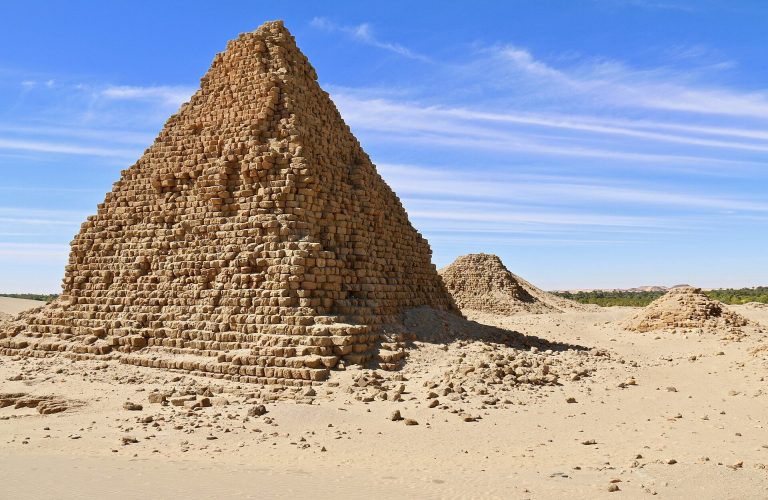
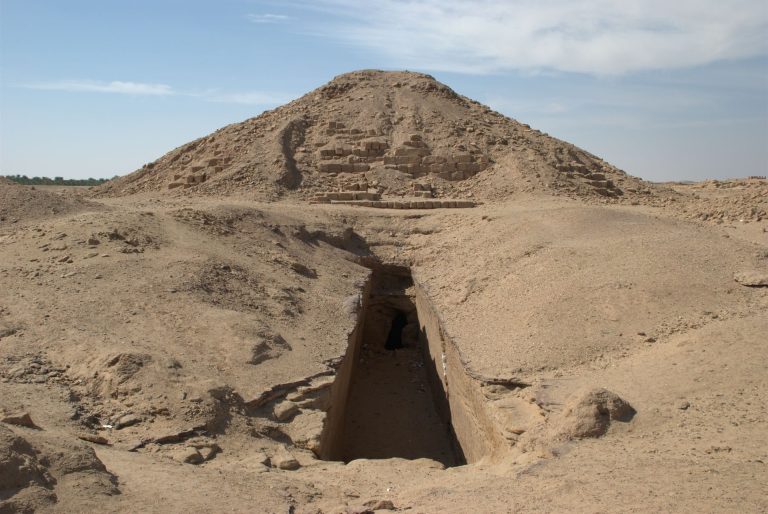
Assyrian campaigns ended Kushite rule in Egypt around 664 BC. After losing the Egyptian throne, Tantamani withdrew to Napata, which remained the Kushite capital. Royal burials of the dynasty lay in the pyramid cemeteries of El-Kurru and Nuri. The Napatan kingdom continued from the sixth into the fourth century BC, preserving Kushite independence through Egyptian invasions supported first by the Assyrians and later by the Persians.
Its rulers included Atlanersa, son of Taharqa (653-643 BC), Senkamenisken (643-623 BC), and Anlamani (623-593 BC). Aspelta (593-568 BC) is credited with recovering lost ground. Later kings included Aramatle-qo (568-555 BC), Malonaqen (555-542 BC), Analmaye (542-538 BC), and Amaniastabarqa (538-519 BC). After gaps in the succession came Irike-amanote (431-405 BC), Harsiotef (390-350 BC), Akhraten (350-335 BC), and Nastasen (335-315 BC).
In about 593 BC, an Egyptian expedition led by Psamtik II sacked Napata and destroyed sanctuaries and royal statues, curbing Kushite efforts to regain power in Egypt. Afterward, images of Napatan kings were often defaced or altered. Some had one of their two uraei removed, the uraeus being the upright cobra emblem worn on a ruler’s forehead to express claims to authority over both kingdoms of the Nile.
Napata drew wealth from gold and other Nubian resources, farming along the Nile, and pastoralism supported by winter rains. Long-distance trade connected central Africa and the Red Sea with Egypt and the Mediterranean. Merchants carried incense and aromatic resins from the southern Arabian Peninsula through Nubia. Routes that bypassed the Levant could be attractive when trade there faced heavy taxes, while Egypt under the Twenty-sixth Dynasty remained an important commercial partner.
Religious importance and later attacks
As Meroe gained political and economic weight, Napata ceased to be the kingdom’s political capital but retained religious importance, including a connection with the coronation of Meroitic rulers. Around 270 BC, Meroe also replaced Napata as the symbolic center of royal burial, a shift associated with the beginning of the Meroitic period, the later phase of Kushite history linked to Meroe’s political and burial prominence.
In 23 BC, Gaius Petronius, the Roman governor of Egypt, led 10,000 men into Kush and sacked Napata after a Meroitic queen-regent had invaded Roman Egypt. The queen later made peace with Augustus and accepted heavy tribute. King Natakamani subsequently restored the city, renewing Amun’s temple and constructing a palace. Napata was eventually abandoned, and its buildings were plundered and destroyed. Religious change has been proposed as one possible cause of its abandonment. The site is included in a UNESCO World Heritage listing.
Remains
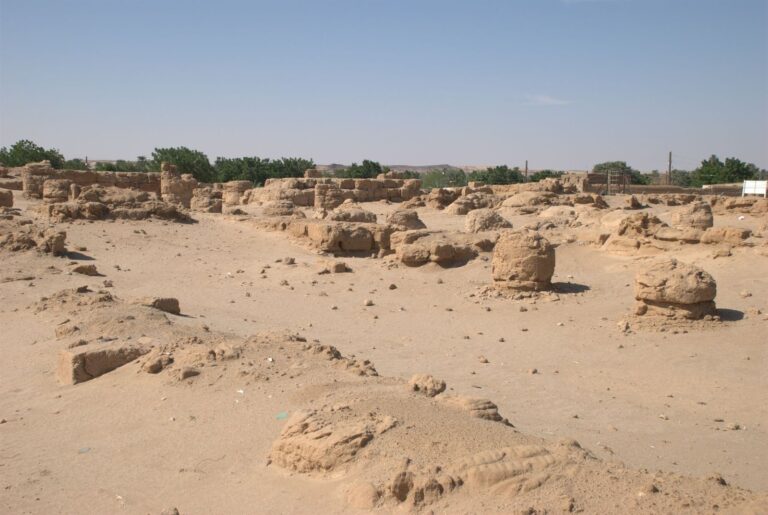
The ruins extend from Gebel Barkal, a sandstone promontory regarded as sacred, toward the Nile. The mountain rises above the valley in central Sudan near Karima, about 1.5 kilometres east of the river and downstream of its Fourth Cataract, a stretch of rapids and rocky shallows. Sanctuaries and burial grounds occupied the zone between desert and cultivated land. The wider site includes temples and palaces.
Temples
Temple of Amun
The temple of Amun stood near the sacred mountain and served as a major center of worship. It was enlarged and embellished during the Napatan period, then renewed under Natakamani. Its location linked the principal religious complex to the mountain associated with Amun of Napata.
Temple of Mut
The temple of Mut, a goddess worshipped alongside Amun, stood at the foot of Gebel Barkal. It formed part of the group of sanctuaries distributed through the wider area.
Royal pavilion and inscribed stones
Enthronement Pavilion
The earliest known standing structure at Gebel Barkal is the Enthronement Pavilion, built during the reign of Thutmose IV. Its purpose during the Eighteenth Dynasty is uncertain, but it served as a royal installation pavilion in the third century BC. Beside the cliff, it was damaged by rockfalls at different times in the third century BC and first century AD.
Stelae
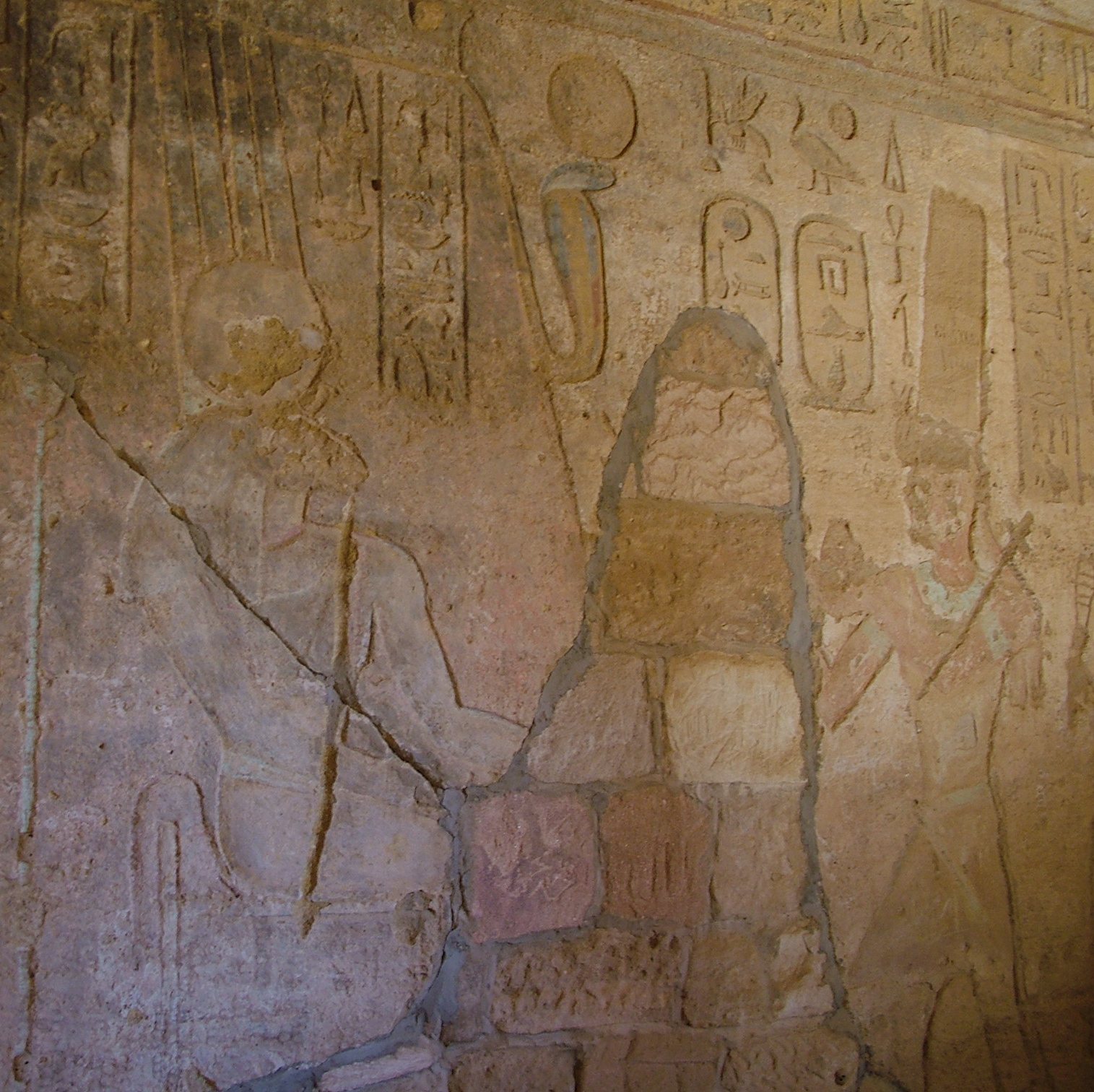
Several upright inscribed stone slabs, known as stelae, connect the site with its rulers and history. A stela of Thutmose III is associated with the southern limit of Egyptian expansion. Other examples include the eighth-century BC inscription concerning a Kushite king and Piye’s account of his campaign in Egypt.
Royal statues
The American archaeologist George A. Reisner excavated two caches containing ten complete or nearly complete royal statues. They depict Taharqa and later rulers, including Tantamani, Senkamenisken, Anlamani, and Aspelta. Fragments found in the second cache, inside the nearby Amun temple, matched statues from the first cache. Their proximity to the temple led to the suggestion that the statues had originally stood there. Ash in the second cache suggested to Reisner that the sculptures had been deliberately destroyed.