Pungnaptoseong: An Earthen Fortification in Seoul
Site at a Glance
- Popularity
- Medium
- Country
- South Korea
- Primary era
- Medieval
- Eras represented
- Medieval
- Civilizations
- Baekje
- Site type
- Military
- Remains
- Wall
History
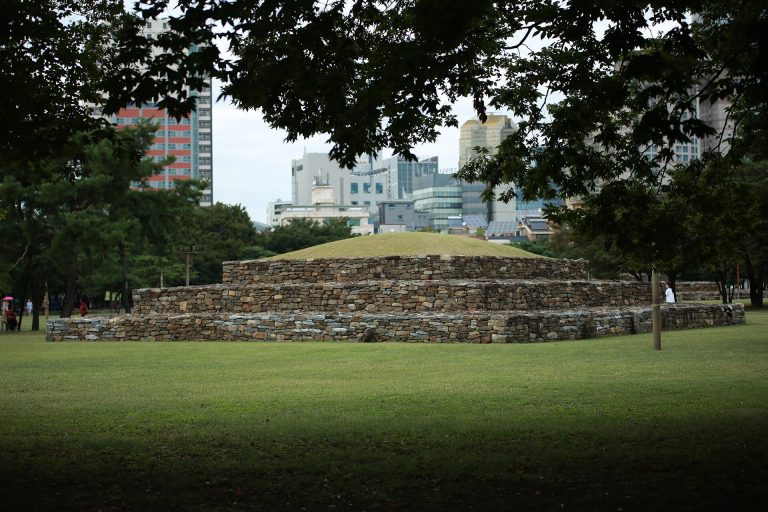
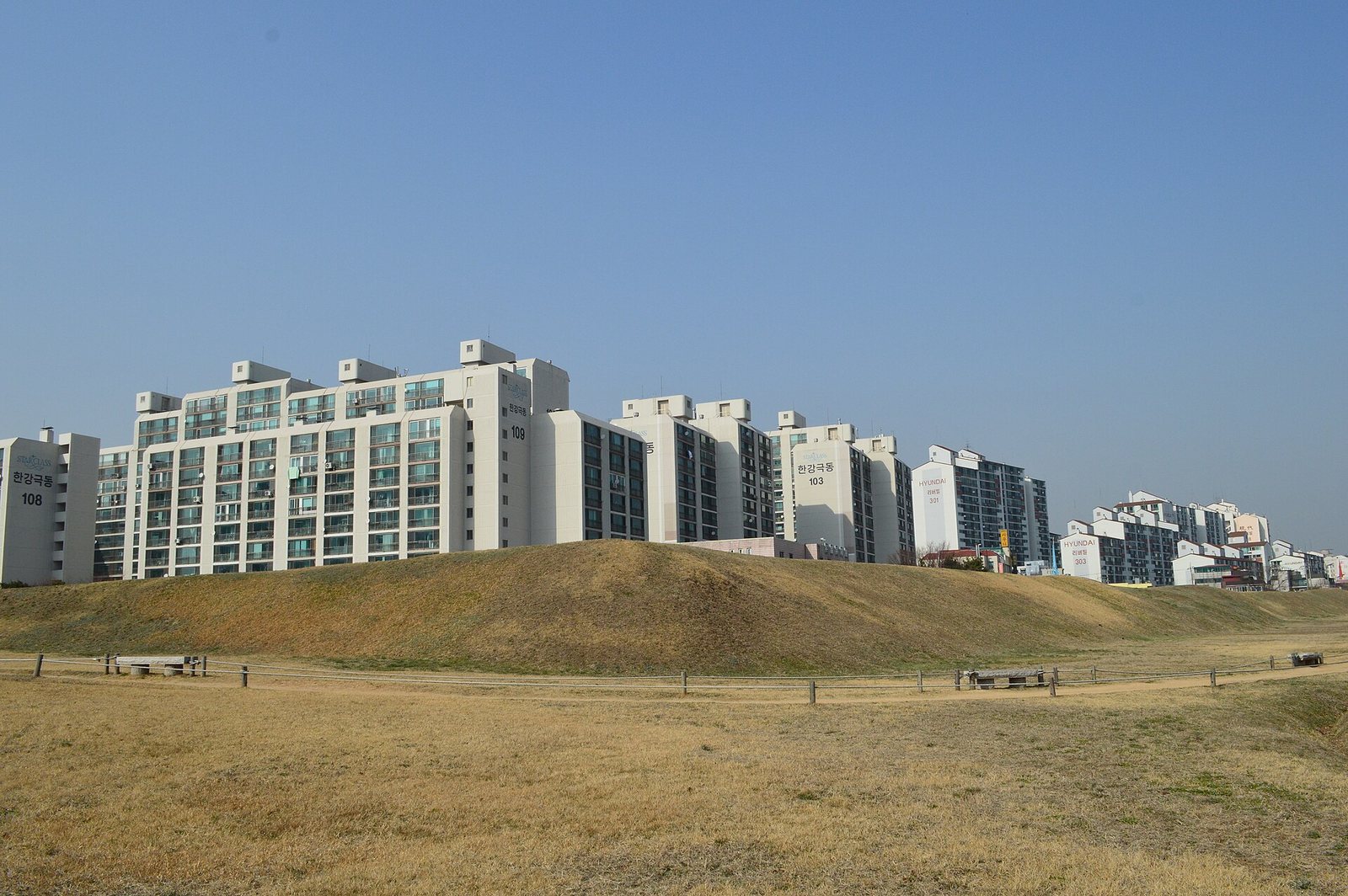
Pungnaptoseong is an earthen fortification beside the Han River in Pungnap-dong, Songpa-gu, Seoul, South Korea. It is widely identified with Hanam Wiryeseong, the first capital of Baekje, an ancient Korean kingdom. This identification was proposed through research conducted during Japan’s colonial rule of Korea.
The site was formerly included within the neighboring city of Gwangju. In 1963, South Korea designated it a Historic Site under the official title “Earthen Fortification in Pungnap-dong, Seoul.”
Remains
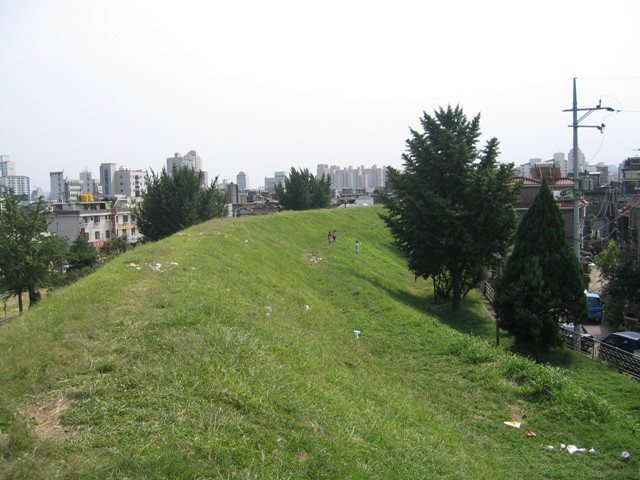
The fortification has a long, roughly north–south oval plan that tilts slightly east. About 2.7 km of wall survive. The full circumference, including the western wall destroyed by flooding, is about 3.5 km, and the area is nearly 859,508 m².
The inner wall was built from sandy soil, grit, clay-rich soil, and muddy soil, heaped in sloping layers. Three layers of pebbles covered the uppermost earthen layer. Trimmed stones were stacked inside the wall with mud made from natural soil, reaching 1.5 m high. The central section had a trapezoidal form; its lower part was 7 m wide and 5 m high.