Kounice Castle: A Renaissance and Baroque Castle in Czechia
Site at a Glance
- Popularity
- Medium
- Country
- Czechia
- Primary era
- Early Modern
- Eras represented
- Early Modern
- Civilizations
- Habsburg, Habsburg Austria, Holy Roman Empire, Kingdom of Bohemia
- Site type
- Domestic
- Remains
- Castle
On this page9 sections
History
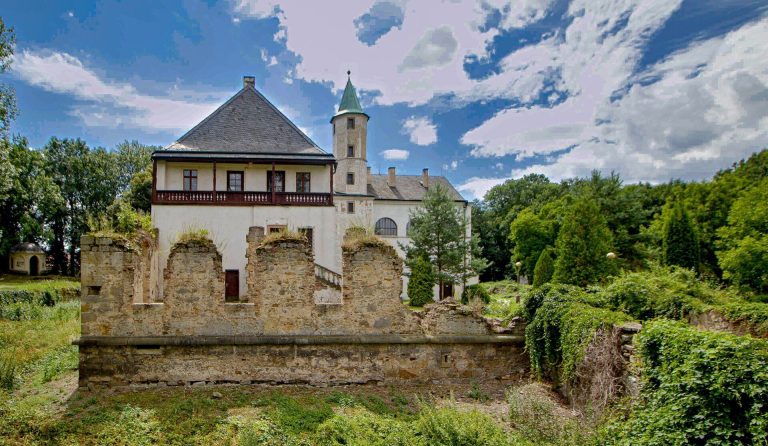
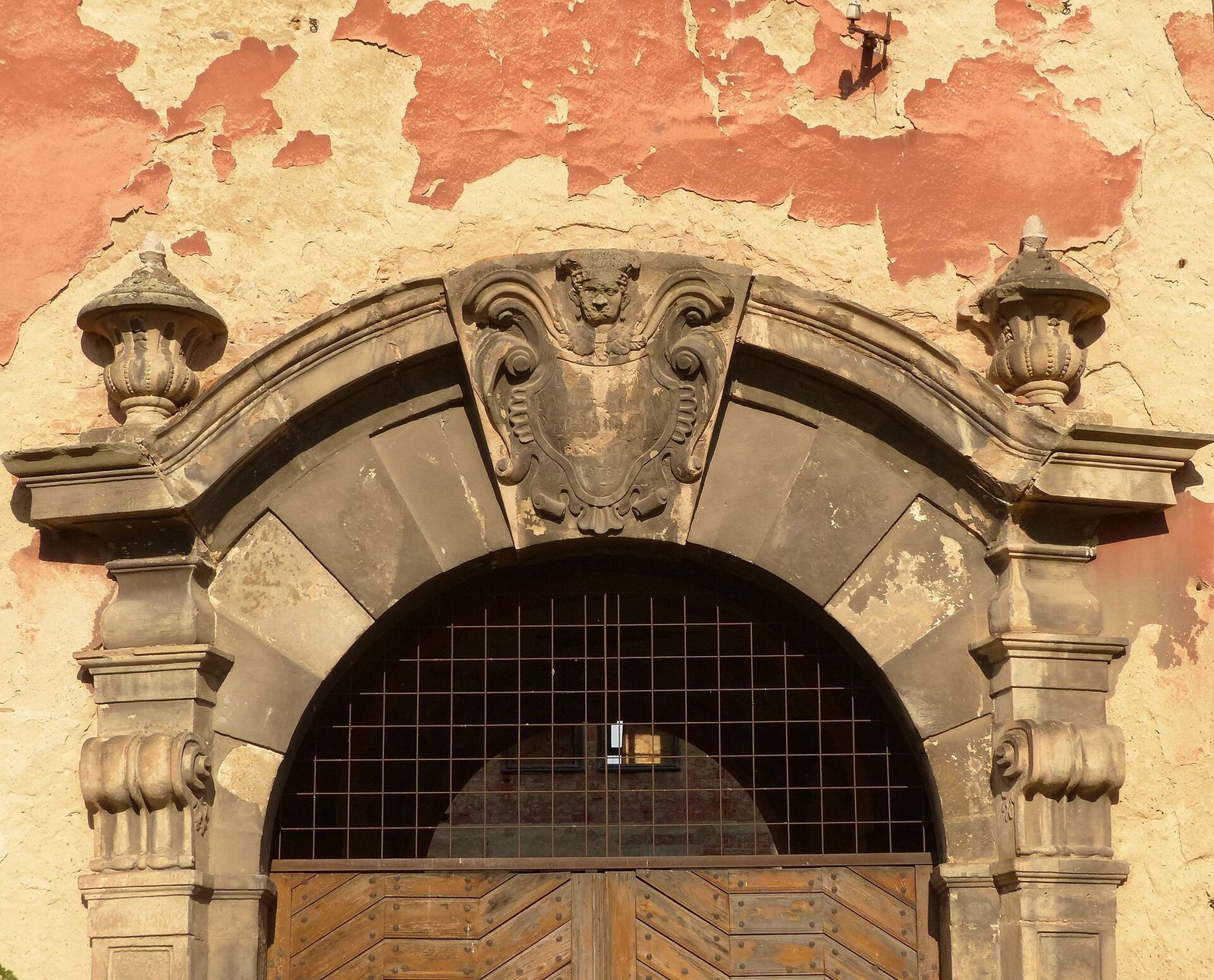
Kounice Castle stands in central Kounice, in the Nymburk district of Czechia, on the site of a fortress first recorded in 1554. Its architecture reflects the Renaissance, an earlier European artistic period, and the later Baroque style, known for more elaborate forms and decoration.
Fortress and castle
In 1554, the estate belonged to Jiřík Wachtl of Pantenov, a Bohemian noble landholder. He began building or rebuilding the fortress in Renaissance style in 1567. The work continued until 1593 and was probably completed by his son and heir, Jáchym.
In the early seventeenth century, Jan Rudolf Trčka of Lípa had the fortress rebuilt as a castle. This reconstruction is dated to 1612–1634. In 1634, the castle and the entire estate were confiscated.
Seventeenth- and eighteenth-century rebuilding
Construction continued in the second half of the seventeenth century under Count Arnošt Ferdinand de Suys. After his death, his wife, Klára Františka, born into the Thun family, kept financing the work and lived at the castle with their underage son. A fourth wing was added, though its construction was finished only under the next owners, the Counts of Morzin.
Under Count Václav of Morzin, the building was completed around 1719 and altered in Baroque style. The architect Jan Blažej Santini-Aichel worked for the count and may also have contributed to the castle’s alterations.
Liechtenstein ownership and municipal use
The House of Liechtenstein, a Central European noble dynasty, owned the castle from 1772 to 1924. During land reform, Kounice received the estate, while land was divided among Břežany, Černíky, Kounice, Limuzy, Přistoupim, Tlustovousy, Vykáň, and Vyšehořovice. Kounice also received land from the Horky farm near Chrást u Poříčan. The remaining estate, made up of scattered parcels, covered 148 hectares.
The municipality leased this holding to a tenant. In May 1939, its council decided not to renew the lease, to use the castle for municipal purposes, and to lease the 148 hectares to local small farmers. After the Second World War, the castle housed a school.
Damage and recent ownership
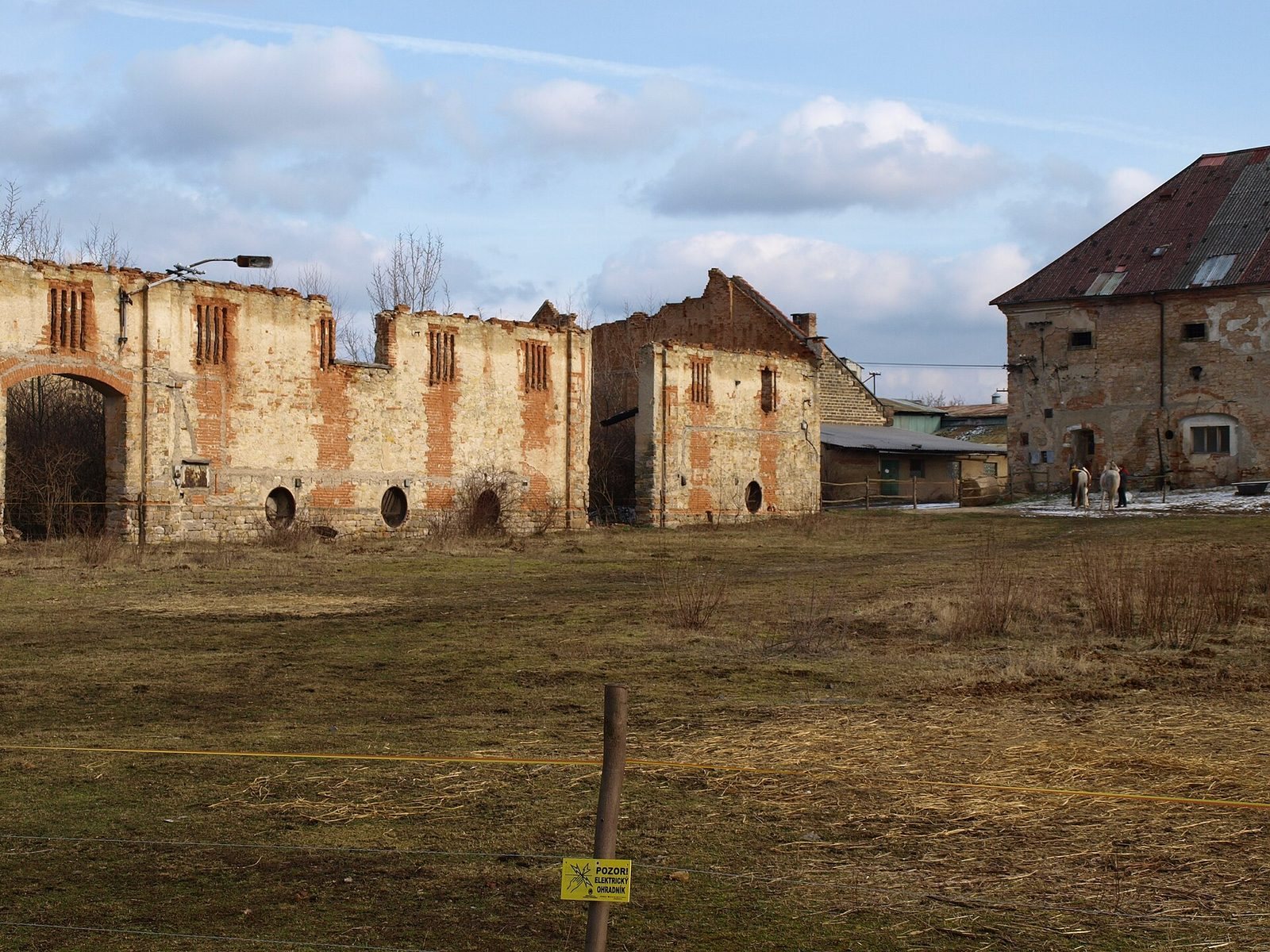
Alterations made in 1949 harmed the castle’s historic character. Its tower was removed in 1963, and reconstruction work in 1970 further diminished valuable architectural remains. In spring 1990, a fire destroyed the roofs and badly damaged the ceilings. A story blamed deliberate ignition intended to destroy files of Czechoslovakia’s State Security, its state security and intelligence apparatus, which were said to be in an attic archive. The official explanation attributed the fire to a chimney defect.
The municipality reroofed the building and restored the tower to the façade, but lack of funds left the reconstruction incomplete. In 2004, the municipality sold the castle to a company called Castle Kounice, owned by Danish citizen Michal Agerled. Plans to convert it into luxury apartments with community and sports facilities were not carried out, and the building continued to deteriorate. It has been offered for sale since 2018 and is privately owned. The castle is protected as a Czech cultural monument, a property safeguarded under Czech heritage law.
Remains
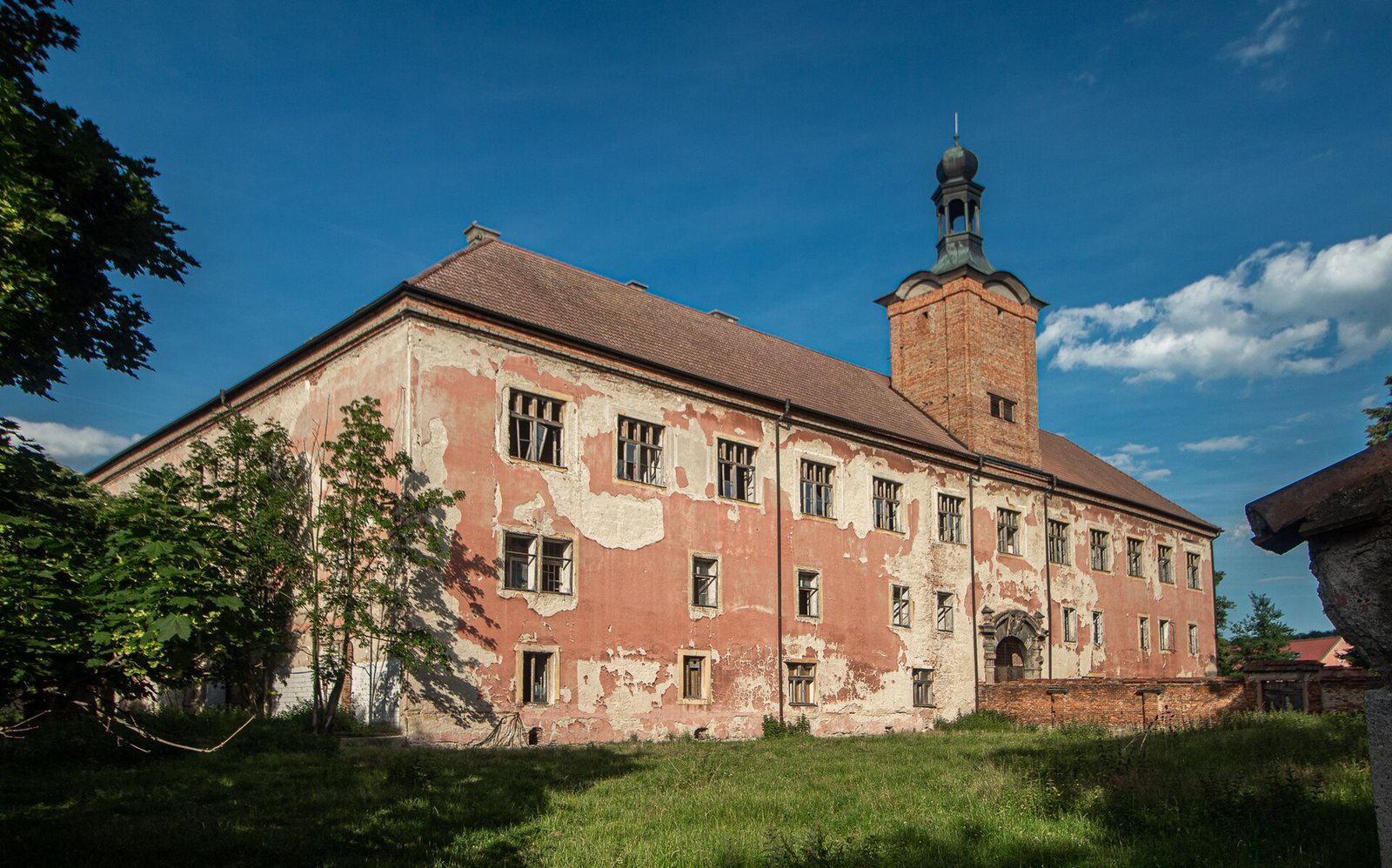
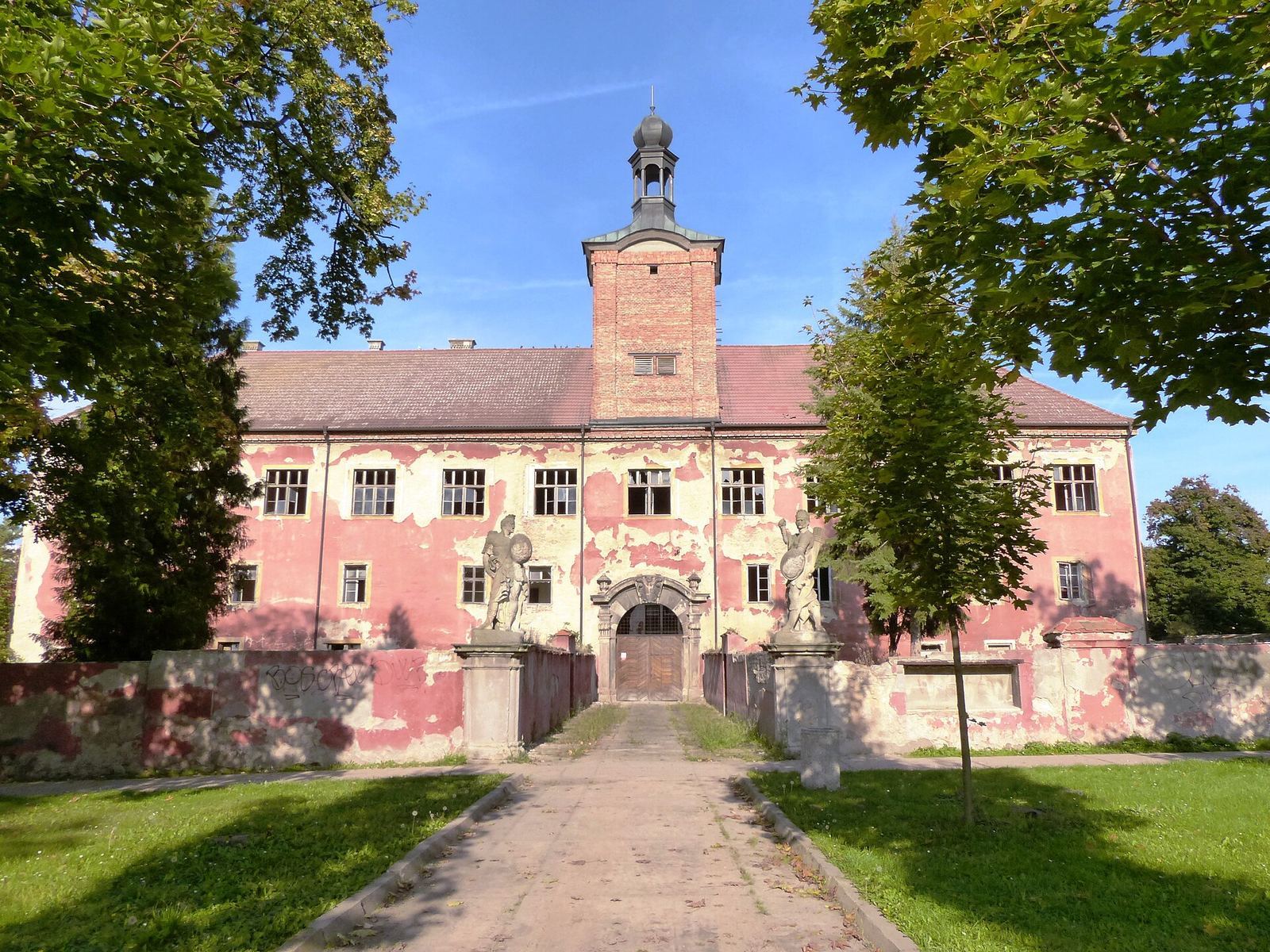
The castle combines Renaissance and Baroque architecture and occupies the site of the earlier fortress. Its plan developed from a representative three-wing building to include a fourth wing, and the complex also has a courtyard. The building is now derelict.
Tower and entrance sculptures
Clock tower
The square tower has a clock and a lantern roof, a raised structure above the roof. It was returned to the façade after being removed in 1963.
Entrance statues
Two statues of Moors by the Baroque sculptor Ferdinand Maxmilián Brokoff stood on pillars at the entrance. The original sculptures entered the collections of the National Gallery in Prague, the country’s principal public art museum, in 1965. Copies took their place at the castle.