Ulrepforte: A Medieval City Gate in Cologne
Site at a Glance
- Popularity
- High
- Country
- Germany
- Primary era
- Medieval
- Eras represented
- Medieval, Modern
- Civilizations
- German, Holy Roman Empire
- Site type
- Military
- Remains
- Gate
On this page14 sections
History
Ulrepforte is a medieval city gate in Cologne, Germany, built in the early 13th century as part of the city’s fortifications. It later became the site of a failed attack in 1268 that helped preserve Cologne’s independence.
Construction and medieval surroundings
Work on earthworks for Cologne’s planned semicircular defenses began in 1179. On 27 July 1180, Archbishop Philip of Heinsberg authorized the project. Construction of the wall began around 1200, and its 16 gates were built between 1220 and 1250. Ulrepforte was probably completed around 1230, among the first of these gates. It is documented in 1245, while its name appears in records from 1271.
The name refers to medieval potters, whose fire-prone work was carried out in less settled areas. Gardens and agricultural land surrounded the gate until the early 19th century.
The attack of 1268
On 10 January 1268, members of the Weisen and Overstolzen, two rival patrician families, clashed in Cologne. The Weisen attacked the Overstolzen at the Parfusenhof in an attempt to seize its owner, Count Wilhelm IV, who escaped. The Overstolzen fled to Mechtern monastery, and a crowd burned the Parfusenhof. They soon gathered about 300 men near Haus Heuberg by the Duffesbach and fought the Weisen. Mayor Weise was killed by Rütger Overstolz and Heinrich von Crane during a clash involving Mathias Overstolz. The Weisen left Cologne for Bonn, where they planned to regain control of the city.
The Weisen chose Ulrepforte as their way back into Cologne. They paid Konrad Havenith, who lived at Ulrichtstor, 25 marks to dig a concealed tunnel beneath the wall, intending to enter with 300 men. They secured support from Walram, Duke of Limburg, Count Dietrich of Kleve, and the exiled Archbishop Engelbert of Falkenburg. If successful, these allies intended to divide the city among themselves. Gottfried Hagen, a medieval Cologne city scribe, gives a different account in his verse chronicle, describing 5,000 men entering under Duke Adolf V of Berg.
The intrusion was discovered on the evening of 14 October. Mathias Overstolz quickly assembled about 40 men, and other defenders joined them, but he was killed. The attackers were killed, driven away or captured, including the Duke of Limburg on the morning of 15 October. The victory preserved Cologne’s independence, and the breach at the city wall was never repeated.
Conversion into a mill
A mill built around 1400, after the completion of the city wall, took its name from a nearby Carthusian monastery. The Carthusians were members of a Catholic monastic order. The mill is first documented in 1446 and later belonged to the monastery. Around 1450, the gate was blocked and its structures adapted for use as the Carthusian Mill, ending its defensive function. A rectangular, two-storey caponier, a fortified structure in the moat used to defend the ditch, was probably added during the 15th century.
Restoration and modern use
In 1885, entrepreneur Franz Carl Guilleaume acquired Ulrepforte and the mill from the city. Vincenz Statz restored the complex in 1886, and a restaurant opened there on 11 June. Antoinette von Guilleaume gave the property to Cologne in 1907.
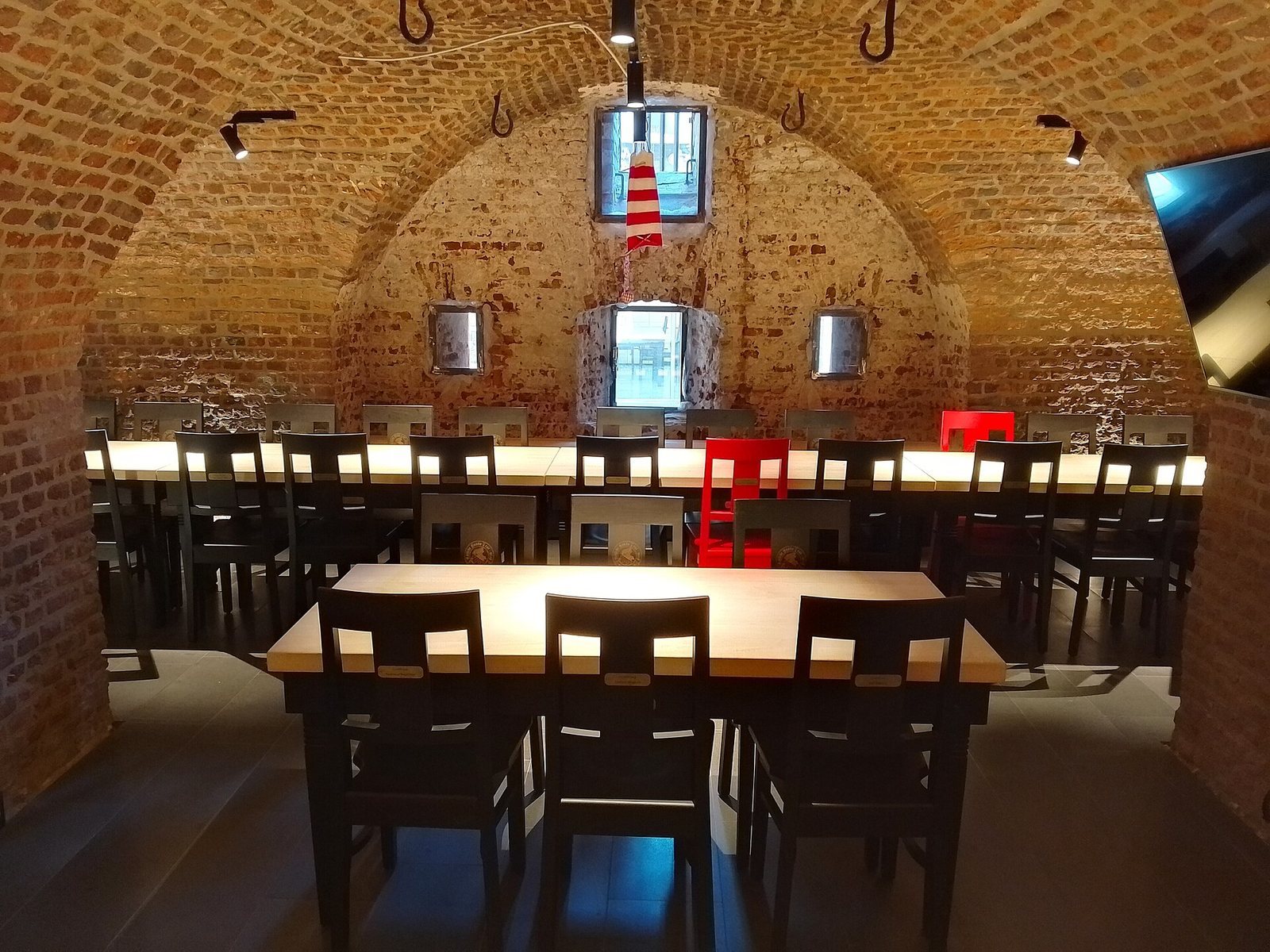
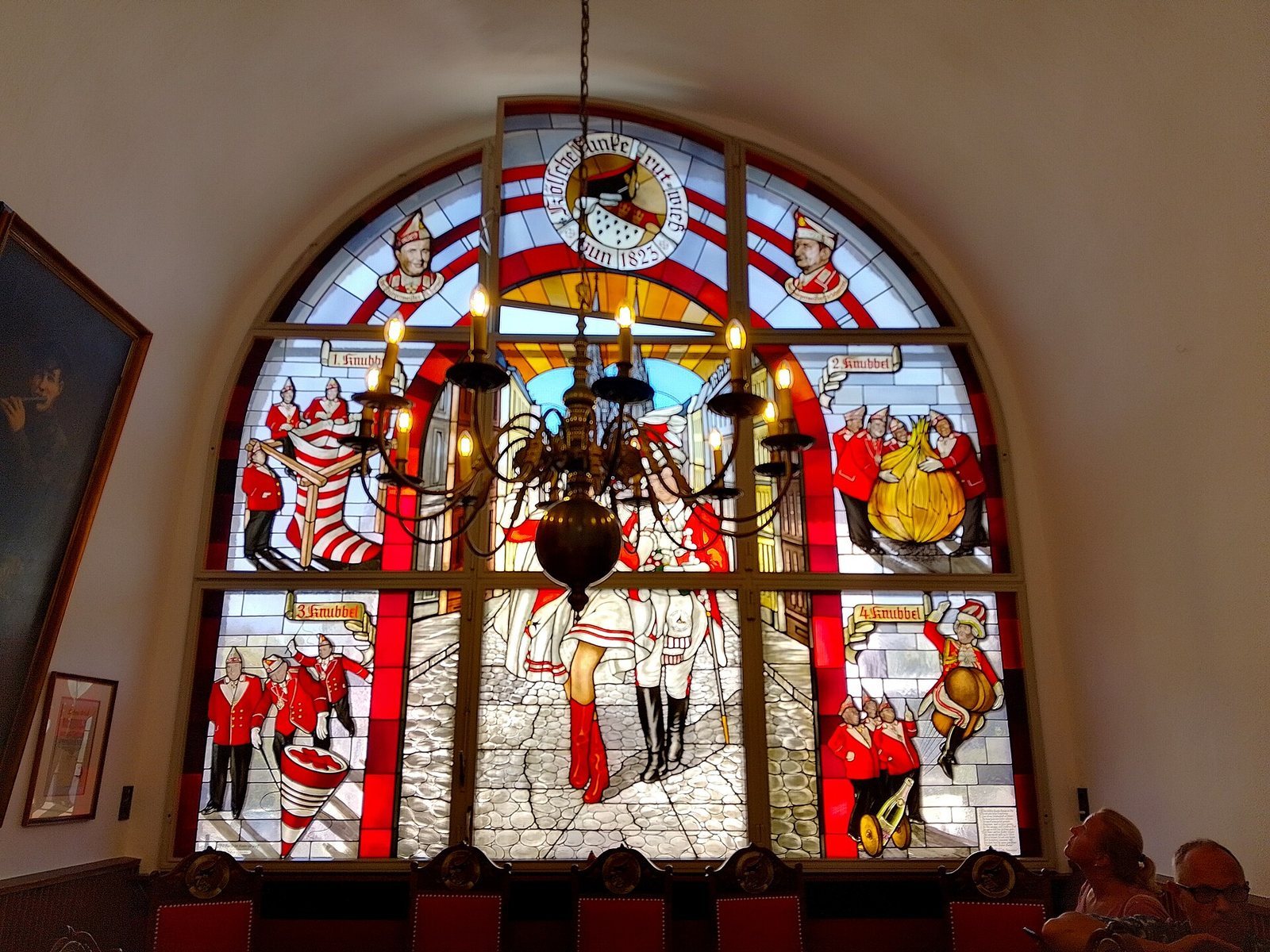
After the Second World War, the Rote Funken, a Cologne carnival society, leased the site. Rubble clearance began at their initiative on 24 September 1955, and the complex became the society’s headquarters after its inauguration on 30 September 1956. The Rote Funken and the Friends and Supporters of the Ühlepooz Fritz Everhan Foundation have since undertaken extensive restoration and maintenance. After wartime damage, the restaurant was removed from the caponier, revealing more of the structure.
Remains
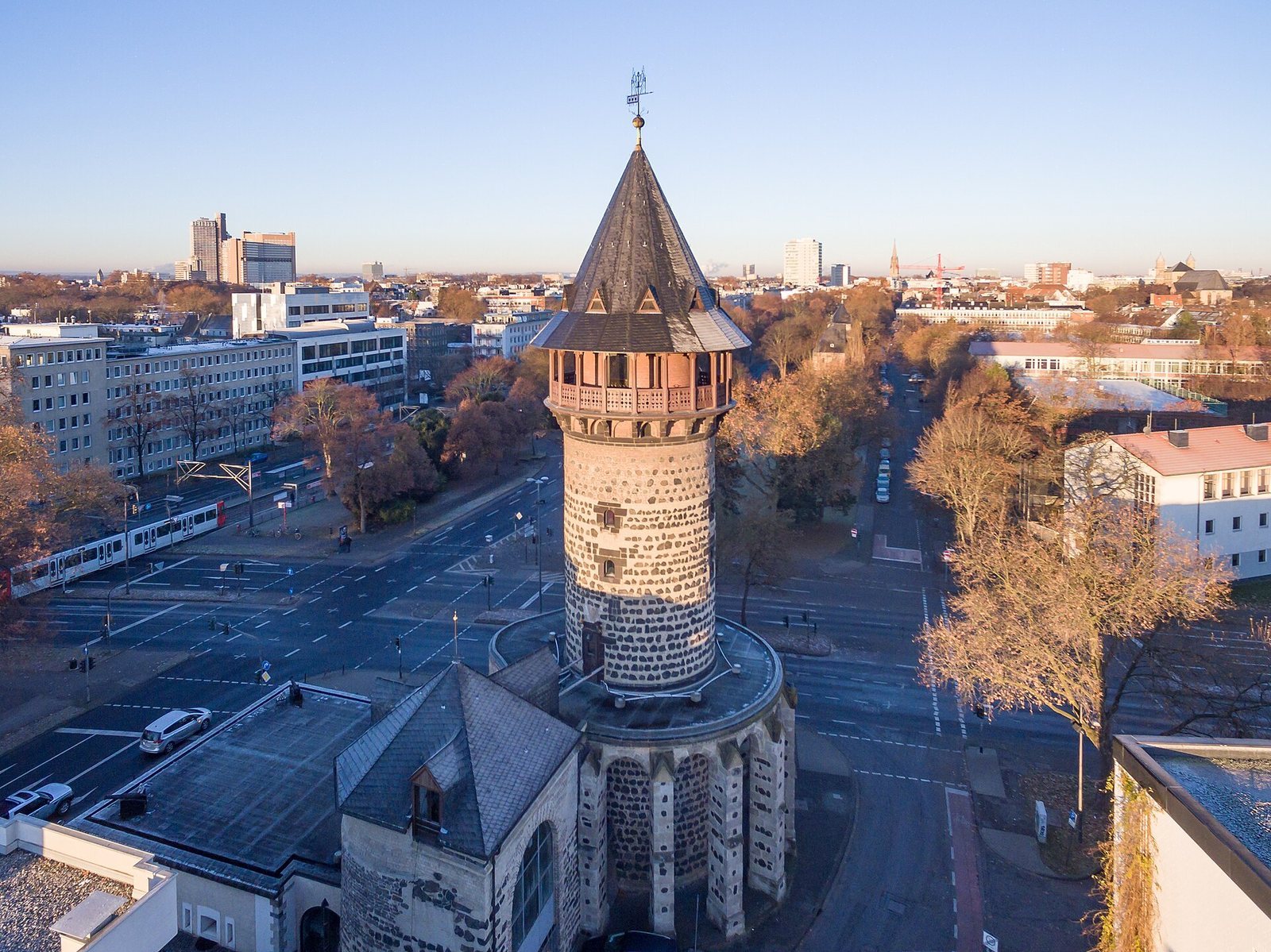
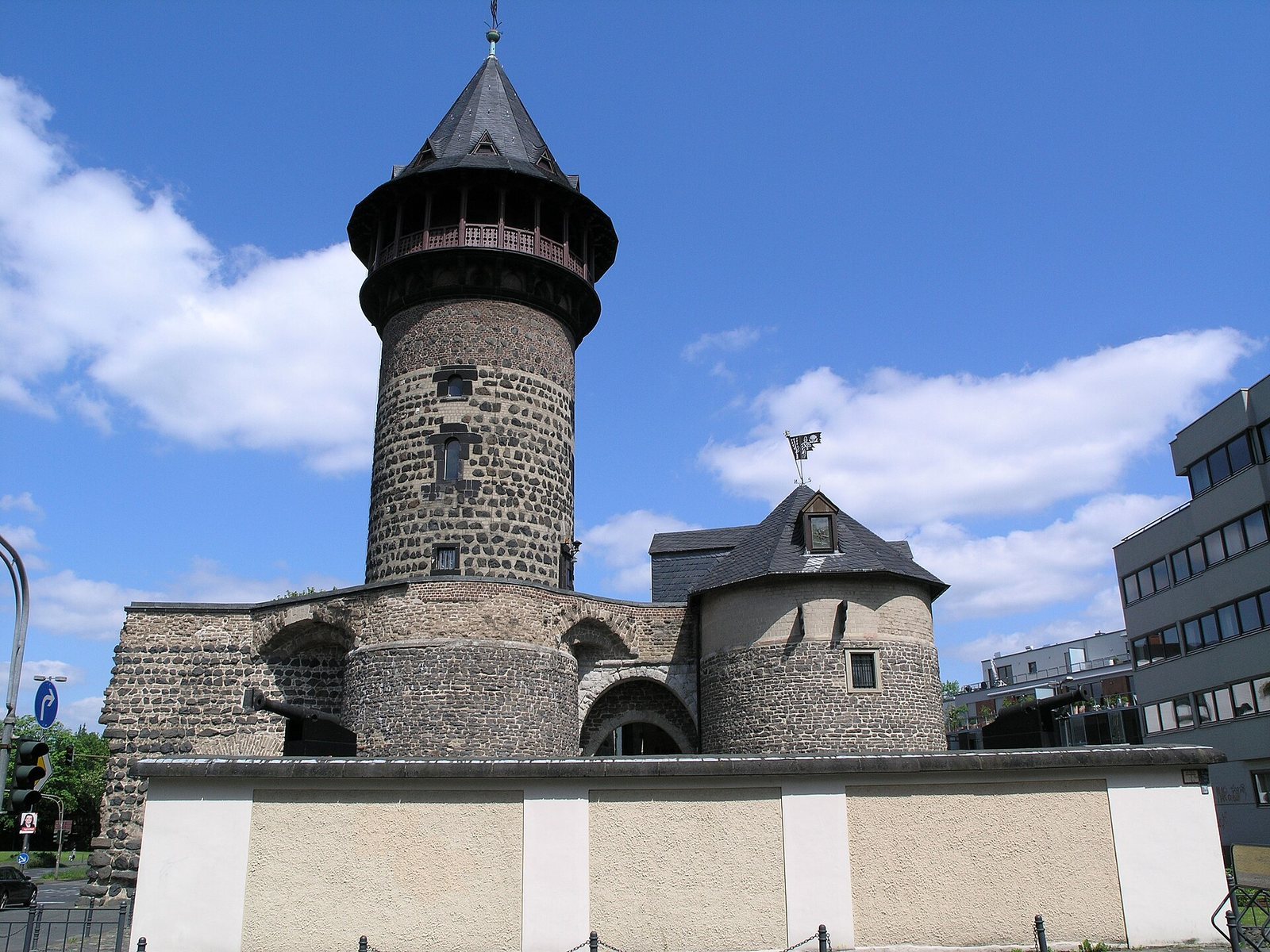
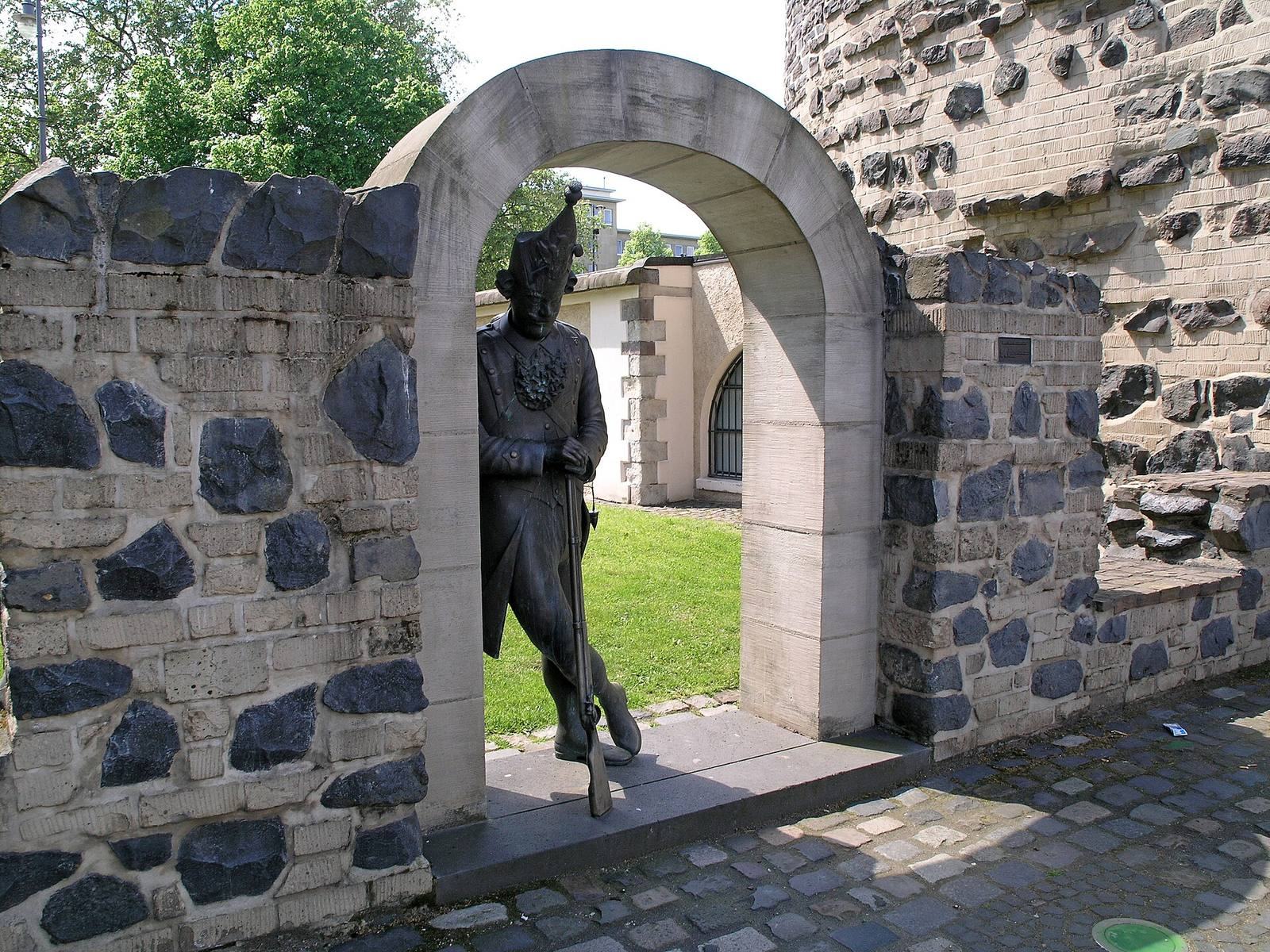
The surviving complex is a substantially altered medieval fortification, with a double-tower gate, a later mill tower and a defensive structure in the former moat. Ulrepforte stood between Kartäuserwall, Ulrichgasse and Sachsenring, which runs past the site. A further section of medieval wall, with a moat and two towers, survives about 200 metres to the west.
The gate complex
Gate passage and towers
The original gate had a multi-storey central block and a passage flanked by two semicircular towers that were open on the city side. The towers strengthened the wall and gave defenders protected positions from which to shoot along its outer face. At about four metres wide, the passage was the narrowest among Cologne’s landward gates. No country road continued beyond it on the field side, so the gate probably carried little traffic.
Mill tower
The mill tower was built on the city-facing side, against and above the northern half-tower. It stands 23.5 metres high and is first mentioned in 1446. Eight cross-vaulted ceilings, formed where barrel-shaped arches intersect, supported the gallery around the mill. On the outer side, the wall was raised by about one metre to accommodate the structure, and the change remains visible. The 1886 restoration added a roofed observation gallery. In 2007, the roof was covered again with Moselle slate using a traditional method that lays slate in courses of varying sizes.
Moat caponier
The rectangular, two-storey caponier stood in the moat in front of the gate. During Guilleaume’s conversion, it became a wine cellar, with dining rooms above. An observation room and a wooden gallery around the structure were added, and a pointed cap in a Gothic style replaced its earlier conical roof. The restaurant was later removed from the caponier.
Commemorative and surviving wall features
Battle relief
A relief commemorating the 1268 battle was placed in the city wall in 1360 and is first mentioned in 1378. Its inscription says the wall was breached there on the night before the feast of Saint Gregory Maurus, whose feast day is 15 October. The original relief has been in the Cologne City Museum since 1983; a copy is mounted on the outer side of the wall beside the northern tower. The relief is described as Cologne’s oldest monument to a historical event and possibly Germany’s oldest. It is thought to have helped preserve this section of wall.
Battle painting
A painting of the battle by Flemish artists Gustave Buschmann and Edouard Jean Conrad Hamman was long mistaken for a depiction of the Battle of Worringen. The wounded older man at the right is identified by his coat of arms as Mathias Overstolz. The young man near him is probably Gottschalk, while Costyn von der Aducht, one of the defeated, appears below. A supported figure on the left may be Walram of Limburg or Dietrich of Falkenburg, the archbishop’s brother; the two men bore the same coat of arms. The city wall in the background places the fight within Cologne and distinguishes it from the Battle of Worringen.
Western wall and towers
About 200 metres west of Ulrepforte, the surviving stretch on Sachsenring includes the medieval wall, its moat and two defensive towers. The eastern tower contains rooms used by the Blue Funken, another Cologne carnival society; the western tower is used by the Prinzen-Garde Köln. These groups, like the Rote Funken, connect themselves with Cologne’s former city soldiers and undertake to care for the wall remains.