Chlum u Třeboně Castle: A Historic Estate Residence in Czechia
Site at a Glance
- Popularity
- Medium
- Country
- Czechia
- Primary era
- Modern
- Eras represented
- Early Modern, Modern
- Civilizations
- Austria-Hungary, Habsburg, Holy Roman Empire, Kingdom of Bohemia
- Site type
- Domestic
- Remains
- Castle
On this page13 sections
History
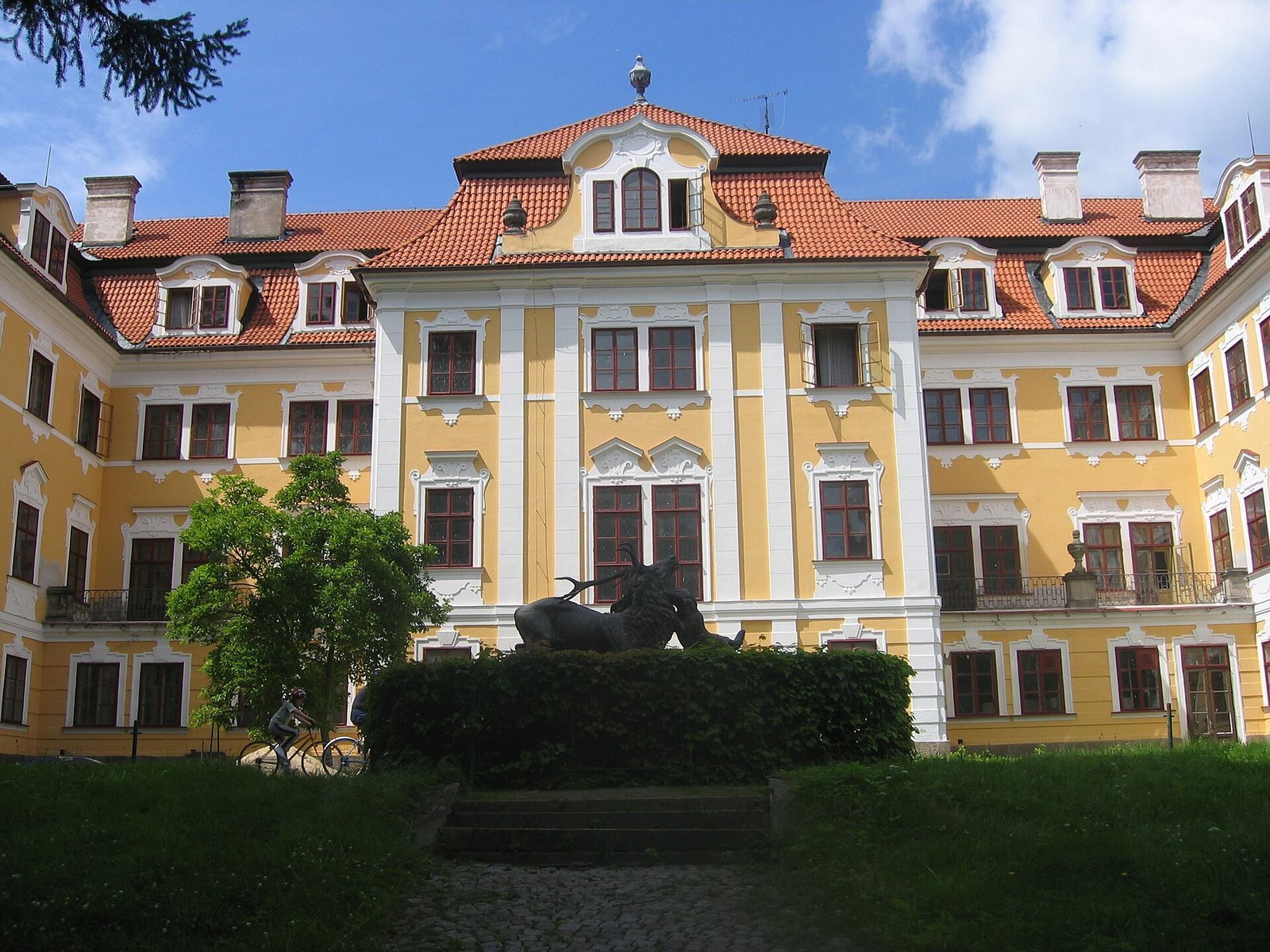
Chlum u Třeboně Castle is a historic estate residence in Czechia, commissioned by Jan František z Fünfkirchenu and built in 1710 in the Baroque style, an ornate European architectural tradition, on the site of a former fortress.
Estate formation and early ownership
Chlum is first recorded in 1395 as part of the Rosenberg estate of Třeboň. The estate’s older core comprised the small villages of Žíteč and Mirochov, and a forest district around Cep was later added. The Rosenbergs were one of Bohemia’s leading noble families.
In 1508, Kunrát Krajíř z Krajku acquired Chlum, Lutová, and Stříbřec from Petr z Rožmberka in exchange for Cep and its surrounding forests. After the Krajíř lands were divided, Chlum became a separate estate under Jiřík Volf Krajíř z Krajku in 1554. His son Julius later attached it to the Bystřice estate.
Aristocratic ownership
Kateřina Terezie, sister of the last Slavata, inherited Nová Bystřice and Chlum in 1693. Her husband, Jan Arnošt z Fünfkirchenu, belonged to a family that held Chlum until 1834. Jan Leopold transferred the estate to his younger son, Jan František, who commissioned the castle.
The Stadion family acquired the estate in 1834. In 1861, it passed to Francis V, the last reigning Duke of Modena, who arranged alterations to the castle. Franz Ferdinand d’Este, an Austro-Hungarian archduke and heir presumptive to the throne, inherited Chlum from his uncle in 1875 along with a substantial estate and other property.
State administration and interwar use
After Franz Ferdinand’s assassination, his daughter Sophie and younger sons Maximilian and Ernst took refuge at Konopiště during the First World War. The Hohenberg estates in Vienna administered Chlum until November 1918. On 3 May 1919, the Czechoslovak Ministry of Agriculture placed the estate under compulsory administration, meaning state-imposed oversight of property, with forestry councillor Ferdinand Trdlica in charge. The state planned to expropriate Chlum and Konopiště. The children’s guardian protested, and President Tomáš Garrigue Masaryk assured him that Maximilian would be recognized as Konopiště’s owner, while family inheritance arrangements assigned Chlum to Ernst. Masaryk also said that the state would take only a modest portion of the land. A 1921 amendment to the expropriation law explicitly extended it to Franz Ferdinand and his descendants.
In 1924, state authorities reorganized the estate’s management. The state forestry administration took charge of several local forest districts, while the State Farms and Ponds Administration received the Chlum estate, covering 6,696 hectares, including 2,083 hectares of agricultural land and ponds. In the late 1920s and early 1930s, Chlum became a fashionable summer resort. The castle was used mainly for recreation by Foreign Ministry employees and government officials. In 1929, Foreign Minister Edvard Beneš stayed for four weeks in a seven-room suite.
War and postwar uses
During the Second World War, the castle housed a German air-force storage depot. After the war, the complex was confiscated as German property and assigned to the Ministry of Agriculture, which established a state farm on the estate and transferred the castle building to the glassworks directorate.
The glassworks used the second floor for offices and converted the first floor into a municipal hall. A kindergarten and public library occupied the ground floor, and school classes operated in the castle from 1945 to 1953. The National Security Corps and later the Border Guard also used the ground floor; the Border Guard subsequently moved to new barracks at Medenice. The municipal national committee took over management of the park.
In 1969, the castle was sold to the Spolana national enterprise for one Czechoslovak koruna. Spolana and Montované stavby Praha repaired the building and converted it into a year-round recreation centre with 165 beds.
Recent ownership
The newly established Spolana joint-stock company took over the former state enterprise’s property in 1992. In 2008, the company’s principal shareholder changed, and the recreation centre was sold to the real-estate firm EST.IM.HO. A 2009 proposal to redevelop the castle and park, including the addition of spa-style buildings, was not carried out; the complex was offered for resale in 2012.
A private company, Zámek Chlum u Třeboně, bought the complex in 2022. Building alterations began without a building permit. Castle d’Este s.r.o. is identified as the current owner. The castle complex is protected as a cultural monument.
Remains
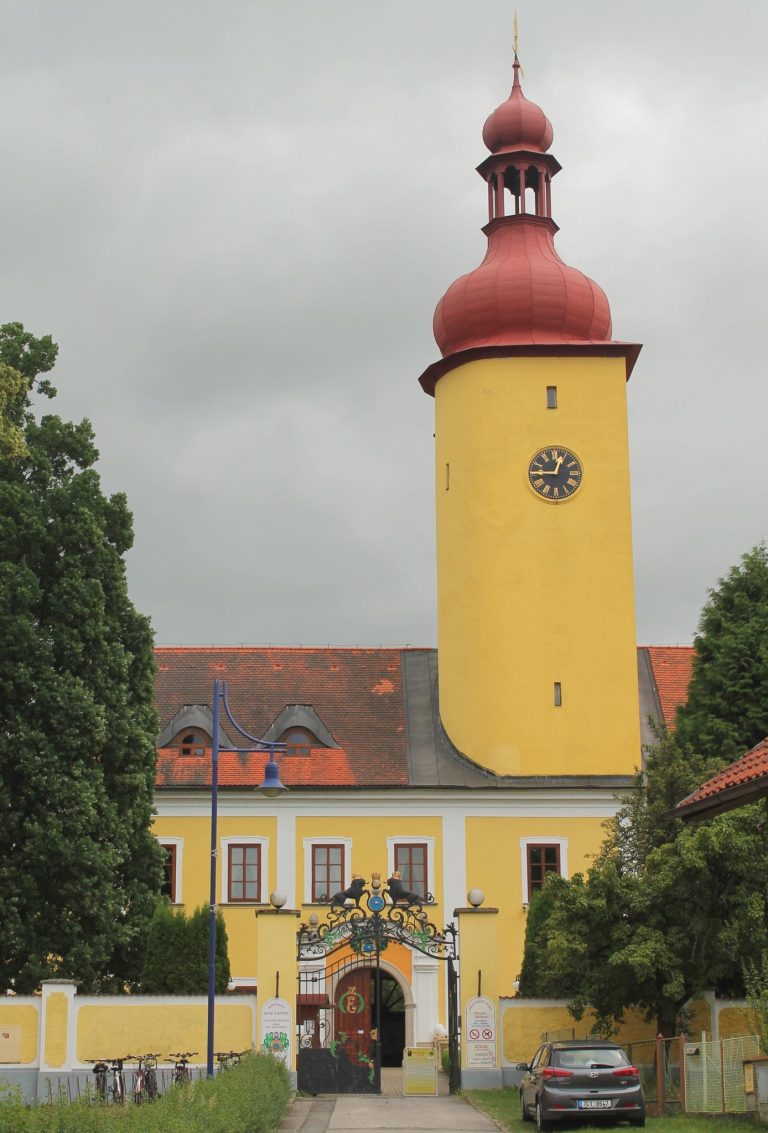
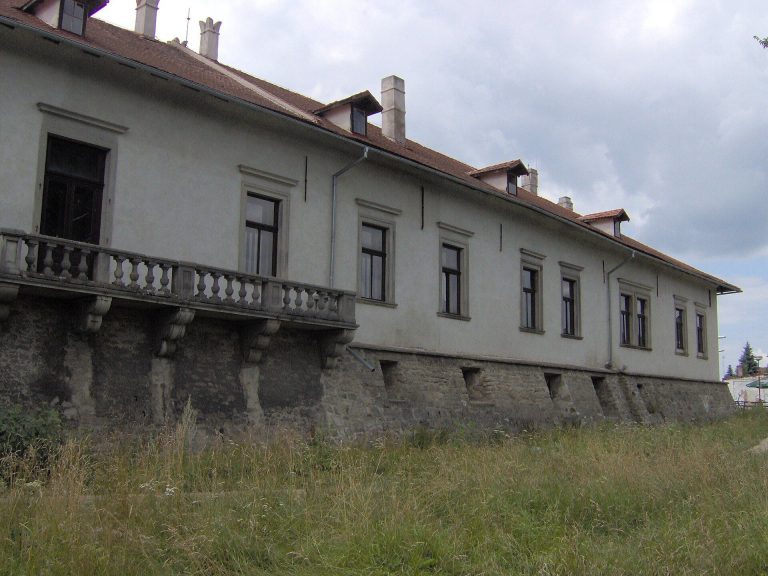
The complex includes the principal castle building, a garden pavilion, a northeast wing between them, and a park. The building’s later architectural character is neo-Baroque, a revival of Baroque forms.
Castle and grounds
Main building
The original castle had two storeys. Its last surviving remains were demolished in 1876, and further rebuilding in 1901 to 1903 established its present neo-Baroque appearance. Heinrich Johann Leopold Gerl, also known as Heinz Gerl, designed this later form.
Northeast wing
The northeast wing, positioned between the main building and the garden pavilion, was rebuilt from 1872 to 1875. It contained a dining room and a billiard room.
Marian chapel
A Marian chapel, dedicated to the Virgin Mary, was established at the castle in 1746.
Main entrance
In 1876, an archducal coat of arms was placed above the main entrance, with a fresco of Saint Procopius, a Bohemian abbot and Christian saint, beneath it. A chiming clock was set at the top of the gable.
Park
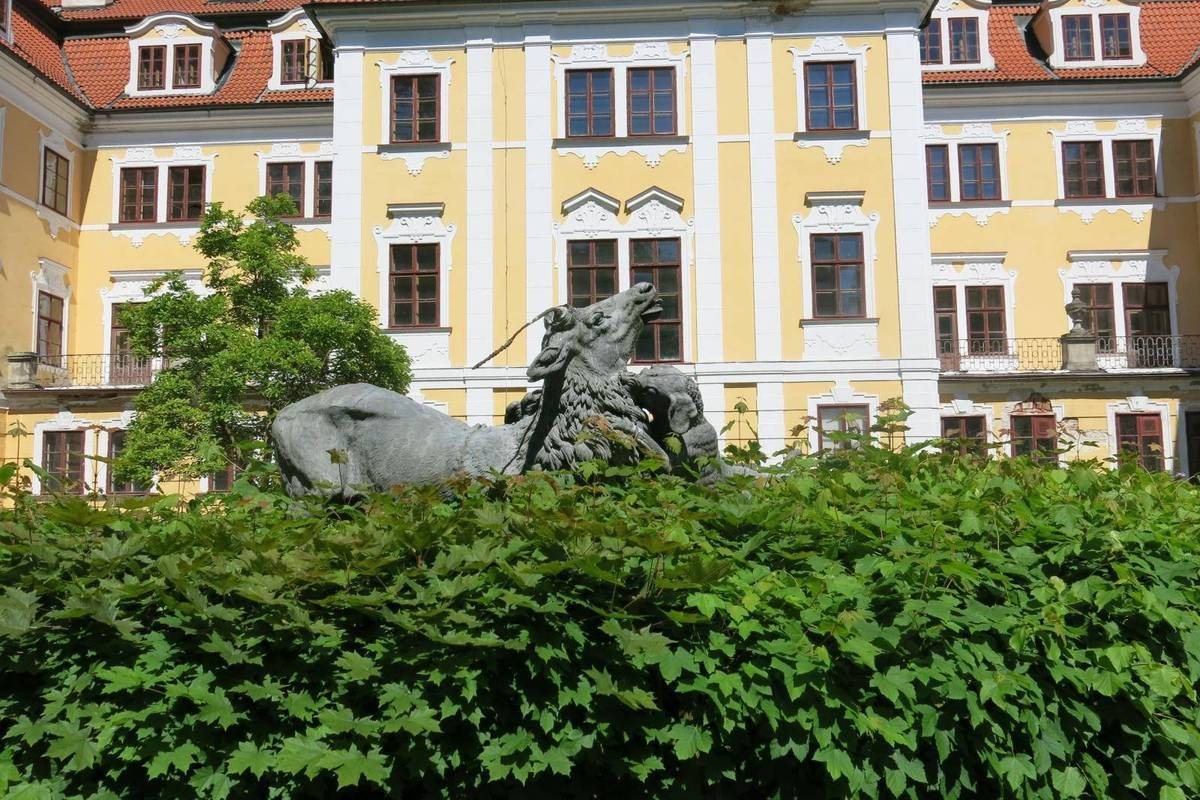
The castle park forms part of the complex. During the 1969 reconstruction, the park was renewed and its statues were repaired.