Zichy Mansion in Seregélyes: A Neoclassical Aristocratic Residence
Site at a Glance
- Popularity
- Medium
- Country
- Hungary
- Primary era
- Modern
- Eras represented
- Modern
- Civilizations
- Austrian Empire, Habsburg, Hungarian
- Site type
- Domestic
- Remains
- Elite Residence
On this page10 sections
History
The Zichy mansion in Seregélyes is a Neoclassical aristocratic residence in Hungary, commissioned in 1821 by Count Ferenc Zichy. Neoclassical architecture draws on forms and motifs from ancient Greek and Roman buildings. Zichy, a Hungarian aristocrat who served as finance minister in the Habsburg Monarchy, the Central European realm ruled by the House of Habsburg, probably had the mansion designed by Mihály Pollack.
Construction and imperial visit
An uncertain family tradition connects the hurried construction to Emperor Francis, who ruled as Francis II of the Holy Roman Empire and Francis I of Austria. The story says Francis told Zichy he intended to stay at the estate during military maneuvers in Fejér County the following year. Zichy then had the mansion built in eight months, with the aim of having it ready by 1822. Francis eventually stayed there for two nights in 1826.
The Zichy and Hadik families
The estate passed to the Hadik family in 1893, when Count János Hadik married Countess Alexandra Zichy, the heir. Their wedding celebrations lasted three days at the mansion. Its last aristocratic residents were Count Béla Hadik and his wife, Countess Alice (Aliz) Széchenyi, daughter of Count László Széchenyi. Amid the hardships of the Second World War, the couple emigrated and later died abroad. Both were buried in the family burial ground at Seregélyes.
War damage and changing uses
The mansion suffered serious damage during the Second World War. German and Soviet soldiers took most of its valuables, only a small portion of which was recovered, while furnishings were removed or destroyed. After the war, the Hungarian state acquired the mansion and park. The building stood empty for a time before becoming a Videoton factory warehouse in the early 1950s.
In 1976, workers in the park discovered a concealed collection while cutting down a tree. The emigrating couple probably buried it, perhaps hoping to retrieve it if they returned to rebuild their lives at the estate. The collection became state property. Work to adapt the mansion as a holiday and training centre began in 1982, and it served those purposes before later operating as a three-star hotel until 2008. It subsequently stood empty. The park is protected as both a natural asset and a historic monument.
Remains
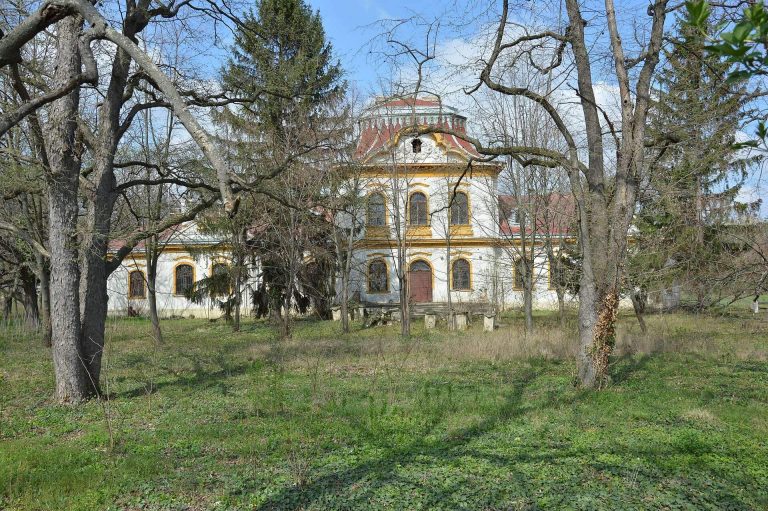
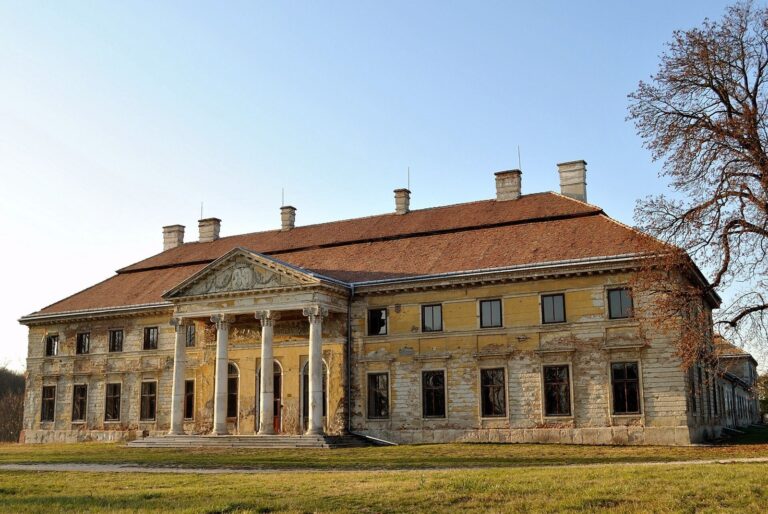
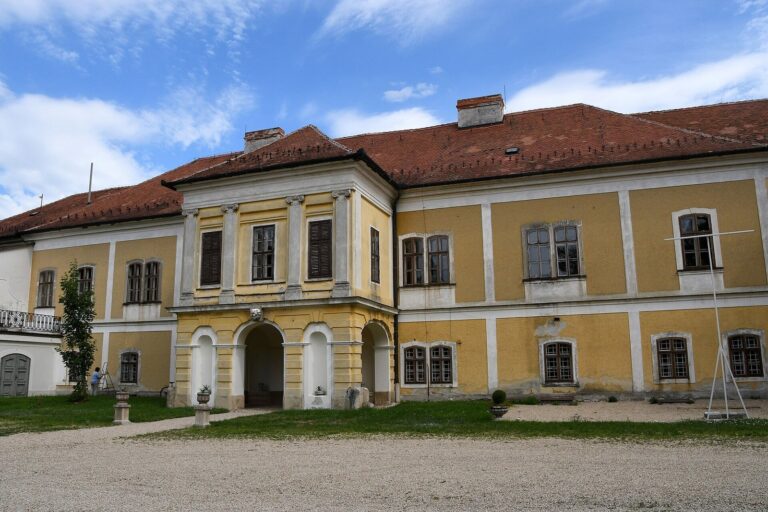
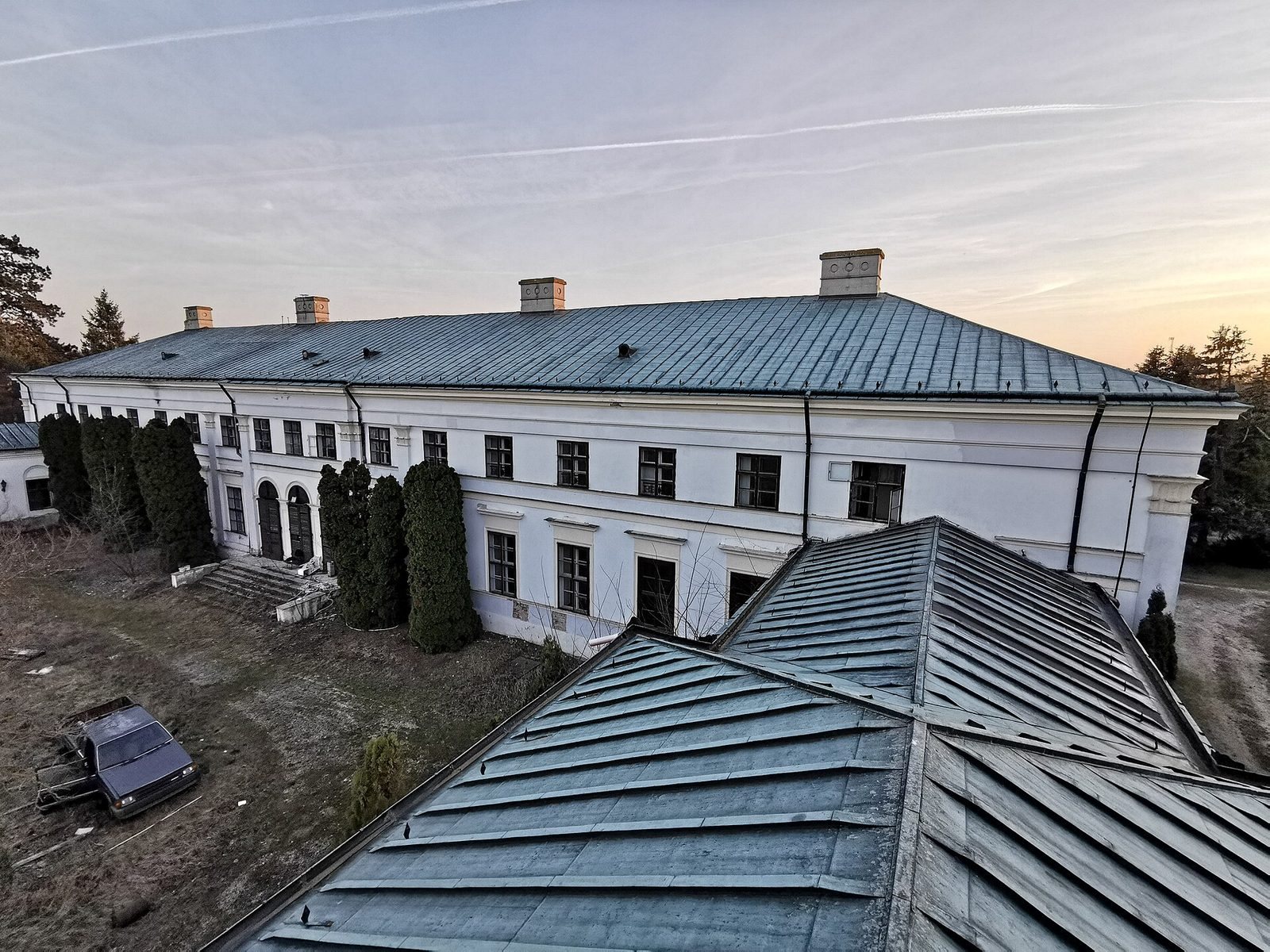
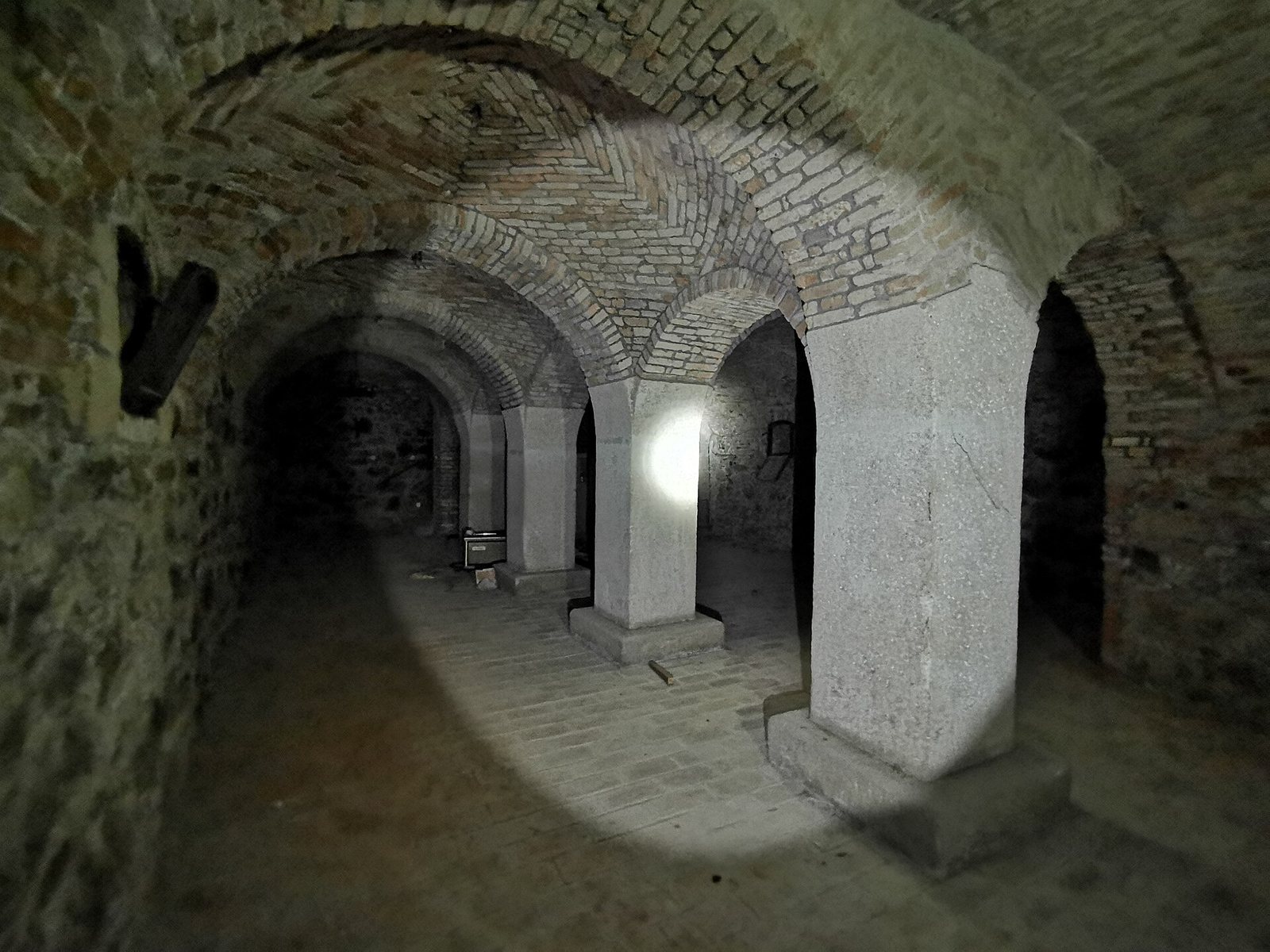
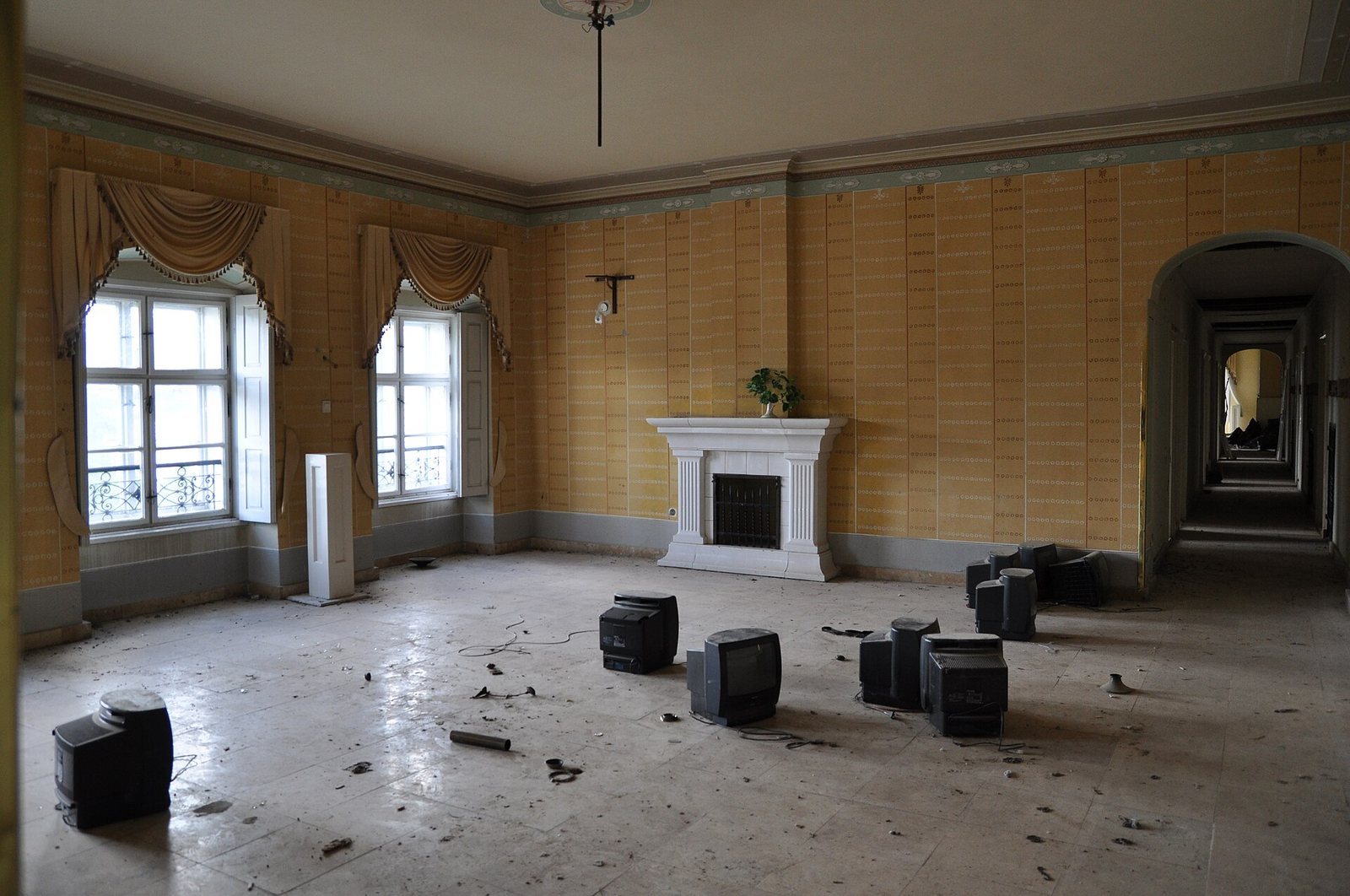
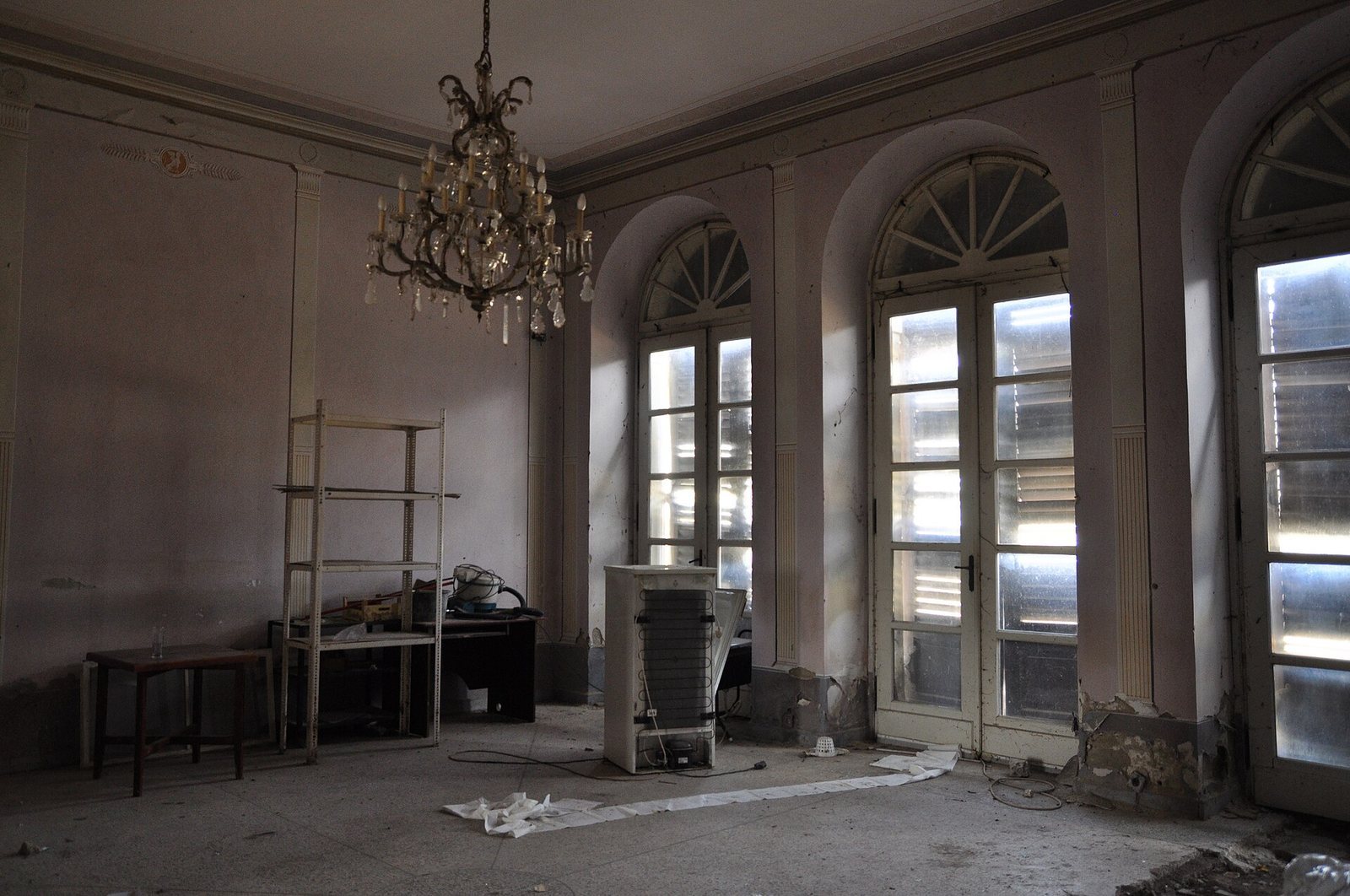
Set apart within a large park, the mansion has a symmetrical U-shaped plan and a footprint of 4,000 square metres. Its taller central wing rises two storeys, while the side wings are single-storey. The building is empty and significantly deteriorated.
The mansion
Exterior
A four-column portico, or columned entrance porch, marks the centre of the main facade and shelters the principal entrance. Above it, a triangular pediment, the gable-like feature over the porch, bears the Zichy family coat of arms. Roman-era themes and motifs appear on the exterior as well as inside.
Interior
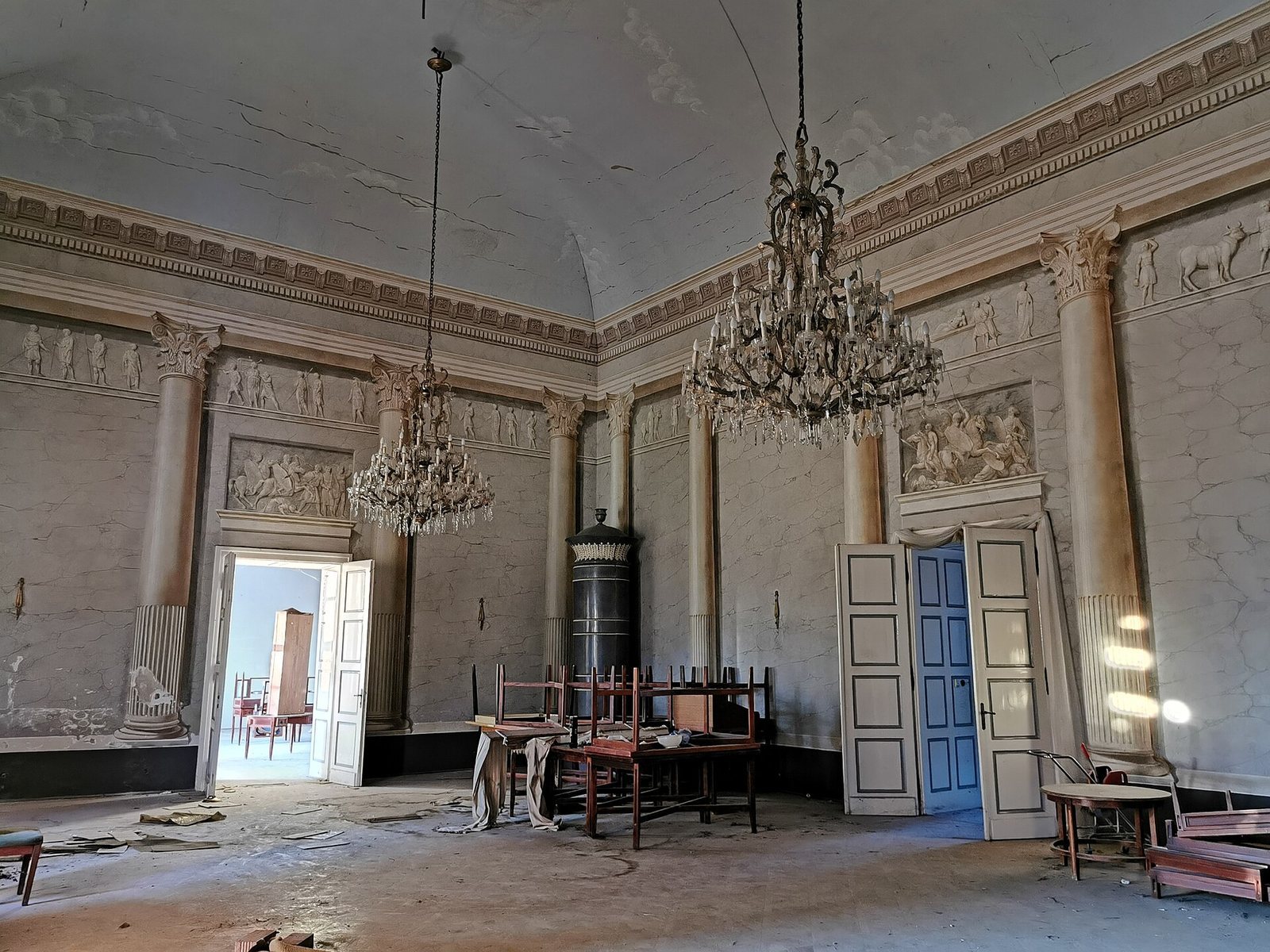
Count Zichy commissioned Ferenc Pilch, a painter from Székesfehérvár, to decorate the rooms and halls. In the great hall, shading makes the painted forms appear three-dimensional. A bedroom on the ground floor was prepared for Emperor Francis’s stay.
Park and garden features
The grounds were arranged as an English landscape garden, designed to evoke a natural rather than strictly geometric landscape, and planted with exotic species. They also included a palm house, a gardener’s house, a pond, a boathouse, and a watermill.
Recovered collection
The collection was contained in an iron lockbox and a wooden chest and comprised about 500 objects. These included silver and silver-gilt cutlery, vessels, medallions, pouches, small boxes, jewelry, and other valuables. Some pieces are from the nineteenth century or earlier, while most date from the early twentieth century. The King St Stephen Museum in Székesfehérvár holds the collection and exhibits objects from it on occasion.