Église Saint-Pierre in Chartres: The Former Abbey Church of Saint-Père-en-Vallée
Site at a Glance
- Popularity
- Medium
- Country
- France
- Primary era
- Medieval
- Eras represented
- Medieval, Modern
- Civilizations
- French
- Site type
- Religious
- Remains
- Church
On this page14 sections
History
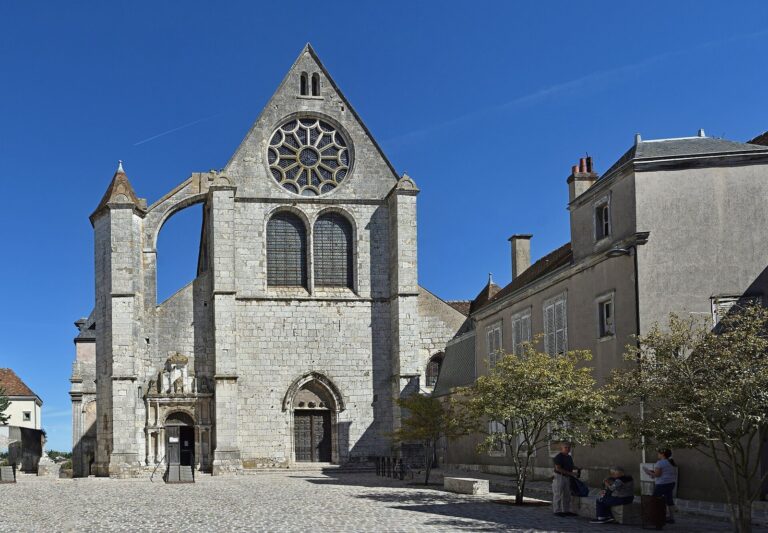
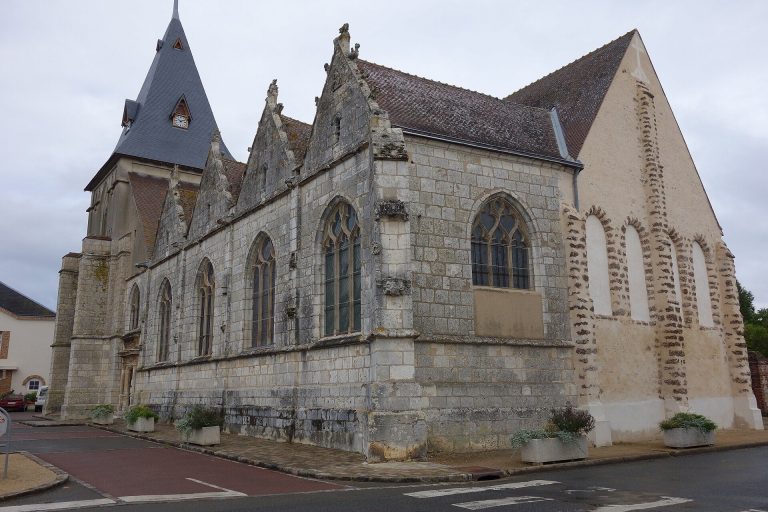
Église Saint-Pierre in Chartres, France, is the former abbey church of Saint-Père-en-Vallée, a Benedictine monastery whose monks followed the Rule of Saint Benedict. Rebuilt after fires in 1077 and 1134 and completed around 1320, the church is predominantly Gothic. It served the abbey until the French Revolution and became a parish church in 1803.
The abbey and the rebuilding of its church
The abbey was established by the seventh century, before the time of Bathilde, a Frankish queen. She probably did not found it, but supported the growth of its revenues. The Normans destroyed the monastery in 858 and again in 911. Around 930, Aganon, bishop of Chartres, rebuilt it; he was later buried there.
Fires in 1077 and 1134 destroyed most of the church, leaving its western tower standing. Abbot Foucher, the head of the abbey, then began a complete rebuilding while retaining that tower. Saint Gilduin, a medieval French saint, died in 1077 while making a pilgrimage to the abbey and was buried in the church choir, the area around the main altar. His tomb was discovered in 1165, attracting pilgrims and donations that supported further work on the choir. The rebuilding continued through the thirteenth century, and the church was completed around 1320.
Later abbey and parish church
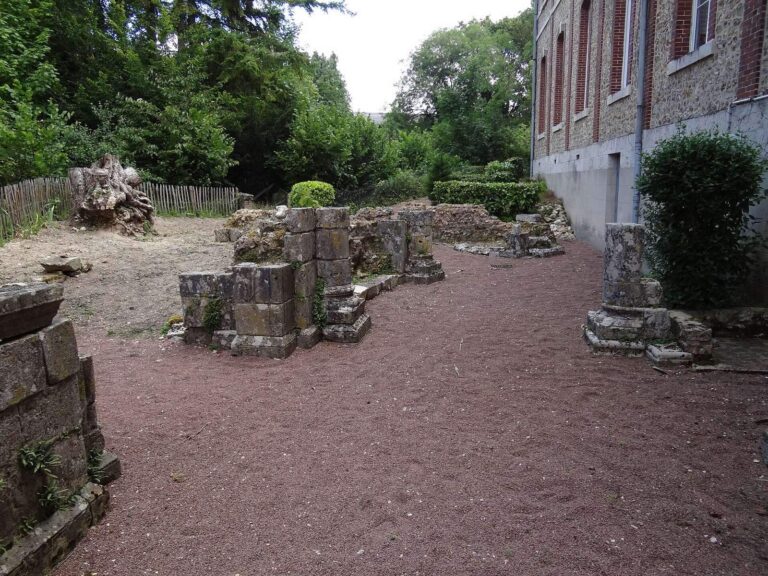
The abbey’s north gallery around the cloister, a covered walkway enclosing a courtyard, was rebuilt in the thirteenth century, and the entire cloister was rebuilt in 1408. A fire destroyed the dormitory in 1584; its replacement was completed in 1609. The abbey buildings were renovated between 1700 and 1709.
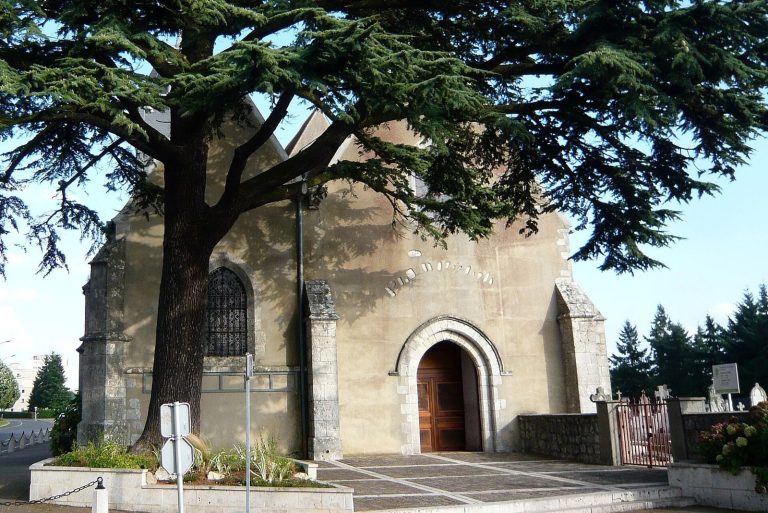
During the French Revolution, the cloister was demolished, and the church was stripped of much of its furnishings and used as a saltpeter factory. Saltpeter, or potassium nitrate, was used to make gunpowder. The remaining abbey buildings served first as cavalry barracks and later housed a secondary school, a museum, and a military hospital. In 1803, the church became a parish church and took the name Saint-Pierre. It is a Catholic church in the Diocese of Chartres, within the Notre-Dame parish and the Chartres deanery, a group of parishes within a diocese. It has been classified as a French historic monument since 1840.
Remains
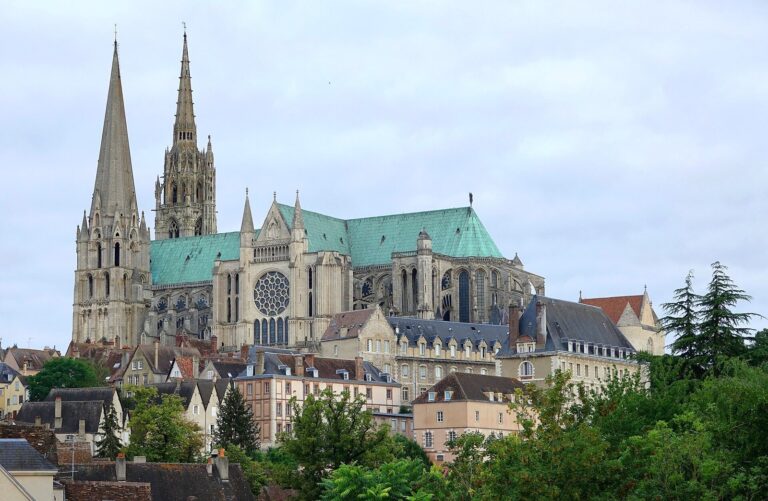
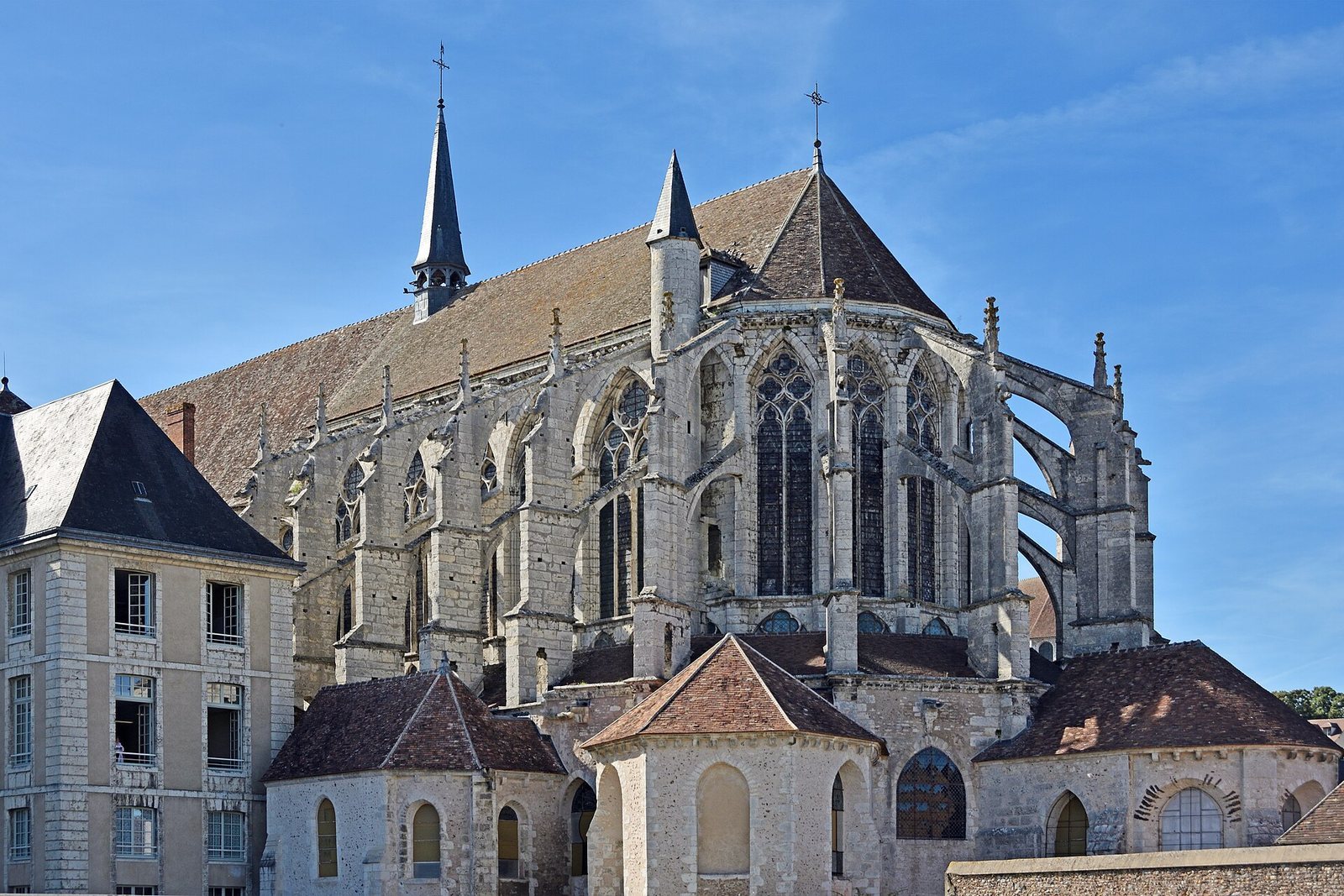
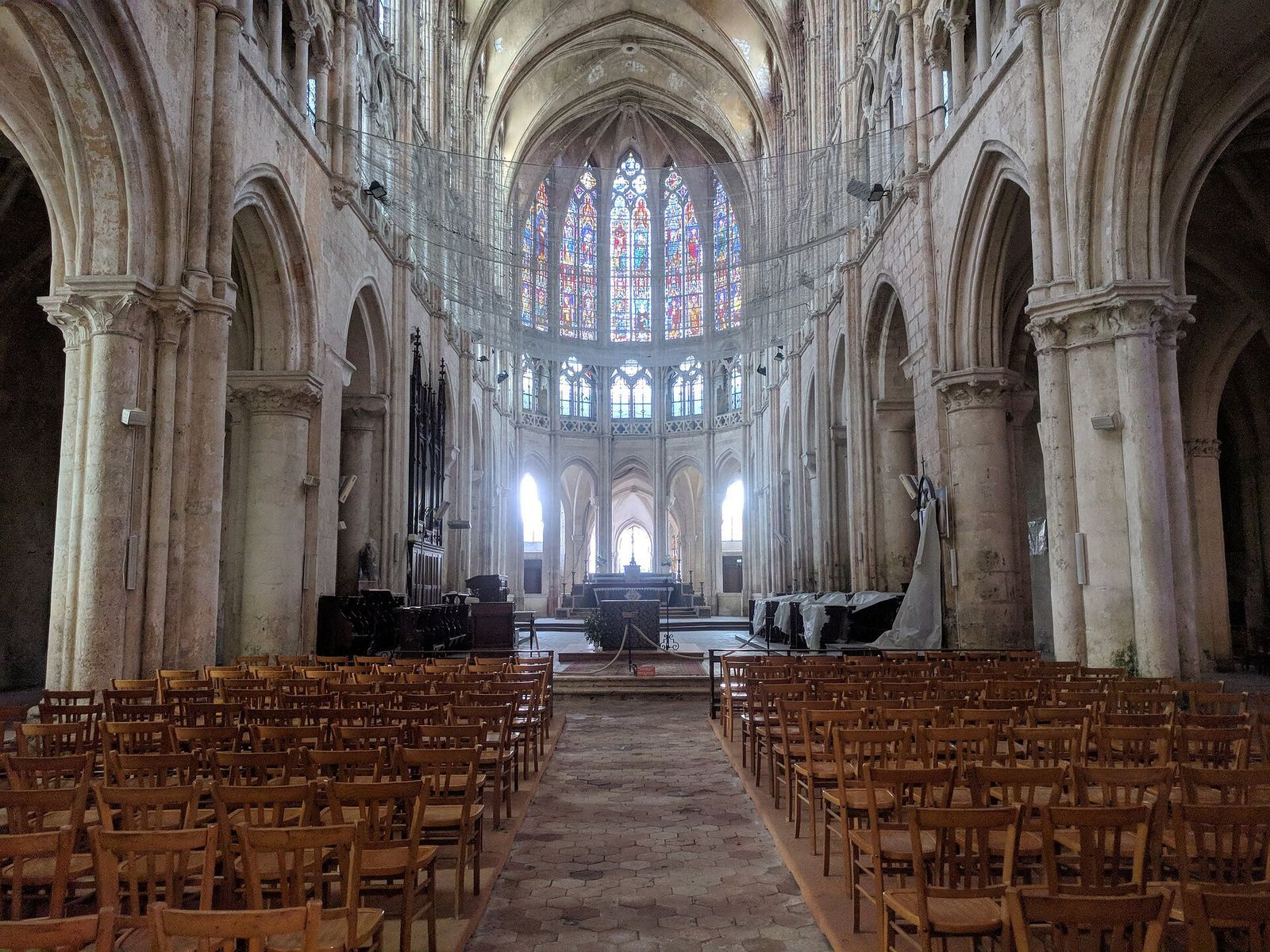
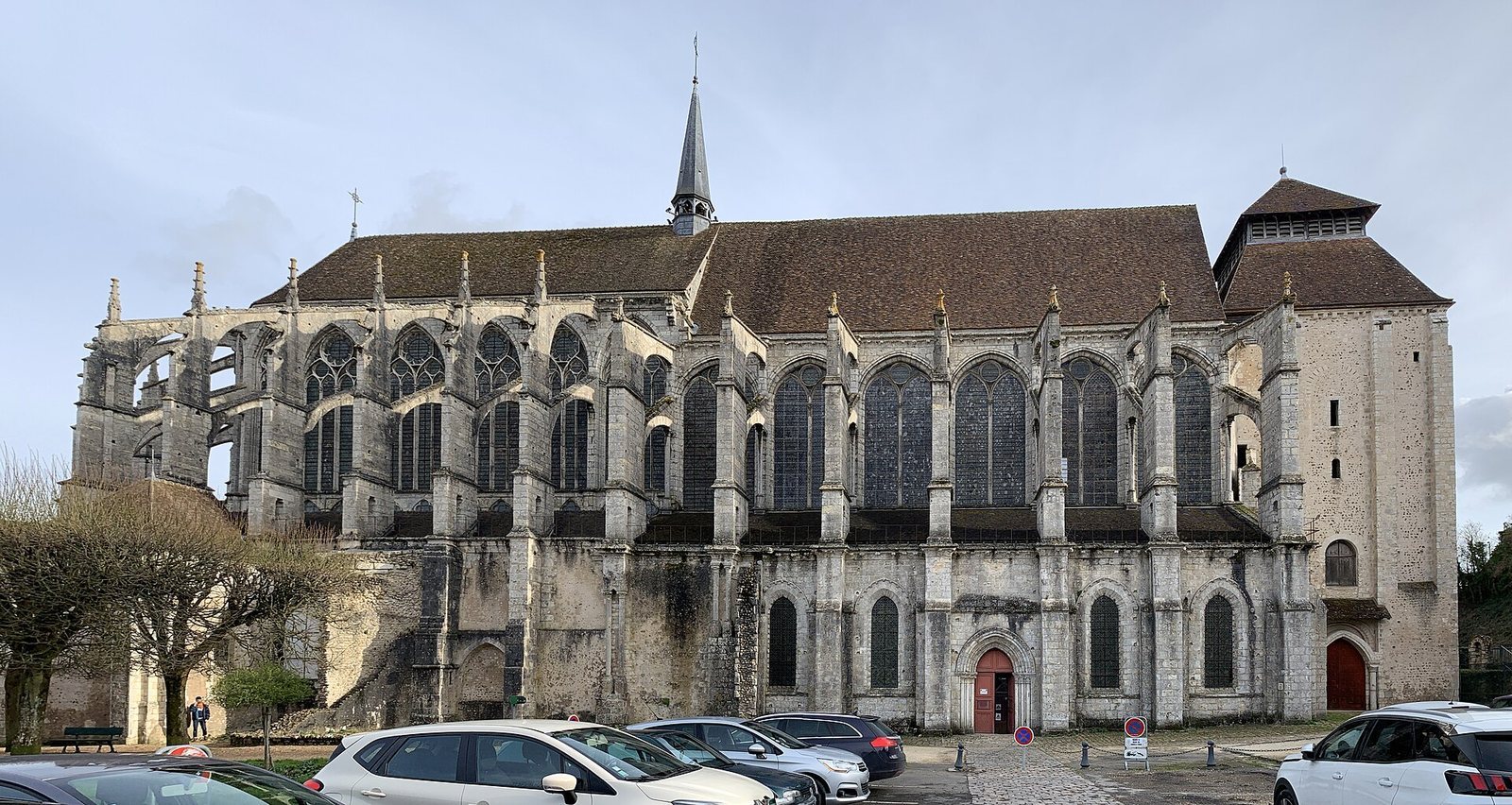
The church has an elongated plan, with a central nave and two flanking aisles. Its choir, the area around the main altar, is encircled by an ambulatory, a passage running around it, and has chapels. The predominantly Gothic building is distinguished outside by double flying buttresses, exterior arches that support the walls. Its surviving western tower was built in the manner of a keep, or fortified tower. The interior is described as lighter than that of Chartres Cathedral. The abbey buildings south of the church were rebuilt in the eighteenth century and are now part of Lycée Marceau, a French secondary school.
Stained-glass windows
Choir and nave clerestory
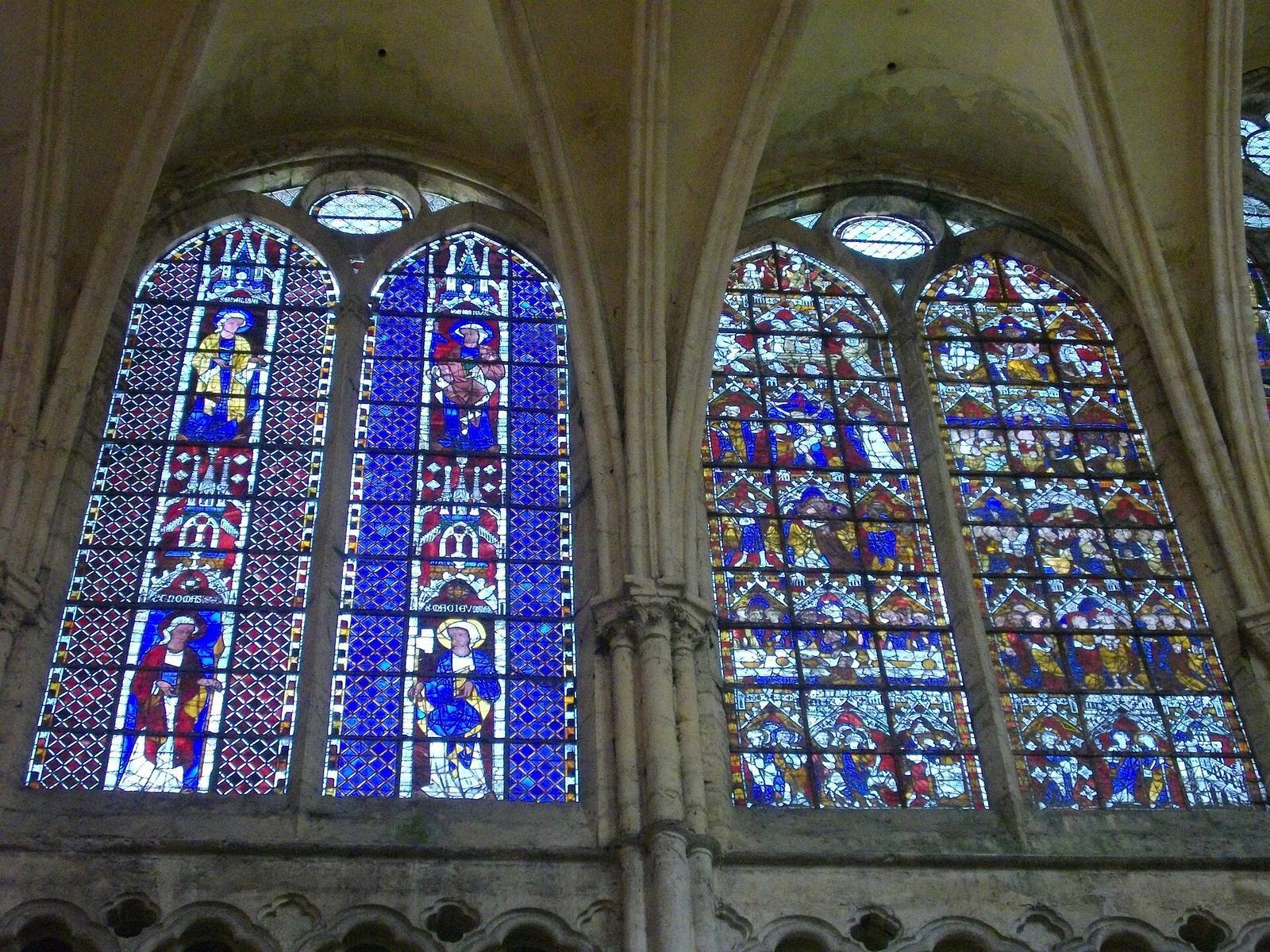
The church has 46 stained-glass windows. Twenty-eight are clerestory windows, set high above the main arcade. Six in the curved eastern end of the choir date to around 1295, 1300, and 1305 and are identified as panels 200 to 205. Another 22, panels 207 to 228, date from the thirteenth century and the first quarter of the fourteenth. Ten are in the straight section of the choir and twelve in the nave. At panels 219, 223, and 227, each of the two tall, narrow pointed openings shows two apostles, distinguished by their clothing colors and attributes. The faces repeat a single design across all twelve figures. The 22 windows in panels 207 to 228 were restored in the nineteenth and twentieth centuries.
Triforium and chapel glazing
Seventeen windows in the triforium, an upper gallery or windowed zone above the main arcade, are dated to 1260, 1270, and 1300. They are identified as panels 100 to 116 and were restored in the twentieth century. The axial chapel, the chapel on the church’s central line beyond the choir, is also called the Notre-Dame or Virgin chapel. When its decoration was renewed in the second half of the nineteenth century, it had two stained-glass windows on each side of its central window. The left window of the Saint John chapel, immediately to the right of the Virgin chapel, incorporates two sixteenth-century heraldic shields that were reused in the twentieth century.
Nave aisle windows
Most windows in the nave aisles date to the nineteenth century. Bay 13 depicts the 1885 Mission, while bay 20 shows Saint Soline, a virgin martyr traditionally regarded as a patron saint of Berry. Chartres glassmaker Nicolas Lorin signed bay 26, which is dated 1876.
Sculpture, paintings, and fittings
Apostle panels
Twelve enamel-painted panels depicting the apostles were made in Limoges in 1547 by Léonard Limosin, the king’s enameler, from color designs by Michel Rochetel. Francis I commissioned them in 1545 for the Saint-Saturnin chapel at Fontainebleau. Henry II later gave them to Diane de Poitiers for her chapel at Anet, where they remained until the Revolution. The panels were installed in Saint-Pierre’s axial chapel from 1802. Five are now held by the Musée des Beaux-Arts de Chartres.
Rood-screen carvings
Five carved sections from the former abbey’s rood screen, a partition separating the choir from the main body of a church, show episodes from the lives of Saints Peter and Paul. François Marchand made them in 1543. They are undergoing restoration, with copies displayed pending their return. Four other scenes from the screen are in the Louvre’s Renaissance sculpture galleries.
Chapel sculpture and paintings
The axial chapel contains an eighteenth-century statue of the Virgin by Charles Antoine Bridan. The Sainte-Anne chapel has an oil painting on canvas of the Adoration of the Shepherds by an anonymous artist, made in the first half of the seventeenth century. An anonymous seventeenth-century painting of the Baptism of Christ is in the Saint John chapel, the first chapel to the right of the axial chapel.
Jean Mosnier’s painting The Nativity, an oil on canvas, came from the decoration of Chartres’s former episcopal palace. The Marriage at Cana, a seventeenth-century oil painting on canvas by Coypel, measures 450 by 577 centimeters and came from the refectory of the former abbey. Restored in 2010, it is positioned against the bell tower.
Memorial plaque
A seventeenth-century engraved stone plaque commemorates three bishops buried in the church: Ragenfroy, bishop of Chartres, who died in 955; Fulbert, bishop of Chartres, who died in 1028; and Clément de Vitré, bishop of Dol, who died in 1244.
Organ
Antoine Tronchet made the church organ in 1912. It has 27 stops, each controlling a set of pipes, two hand-played keyboards, and a pedal played by the feet.