Castle of Szarvaskő: A Medieval Episcopal Fortress in Hungary
Site at a Glance
- Popularity
- Medium
- Country
- Hungary
- Primary era
- Medieval
- Eras represented
- Medieval, Early Modern
- Civilizations
- Habsburg, Hungarian
- Site type
- Military
- Remains
- Castle
On this page13 sections
History
The Castle of Szarvaskő, on a steep ridge in Hungary, was probably commissioned by the bishops of Eger between 1261 and 1295. Its exact construction date is unknown. The castle became the center of an episcopal estate and a defended route through the Bükk, then passed through periods of Hungarian and Ottoman rule before losing its military purpose.
Foundation, names and episcopal estate
The Mongol invasion of 1241–1242 devastated parts of the Bükk region and made new fortifications a priority under King Béla IV. In 1242, Bishop Kilit of Eger sought permission to build a castle, but died three years later. In 1248, Béla authorized Bishop Lampert to build a rock castle at either Kerekku or Fyzerkew. The Castle of Szarvaskő is thought to have been commissioned by Eger’s bishops later in the 13th century.
The castle’s names reflect the changing names of the mountain and settlement below. Before 1248, the rock was called Tűzönkő, a name associated with its volcanic origin; it was later known as Kerekku or Kerekkő, apparently for its rounded shape. By 1295, the castle was called Püspökvár, or Bishop’s Castle, and also Tarisznya-vár, or Satchel Castle. The latter name was linked to the garrison’s weekly rotation and the provisions its members carried in satchels. In 1330, the castle was called Mentsvár, meaning Refuge Castle, while the settlement below was known as Kerekkő-váralja or Püspökvár-alja. The settlement later became Szarvaskő-alja, shortened to Szarvaskő in 1773, so the castle’s name came before the village’s.
Several traditions offer explanations for the name Szarvaskő. One links it to Saint Giles and the legend of a hind, or female deer, and to Walloon settlers who came to the Eger Valley during a famine in 1317 and may have helped spread the name. Another tells of a stag leaping from the peak while pursued by hunters and dogs. A later local wordplay imagines people seeing horns in the rock.
The castle anchored an estate intended to support its upkeep and feed its garrison. It included Bakta, Bátor, Bocs, Deménd, Fedémes, Kerecsend and Szarvaskő-alja, with a tax assessment of 213 medieval fiscal units, not a direct count of households. Peasants in the estate’s villages paid taxes and performed labor for the castle’s lords over many generations.
From episcopal retreat to frontier outpost
As the threat of further Mongol incursions receded, the castle’s defensive role changed. It monitored the north–south route through the Bükk and also served as a place of rest for the bishops of Eger, senior clergy and their guests during hunting trips. A garrison and toll collectors were stationed there. King Louis I of Hungary probably visited in 1378 while hunting at Szilvásvárad, and Hippolyt of Este and his guests returned on several occasions. From the 1420s, as Eger became a major frontier stronghold against the Hussites, followers of the religious reformer Jan Hus whose movement also became a political and military force, Szarvaskő helped guard roads leading from Upper Hungary to Eger.
Sixteenth-century conflict
After the Battle of Mohács in 1526, John Zápolya and Ferdinand I competed for the Hungarian crown. In 1527, John took Szarvaskő and granted it to Bishop Simon Erdődy, who placed his brother Péter in charge of the castle. Much of Heves County came under Ferdinand in 1528, but Szarvaskő remained with John’s supporters, Péter Erdődy and Ferenc Erchy. After Ferdinand’s commanders defeated John’s forces near Kassa, they attacked Szarvaskő with artillery and captured it quickly.
In 1528, Bishop Tamás Szalaházy, appointed by Ferdinand, made Ferenc Horváth the castle’s commander. Horváth extorted the estate’s inhabitants and seized control of the Abbey of Bél. Szalaházy borrowed 20,000 florins from him, pledging the estate’s seven villages as security. Horváth kept the castle, and John’s captains failed to take it back. Ferenc Frangepán demanded its return in 1540 but did not succeed. In 1545, the Hungarian Diet, an assembly of the kingdom’s estates, ordered that unauthorized holders be removed, the castle’s income used to maintain Eger Castle, and Szarvaskő itself demolished. The order was not carried out.
In 1548, Bishop and Chancellor Miklós Oláh demanded that Horváth sell the castle and its lands. Horváth maintained that the property had been pledged to him with royal recognition, and the dispute was settled through negotiation. On March 11, 1549, István Dobó took possession and appointed Balázs Szalkay as castle commander.
During the Ottoman siege of Eger, Szarvaskő provided temporary lodging for couriers, spies and envoys. It remained outside Ottoman control after Eger’s first major siege, although many villagers fled. Bishop Antal Verancsics appointed Gábor Gadóczy to command the castle. By 1558, it was described as neglected, and Gadóczy faced accusations of plundering estate peasants. In 1564, Eger’s captain, Gáspár Mágócsy, also took responsibility for Szarvaskő to coordinate its administration with the larger stronghold. In 1583, military engineer Cristoforo della Stella directed repairs and strengthening there while work was also underway at Eger.
Ottoman rule and reconquest
After Eger fell in 1596 and the Hungarian forces suffered a disastrous defeat at Mezőkeresztes, the position of Gáll János and Szarvaskő’s garrison became untenable. They probably withdrew to Kassa, and the Ottomans took the castle without resistance. It remained under Ottoman rule until 1687, within the Sanjak of Hatvan, an Ottoman administrative district. A force of about 30 to 40 soldiers under a commander guarded the north–south route and watched for attacks from Upper Hungary. The Ottoman cavalry officer Omar ben Ali held the castle and estate as a fief. During this period, Szarvaskő-alja ceased to be treated as a separate settlement, and people from Apátfalva used its boundary.
On October 8, 1687, Italian margrave and colonel Alessandro Vitelli took the castle after its Ottoman garrison had fled to Eger ahead of the fortress’s encirclement. The formal handover followed on December 17. About 600 Ottomans remained in the area, including former members of the garrison. They adopted the surname Szarvaskői, converted to Christianity and became part of the Hungarian population.
Telekessy and the final episcopal era
After the wars that ended Ottoman rule and the recovery of Eger, Szarvaskő lost its strategic purpose and returned to the bishops of Eger. From 1699, Bishop István Telekessy held the estate and resettled the nearly depopulated settlement and surrounding villages. In 1705, after Ferenc II Rákóczi was elected prince of Hungary, Telekessy administered his oath. Rákóczi led an uprising against Habsburg rule, and in the summer of 1709 Telekessy went into voluntary exile at the castle as the king pursued the prince’s supporters.
Pope Clement XI issued a brief on August 17, 1709, urging clergy to remain loyal to the king and warning those who supported Rákóczi. Cardinal Primate Christian August summoned Telekessy to Pozsony to explain his position. Unable to attend in person because Rákóczi forbade it, Telekessy sent a written defense. On December 18, the cardinal removed him from office, along with senior members of the Eger clergy and religious orders. Telekessy stopped performing episcopal duties. On January 25, 1710, he celebrated a Mass at the castle marking fifty years since his ordination.
After Kuruc insurgents took Eger, Imre Csáki was appointed bishop and installed at Hatvan in 1711. Telekessy attended and protested without success. Csáki’s officers and five armed retainers went to Szarvaskő, ransacked Telekessy’s home and took his possessions. Telekessy appealed to the pope, and the Holy See restored him and his diocese to their former standing. The king later pardoned him after papal intervention. Telekessy and other participants in the uprising accepted the amnesty and pledged loyalty to the king. The bishopric, later the archbishopric, of Eger retained authority over the settlement until 1848.
Decline and changing landscape
After Telekessy’s death in 1715, the castle deteriorated. In 1739, Bishop Gábor Erdődy asked landowner Mátyás Okolicsányi for timber from a nearby forest to repair it, but the request went unmet. Erdődy’s successor, Ferenc Barkóczy, concentrated on Felsőtárkány, and the castle fell into ruin. Builders took usable stone for the village school, church and houses. A ridge road leading to Gilitka Chapel also made access to the hill easier.
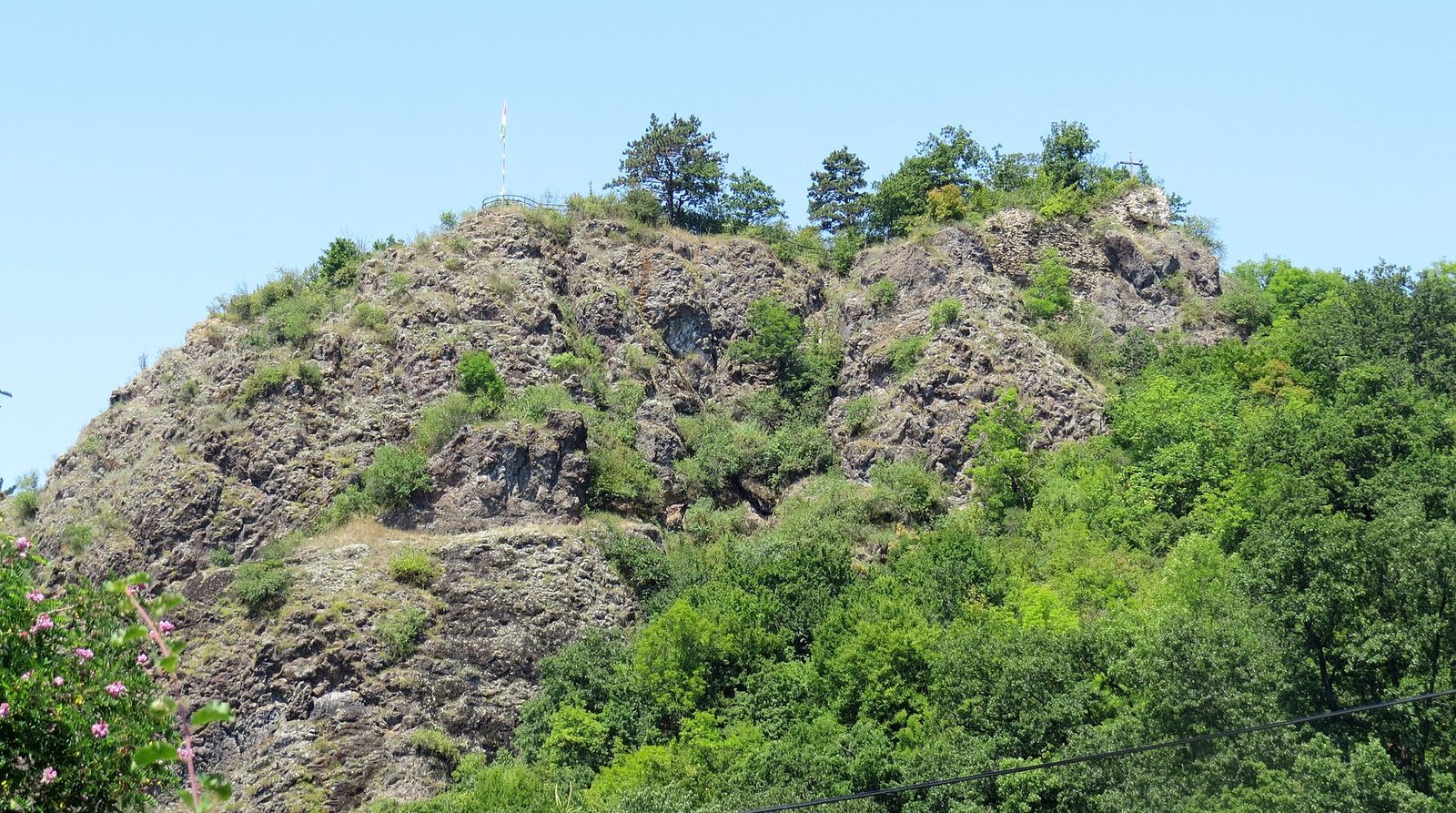
In 1840, Eger Archbishop László Pyrker had a cart road cut through the rock of the narrow, winding Eger-stream gorge. In the modern period, the hill became part of Bükk National Park because of its unusual and rare plants. The castle hill, its cross and the flag that marks the former cross’s position became symbols of Szarvaskő.
Remains
Ridge setting and enclosure
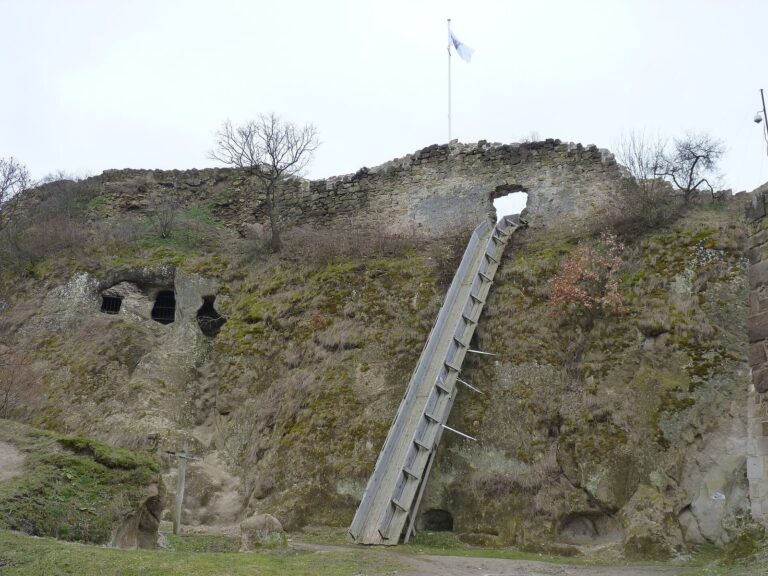
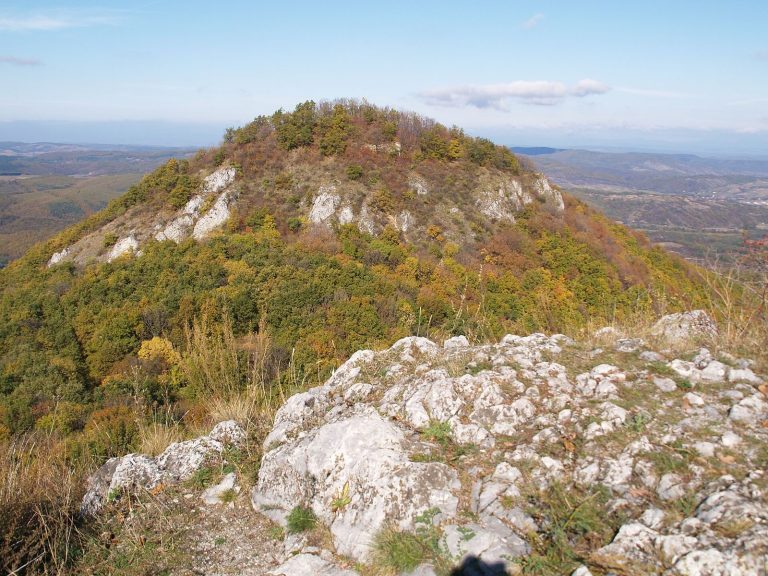
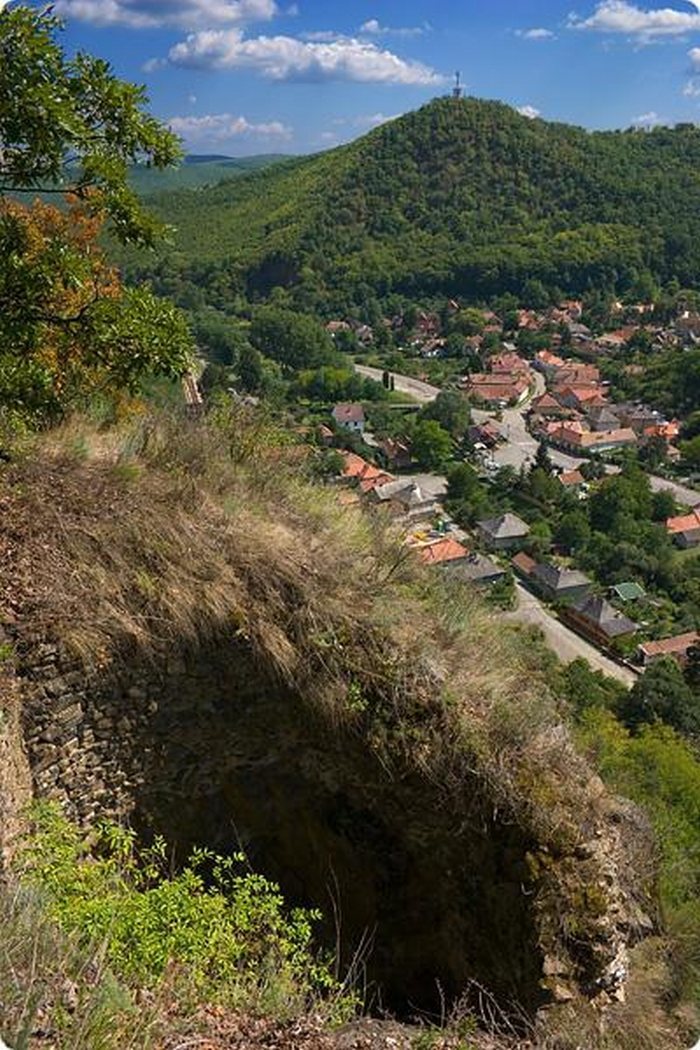
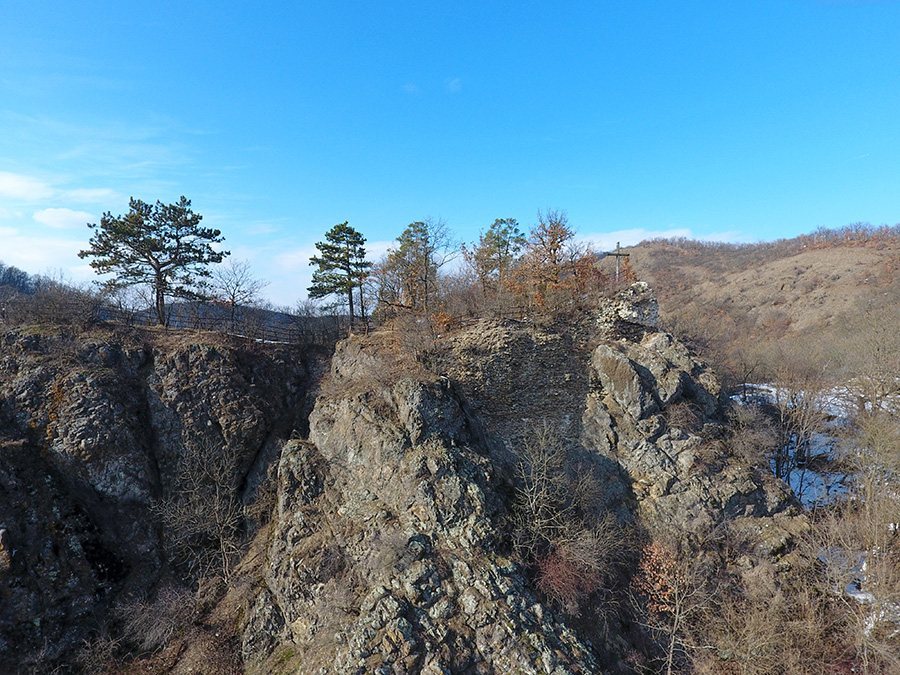
The castle stands directly north of the settlement, on a steep rocky ridge at about 293 metres above sea level. The ridge forms part of the northeastern spur of Keselyű-hegy, near the western edge of the Bükk’s summit region and roughly 10 kilometres north of Eger. It rises beside the right bank of the Eger stream, where the water cuts through a winding rocky gorge. The surrounding heights include Nagy-akasztódomb at 333 metres and Keselyű-hegy at 435 metres. The ridge’s western end is only about 2 to 3 metres wide. Its southeastern and southern sides meet a sheer rock face, while the northwest slope descends less sharply before dropping toward Pyrker Road. The northeastern end widens to about 15 metres. A strip on the northwest side was broadened to form the inner castle area, about 68 metres long and between 14 and 26 metres wide.
Walls, towers and defenses
Wall remains mark the northeastern and southwestern ends of the castle footprint. At the southeastern end, the foundation of a circular main tower descends about 10 metres into fissures in the cliff; its interior measured roughly 3.5 to 4 metres across. A circular tower remnant lies beneath the present lookout, and a smaller tower stood at the southwestern end. The castle had an outer gate beneath a drawbridge and a main inner gate at the bridge’s upper end; a possible third gate has no known position. A moat cut into the rock formed another part of the defenses. The surviving fabric is a stone ruin with a few foundation walls in overgrown ground. The remaining façade apparently collapsed in the early 1910s. In early 1931, part of the eastern wall, with two windows and a doorway, was still standing; autumn rains brought it down that year.
Buildings within the enclosure
The inner castle contained a three-storey cellar and buildings for the steward, the castle commander and his deputy, as well as quarters for the garrison. Its other facilities included a kitchen, bakehouse, internal well, guesthouse, smokehouse, mill and prison. The prison first served the castle community and later held people convicted of serious crimes. The nearby hill was once called Akasztófadomb, or Gallows Hill, and was associated with lawful executions.
Chapel and later residence
The castle’s Chapel of Saint Nicholas was part of its religious and domestic complex. An inventory made by Jakab Domonkos on October 8, 1687, lists 21 timber rooms used by the Ottoman garrison and a mosque, suggesting that the medieval chapel had been adapted for Muslim worship. In 1706–1707, a two-room timber house was built within the castle to serve as Telekessy’s residence.
Crosses and the gorge road
A large wooden cross once stood at the southwestern edge of the castle, probably recalling the Chapel of Saint Nicholas and Telekessy’s confinement there. A national flag now marks its position. A second cross, erected on the southeastern side of the ruins during the second half of the 20th century, remains in place. The castle ruins now serve as a lookout. A marble plaque in the gorge commemorates Pyrker’s 1840 rock-cut road.