St Mary Aldermary: A Perpendicular Gothic Church in London
Site at a Glance
- Popularity
- High
- Country
- United Kingdom
- Primary era
- Early Modern
- Eras represented
- Early Modern, Modern
- Civilizations
- British, English
- Site type
- Religious
- Remains
- Church
On this page10 sections
History
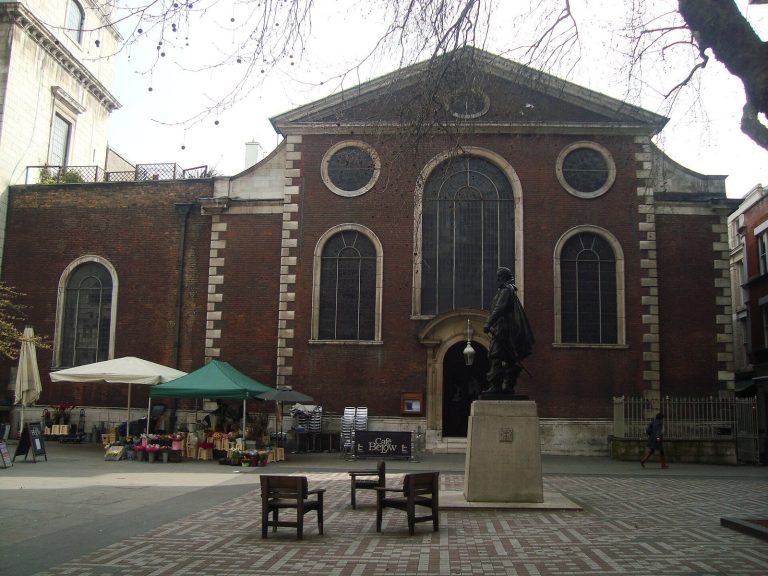
St Mary Aldermary is a church at the junction of Bow Lane and Watling Street in the City of London, United Kingdom. A church dedicated to Mary, the mother of Jesus, has occupied the site since the 11th century or earlier. It was Roman Catholic until 1538 and is now Anglican.
Early church and medieval patronage
The name Aldermary is commonly understood as Elder Mary, a reading that suggests this was the oldest City of London church dedicated to Mary. Another interpretation is that the name distinguished the older of two local churches dedicated to her, the other being nearby St Mary-le-Bow. The right to appoint the church’s rector, or parish priest, belonged to Canterbury’s prior, the head of a religious house, and its chapter, the governing body. In 1400, this right passed to the Archbishop of Canterbury.
Keeble’s church and early modern use
In 1510, London merchant and lord mayor Henry Keeble paid for a new church. Its tower was still unfinished when he died. Two legacies made in 1629 provided for its completion, and the work was finished in 1632.
Keeble was first buried in a vault beneath the church floor. Sir William Laxton, who died in 1556, and Sir Thomas Lodge, who died in 1583, were later buried there. Both were grocers and mayors of the City of London, and Lodge was Laxton’s son-in-law. Keeble’s bones were removed and his monument taken down to make way for monuments to Laxton and Lodge. In his 1598 account of London, historian John Stow named Richard Chaucer, a vintner whom he identified as the father of poet Geoffrey Chaucer. Charles Blount, 5th Baron Mountjoy, was also buried at the church. John Milton married his third wife, Elizabeth Minshull, there in 1663. The parish registers begin in 1558 and are now held at the Guildhall Library.
In 1599, citizens associated with St Antholin’s endowed a daily series of religious lectures, funded by property in London and delivered from that church’s pulpit. St Antholin’s was destroyed in the Great Fire, rebuilt, and eventually demolished in 1870. The lectures then moved to St Mary Aldermary and continued there into the Second World War.
The Great Fire and rebuilding
The Great Fire of London in 1666 severely damaged St Mary Aldermary, although parts of its walls and tower survived. Christopher Wren’s office oversaw the rebuilding, completed in 1681. Benefactor Henry Rogers left £5,000 toward rebuilding a church, and his widow agreed that the money should be used for St Mary Aldermary. She may have stipulated that the new building closely imitate the church destroyed by the fire. The parish of St Thomas the Apostle was joined to St Mary Aldermary’s parish after its own church was destroyed and not rebuilt.
Guild church and later roles
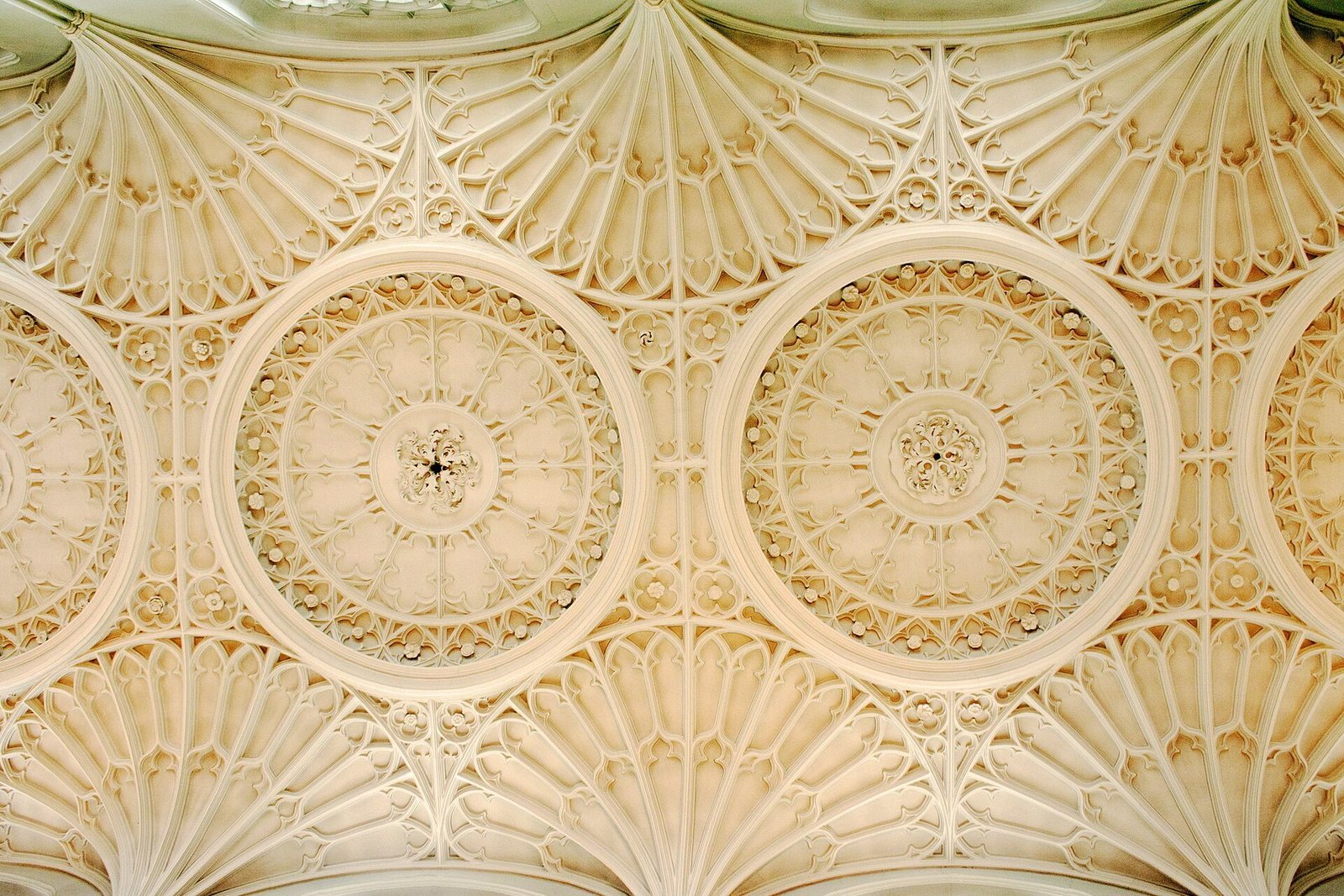
German bombing during the Second World War damaged the church. On 4 January 1950, it was designated a Grade I listed building, the highest listed-building category in England. In 1952, it changed from a parish church to a guild church serving commuters and other workers who did not live in the City. An interior restoration completed in April 2005 concentrated on the plaster ceilings and the memorials along the north wall.
In 1989, the church hosted a Malankara Orthodox Syrian congregation, part of a Christian tradition rooted in Kerala, India, whose worship drew on Syriac liturgy. The congregation later established its own London church, St Thomas Jacobite Syrian Orthodox Church. Since 2007, St Mary Aldermary has served as the Regimental Church of the Royal Tank Regiment, taking over that role from St Peter’s Church, Cornhill.
In January 2010, the Bishop and Archdeacon of London invited the Moot Community to make the church its home. Moot is a Church of England community associated with Fresh Expressions, an initiative encouraging new forms of Christian community and worship. Its stated way of life included prayer, meditation and presence, alongside values such as acceptance, balance, creativity and hospitality. The church’s main space also serves as a public café during weekday business hours, with religious and meditative sessions held in the mornings and evenings.
Remains
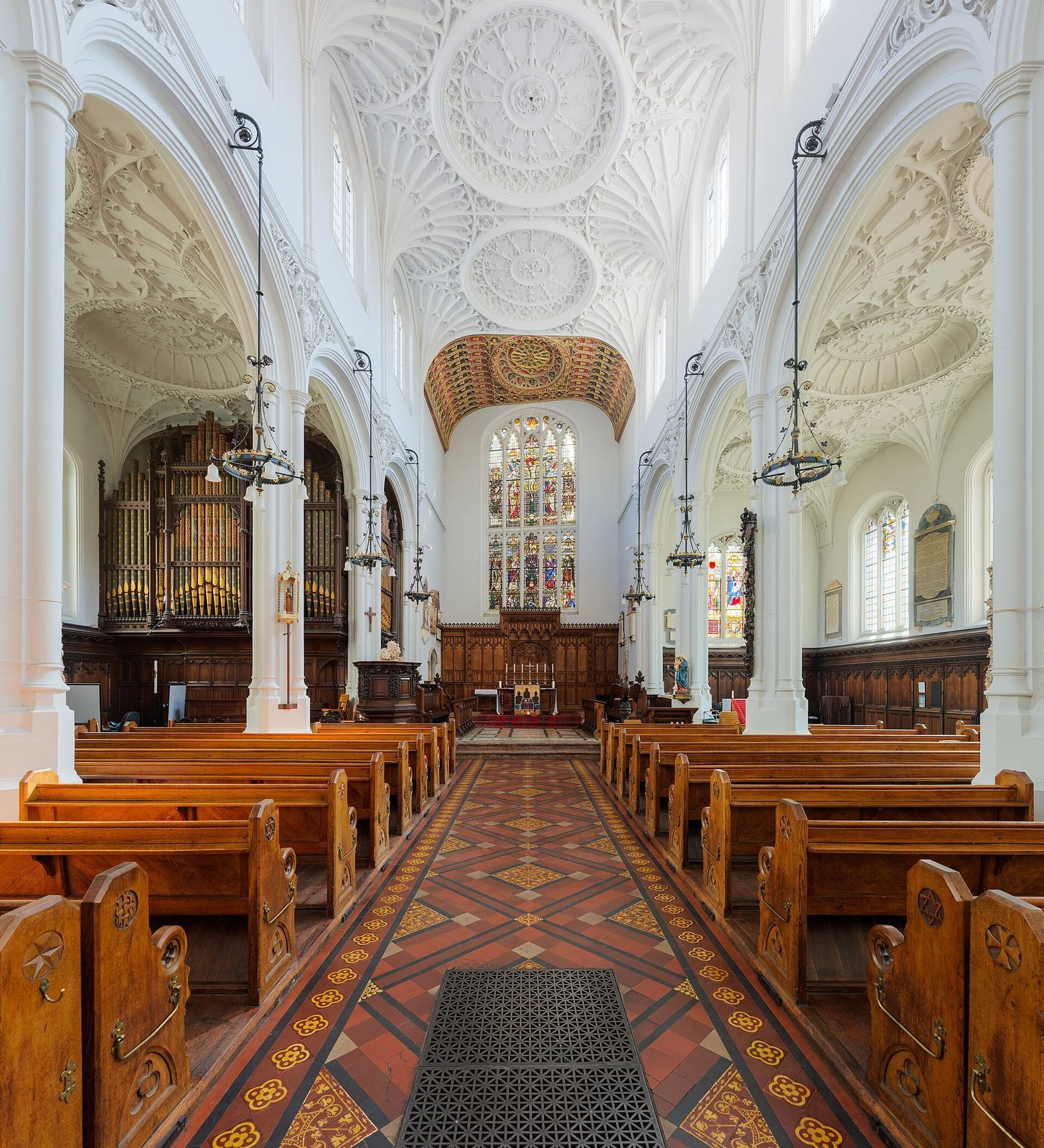
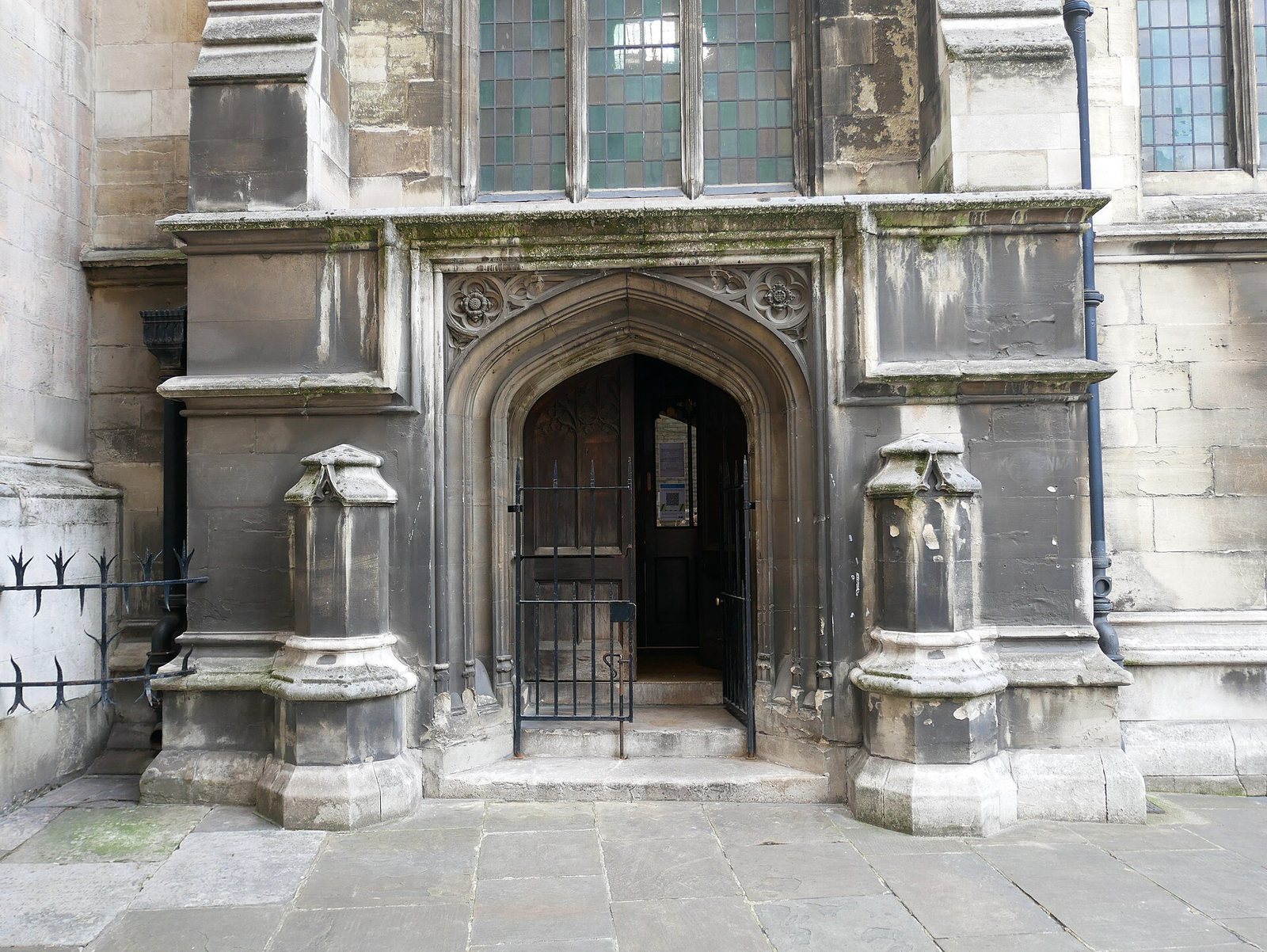
The church combines an aisled nave, a short chancel and a tower at the southwest corner. Its rebuilt fabric uses Perpendicular Gothic, a late English Gothic style marked by strong vertical lines, an unusual choice among Wren’s City churches. Architectural historian Nikolaus Pevsner called it the City’s chief surviving monument of 17th-century Gothic Revival, the renewed use of medieval Gothic forms, and placed it alongside Warwick among England’s most important late 17th-century Gothic churches.
The rebuilt church
Plan and chancel
The nave extends through six structural divisions, or bays, and is flanked by aisles. Above the aisle roofs, a clerestory, an upper wall with windows, brings light into the nave. The short chancel, the area around the altar, forms the eastern end of the church; its east wall lies at an angle to the building’s main axis.
Tower
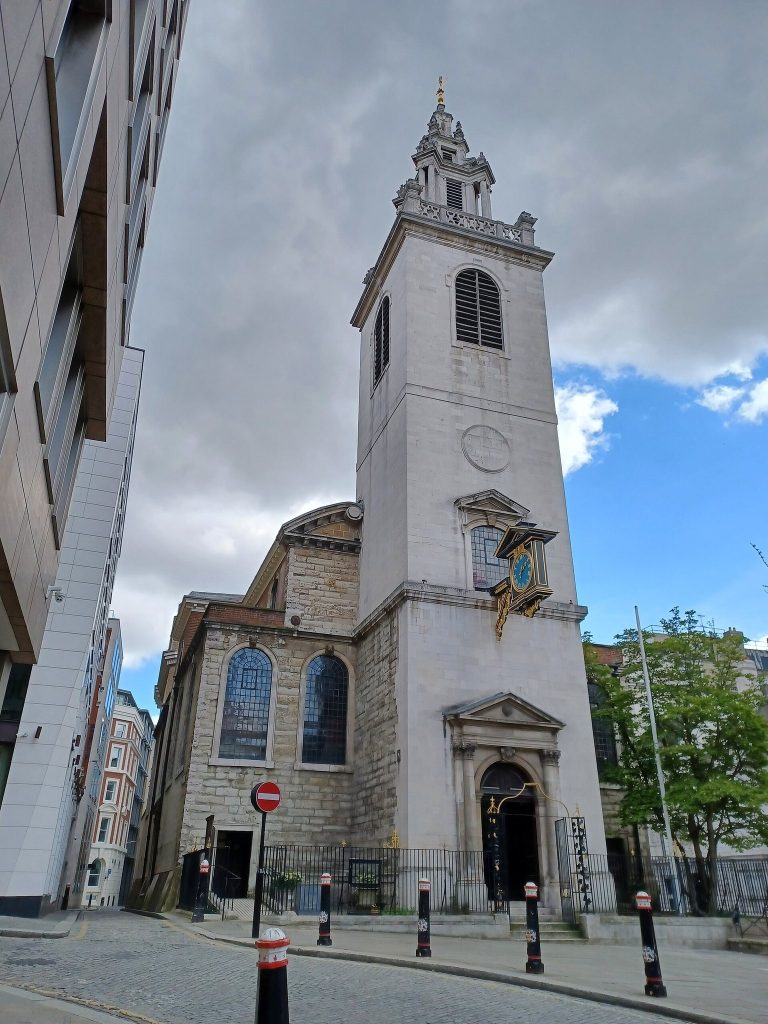
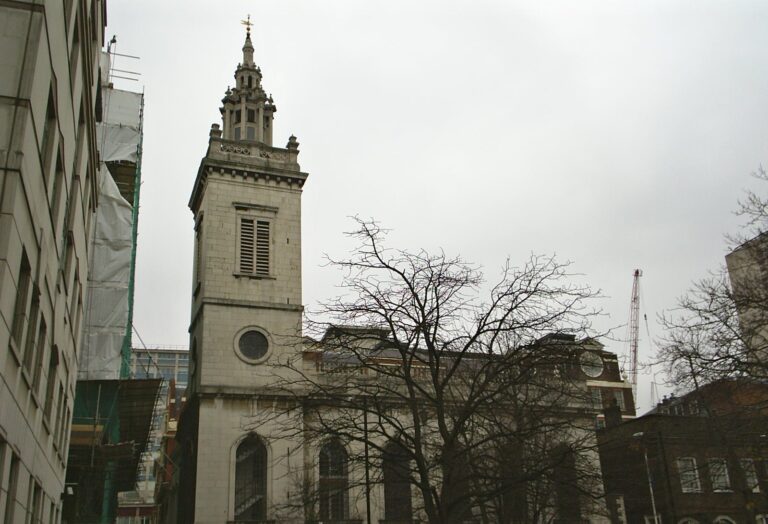
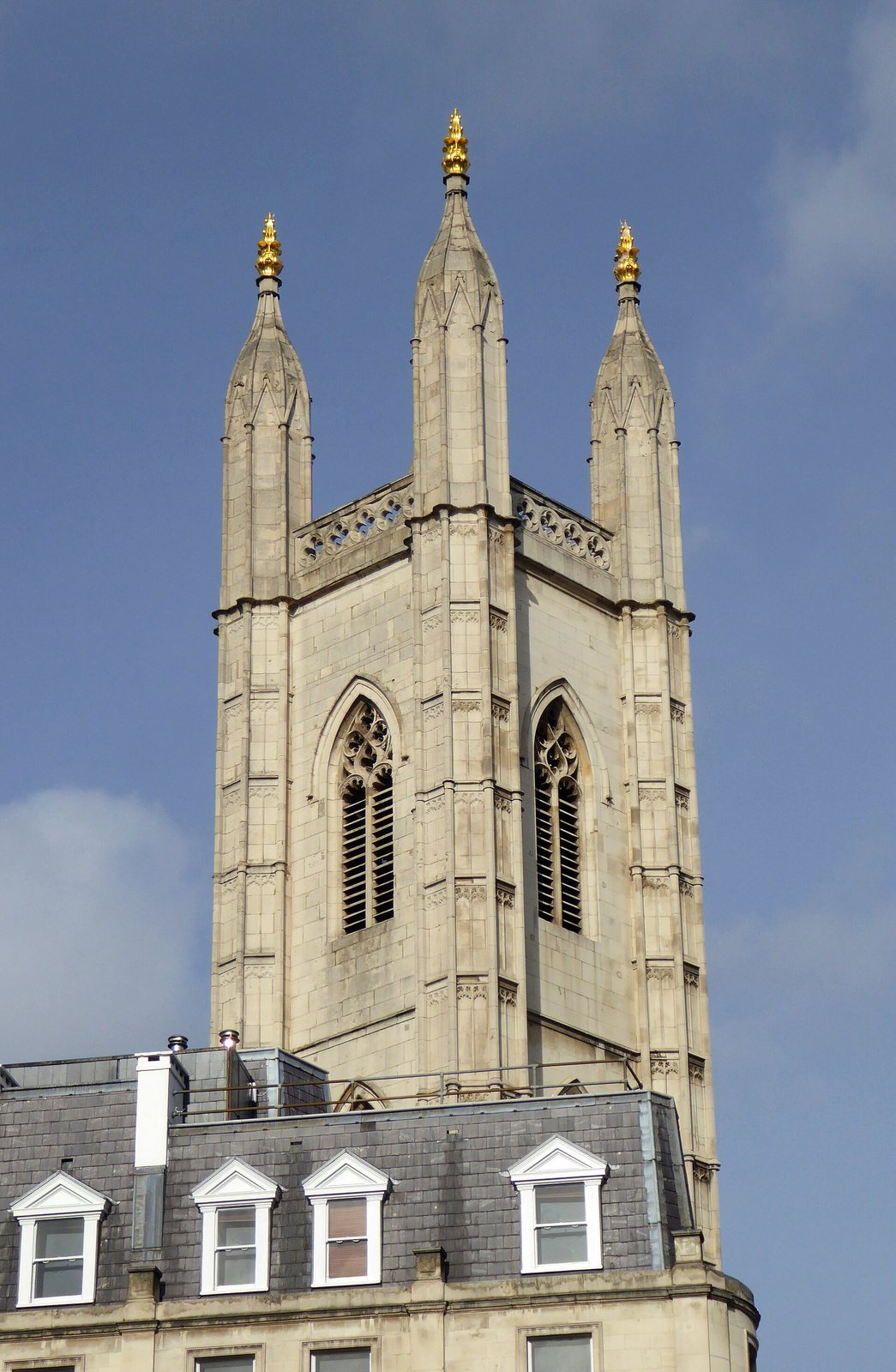
The tower is attached to the southwest corner and is entered through a lobby on the west. Horizontal bands mark its storeys, while eight-sided turrets rise at the corners and finish in carved ornaments.
Interior and alterations
Rows of clustered columns divide the nave from the aisles and carry somewhat flattened Gothic arches. The ceilings have elaborate plaster vaults, with ribs spreading in fan-like patterns. Work in 1876–77 added an oak screen between the church and lobby, replaced the pews and stalls, repaved the floor, installed stained-glass windows and added a new structure behind the altar. The organ, built by George England and Hugh Russell and installed in 1781, was moved from the western gallery to the chancel. During the Blitz, bombing shattered all the windows and brought plaster down from the vaults, while the building itself remained intact.