Grimsby Minster: A Church of England Parish Church
Site at a Glance
- Popularity
- High
- Country
- United Kingdom
- Primary era
- Medieval
- Eras represented
- Medieval, Modern
- Civilizations
- British, English
- Site type
- Religious
- Remains
- Church
On this page14 sections
History
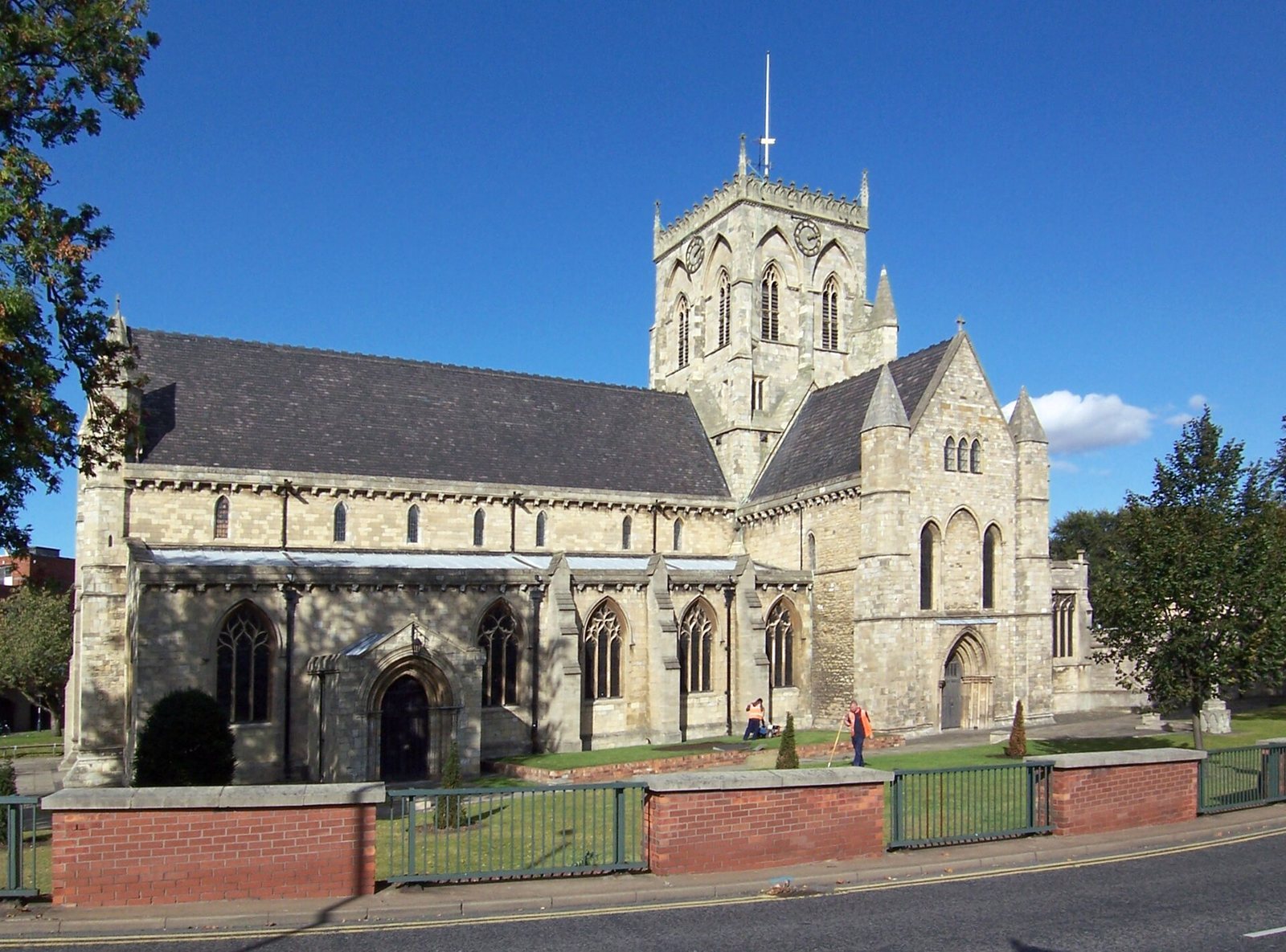
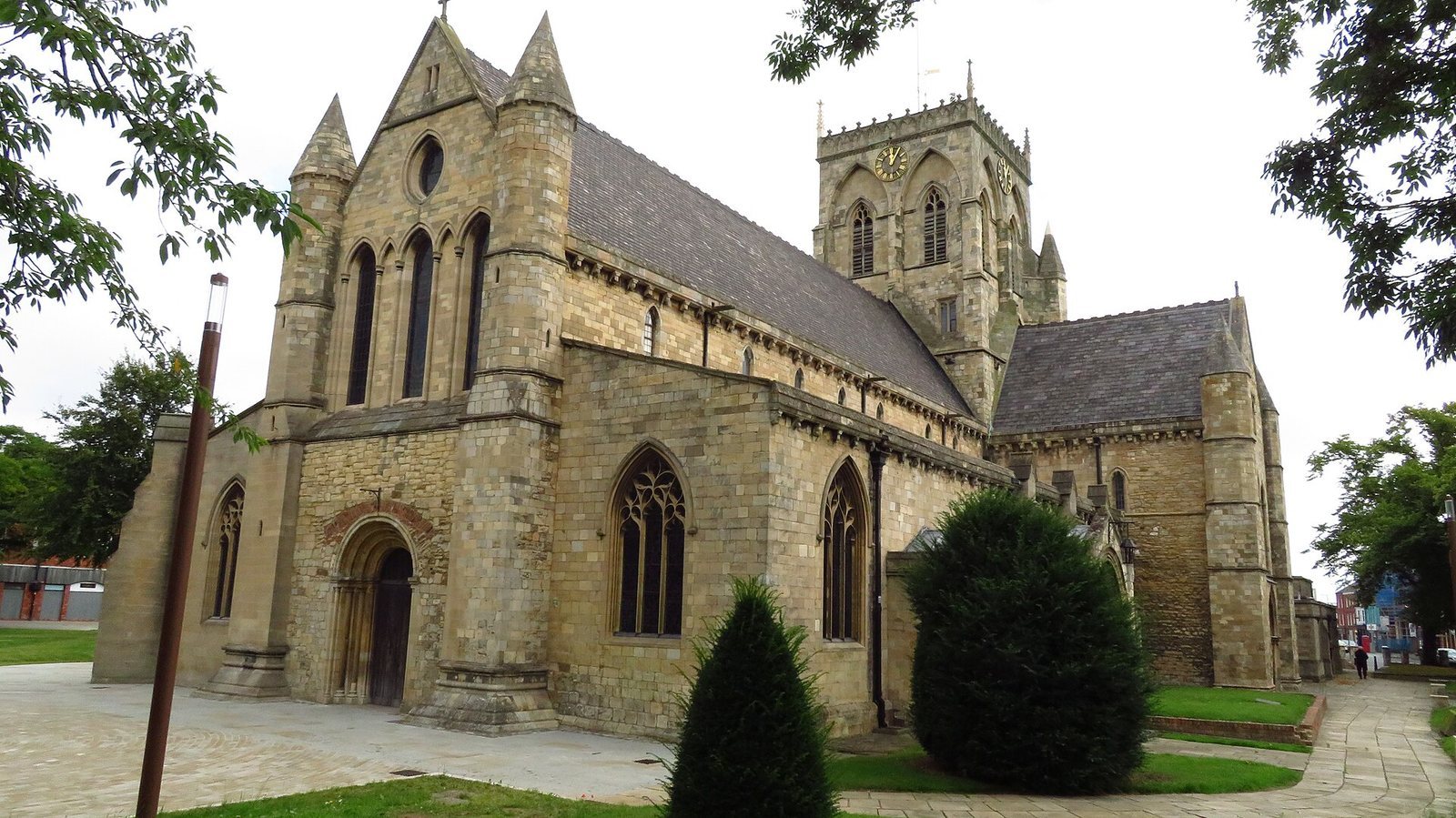
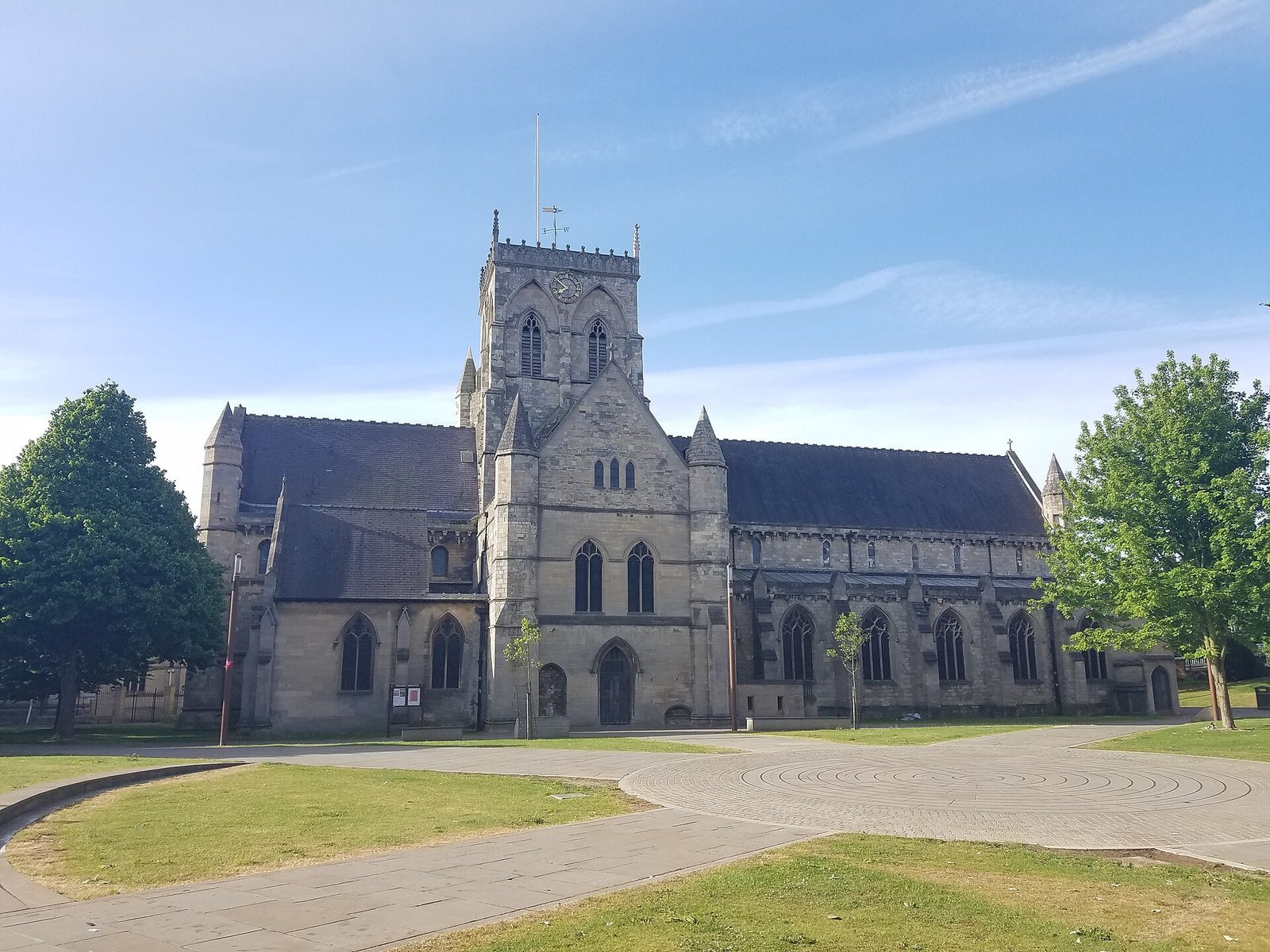
Grimsby Minster is an active Church of England parish church dedicated to St James in Grimsby, United Kingdom. Its earlier fabric is Norman, and a church was already standing here by 1114. The minster title, formally conferred in 2010, denotes an important church but does not make it a cathedral. The church belongs to the Diocese of Lincoln, a district overseen by a bishop, within the Province of Canterbury, a grouping of dioceses.
Early church and medieval growth
In 1114, the existing church was transferred to Robert Bloet, Bishop of Lincoln, who oversaw renovations and further development. Medieval work included a central tower, dated to 1365, as well as two side aisles and a new choir. The church was also altered during the 14th and 15th centuries.
Parish church and restoration
In 1586, John Whitgift united the parishes of St James and St Mary, making St James the parish church of Grimsby. St Mary’s church stood on the site of present-day Victoria Street. A medieval chapel on the site of today’s Lady Chapel was demolished around 1720. Canon Ainslie began a major restoration in 1856, followed by work that included new windows with stone tracery and oak roofs. The Lady Chapel opened in 1905 as a memorial to Canon James Peter Young.
Choir, schools and war memorials
James Peter Young founded St James’ Choir School in 1880. James College, a predecessor of today’s St James’ School, opened in 1883. Until a reorganization in 2013, the choir school was described as the only one attached to a parish church in the United Kingdom. That year, organist Anthony Pinel changed recruitment so choristers could come from local schools and girls as well as boys could join. The school is now co-educational and part of the Alpha Group, an education group associated with schools.
The Memorial Chapel was completed in 1921 at the initiative of former vicar Canon Algernon Markham. Its First World War Roll of Honour commemorates 2,100 local people who died in the conflict. The chapel also honours the Grimsby Chums, a local Pals Battalion, a unit recruited from men who enlisted together, often from the same area. Raised after Kitchener’s 1914 appeal, the 10th Service Battalion of the Lincolnshire Regiment was the only one of 304 Pals Battalions to use the name “Chums.” On 1 July 1916, the first day of the Battle of the Somme, it joined the assault at Ovillers-la-Boisselle. After a mine exploded at 7:28 a.m., the battalion occupied the resulting crater at 7:30 and remained under German and British fire for much of the day.
War damage and later status
Bombing raids on Grimsby during the Second World War destroyed the church’s pre-war west-end organ and damaged the Memorial Chapel, whose windows survived. The west-end organ was replaced in 1951 and rebuilt in 1976 with substantial changes to its sound. A second organ was installed during the 1970s to accompany the choir.
The church received Grade I listing in 1951. Its minster status was announced in April 2010 and formally conferred at a ceremony on 16 May, led by the bishops of Lincoln and Grimsby. Borough mayor John Colebrook accepted the declaration for the borough. The Parish of Grimsby, St Mary and St James and St Hugh includes St Hugh’s Church, built as a daughter church of St James. St Martin’s and St Mark’s also belonged to the parish as daughter churches until 1 September 2022, when they became part of a separate parish.
Remains
Built of stone, the church combines its relatively plain Norman fabric with later medieval and modern work. Its nave is divided into six structural bays. The nave, transept and choir have comparatively simple wooden vaulted ceilings, with beams connecting opposing roof supports, while the aisle ceilings have more elaborate vaulting. An interior gallery is also part of the earlier church fabric. At the crossing, where the nave and transept meet, the central tower rises above the church. The chancel was lengthened and the south transept rebuilt during the restoration begun in 1856.
Chapels and carved features
Lady Chapel
Dedicated to the Virgin Mary, the Lady Chapel occupies the site of a medieval chapel. A medieval squint, a small opening through a wall, gives a view towards the High Altar in the chancel. It allowed a view of the elevation of the Host, the raising of the consecrated bread during the Eucharist.
Memorial Chapel
The chapel contains the First World War Roll of Honour, inscribed on gunmetal, and a memorial to the Grimsby Chums. Its windows survived the Second World War bombing raids.
Sir Thomas Haslerton memorial
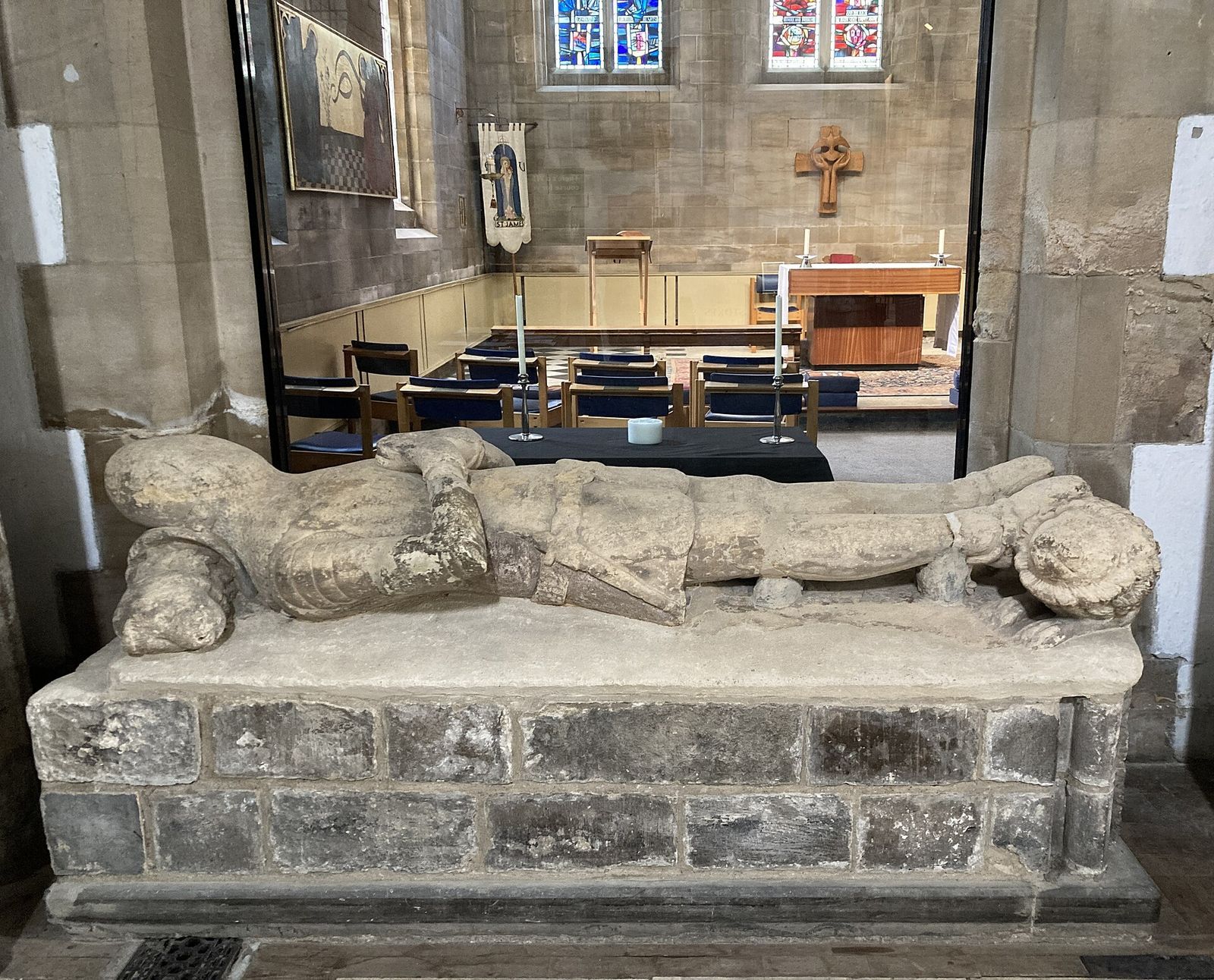
A badly weathered stone memorial to Sir Thomas Haslerton, a 14th-century knight, bears his reclining figure in armour and knightly dress. A reclining lion supports his feet. Local tradition claimed that Grim, a probably mythical Viking founder of Grimsby, was buried in the church. In 1913, a verger mistakenly identified Haslerton’s memorial as Grim’s tomb. A cenotaph, a memorial without the person’s remains, does not itself contain the person it commemorates.
Grimsby Imp
The 12th-century stone carving known as the Grimsby Imp sits atop a column supporting the bell tower in the south aisle. It has been interpreted either as an imp or as a bent-over man appearing to support the church’s beams.
Windows and interior features
Most church windows were reglazed around 1910, with donors’ names recorded on brass plaques. Replacement windows after the wartime damage largely followed the earlier theological scheme. Many were given as memorials, and their donors’ names appear in the glass. The windows include subjects from Anglican Church history; those in the north aisle show episodes from the life of Jesus, from the Adoration of the Magi to the Last Supper.
Stained-glass artist Hugh Easton made four windows for the church between 1954 and 1957. Two paired-panel windows in the north transept, commissioned in 1954, depict the archangels Uriel, Gabriel, Raphael and Michael. Two memorial windows installed in 1957 show the Creation of the sun, moon and stars and the Holy Sacrament, a reference to the Eucharist. Between 1954 and 1956, Leonard Evetts made five paired-panel windows for the Lady Chapel, each showing a scene from the Magnificat, Mary’s song of praise in the Gospel of Luke.
Other interior features include a baptismal font, a crucifix resting on a corbel, a projecting wall support, and windows depicting the Transfiguration and Saints Andrew, Nicholas, James and Peter. A Masonic window relates to Freemasonry, a fraternal organization. A separate memorial commemorates Lincolnshire Regiment soldiers killed in the Second World War.
Organs and bells
The west-end pipe organ, made by J. W. Walker & Sons, incorporates soundboards and some pedal pipes from the instrument destroyed during the war. A Johnson organ on the north side of the choir has two hand-played keyboards and pedals operated by foot, and is used to accompany choral services.
Ten bells are hung for full-circle ringing, in which each bell swings through a complete circle. Together they weigh 4.3 tonnes and are tuned to E-flat. The tenor bell is four feet in diameter and weighs 18.25 hundredweight, a traditional unit of weight. Three bells were cast by William Dobson in 1830; other bellfounders include John Taylor & Co. and John Warner & Sons. The two lightest and newest bells were cast by Mears and Stainbank in 1962.
St James Square
The former churchyard is now St James Square, redeveloped in 2021. Its permanent artworks include Trevor Harries’ bronze Fishermen’s Memorial, installed in 2005, which depicts a trawlerman hauling in a net. On the square’s east-side wall, Annabel McCourt’s Human Murmuration consists of silhouettes based on photographs of local residents who volunteered to take part. Adrian Riley’s Come Follow Me is a 35-metre text artwork etched into the paving, featuring poetry by local writers.