Amos: An Ancient Greek Settlement in Caria, Turkey
Site at a Glance
- Popularity
- Medium
- Country
- Turkey
- Primary era
- Unclassified
- Eras represented
- Unclassified
- Civilizations
- Ancient Greek
- Site type
- Settlement
- Remains
- Town
On this page7 sections
History
Amos was a Greek settlement on Hisarburnu near modern Turunç in Turkey, in ancient Caria and the Rhodian Peraia, the mainland territory associated with Rhodes. Its earliest known occupation dates to the Classical period and continued into the Hellenistic period. The settlement was probably built by Doric Rhodians, though its construction date is unknown.
Classical and Hellenistic periods
In the fifth century BCE, Amos joined the Delian League, an alliance led by Athens, along with other Rhodian territories. Athenian tribute records placed it among the “people of the peninsula,” probably communities of the Loryma peninsula. The identities of the other communities are unknown. At some point, Amos and two other members joined in a fiscal union to pay tribute; together, they likely represented most of the peninsula.
Evidence connects Amos with Lindos, a city on Rhodes, while inscriptions at Amos written in Doric, a regional form of Greek, point to ties with other Rhodian city-states. The inhabitants were full citizens of Rhodes and apparently descended from Lindians, but do not appear to have held citizenship at Lindos. Inscriptions also indicate that Rhodes could evict tenants and impose fines in the area, reflecting its strong interests there.
Around 200 BCE, Amos had a board of officials called hieromnamones, or “sacred rememberers.” Three inscriptions associate these officials with preserving and recalling legal agreements and judicial proceedings. The name Amos may derive from a Greek word for “sandy”; the settlement is also called Hisarburnu, Turkish for “fortress point.”
Amos was probably abandoned during the Roman era.
Remains
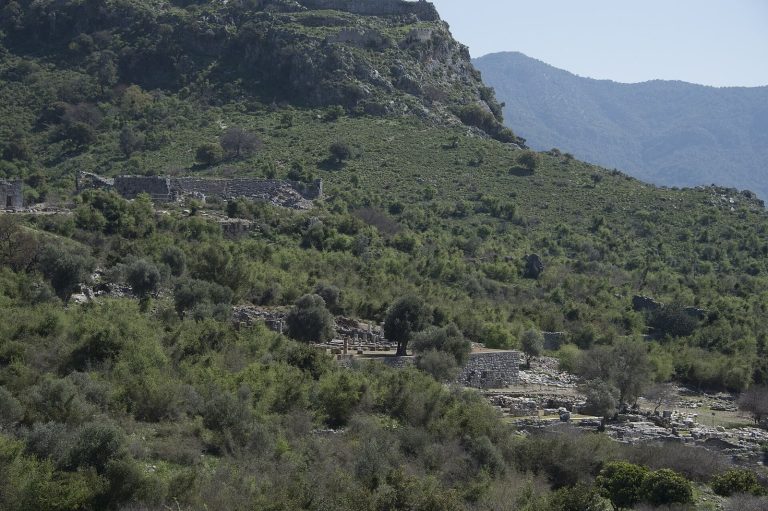
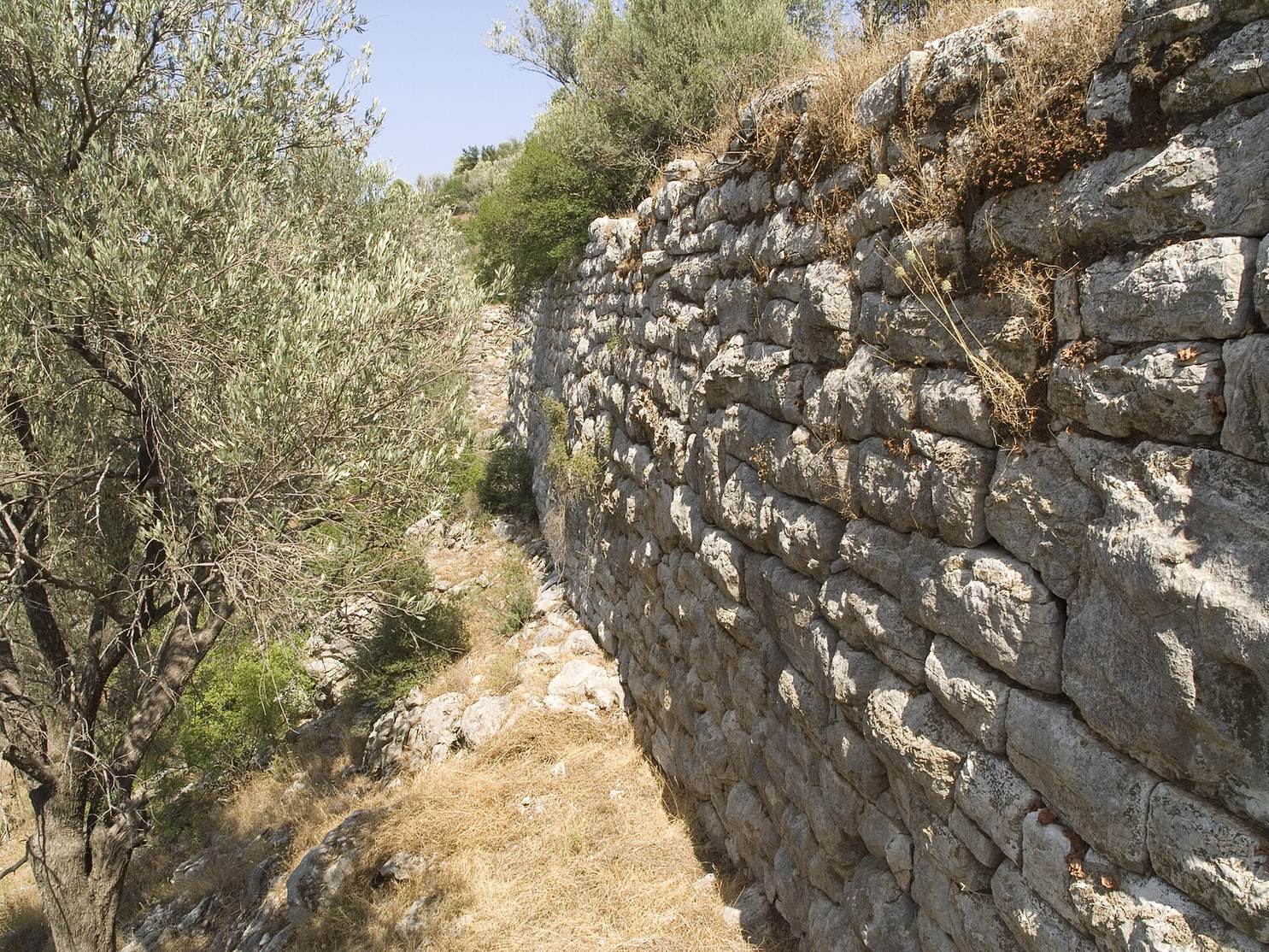
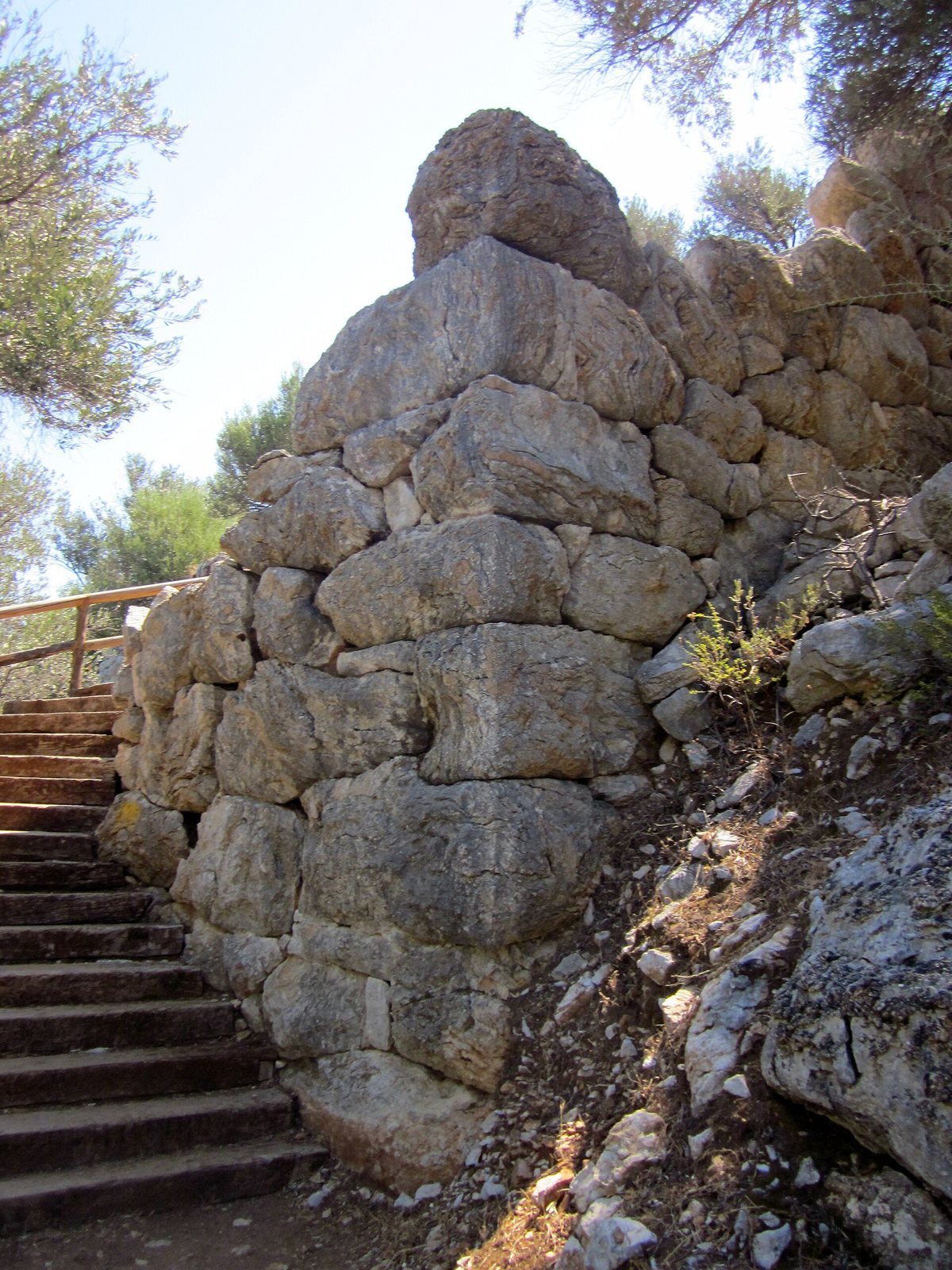
The remains occupy the elongated hill of Asarcık at Hisarburnu, above the Gulf of Marmaris. The settlement included an elevated fortified center, or acropolis, and a burial ground outside its limits. Local stone was worked as carefully cut blocks, laid in polygonal patterns, and arranged in courses of uniform height.
City walls
The walls are built in coursed polygonal masonry and are assigned to the Hellenistic period; the masonry indicates an original construction in the fourth century BCE. The north slope survives particularly well, with sections of wall and towers standing 3–4 metres high. Erosion has removed almost all of the southern stretch. Five towers remain, four solid and one not solid, while a gate in the northern wall was probably the main entrance.
Theatre
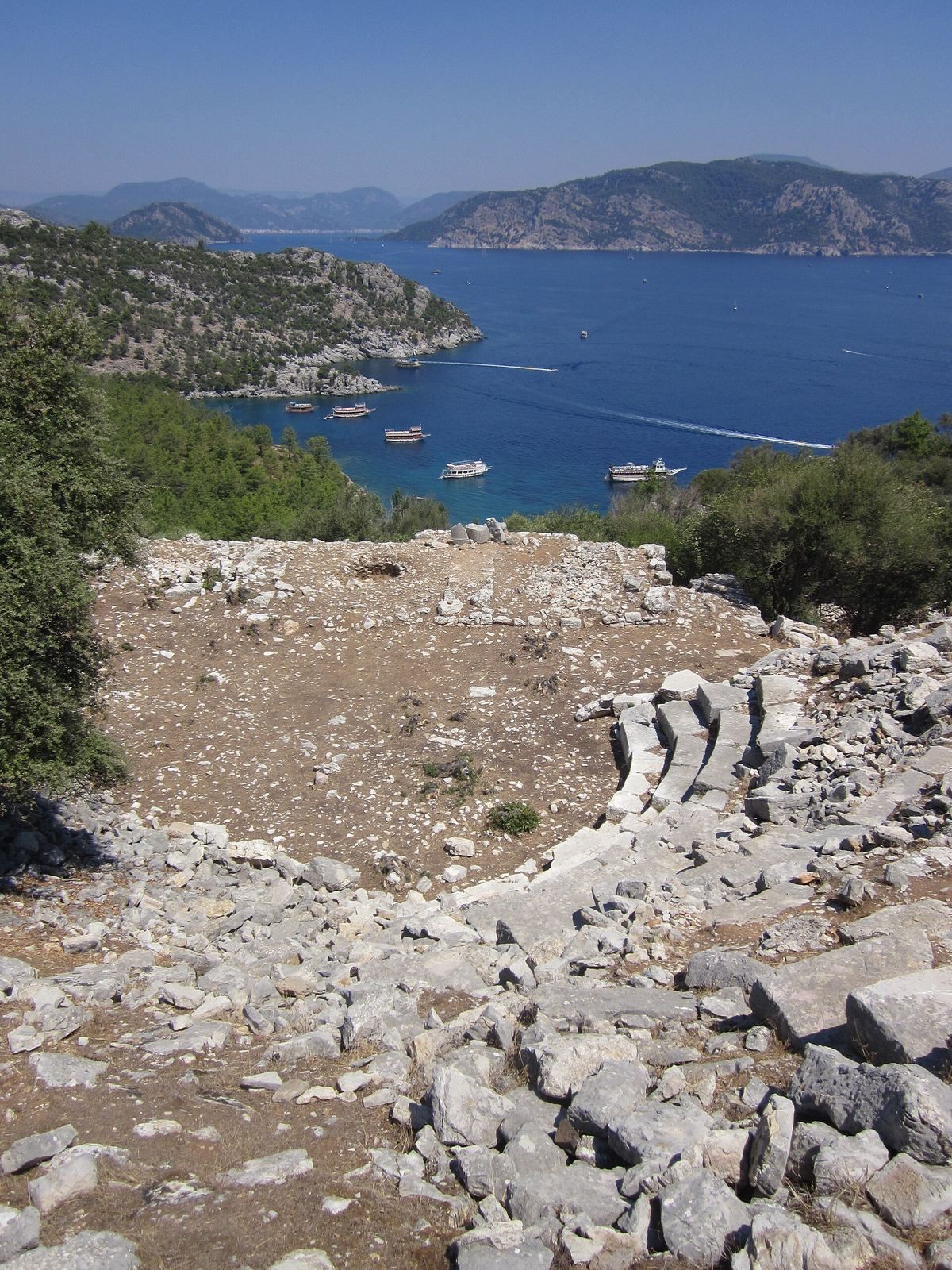
The theatre is the most prominent surviving feature inside the walls, with an estimated capacity of about 1,300 spectators. Among the three known Greek theatres in the Rhodian Peraia, it is the only one where remains survive of both the skēnē, the stage building, and the orchestra, the performance area. A fragment of an altar to Dionysus was found in the orchestra by archaeologist G. E. Bean in 1948.
Temple and statue base
Near the ramparts, farther west, are the foundations of a small temple with columns set between extensions of its side walls and an entrance porch. The building measures 6.8 metres wide by 13.8 metres long. Temple-inventory inscriptions found nearby suggest it was probably dedicated to Apollo Samnaios, meaning “Apollo of the Hill,” a deity known only from Amos. Several fragments of a circular or semicircular Hellenistic statue base lie near the hilltop, west of the theatre.
Necropolis
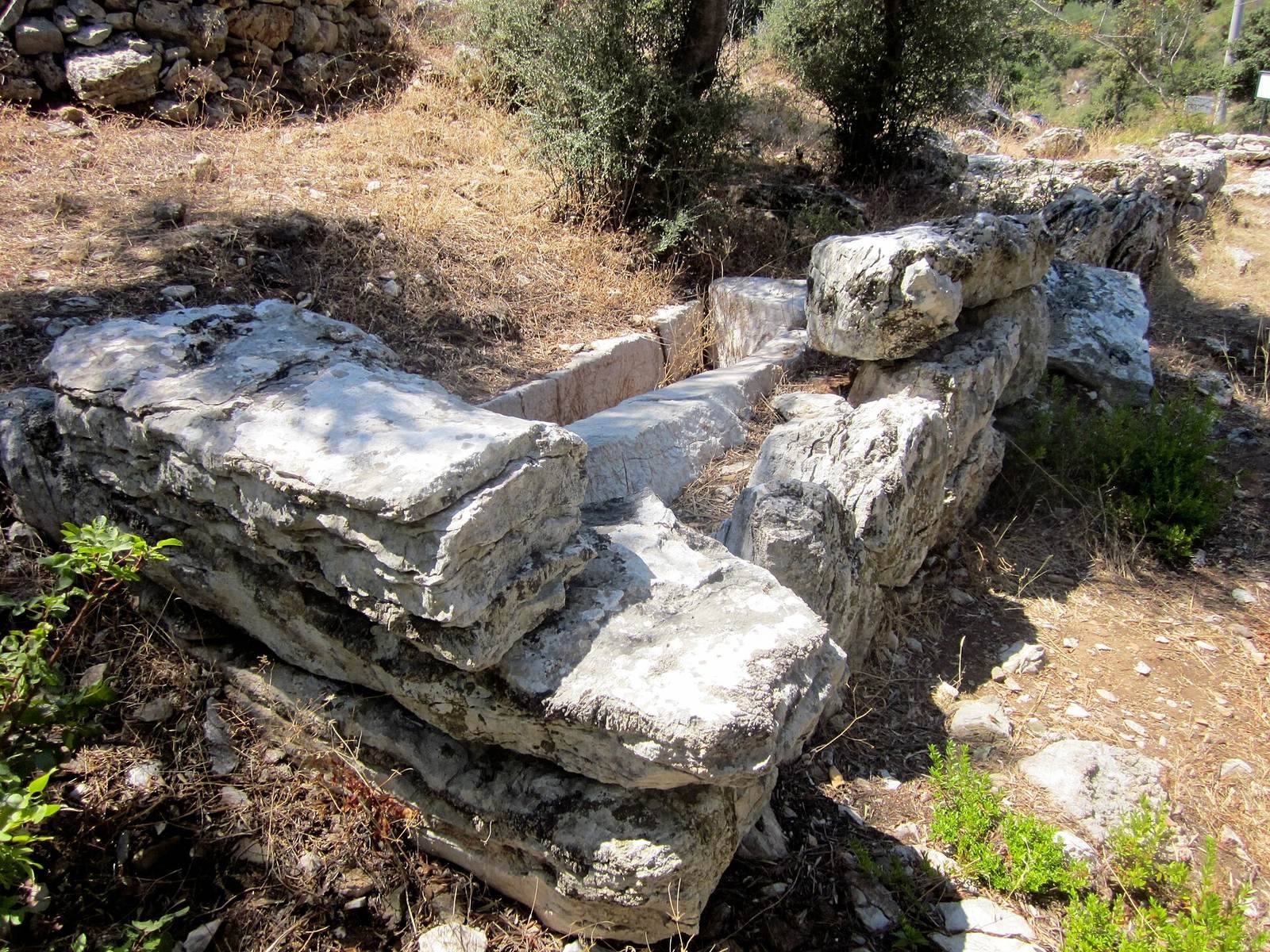
The necropolis lies north of the city walls, just beyond the settlement’s limits. Visible remains include rock-cut tombs, inscriptions, and fragments of monumental architecture.