Mamertine Prison: An Ancient Roman Detention and Execution Site
Site at a Glance
- Popularity
- Very High
- Country
- Italy
- Primary era
- Classical
- Eras represented
- Classical
- Civilizations
- Roman
- Site type
- Civic
- Remains
- Prison
On this page11 sections
History
The Mamertine Prison was an ancient Roman detention and execution site in Rome, Italy. Its origins are uncertain: tradition attributes its construction to Ancus Marcius, Rome’s fourth king, between 640 and 616 BC, and suggests that Servius Tullius later enlarged it. Another proposed date is around 386 BC, near Rome’s first sack by the Gauls. The upper chamber has a separate date, in the second century BC. The complex mattered chiefly as a place to hold people briefly before trial or execution, rather than as a prison for long sentences.
Origins and Roman use
In antiquity, Tullianum referred to a particular part of the prison, while Lautumiae named an associated place, generally understood as a quarry, where punishment was less severe. Over time, Lautumiae fell out of use and Tullianum came to refer to the complex. The origin of Tullianum is disputed. It was traditionally linked to the kings Tullus Hostilius or Servius Tullius, but a more likely explanation connects it to an archaic Latin word for a jet of water, possibly referring to the spring in the lower chamber. The medieval name “Mamertine” may refer to a nearby temple of Mars. The prison was enlarged under the emperor Tiberius.
Roman law did not prescribe imprisonment as a sentence, although detention appears in both the Twelve Tables, an early law code, and the Digest, a later collection of legal writings. Detention could involve debt bondage in the early Republic or chains, used especially for enslaved people. In the imperial period, some people were sentenced to hard labor in mills, mines, or quarries; enslaved people and citizens of low status could be confined in labor camps. The Mamertine Prison was chiefly for short-term custody. Its lower chamber was unsuitable for long stays, while the upper level might theoretically have accommodated longer detention. Long-term imprisonment became more common in the later Empire, and laws from the fourth century sought to limit abuses such as torture and inhumane conditions.
High-status Roman and foreign prisoners were generally kept in the custody of individual Romans, sometimes in private homes or country estates. Some foreign leaders captured in war were executed after being displayed in a Roman triumph, a public procession celebrating military victory, but most high-status captives were neither held at the prison for long nor executed there.
Prisoners and executions
In 63 BC, Publius Cornelius Lentulus Sura and other associates of Catiline were held briefly at the prison and executed for their alleged plan to overthrow the government. The executions took place during Cicero’s consulship without the usual opportunity to appeal. Cicero was later exiled for his actions. Sejanus, who led the Praetorian Guard under Tiberius, was held at the prison before his execution, which was associated with the Gemonian stairs. Quintus Pleminius may have been arrested and exiled after losing power, or may instead have died in prison while under prosecution.
Other prisoners included Herennius Siculus, a supporter of the Gracchi and a diviner who read the entrails of sacrificial animals. He struck his head against a beam in his cell and died before his planned execution. Eumenes III of Pergamum, also known as Aristonicus, was imprisoned there after rebelling against Rome in 132 BC and being defeated in 130 BC. The Samnite leader Gaius Pontius was captured and executed at the prison.
Vercingetorix, leader of the Gauls during the Gallic War, was executed after Julius Caesar’s triumph in 46 BC. Adiatorix, a ruler of part of Galatia, was imprisoned after killing Roman settlers at Heracleia. Jugurtha, king of Numidia, may have died at the end of Gaius Marius’s triumph or several days later in prison. Simon bar Giora, a Jewish rebel leader captured in Judea, was taken to Rome, displayed in a triumphal procession, and executed in 70 AD.
Christian traditions and later use
Christian tradition associates Saint Peter with imprisonment in the Tullianum and says that he baptized people with water from its spring. This account is not historically established: the spring existed before Peter’s supposed confinement, and the story appears in texts from the sixth century. The same tradition says that the guards Martinian and Processus were baptized by Peter and then held there awaiting execution. Saint Paul was also associated with the prison, but he awaited trial in a house in the southern Campus Martius, a large district outside Rome’s central civic area. That site later became the church of San Paolo alla Regola. Paul was a Roman citizen tried and executed under Nero. Christian worship has taken place at the prison since the Middle Ages, and later traditions also linked visits there with Saints Philip, Ignatius, Teresa of Lisieux, and Benedict Joseph.
Remains
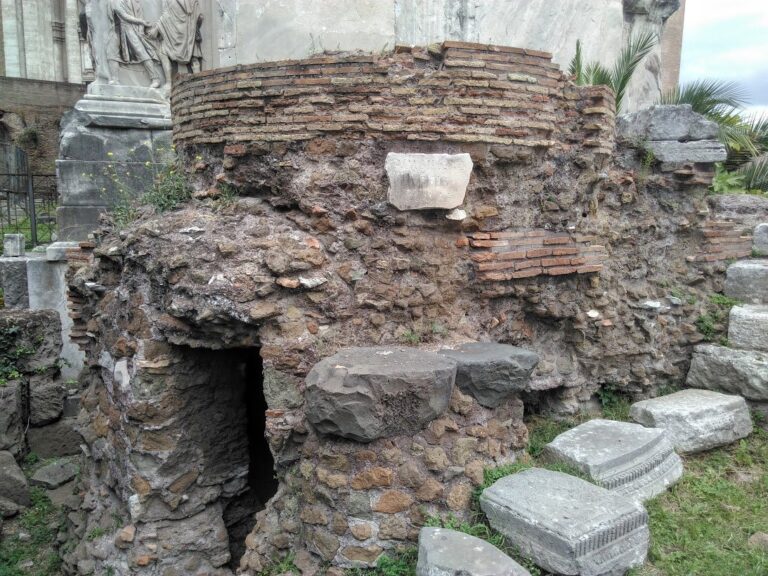
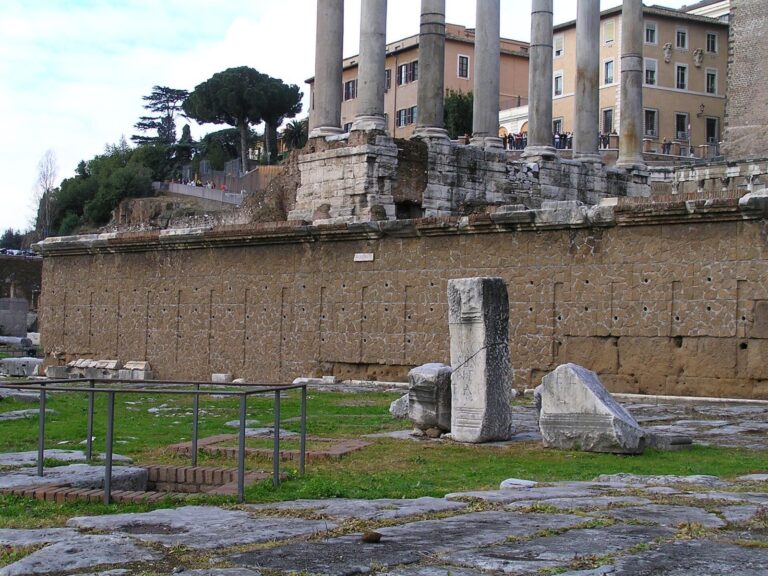
The surviving complex has two chambers on different levels, with an opening through which prisoners could be lowered from the upper room into the lower cell. It stands on the northeastern slope of the Capitoline Hill, within the Comitium, an important civic meeting area in ancient Rome.
Setting and layout
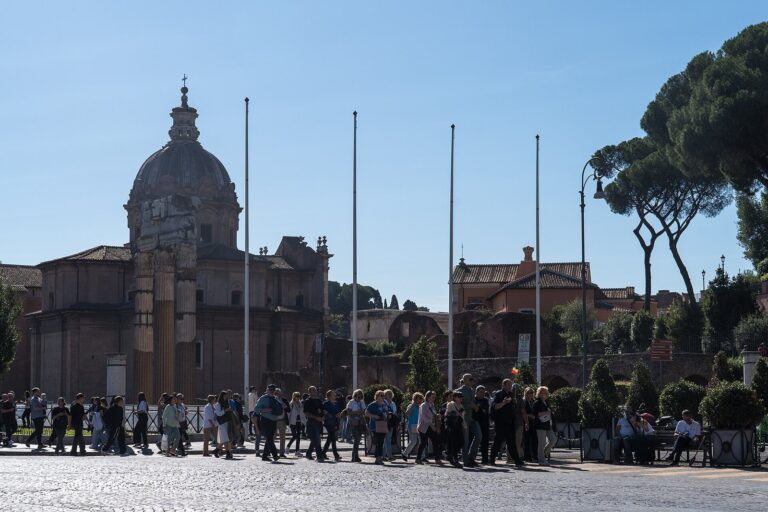
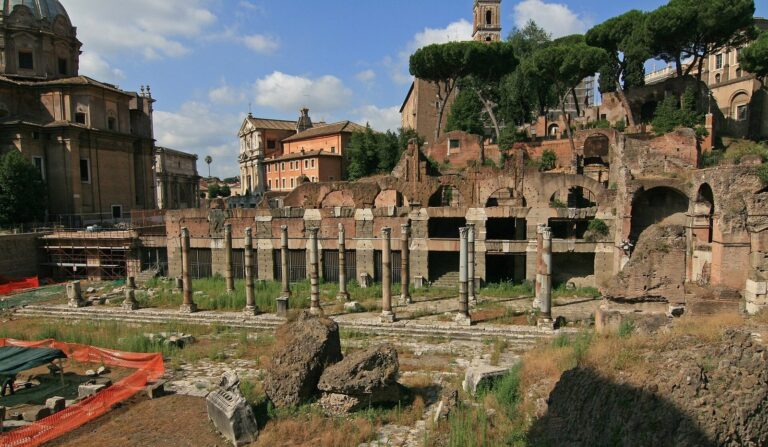
The prison faced the Curia, the Senate house, and the imperial forums of Nerva, Vespasian, and Augustus. The Gemonian stairs lay between it and the Tabularium, which served as a record archive, and led toward the Arx, the citadel on the Capitoline Hill.
The prison chambers
Upper chamber
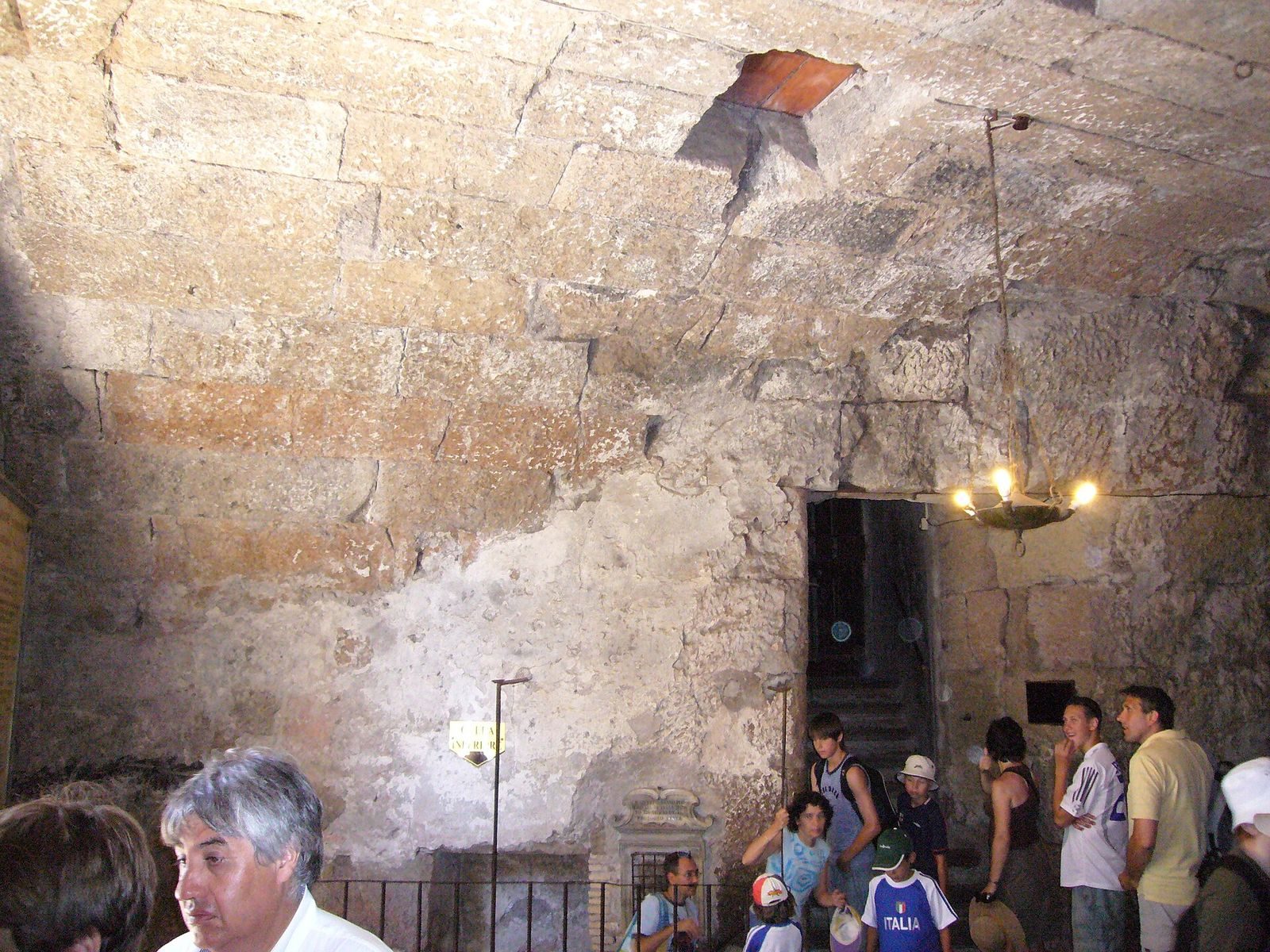
The upper room is trapezoidal, roofed with a vault, and built from blocks of tufa, a volcanic stone. It dates to the second century BC. An opening in its floor gave access to the lower chamber, allowing prisoners to be lowered below.
Lower chamber
The lower cell is circular and formed from blocks of peperino, another volcanic stone. Its walls curve inward to create the shape of a truncated dome, a form probably connected with construction of the Basilica Porcia in 184 BC. A stairway descends into the chamber.
Cistern and drainage
The prison began as a cistern, with a spring in the floor of the lower level. A passage was later made from the cistern to the Cloaca Maxima, Rome’s principal sewer, apparently so that bodies could be removed through the drainage system.
Churches and Christian features
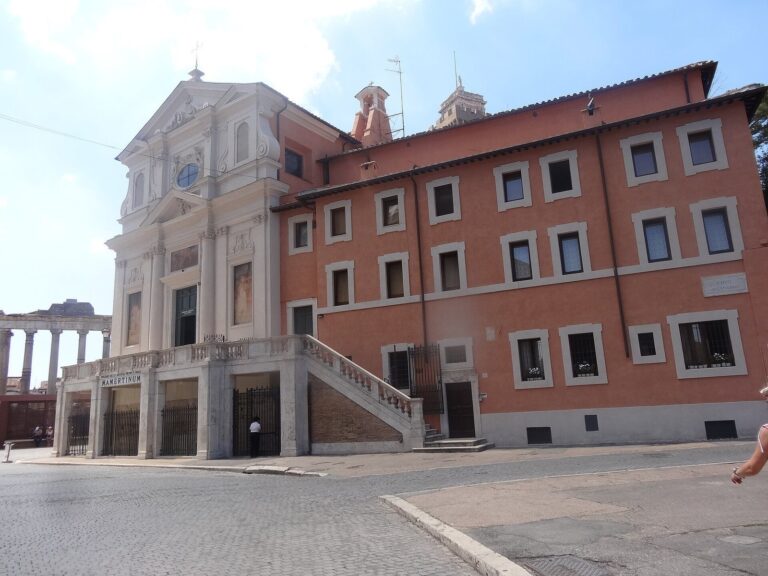
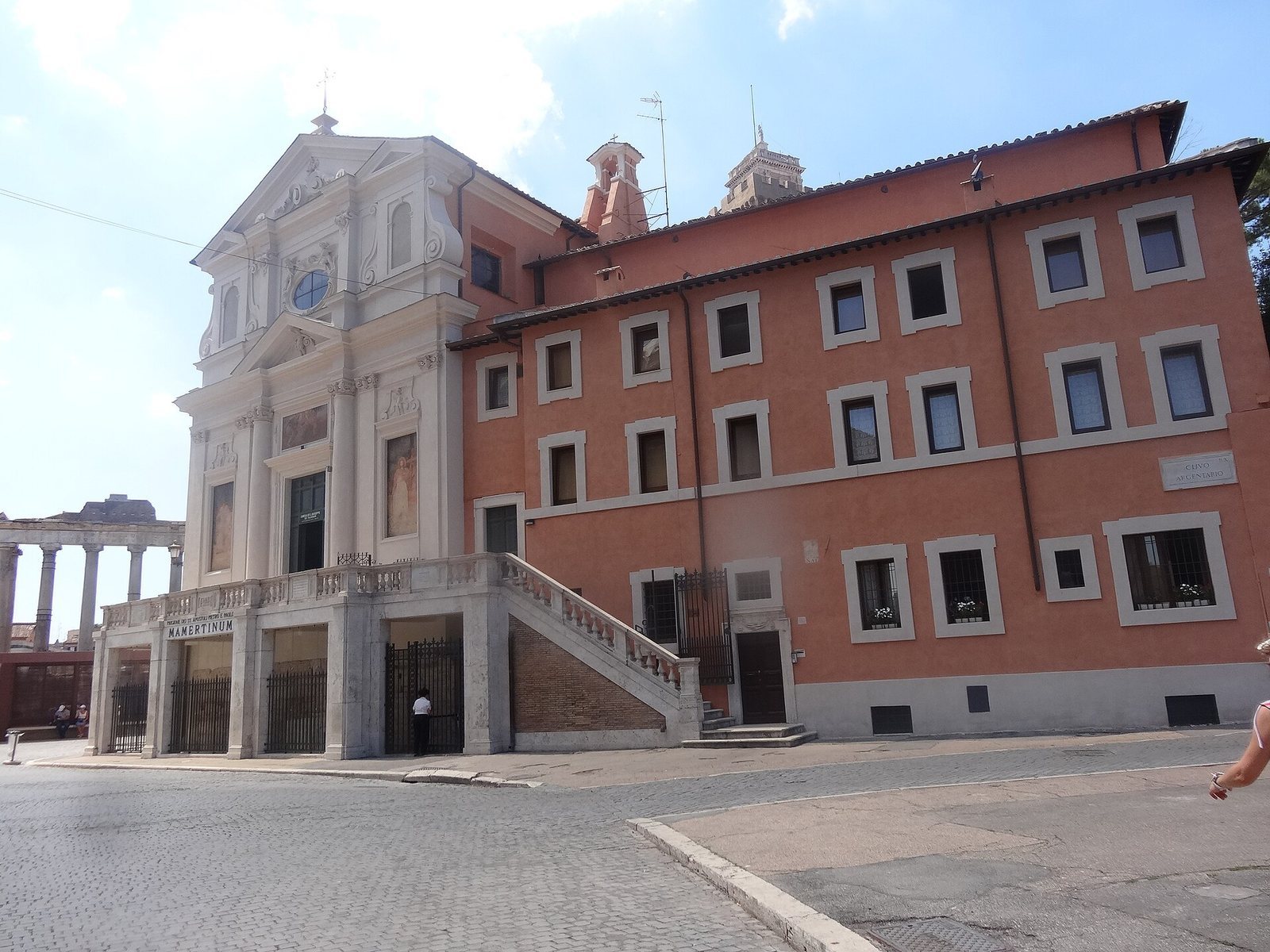
Two churches occupy the site on separate levels: San Giuseppe dei Falegnami above and San Pietro in Carcere below. The cross on the lower chapel’s altar is inverted, reflecting the tradition that Peter was crucified upside down. Excavations in 2009 uncovered frescoes belonging to a church.