Basilica on the Holy Mountain: A Baroque Marian Shrine in Poland
Site at a Glance
- Popularity
- High
- Country
- Poland
- Primary era
- Early Modern
- Eras represented
- Medieval, Early Modern
- Civilizations
- Kingdom of Poland, Polish–Lithuanian Commonwealth
- Site type
- Religious
- Remains
- Basilica
On this page13 sections
History
The Basilica on the Holy Mountain is a Baroque Roman Catholic church at Głogówko, in the Piaski commune near Gostyń, Poland. Built between 1675 and 1698, it is dedicated to the Immaculate Conception of the Virgin Mary and St Philip Neri. It became the largest Marian shrine in the Archdiocese of Poznań.
Medieval worship and the Marian image
The Holy Mountain was a place of worship by the Middle Ages. Devotion there may have been influenced by the Benedictine monastery at nearby Lubiń. A wooden chapel was built on the hill in the 15th century, and a healing from paralysis experienced by a man named Krzyżanowski in 1495 became especially well known among the miracles associated with the site.
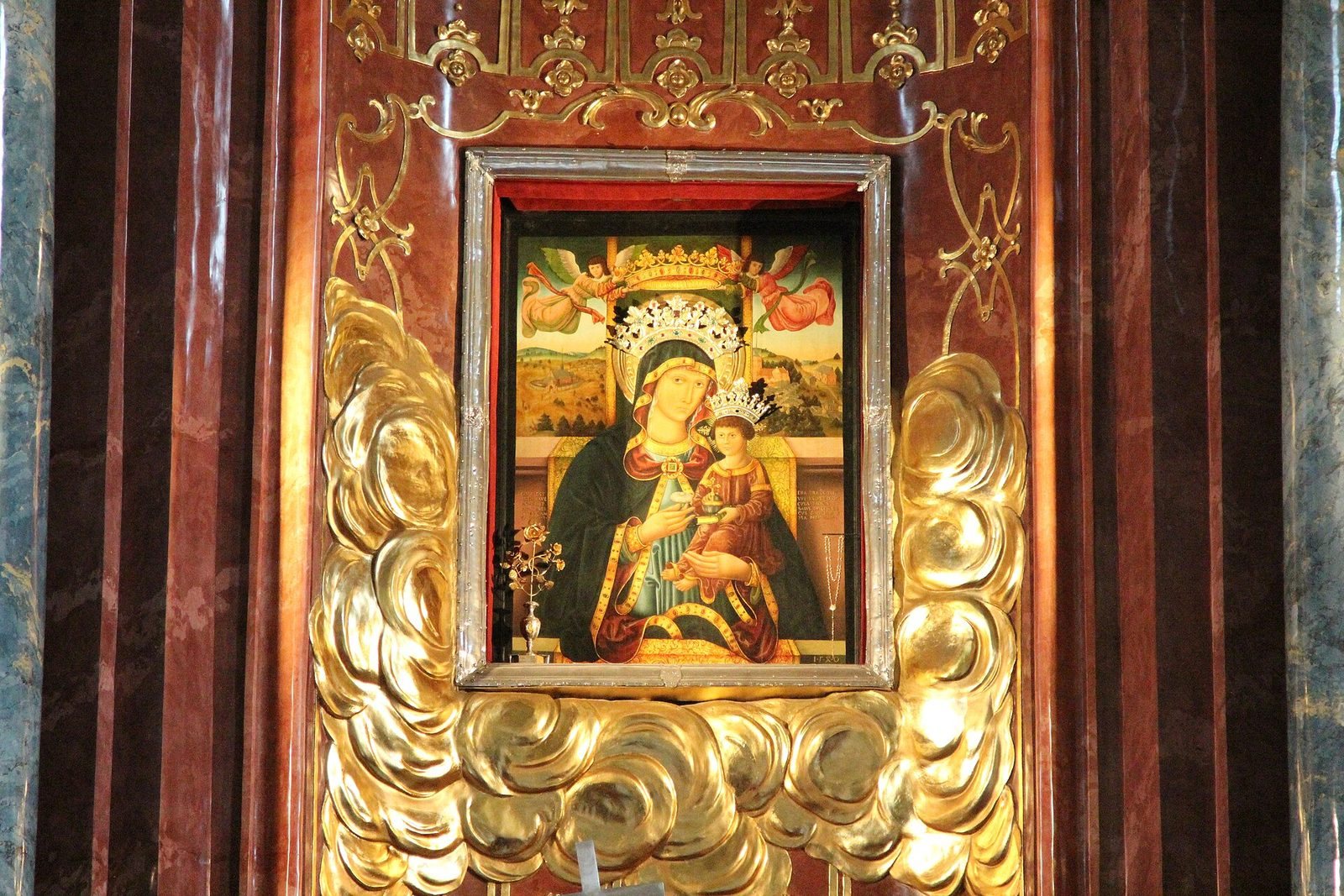
In 1512, Jan Lubrański, bishop of Poznań, approved the expansion of Marian devotion and the construction of a church. An anonymous painter from Wielkopolska created an image of the Virgin and Child in 1540. Believed to be miraculous, it drew many pilgrims to the Holy Mountain.
The Oratorians and the present church
Adam Konarzewski brought members of the Congregation of the Oratory of St Philip Neri to the Holy Mountain in 1668. This Catholic community, founded by the 16th-century Italian priest Philip Neri, is known through its members as the Oratorians, who have remained associated with the site.
Konarzewski began the present church as an offering of thanks for a miraculous recovery he had experienced as a child. After his death, his widow, Zofia Konarzewska, continued the project. Having seen Santa Maria della Salute in Venice, she chose to create a church near Gostyń based on a design by its architect, Baldassare Longhena. Work under the revised plans began in 1677, directed by the Italian architects Giorgio and Giovanni Catenazzi. The church was consecrated in 1698.
Completion and pilgrimage
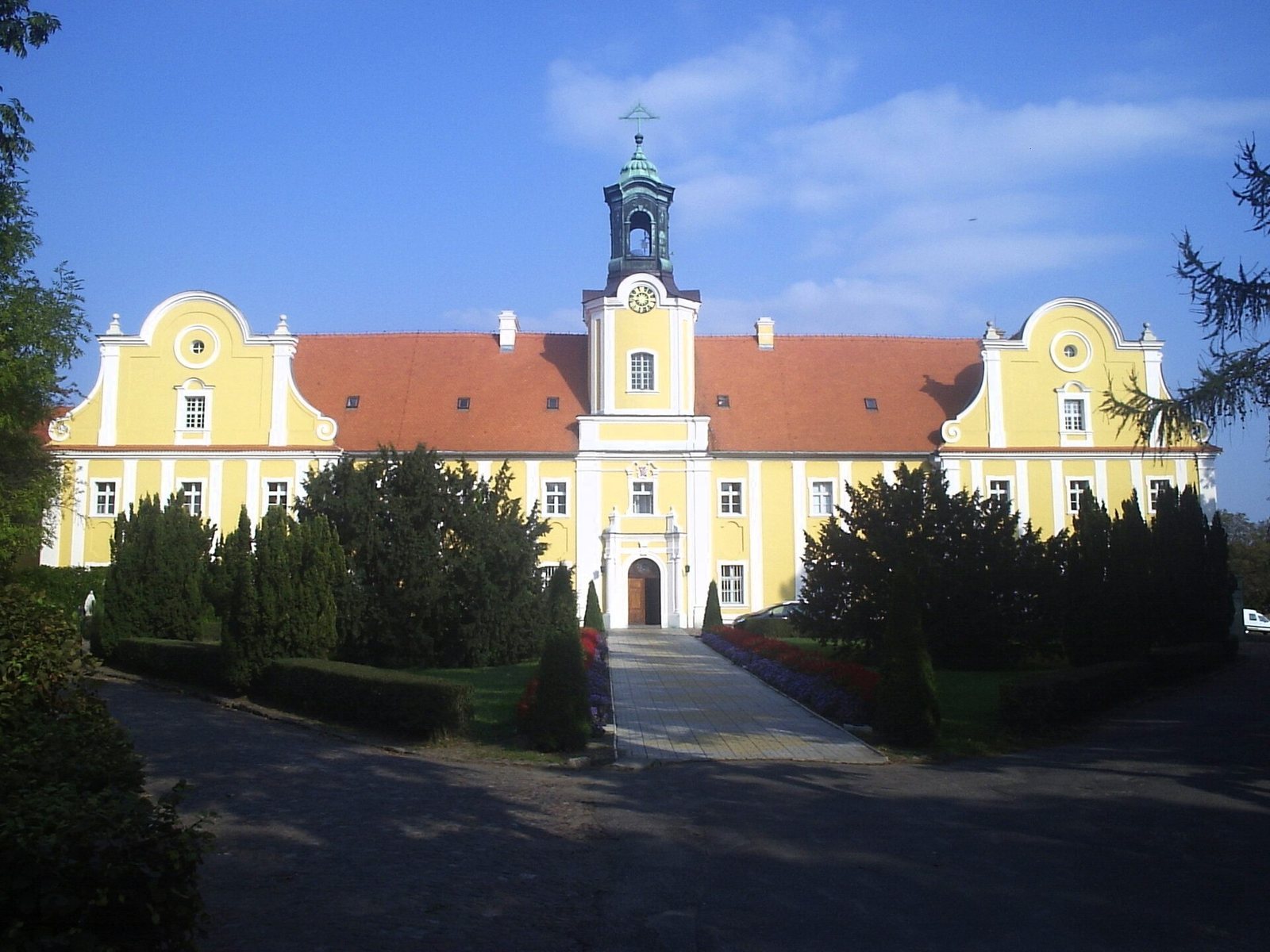
Work continued after the consecration. In 1726–1728, Konarzewska’s granddaughter, Weronika Mycielska, commissioned Pompeo Ferrari and Jan Adam Stier to add the dome and lantern. Ferrari also designed the monastery buildings, which were built from 1732 to 1748; finishing work continued until 1780. Meanwhile, a diocesan commission declared the Marian image miraculous in 1726, the year a description of its associated miracles was published in Poznań.
During the Seven Years’ War, a major conflict fought from 1756 to 1763, Russian and Prussian forces fought near Gostyń in 1761. The church and monastery escaped destruction. Jérôme Bonaparte, Napoleon’s brother, stayed at the Holy Mountain in 1806. An unverified story links the period to an alleged plan to abduct Napoleon during his stay in Poznań and replace him with the Oratorian priest Stefan Błażewski.
Institutional change and modern recognition
In 1876, the Prussian state dissolved the Oratorian community during the Kulturkampf, its campaign against the Catholic Church’s influence, particularly in the 1870s. The diocese took over the monastery, and the Oratorians returned in 1919. On 24 June 1928, Cardinal August Hlond crowned the Marian image under a decree from Pope Pius XI.
Pope Paul VI granted the church the honorary title of minor basilica in 1971. In 2008, it received the Historic Monument of Poland designation, a high-level national heritage status. The discovery of manuscripts by composers active at the Holy Mountain in the 18th and 19th centuries also led to the formation of a society dedicated to the site’s musical heritage.
Remains
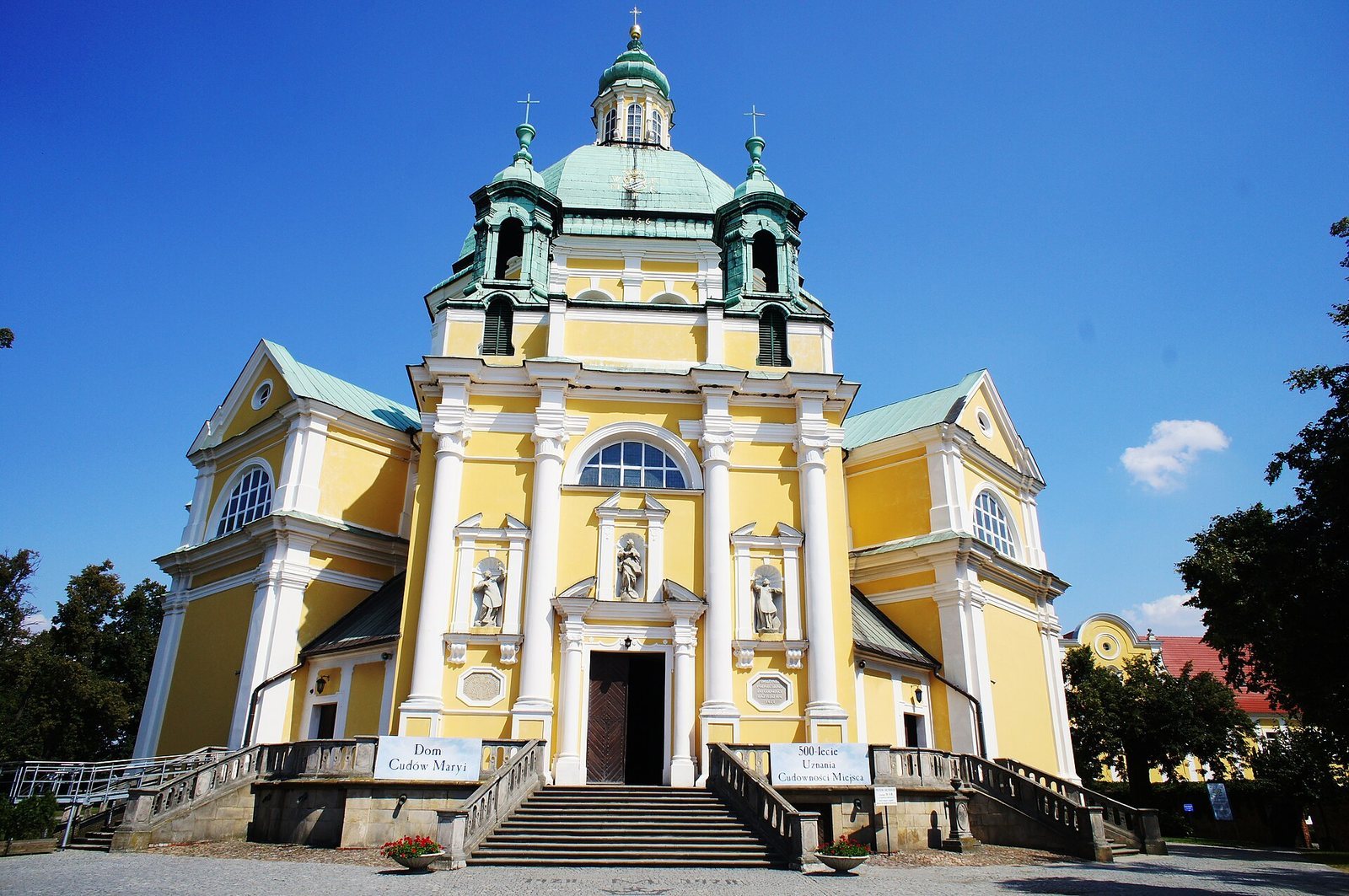
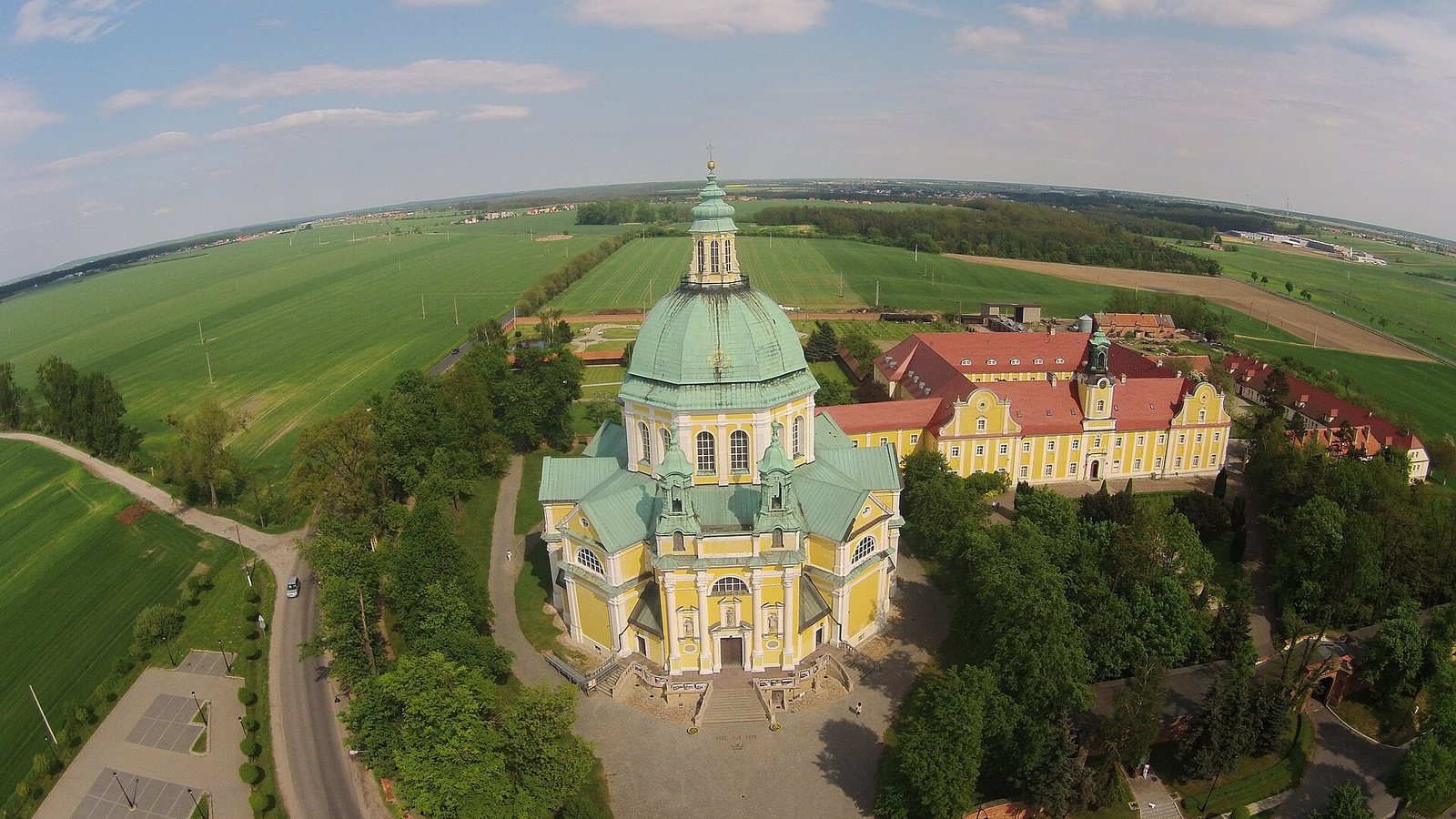
The church’s Baroque design is arranged around a circular plan. Its central octagonal nave is encircled by an ambulatory, a passage around the central space, and six chapels. A transept, the crosswise section of a church, lies between the octagonal space and the choir.
Dome and exterior
A dominant dome rises above the church. Measuring 17 metres in diameter and 50 metres in height, it is described as Poland’s largest dome. A 10-metre lantern topped by a sphere and cross crowns it. Above the church’s left side entrance, a cannonball embedded in the wall commemorates the 1761 battle near Gostyń.
Interior and furnishings
Dome painting
The inside of the dome carries a multicoloured painting by Georg Wilhelm Neunhertz, dated 1746. Its scenes depict episodes from the life of St Philip Neri.
Main altar
Made between 1723 and 1726 by Ignazio Provisore and Johann Albrecht Siegwitz of Breslau, the main altar holds the Virgin and Child image known as the Mystical Rose of the Holy Mountain, a devotional title for Mary.
Organ and pulpit
The organ, dated 1766–1768, stands on the music gallery. A pulpit from 1756 is positioned to the left of the presbytery and rests on a sculpted Black male figure.
Earlier worship buildings
The earlier 15th-century chapel was wooden and housed sculptures of a Pietà, showing Mary holding the dead Jesus, and a crucifix. The first church was a wooden, half-timbered building.
Monastery and burial area
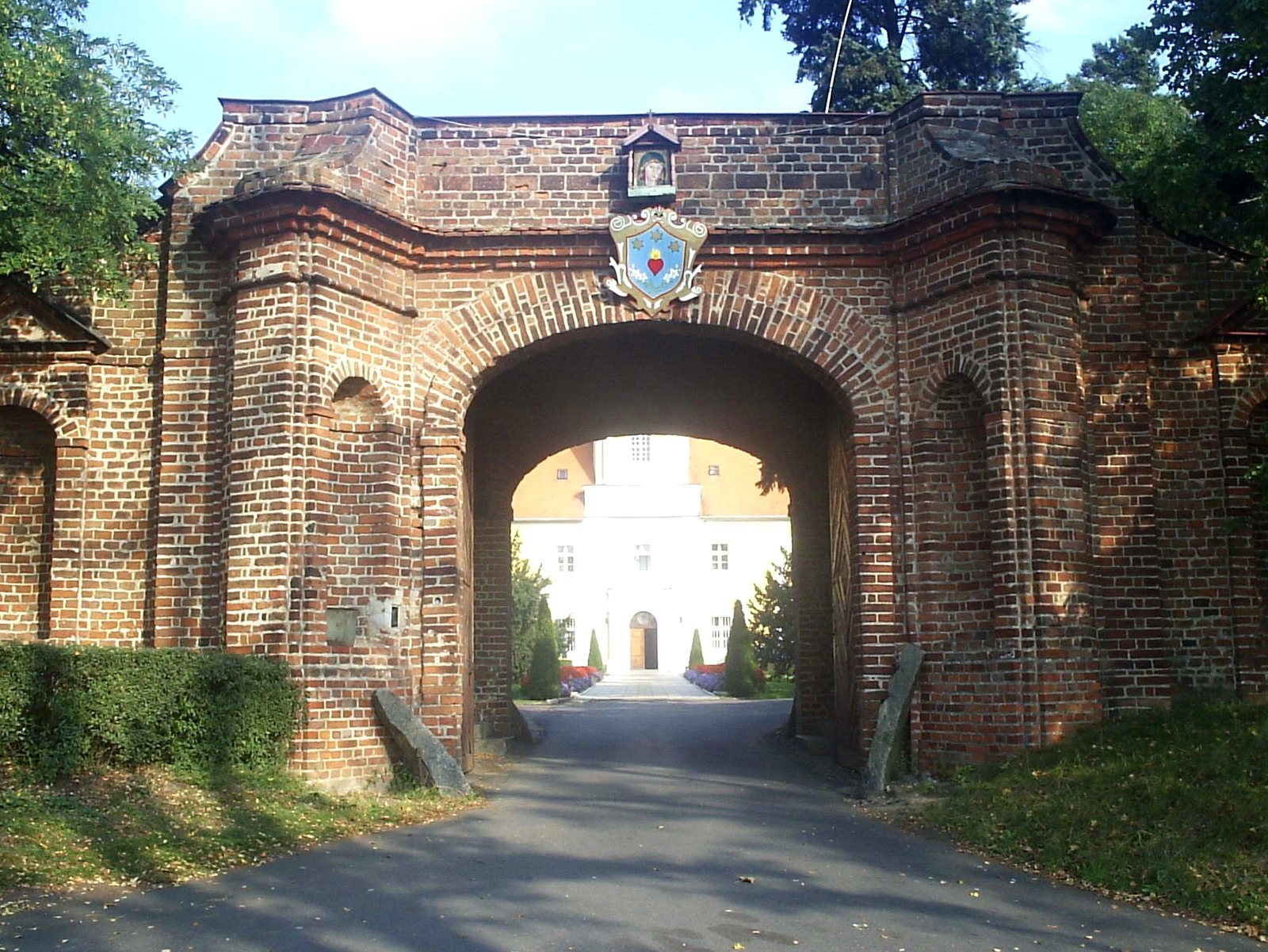
The monastery buildings stand beside the church and include a courtyard garden.
An underground burial area beneath the church contains the coffins of its founders and deceased members of the Oratorian congregation. They include Father Wawrzyniec Kuśniak (1788–1866), an Oratorian priest called a Servant of God, a Catholic title for someone whose cause for canonization has begun.