Fort San Miguel, Campeche: A Defensive Fort in the City’s Fortification System
Site at a Glance
- Popularity
- Medium
- Country
- Mexico
- Primary era
- Early Modern
- Eras represented
- Early Modern, Modern
- Civilizations
- Spanish
- Site type
- Military
- Remains
- Fort
On this page8 sections
History
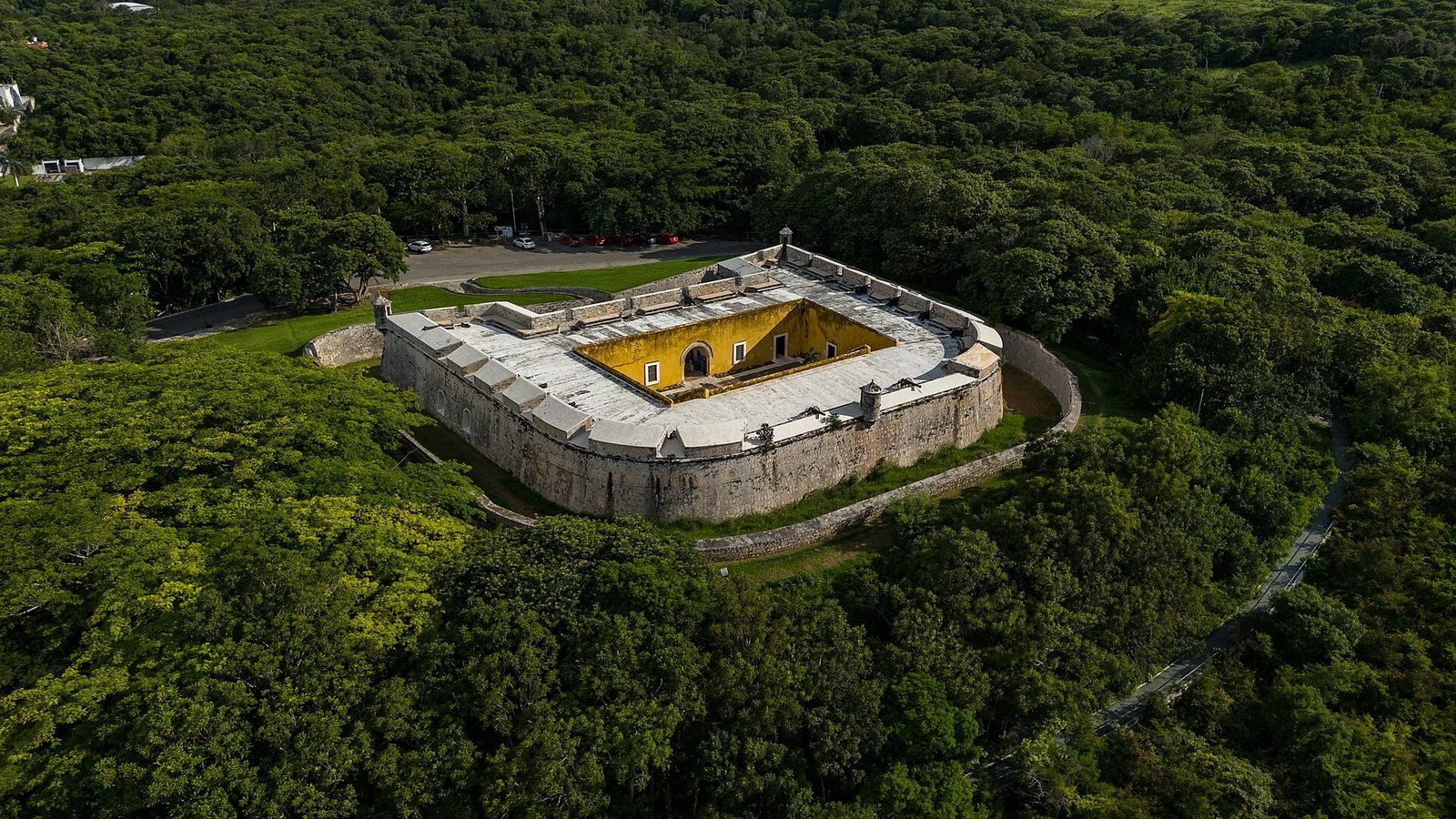
Fort San Miguel is a defensive fort in Campeche, Mexico, built between 1771 and 1801 as part of the city’s fortified system. It was intended to help protect Campeche from possible pirate attacks.
Campeche’s defensive system
Construction of the city’s defenses began in 1663 with Fort San Benito, Fort San Bartolomé, and the fort known as El Bonete. The wider complex, developed across the seventeenth and eighteenth centuries, also included Fort San José El Alto and the city wall.
Construction of Fort San Miguel
Engineer Juan José de León y Zamorano directed work on Fort San Miguel and was also identified as its commissioner. It is the largest of Campeche’s forts; its size and history have made it one of the city’s representative buildings.
Museum use
The fort now houses the Campeche Archaeological Museum, with important artifacts from Maya remains found in the state. The Maya are Indigenous peoples of Mesoamerica. Mexico’s National Institute of Anthropology and History owns the fort.
Remains
Defensive layout
Moat and entrance
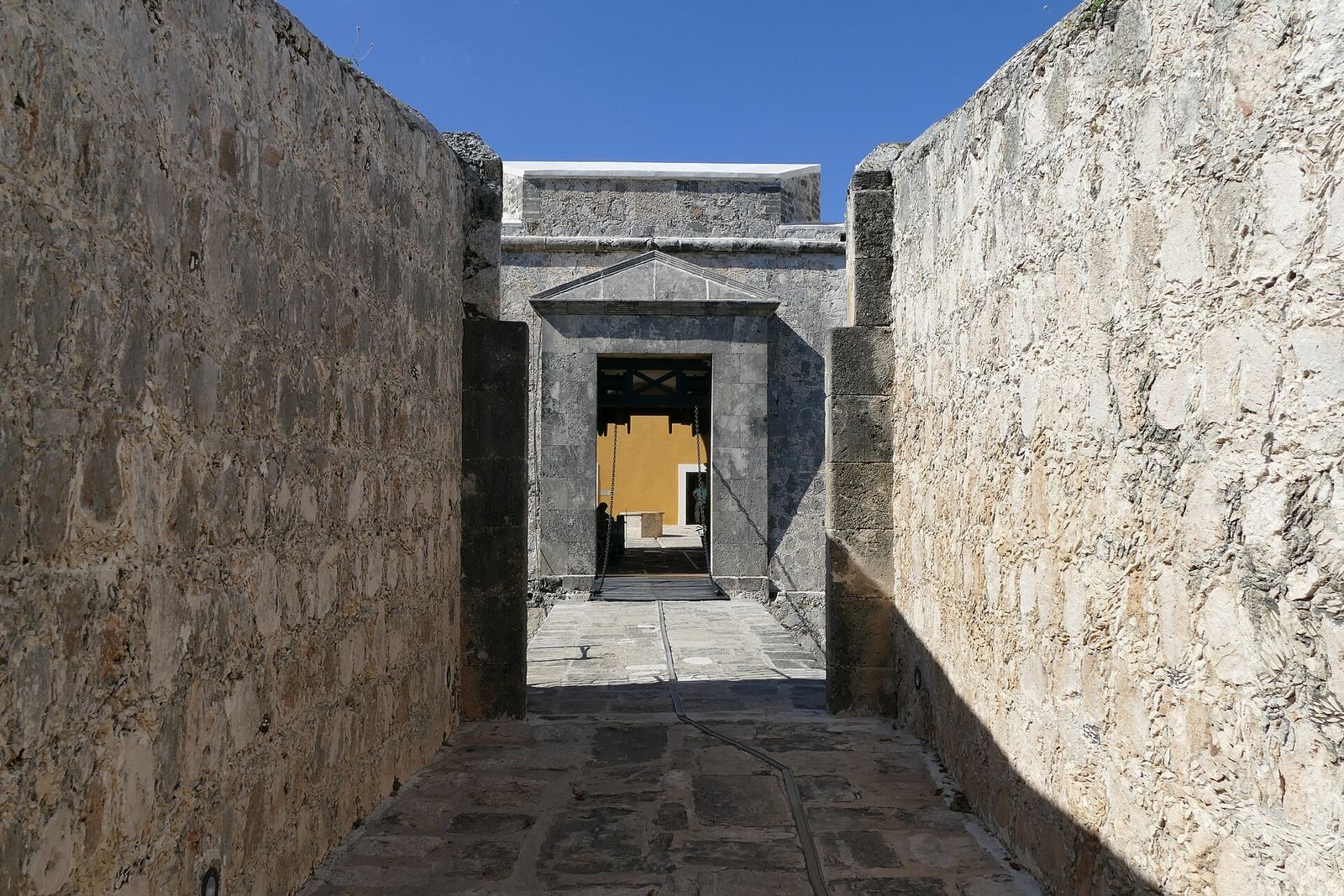
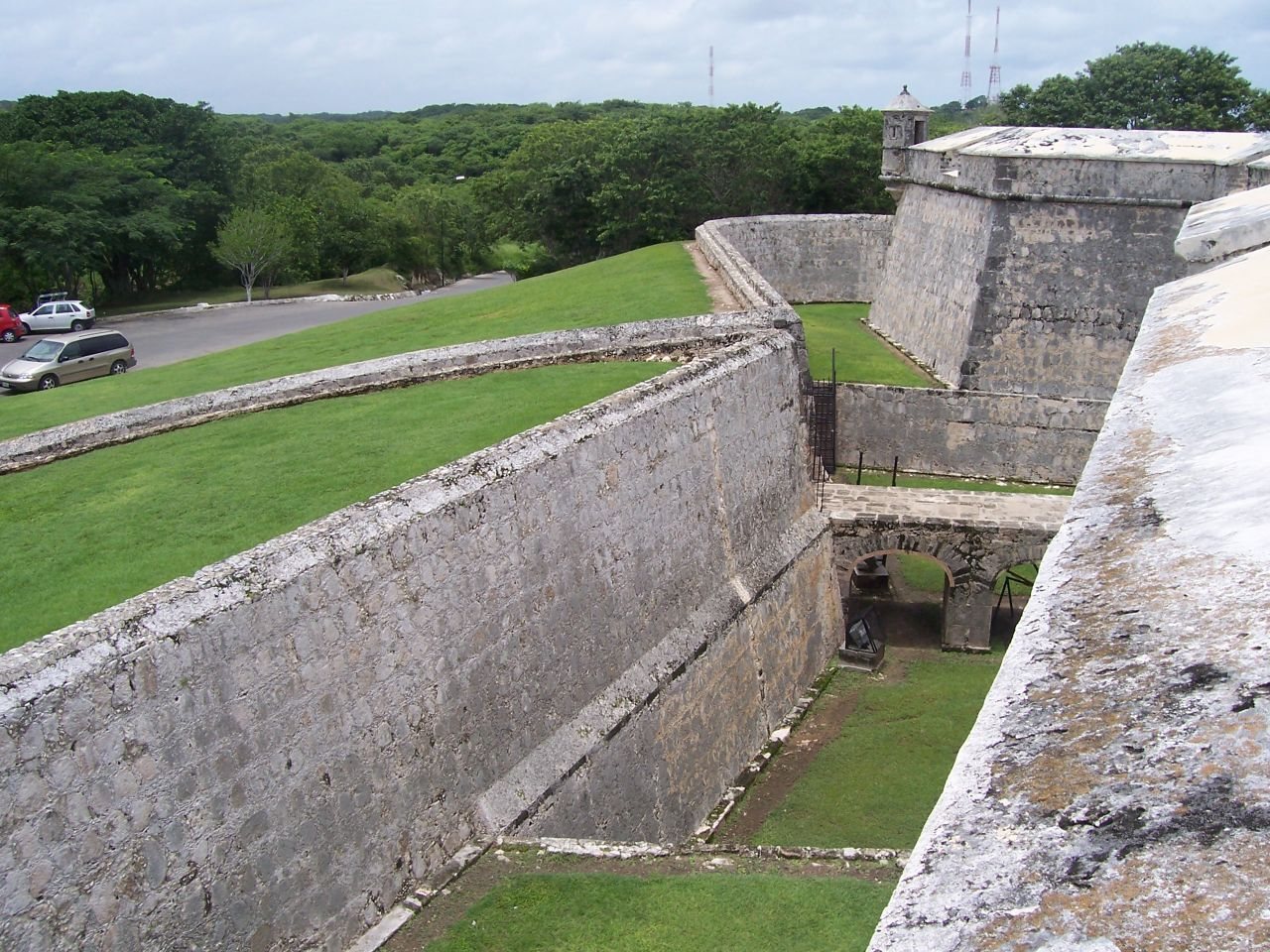
The fort has a pentagonal plan on a raised platform of compacted earth, surrounded by a moat. A narrow, curved passage crosses the moat to the main entrance, where a drawbridge once stood.
Courtyard and roof
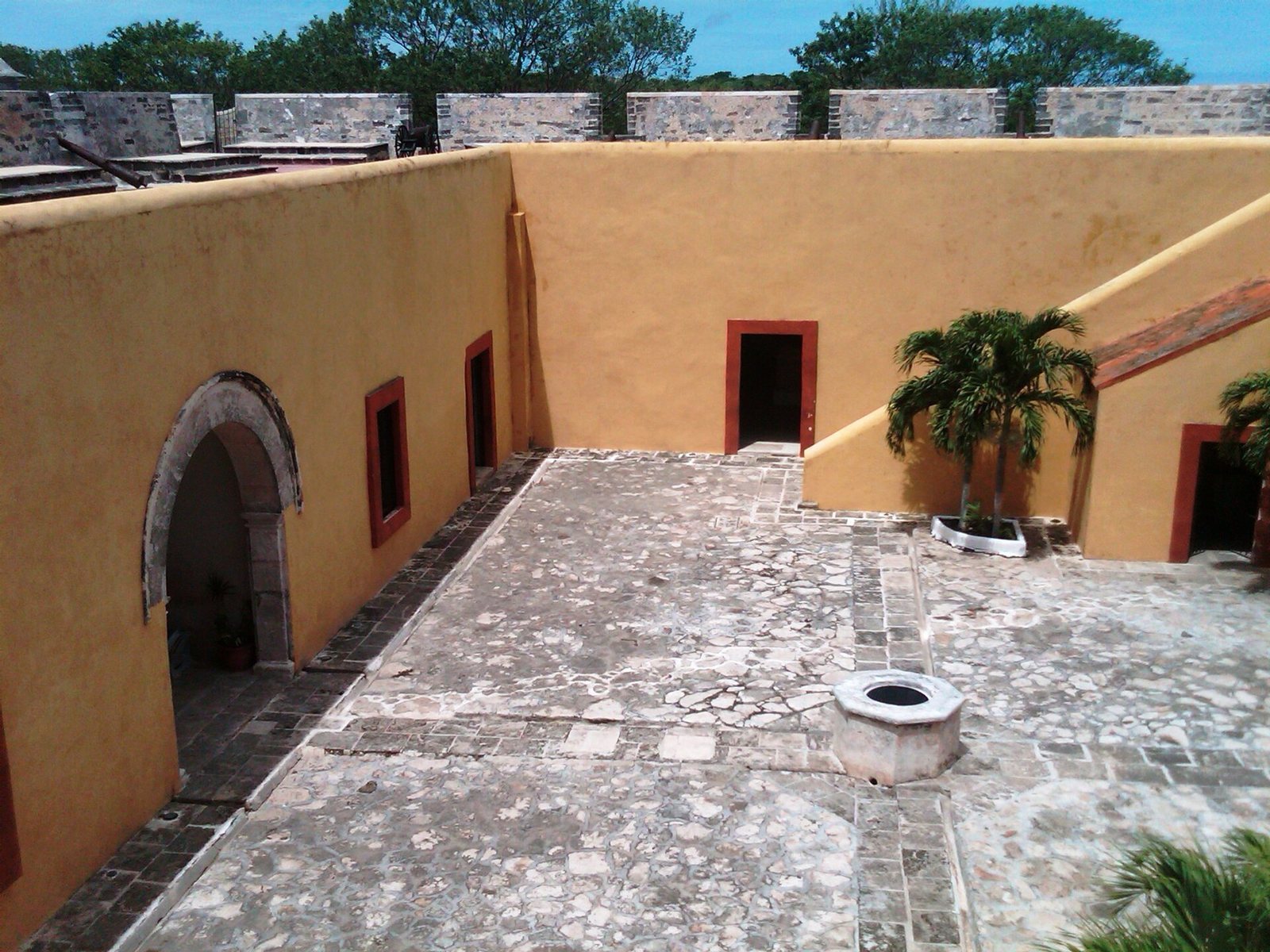
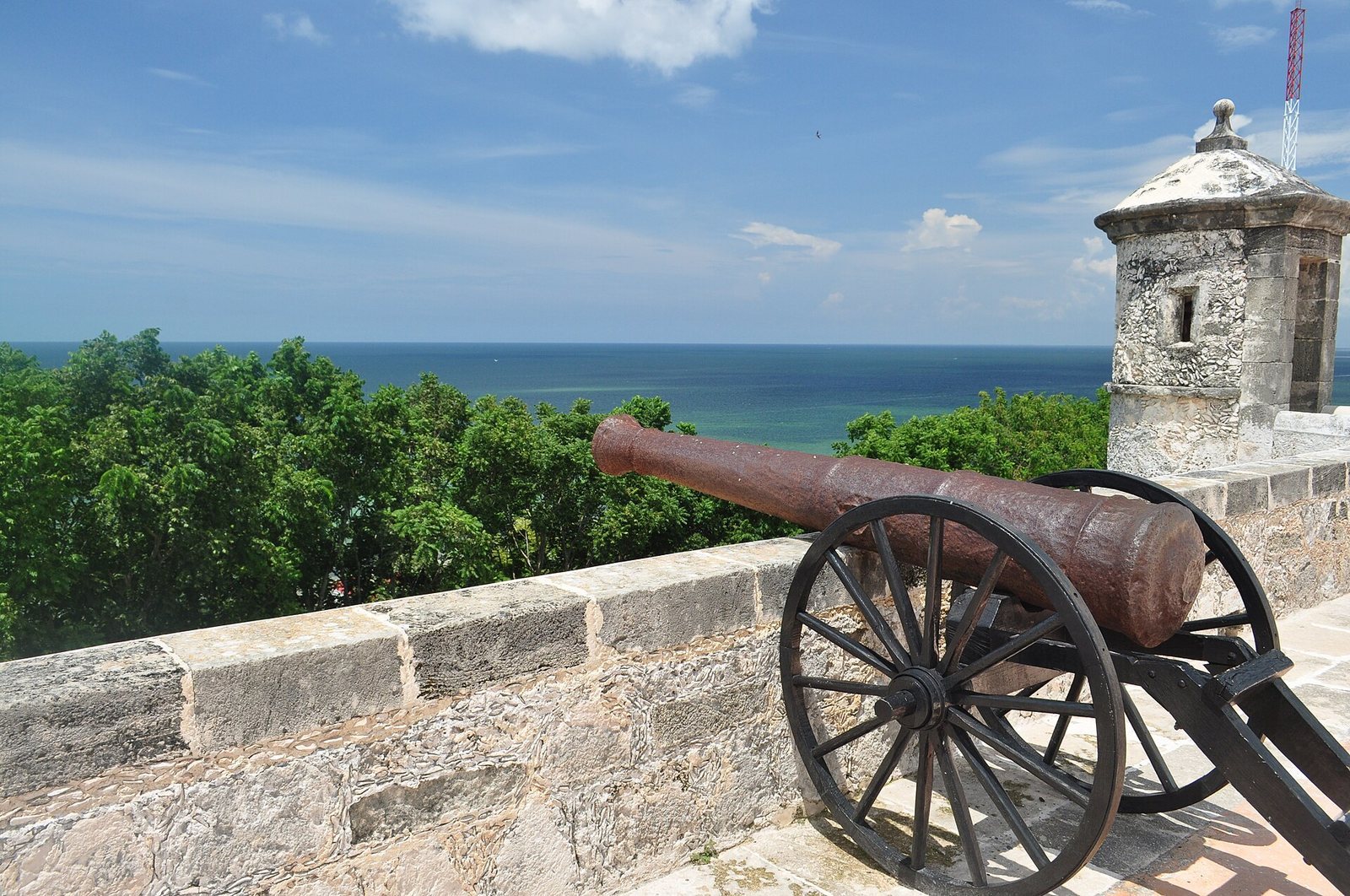
A well occupies the center of the inner courtyard. Ramps at the sides lead to the roof, where twenty cannons were positioned along the battlements, the defensive parapet at the fort’s top. The fort is in good condition.