Rengebu-ji Temple: A Shingon Buddhist Temple on Sado Island
Site at a Glance
- Popularity
- Medium
- Country
- Japan
- Primary era
- Medieval
- Eras represented
- Medieval, Early Modern
- Civilizations
- Ashikaga shogunate, Tokugawa
- Site type
- Religious
- Remains
- Temple
On this page16 sections
History
Rengebu-ji Temple is a Chisan-ha branch Shingon Buddhist temple in Kobie, on the southern side of Sado Island, Japan. Shingon is a Japanese Buddhist tradition centered on esoteric teachings. The temple is regarded as one of Shingon’s three major sacred centers, alongside Amanosan Kongoji and Murō-ji. Its foundation date is uncertain: temple tradition places it in 806, another tradition gives 807, and an alternative account credits a Tendai monk in the mid-ninth century. Rengebu-ji is also the sixth temple on the Sado Shikoku 88-temple pilgrimage and is said to have served as a place of imperial prayer under Emperor Saga, an early ninth-century ruler.
Foundation traditions and sacred associations
The tradition that dates the temple to 806 credits Kūkai, the monk who established Shingon Buddhism in Japan, with founding it as a spiritual safeguard for the capital. Sado was regarded as Kyoto’s maritime “demon gate.” A separate version places the foundation in 807, while another attributes it to a Tendai monk in the middle of the ninth century. Tendai is another major Japanese Buddhist school.
A legend links the temple to three vajras, ritual implements that Huiguo, a Tang-dynasty Buddhist master, had given Kūkai as a sign of the transfer of teachings. When monks pursued Kūkai to reclaim them, he is said to have cast the objects eastward. The five-pronged vajra supposedly reached Mitsuke Island in Noto, the three-pronged one Mount Koya, and the single-pronged one Mount Kobie, where Rengebu-ji stands.
Traditions offer several explanations for the name Kobie. One says that Mount Kobie aligns with Mount Hiei when viewed from the imperial palace, and that both mountains were regarded as protectors of the capital. Other explanations hold that Kobie was already the place-name before the temple’s foundation, or that the temple briefly adopted Tendai affiliation late in the Muromachi period, from the fourteenth to sixteenth centuries, and took a mountain name modeled on Hiei. The temple’s name, in turn, is said to refer to surrounding mountains shaped like an eight-petaled lotus.
Growth and the Kobie disturbance
By the middle of the Edo period, which lasted from the seventeenth to nineteenth centuries, Rengebu-ji had more than 40 subordinate temples, most in Sado Province. It also became a mausoleum site for the Tokugawa family, which ruled Japan through the Edo-period shogunate.
In 1652, a dispute involving the Aikawa town magistrate led to a violent crackdown at the temple. The magistrate had challenged corruption and misconduct in the Sado magistrate’s office and was demoted to a post in Ogi. After he attempted to send a complaint to Edo, the ship carrying it was wrecked and the petition came ashore, exposing his effort. While on official business in Aikawa, he stopped at Rengebu-ji to see the abbot, an acquaintance. Authorities treated the visit as rebellion and sent troops to suppress it. The magistrate and his family barricaded themselves in the temple and a neighboring castle, then died by suicide. The abbot was executed, and his head was displayed.
The fighting destroyed the guest hall and kitchen, while the main hall, Kobo Hall, and ossuary survived. The episode is generally understood as an excessive response to a personal dispute amid the unsettled period after the Keian Incident, a failed 1651 plot against the Tokugawa shogunate. Another explanation connects the conflict to disagreements with the magistrate’s office over mining rights to gold found on temple land.
Changes and preservation
Kobie Shrine had served as Rengebu-ji’s tutelary shrine, a shrine associated with protecting a temple. It became independent during the Meiji-era separation of Buddhism and Shinto, a change that began in 1868, although its grounds remain physically continuous with the temple’s. The main hall, Kobo Hall, and ossuary are nationally designated Important Cultural Properties. Numerous other temple buildings are registered tangible cultural properties, and the shrine’s stone torii, a traditional gateway marking the approach to a Shinto shrine, and main hall are also nationally designated Important Cultural Properties.
Remains
The temple grounds occupy a valley among low hills and cover about 3,000 tsubo, a Japanese unit of area. The main hall stands at the center of a compound that also includes gates, halls, a bell tower, mausoleum buildings, and Kobie Shrine. The surviving buildings preserve architectural styles from the Nanbokucho period, an earlier phase of the Muromachi period, through the early Edo period.
Principal buildings
Main hall
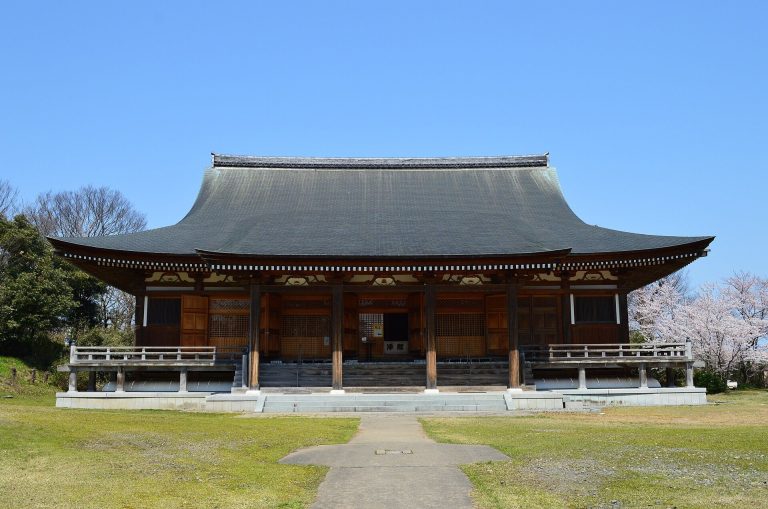
The centrally placed main hall is attributed to the early Muromachi period and was built before 1459. It is one of the temple’s nationally designated Important Cultural Properties.
Kobo Hall
Built in 1609, Kobo Hall is the temple’s inner sanctuary and is dedicated to Kūkai. The building is among the nationally designated Important Cultural Properties.
Ossuary
The ossuary, a structure for housing human remains, was built before 1348. It is the oldest building in Niigata Prefecture and is nationally designated as an Important Cultural Property.
Other buildings and shrine
Gates, halls, and temple buildings
Other buildings in the compound include the Great Gate and Deva-King Gate, a Chinese-style gate, a scripture repository, a bell tower, and the Bridge of Ignorance. The Octagonal Hall, Hall of the Eight Patriarchs, Hall of Esoteric Adornment, Jizo Hall, fire-ritual hall, and Single-Pronged Vajra Hall are also among its structures. The Hall of the Eight Patriarchs honors revered teachers in the Shingon lineage, while Jizo Hall is dedicated to Jizo, a bodhisattva in Mahayana Buddhism. The guest hall and kitchen are also part of the compound.
Tokugawa memorial buildings
The grounds include Tōshō Shrine, honoring Tokugawa Ieyasu, founder of the shogunate, and the Taitoku-in mausoleum with its protective shelter. Taitoku-in was the posthumous Buddhist name of Ieyasu’s son Tokugawa Hidetada, the second Tokugawa shogun.
Kobie Shrine
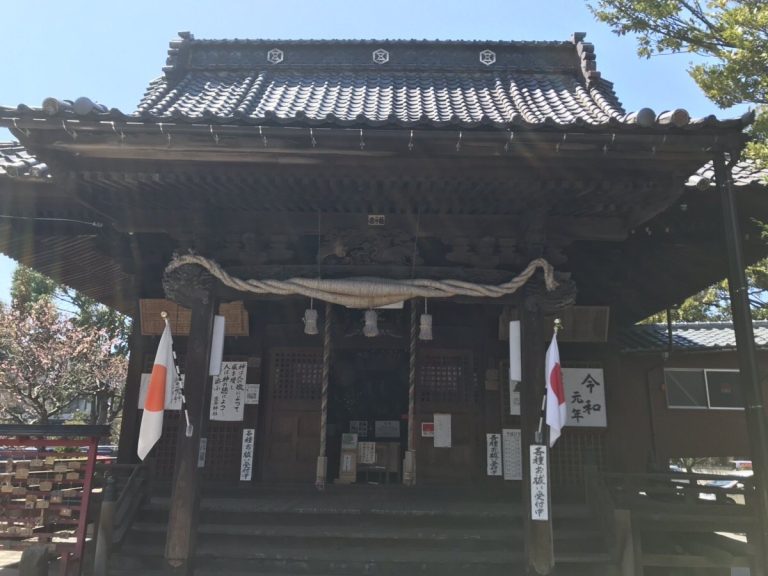
The shrine’s stone torii and main hall stand on grounds that remain physically continuous with the temple compound.
Wetland and gardens
Wetland and spring water
A wetland containing skunk cabbage extends around the site. Water rising there is regarded as sacred and associated with longevity and health.
Trees and planted grounds
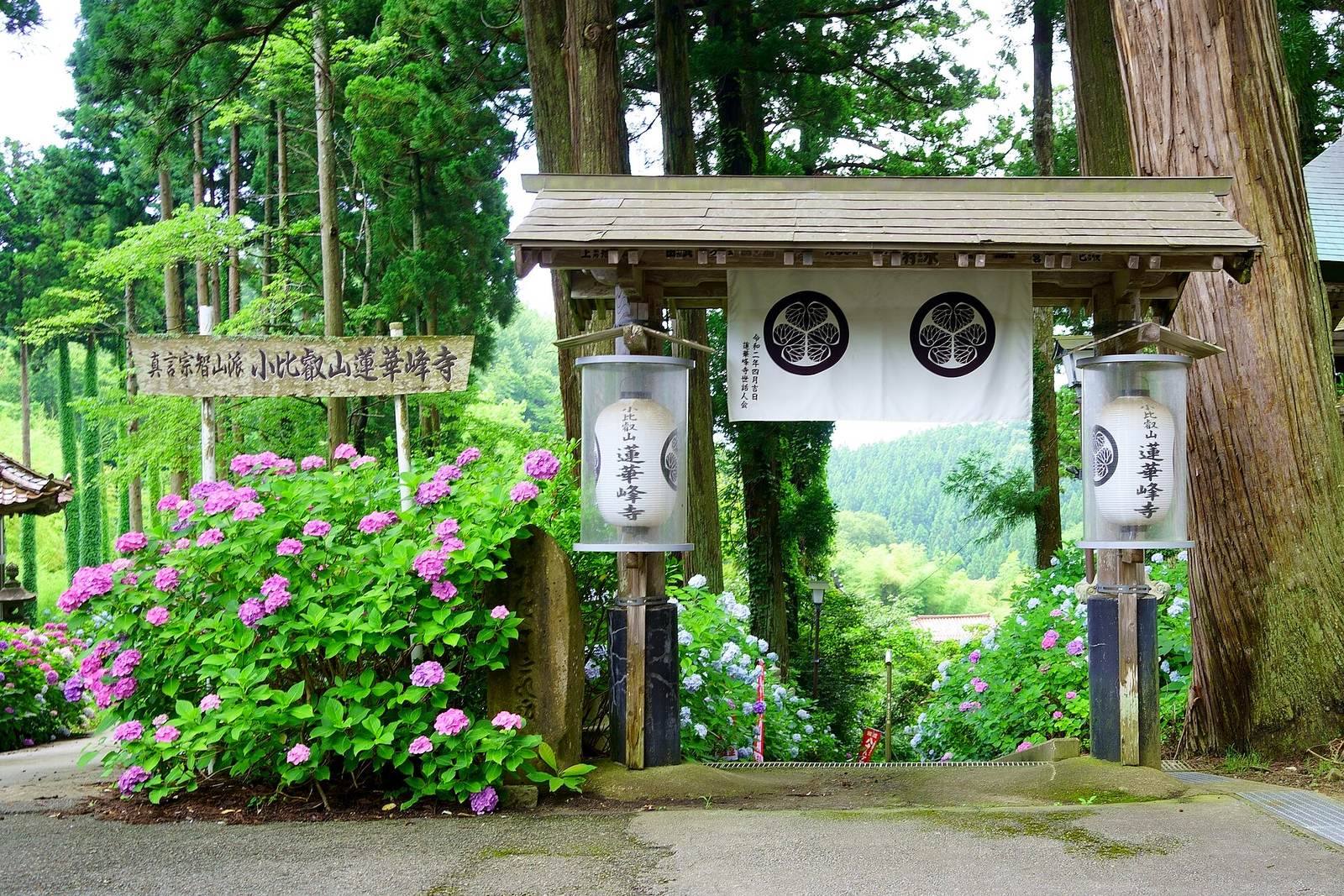
A zelkova tree stands in front of the temple gate. Tradition holds that secretly embracing it brings children. Cedar groves and azaleas grow within the grounds, along with about 7,000 hydrangeas. The temple is also known as the Hydrangea Temple.