Laura of Euthymius: A Judaean Desert Monastery and Pilgrim Inn
Site at a Glance
- Popularity
- Medium
- Country
- Palestine
- Primary era
- Medieval
- Eras represented
- Classical, Medieval
- Civilizations
- Byzantine, Crusader, Kingdom of Jerusalem, Roman
- Site type
- Economic
- Remains
- Caravanserai
On this page11 sections
History
The Laura of Euthymius was a Christian monastic settlement founded by Euthymius the Great in 420 in Israel’s Judaean Desert, near Ma’ale Adumim. A laura was a group of largely separate hermits’ cells gathered around a church. Before establishing the settlement, Euthymius had lived as a monk at Pharan from 406 to 411; he was also known as Euthymius of Lesser Armenia.
Foundation and Monastic Influence
Juvenal, Bishop of Jerusalem, consecrated the church on 7 May 428. The monastery also served as a training place for novice monks before they entered a laura. It became an important center in the Sabaite desert-monastic movement, named for the Palestinian monastic leader Sabas.
By the Council of Chalcedon, a Christian council held in 451, the Laura of Euthymius was the Judaean Desert’s only monastery aligned with the belief that Christ had both a divine and a human nature. Palestinian monasticism had previously been largely shaped by the view that these natures were united. The monastery played a central part in the development of Chalcedonian orthodoxy among Palestinian monks.
Rebuilding and Medieval Changes
After Euthymius died on 20 January 473, the first church was put to use as a refectory, and a new church and communal monastery, or cenobium, were built above it. Martyrius, Patriarch of Jerusalem, consecrated the new church in 482. The monastery thereafter became known as the Monastery of St. Euthymius.
An earthquake ruined the laura in 660, and it was subsequently rebuilt in a similar form. The monastery may have been attacked by Bedouins in 796–797, during a period of attacks on monasteries in Jerusalem and the Judaean Desert. Archaeological interpretation, however, generally favors peaceful abandonment rather than destruction by attackers or natural disaster.
In 1106, the Russian monk and pilgrim Abbot Daniel described the monastery and the nearby Monastery of St. Theoctistus as destroyed by “pagans.” He also said that Euthymius and many other holy fathers were buried there, and that their bodies appeared lifelike. Major restoration and construction followed during the 12th-century era of Latin Christian Crusader states in the eastern Mediterranean. The monastery was abandoned in the following century.
From Monastery to Pilgrim Inn
Under Mamluk rule in the 13th century, the former monastery was converted into a caravanserai, a roadside lodging for travelers and their pack animals. It served Muslim pilgrims journeying between Jerusalem and Mecca by way of Nabi Musa. The inn became known as Khan al-Ahmar, meaning “Red Inn,” and is also called Khan el-Ahmar. It should not be confused with the nearby Khan al-Hatruri, or Good Samaritan Inn, which was sometimes also called Khan al-Ahmar.
Remains
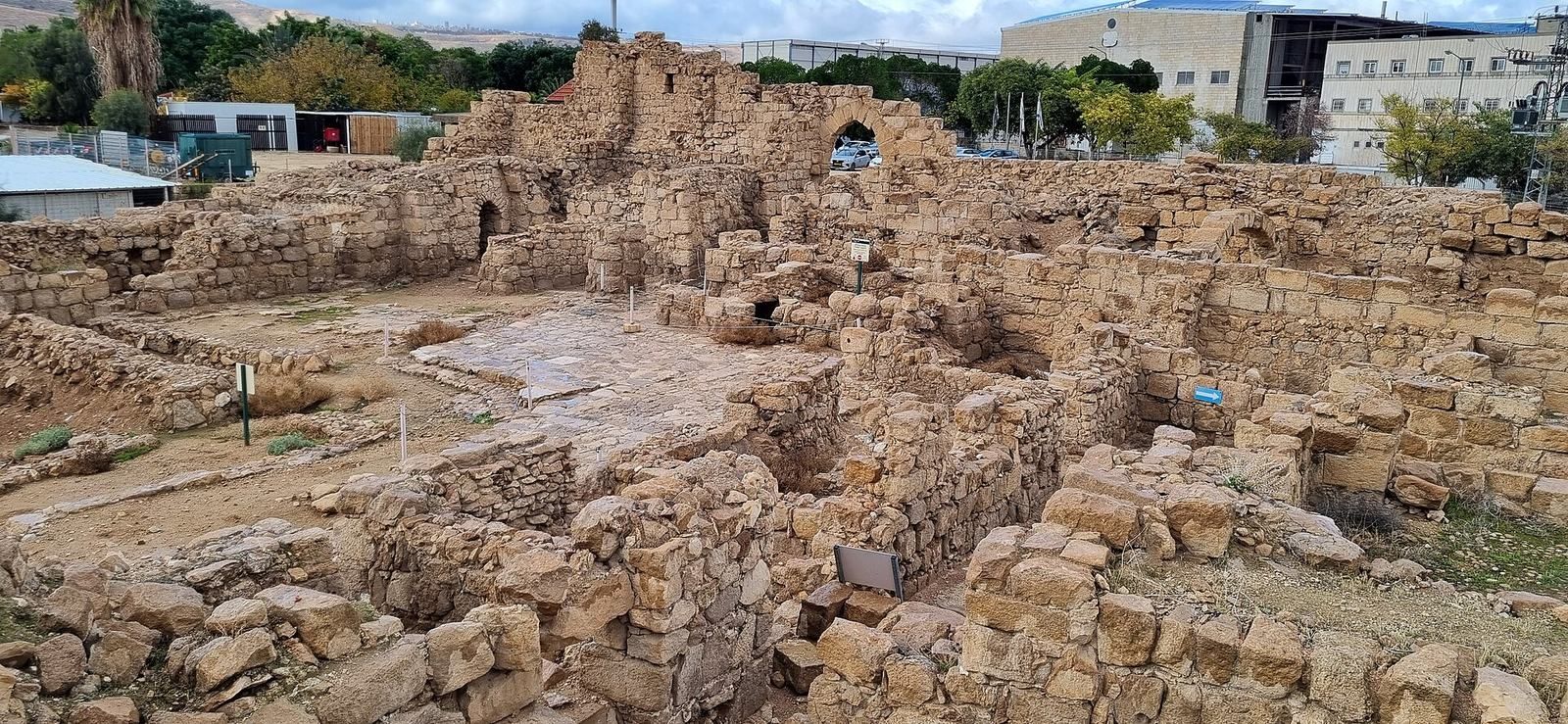
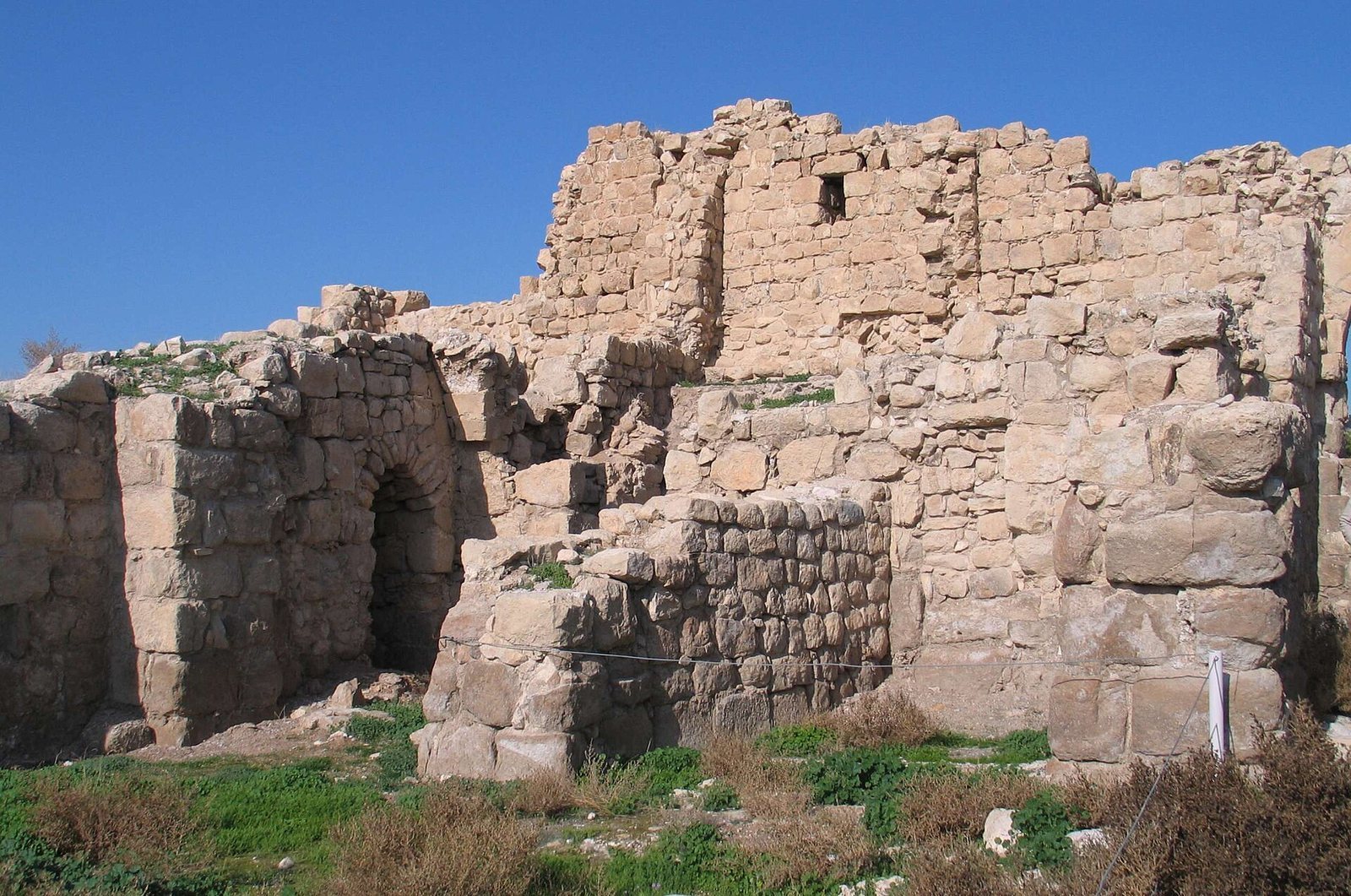
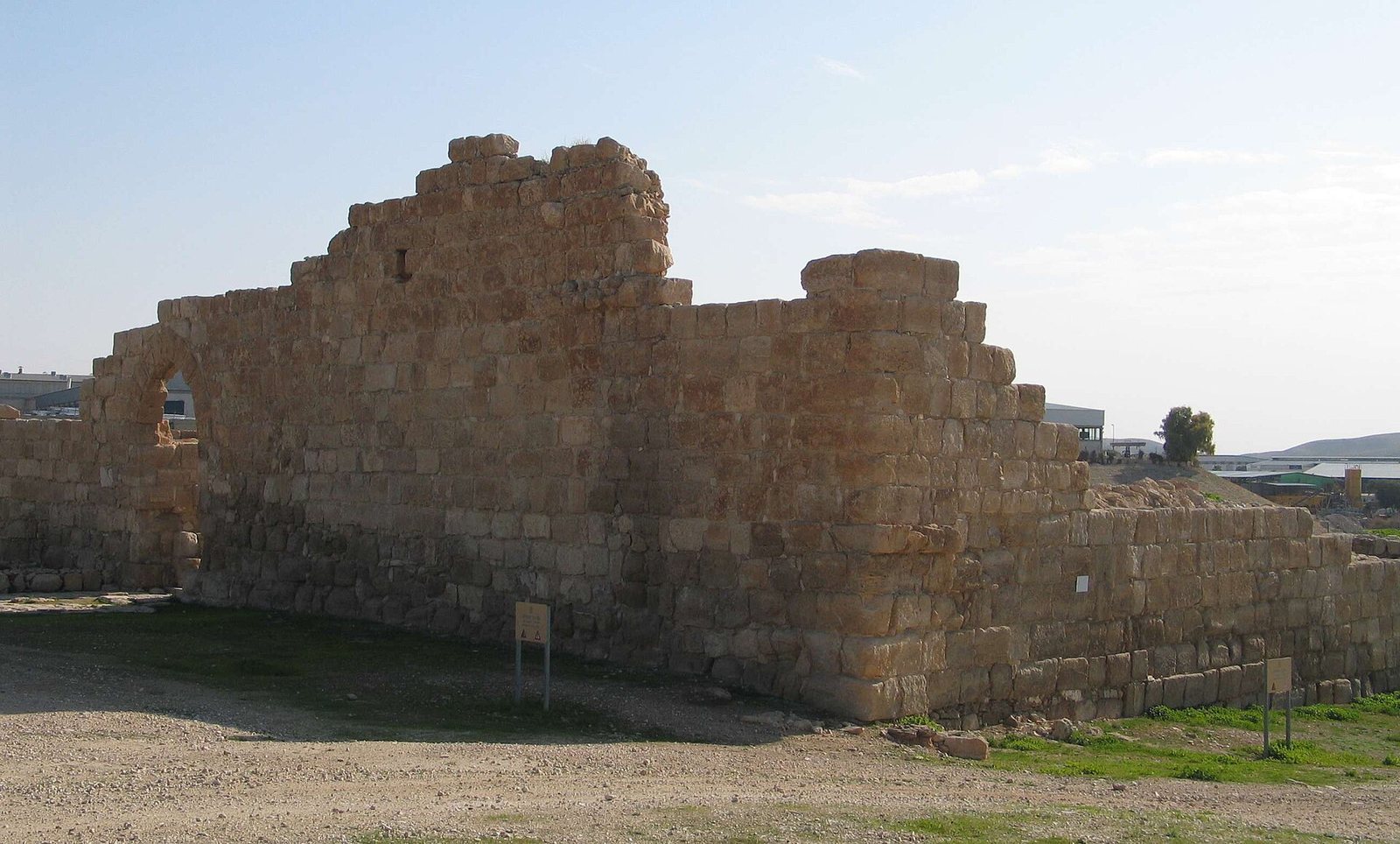
The site survives as ruins in the Judaean Desert, near Ma’ale Adumim and south of the modern Jerusalem–Jericho highway. Its layout reflects successive use as a monastic settlement and as a roadside inn.
Monastic Structures
The Original Laura
The first settlement consisted of small hermits’ cells arranged around a church, following the layout of the laura at Pharan. Abbot Daniel described the monastery as standing on level ground, with rocky mountains some distance away. He also noted an enclosing wall and a church raised above its surroundings.
The Later Church and Cenobium
The later church and communal monastery were built above the earlier church after it had been converted into a refectory. This arrangement placed the later complex over the first church, preserving the sequence of the monastery’s successive building phases in its layout.
Khan al-Ahmar
Entrance, Covered Court, and Chambers
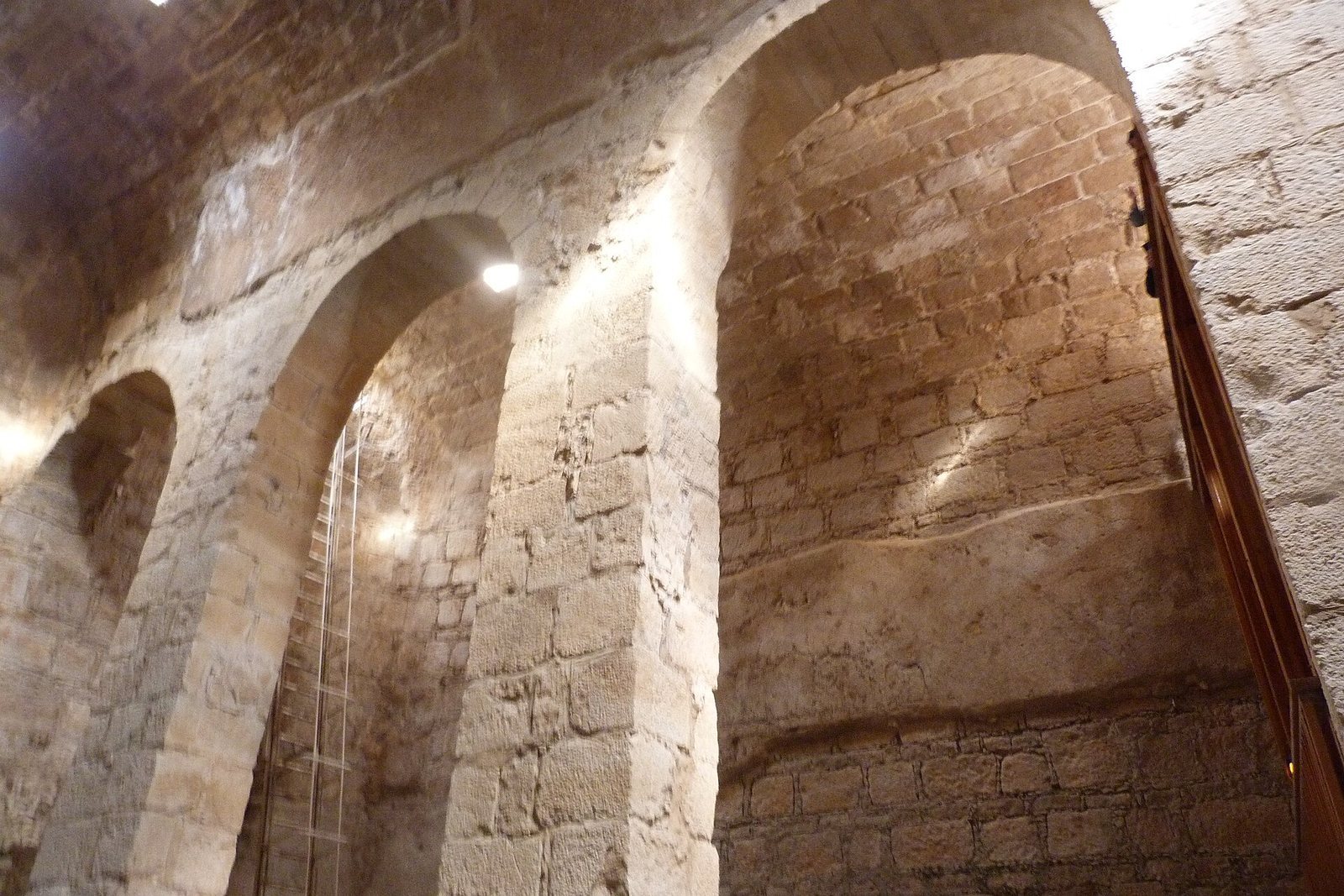
In its inn phase, a wide arch on the road-facing side opened into a covered court. Two similar arches stood at the far end, with doors leading to chambers on either side.
Open Square
Beyond the covered court lay a large open square. The khan’s high walls enclosed it on three sides, while the chambers and covered court formed its fourth side.